List of Authors
>>About this blog
Recent blog posts
|
[Desire purple]
09:00 on January 11, 2018
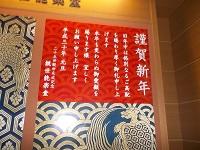 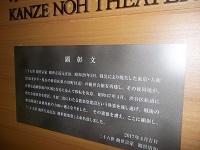
The January performance of Kanzekai regular Noh begins with "Okina" who survives the beginning of the year. As you know, "Ona" is also called "Shikisanban" and has strong elements of prayer and ritual, which are the roots of Noh, and is often performed in changed places such as New Year's Day and the fall of theaters. Okina, Chitose, and Sanbaso pray for peace of the world, peace of the country, and rich harvest. Noh-loving friends say that this little tension and freshness can't be said. Next, "Kureha" (Kureha) was performed, so I was quite slept for 2 hours and 40 minutes. Next, after relaxing a little with Kyogen "Treasure Hammer" and the story of Taro's crown being tricked into selling drums as a small hammer, nine songs such as "Yashima", "Takasago", and "Hagoromo" are performed by Yaemon Yamashina, Tetsunojo Kanze, Gensho Umewaka, and other important figures of Kanzekai dance. When he said to the next person, "There are many dances," he said, "This is a replacement for the New Year's greetings at the Tokyo Kanzekai." I'm happy.
Finally, the celebration Noh "Iwafune" ended at 5:40. The break was 20 minutes, so I would have been sitting for 4 hours and 20 minutes. The neighbors can see from Sendai, and go to Tokyo for theaters and concerts 40 times a year, or "It's really convenient to change from Shoto to Ginza. I'm 80 years old, "I thought that I had to do my best because of the effect of the dance or my back stretching.
The Noh Theater regularly holds "Kanzekai Noh Lectures".
The second time is from 18:30 on Tuesday, February 6
Part of the charm of Obasute, a demonstration by the head family of Nibu Kanze. Lecturer: Kiyokazu Kanze, Shinpei Matsuoka, and our guests are Ki Uchida. General Admission: 1500 yen
Kanze Araiso Noh Preliminary Course Thursday, January 25 18:00 to 500 yen Admission fee
Contact Application Kanze Noh Theater 6274-6579
[CAM]
18:00 on January 10, 2018
Today, the Japan Tourism Agency received the following notice and training guidance by e-mail. The revised law came into effect on January 4th.
Finally, the Tokyo Olympics mood will be exciting.
Currently, it is an inbound boom, but in terms of numbers, tourists from China, Taiwan, and Korea seem to be overwhelming, and Chinese is heard everywhere around Tokyo and Ginza. However, recently, the number of buses carrying tourists from China has stopped since its peak has decreased. At the Olympics, will there be a lot of tourists from China?
Revised Interpreter Guide Law Enforcement Guide
1. Background
In order to improve the environment for accepting foreign tourists visiting Japan, we will review regulations on the qualifications of interpreter guides and register so-called land operators who plan and arrange travel in order to ensure travel safety and fairness in transactions. The "Act on Partial Revision of the Interpretation Guide Law and the Travel Business Law" (Act No. 50 of 2017), which takes measures such as the establishment of a system, was promulgated on June 2, last year, and January 4 this year. It became effective.
2. Major amendments to the Interpreter Guide Law
(1) Abolition of business monopolization regulations and only the name monopolization regulations survive
(2) Expanding the Local Interpreter Guide System nationwide
(3) Review of exam subjects for the National Interpreter Guide Examination
(4) Requires national interpreter guides to attend training conducted by registered training institutions
Business monopolization regulations have been abolished, and even those who do not have qualifications will be able to provide paid interpreting guidance services in the future. In addition, since the name monopoly regulation continues, unqualified persons cannot give their names such as "National interpreter guide", "Regional interpreter guide", and similar names.
(* Please refer to the website of the Japan Tourism Agency for information on the interpreter guide system after the enforcement of the revised law.)
[Sumida Fireworks]
12:00 on January 10, 2018
Friday, January 5. I went to Tsukiji Market and New Year's annual first market.
At the end of last year, Tsukiji Market was officially decided when to move to Toyosu with a busy feeling. Since it is relocation in October this year, today is Tsukiji's last first market if it goes as planned.
A very cold morning. "I'm relocating to Toyosu this year," I'm a little lonely early at the beginning of the year, and I'm heading to seafood Hashikado, the on-site market. When you come in front of the torii gate of Namiki Inari Shrine, there is a crowd of press members calling Sawazawa on the grounds of the shrine.
What a giant tuna after the auction was displayed with the "first shipment flag" and shown.
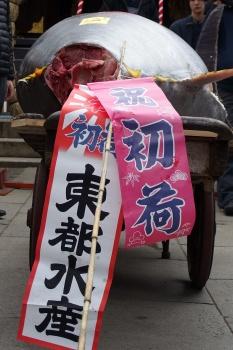
The first tuna auction is always a hot topic in Tsukiji's first market. This year, it was news a few days before the first auction that a very large bluefin tuna was landed at Oma Port in Aomori Prefecture. It is the second largest producer in Tsugaru Strait Oma.
It weighs 405 kilograms. Even if you add the weight of Yokozuna Hakuho Seki and Kakuryu Seki, it weighs less than 100 kg. It was auctioned off at a price of 36.45 million yen, and became the highest price tuna of this year's first auction.

I hope you will be able to meet such a happy thing early in the New Year. This year, unlike usual, I have a good feeling.
After the media coverage and coverage were over, the show was over, and Tsukiji's last first auction tuna was sent out as "first load" from the precincts of Namiki Inari Shrine.
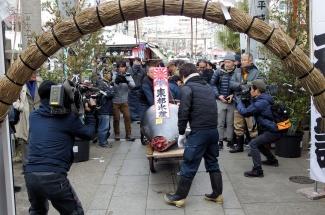
The word "first shipment" is often used when the goods are shipped for the first time in the New Year.
The first shipment is a ritual to celebrate auspiciousness, which is said to have started in the Edo period. Originally, on the 2nd of New Year, wholesalers and merchants decorate horses and wagons gorgeously, put loads on them, and send them to their customers lively. Was.
It is said that it was a natural New Year scenery around Nihonbashi and Kyobashi, where there were many merchants.
The scenery of the first shipment of the New Year is no longer visible, but at Tsukiji Market, the ritualistic custom of this first shipment remains in the form of the "first shipment flag".
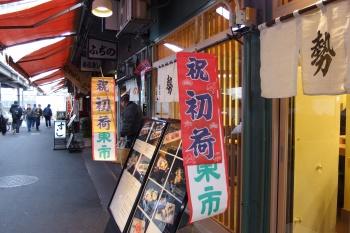
The flag with the word "celebration first shipment" and the flag with the company name are tied to thin bamboo and displayed in various places. I also saw him running in the wind attached to the tarle.
This new year's first shipment flag celebrates the first shipment and wishes for business prosperity. This year, we will also welcome the success of moving the market.
I came to the Uokawagishimizu Shrine in Tsukiji Market and the venue. Will we finally be transferred to Toyosu this year?
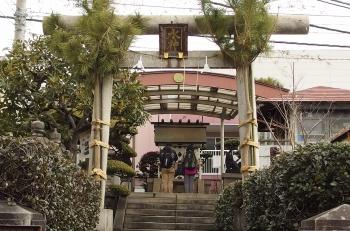
Tsukiji Market opened in 1935. Since then, the scenery of the beginning of the year, which has a history of more than 80 years, is expected to be the last year. I think so, when I recall the scenery that I saw today, there is something very impressive.
This year, the "Tsukiji Lion Festival" of Namiki Inari Shrine is the main festival. It's going to be a busy year for Tsukiji.
At the same time, it is likely to be a year of attention, which will be the first step toward the new Tsukiji.
[Hikoharu Co., Ltd.]
09:00 on January 10, 2018
Happy New Year! This year we would like to send rare information of Chuo-ku. We look forward to seeing you again this year.
That's why I went to Harumi early in the new year. Harumi, Chuo-ku, used to be famous for its Tokyo International Trade Fair venue. When I was a student, I remember going to the Tokyo Motor Show several times. Since then, it's been decades since. First, we started from Harumi Wharf at the southernmost tip of Chuo-ku.
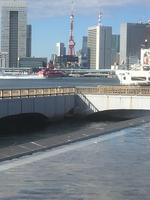 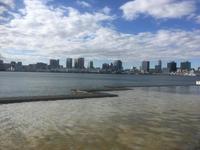
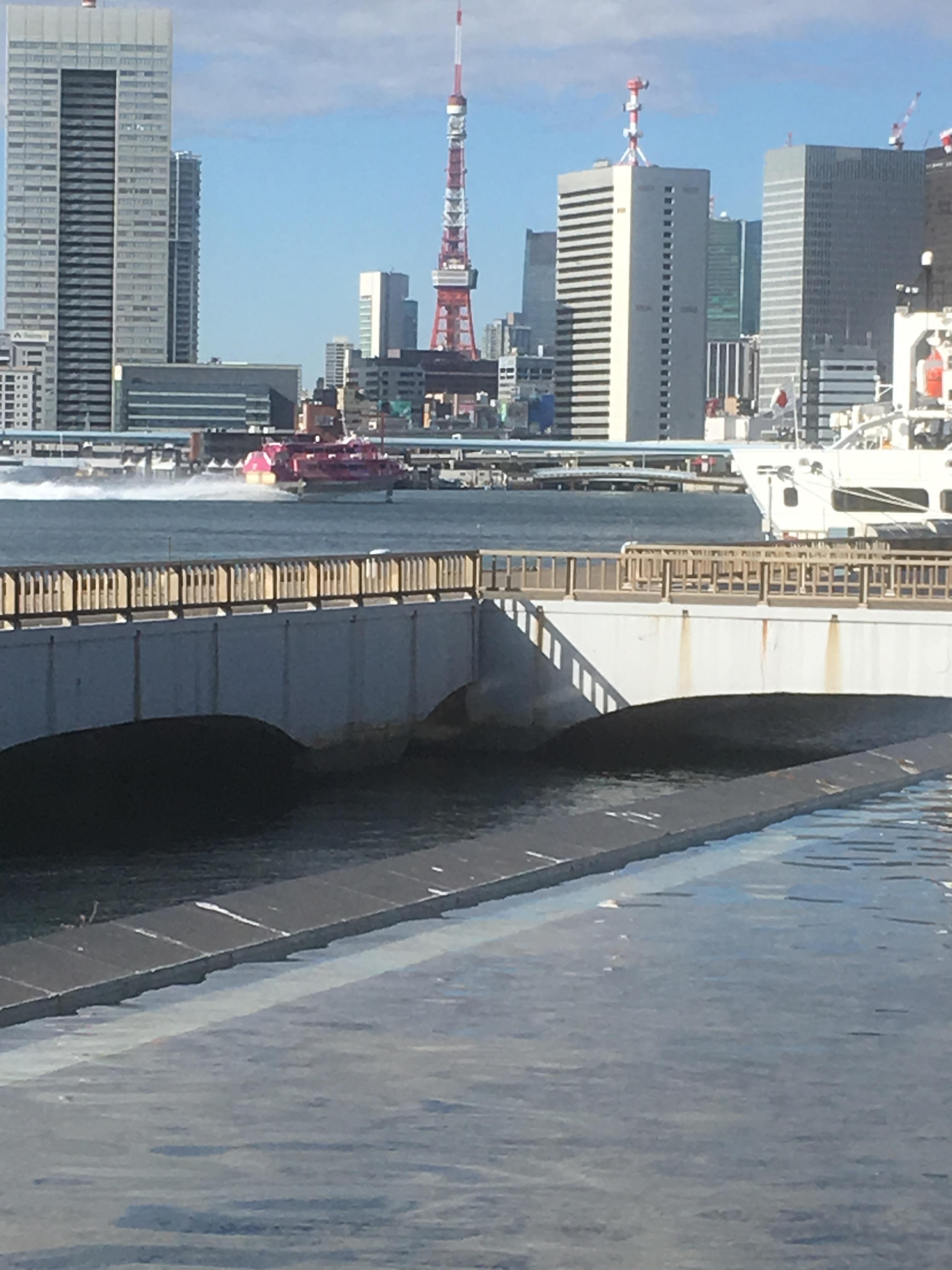
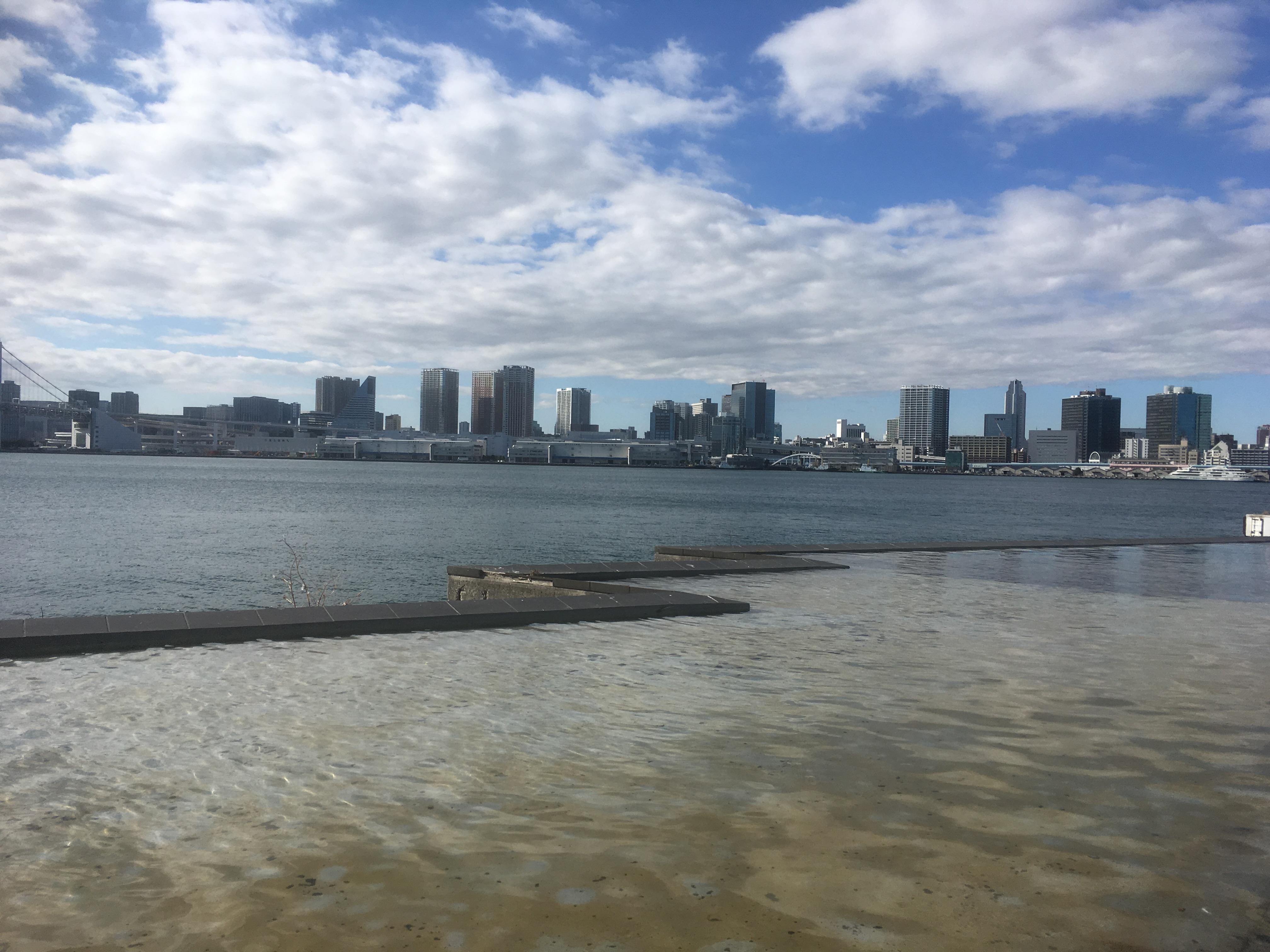
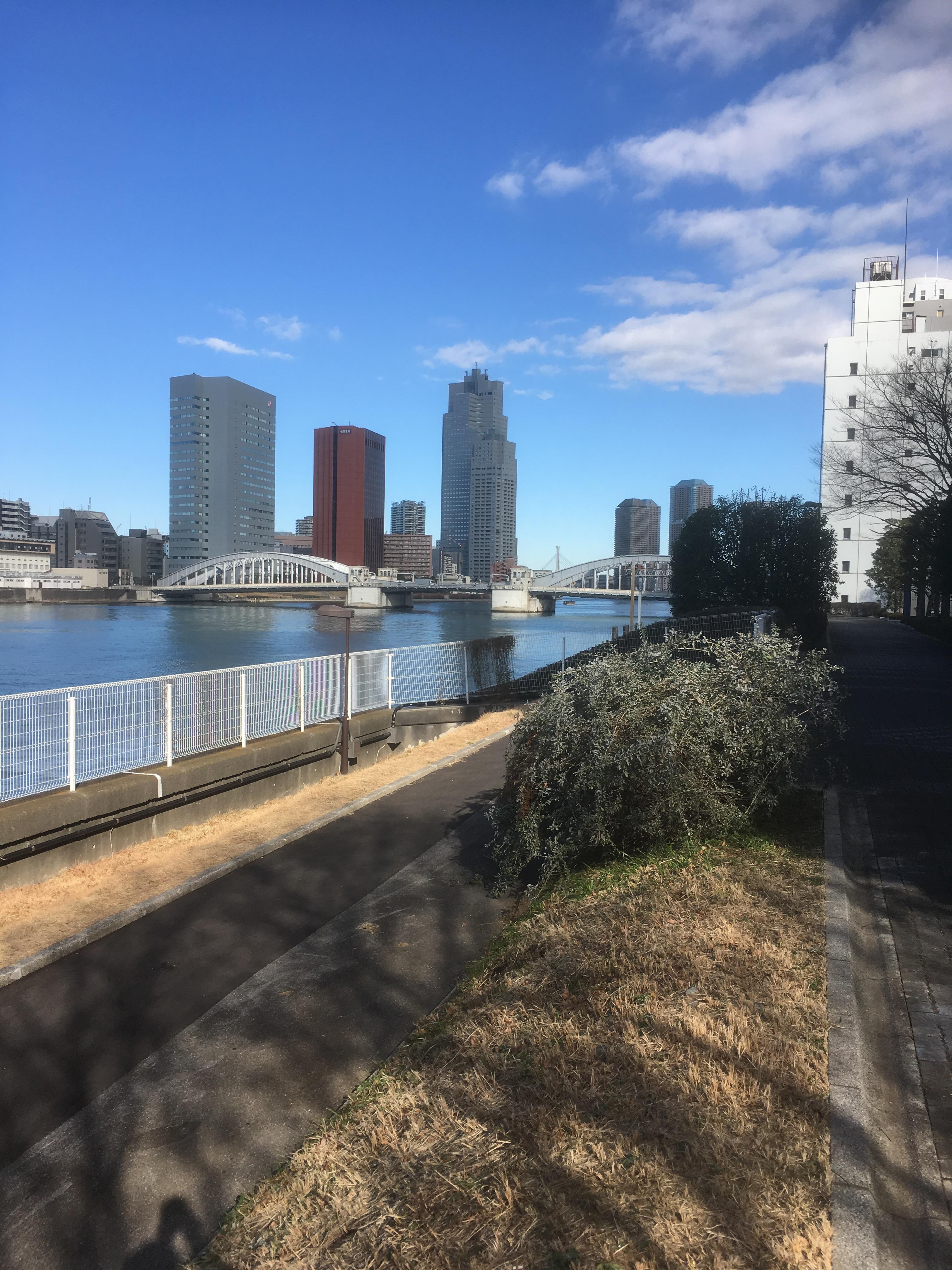
The photo shows a view of Tokyo Port from Harumi Wharf. Tokyo Port was very beautiful and quiet.
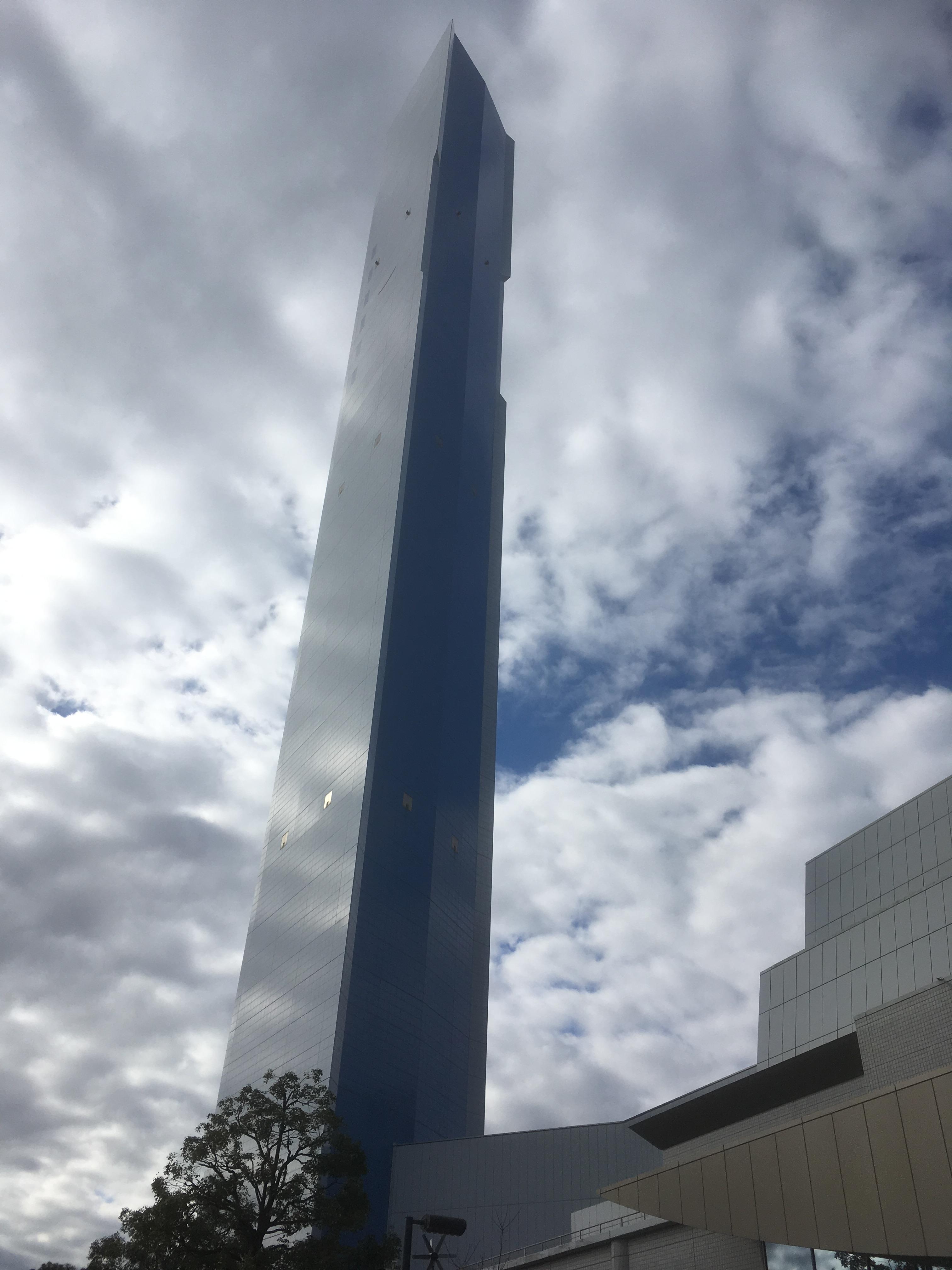
As you walk toward Kachidoki Station with Harumi Wharf behind, you will see a building with a high chimney on your right.
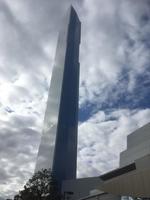 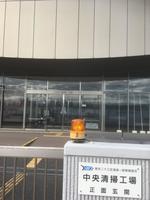 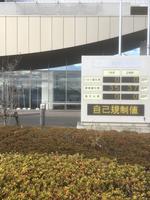
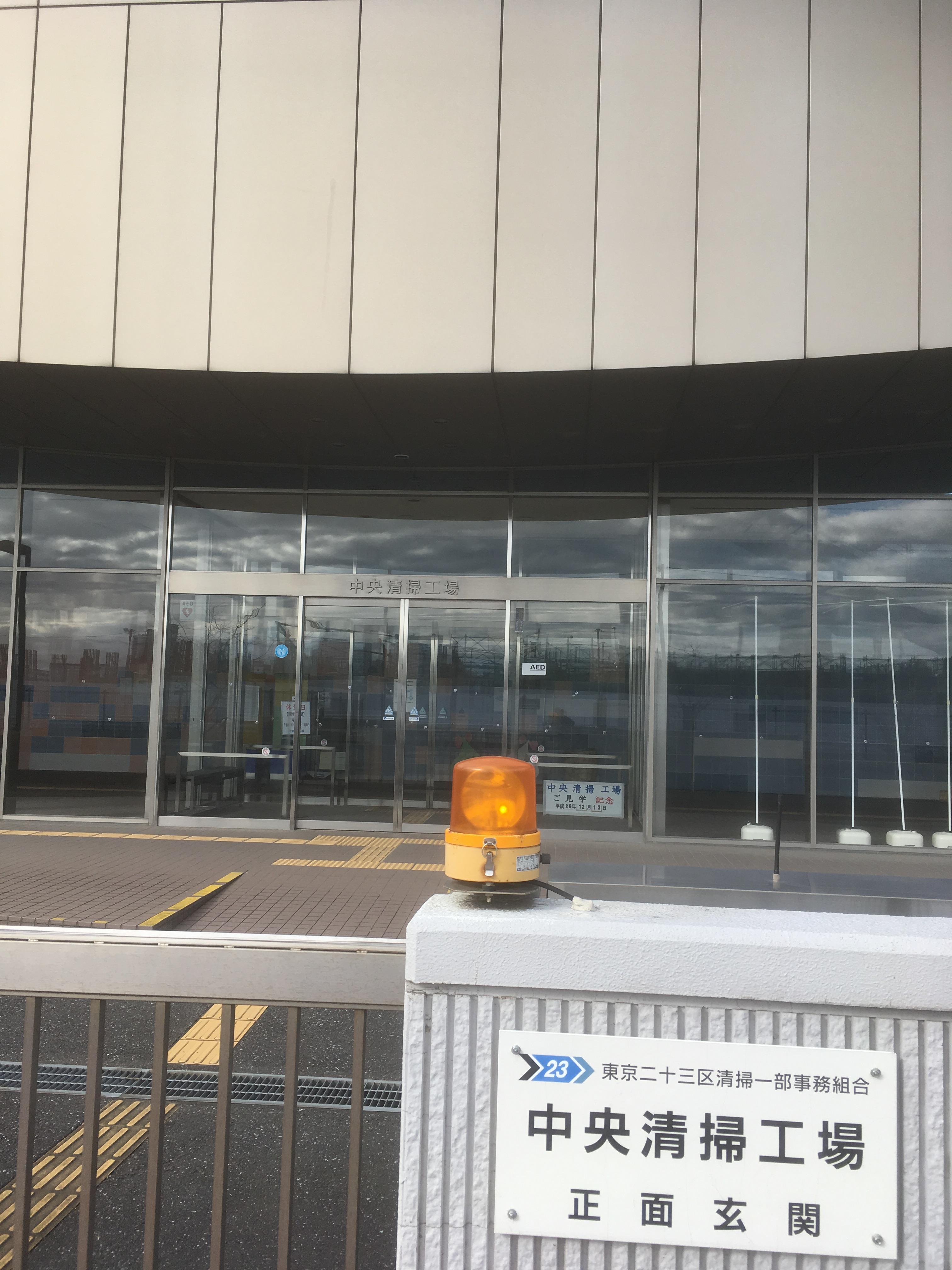
The Central Incineration Plant was built on the site of the Tokyo International Trade Fair. It seems that the length of the chimney is 177.5 meters. The remaining heat of the factory is being supplied to Plaza Harumi, which is adjacent to the station.
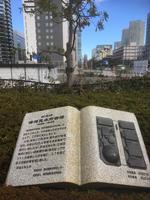 
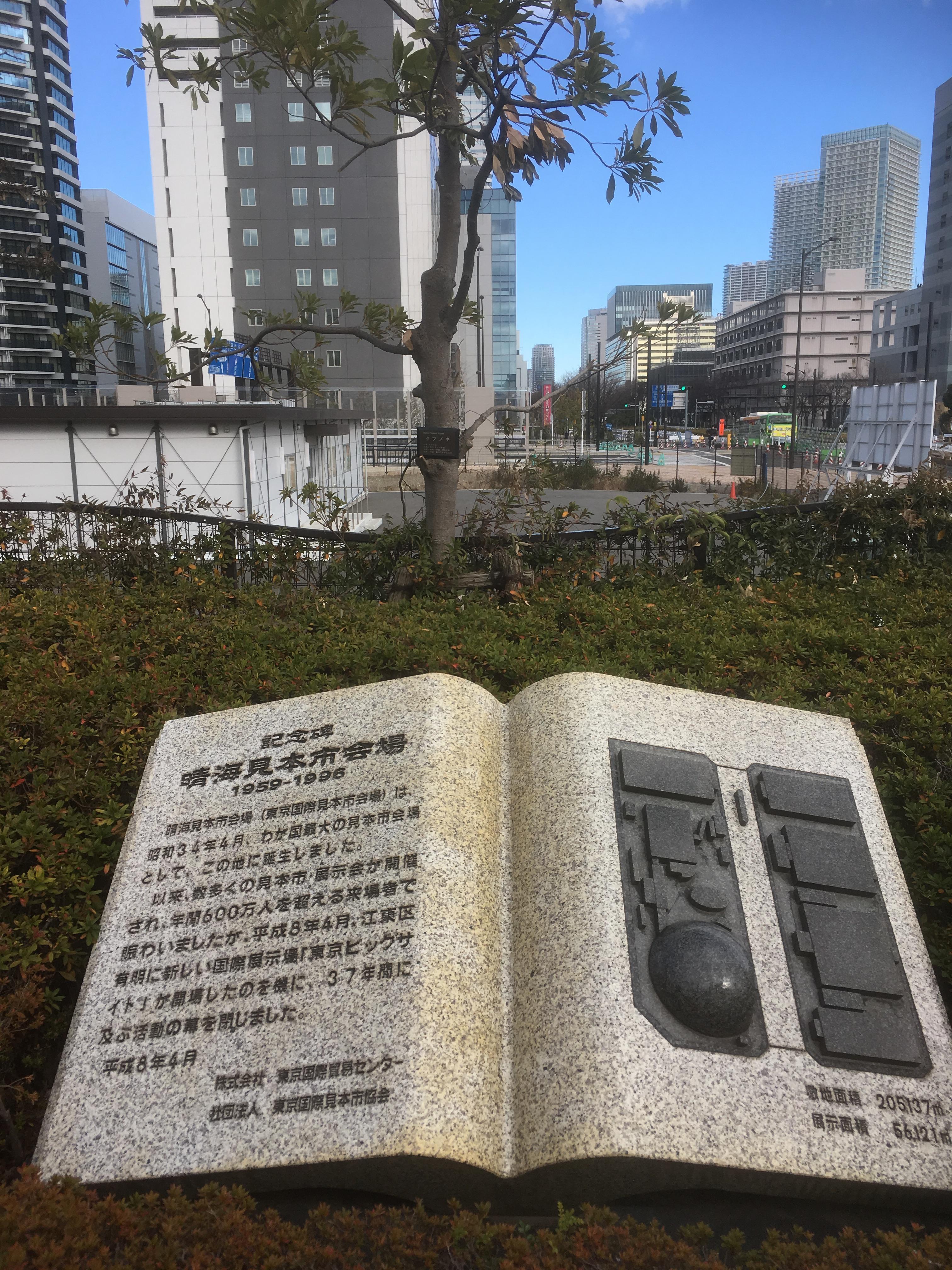
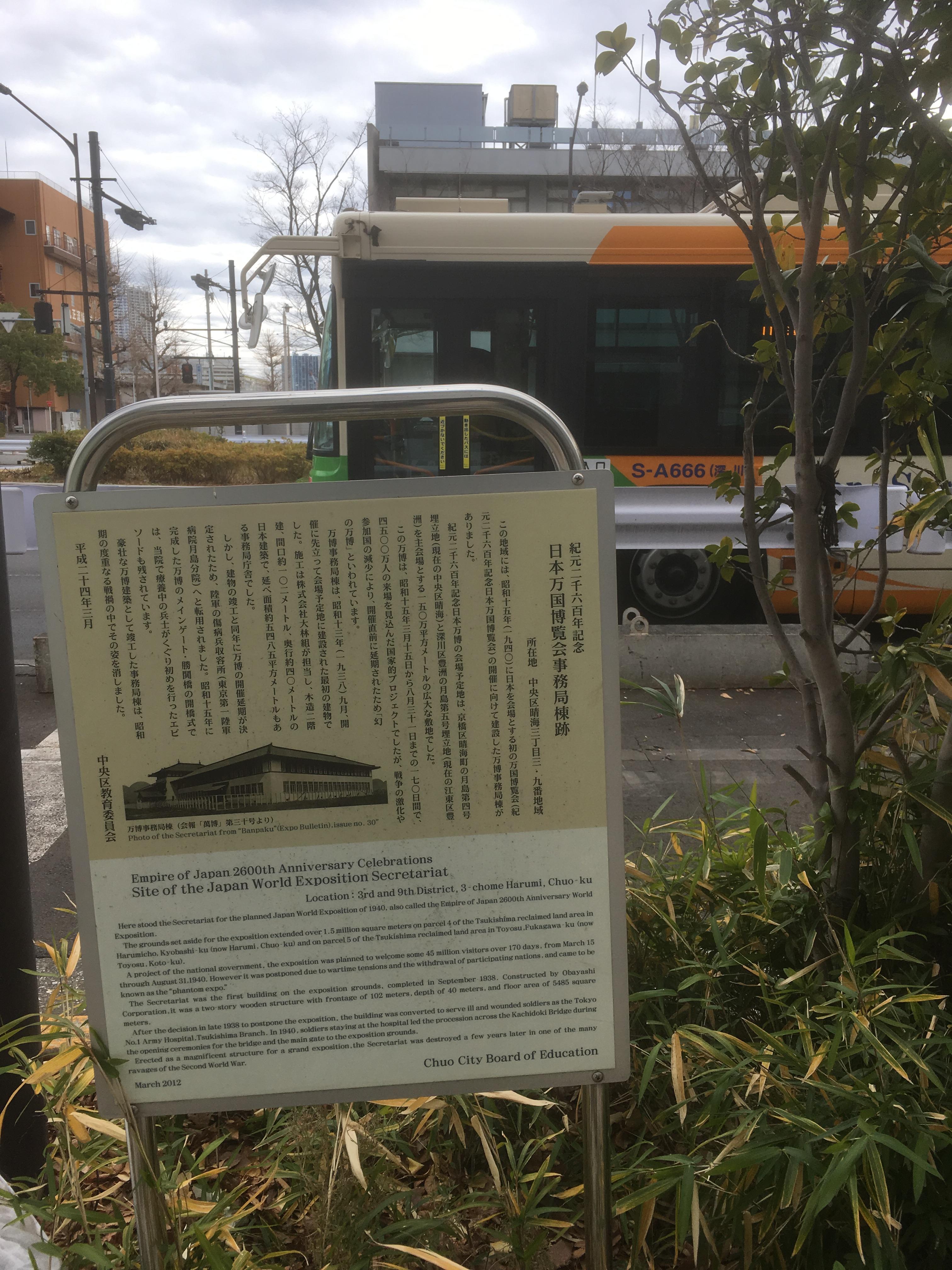
A monument to "Harumi Trade Fair Venue" is set up on the premises. And after passing the Tsukishima Police Station, there is an explanation version of the site of the Japan World Exposition Secretariat Building.
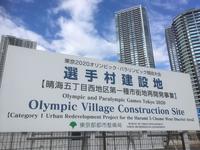
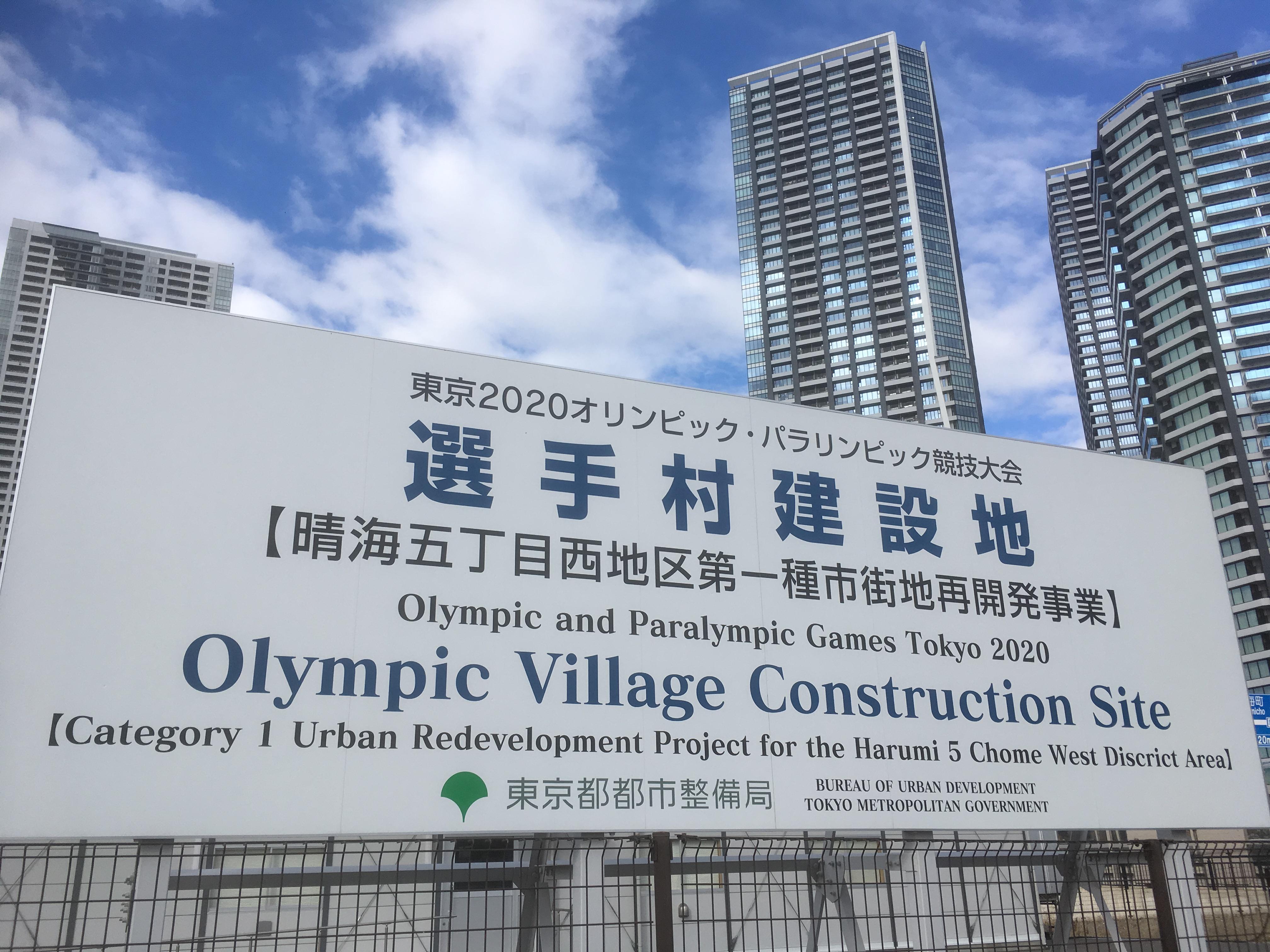
In Harumi, construction of an athlete village has begun for the 2020 Tokyo Olympics.
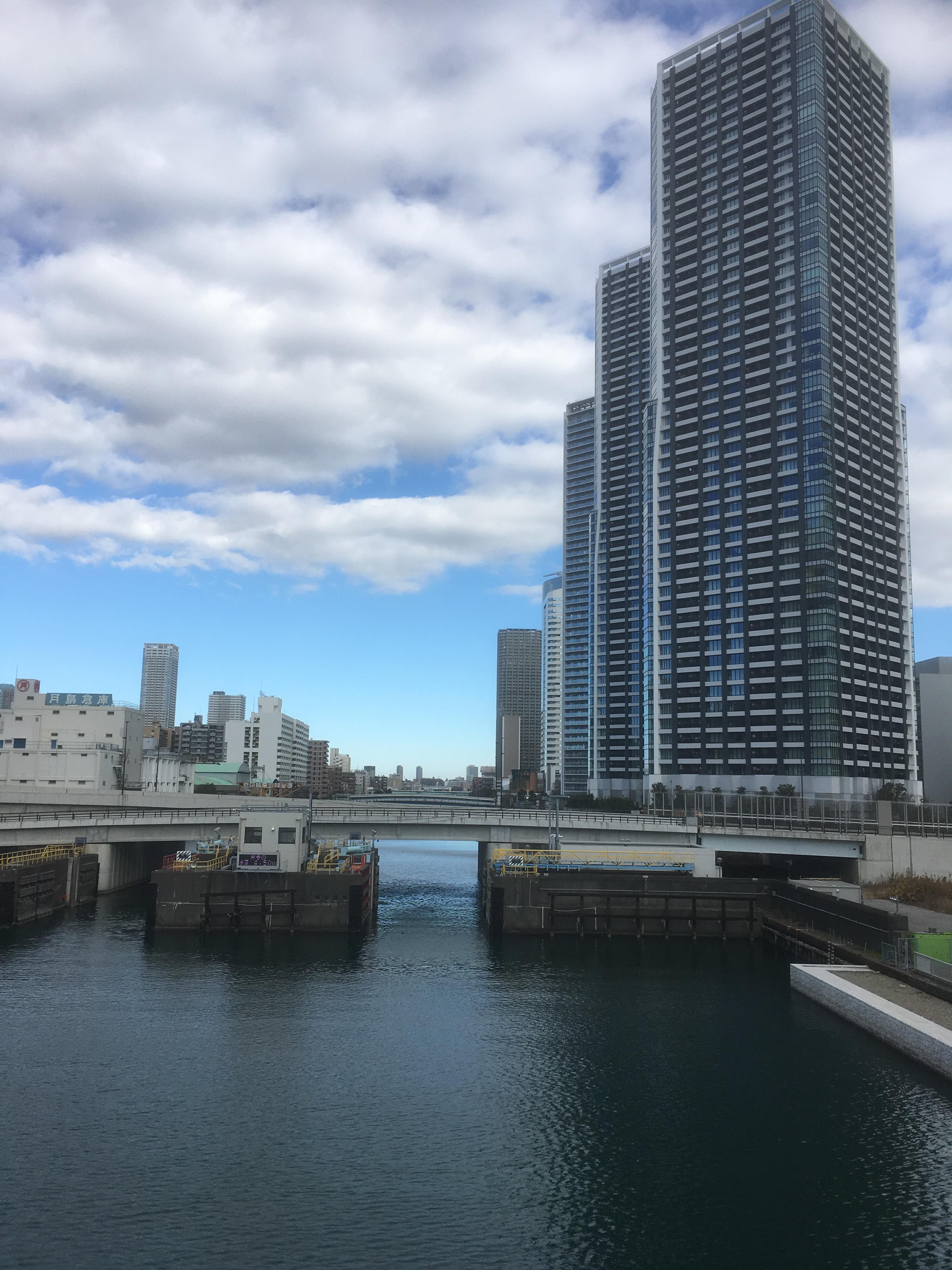
Toyosu Ohashi, Reimei Ohashi and Tsukiji Ohashi have already been bridged. However, it has not yet been used due to the postponement of the relocation of Tsukiji Market to Toyosu.
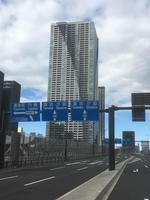 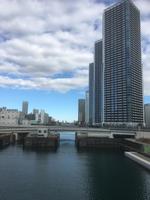 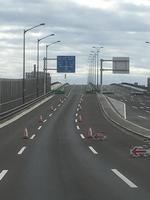
So you can take some strange photos.
The photo on the left shows the view of Tsukiji from Harumi 5-chome intersection.
The central photo shows a picture of the dawn Ohashi Bridge from Asashio Kobashi.
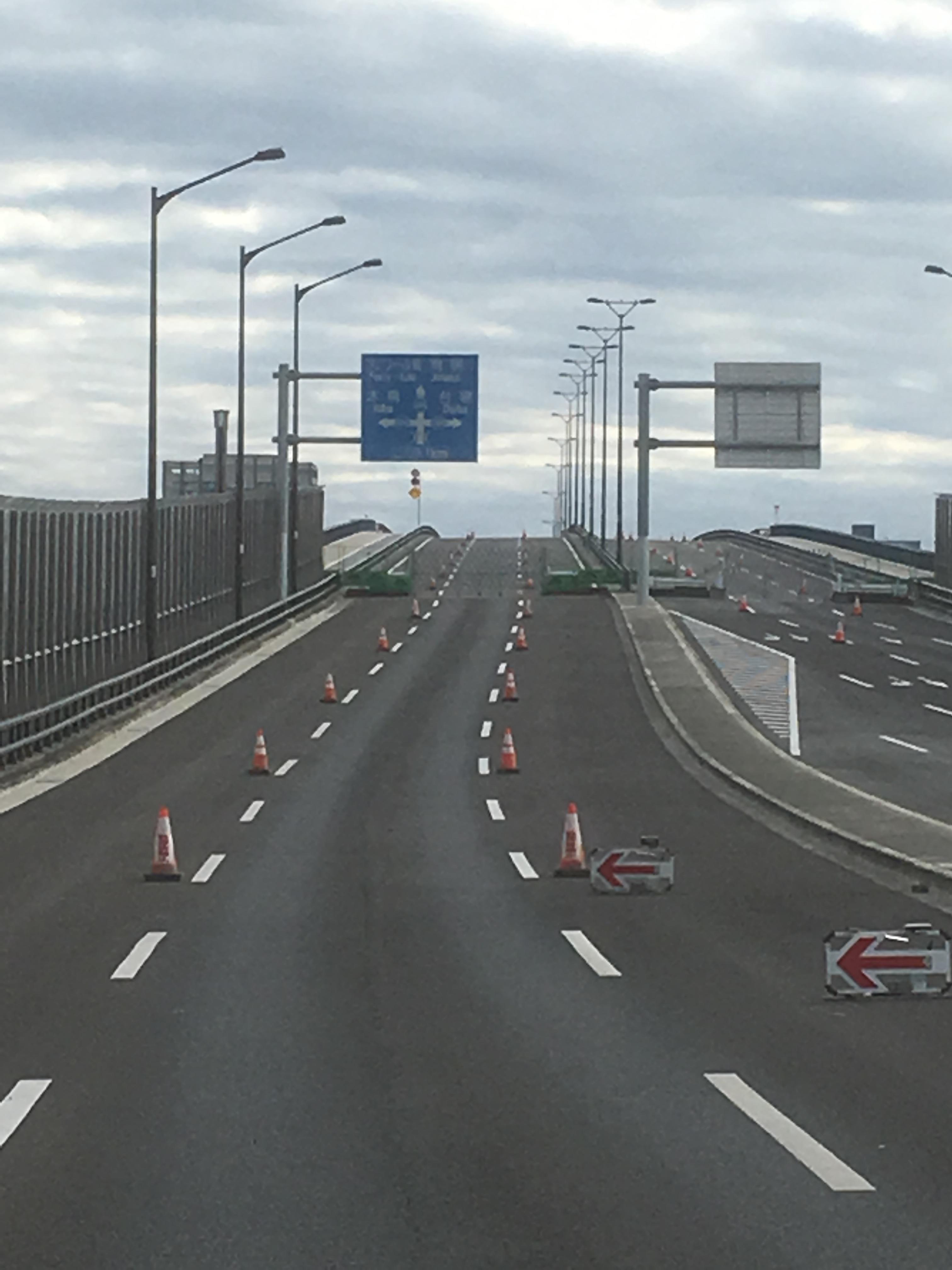
Photo from Harumi 5-chome intersection facing the Toyosu area
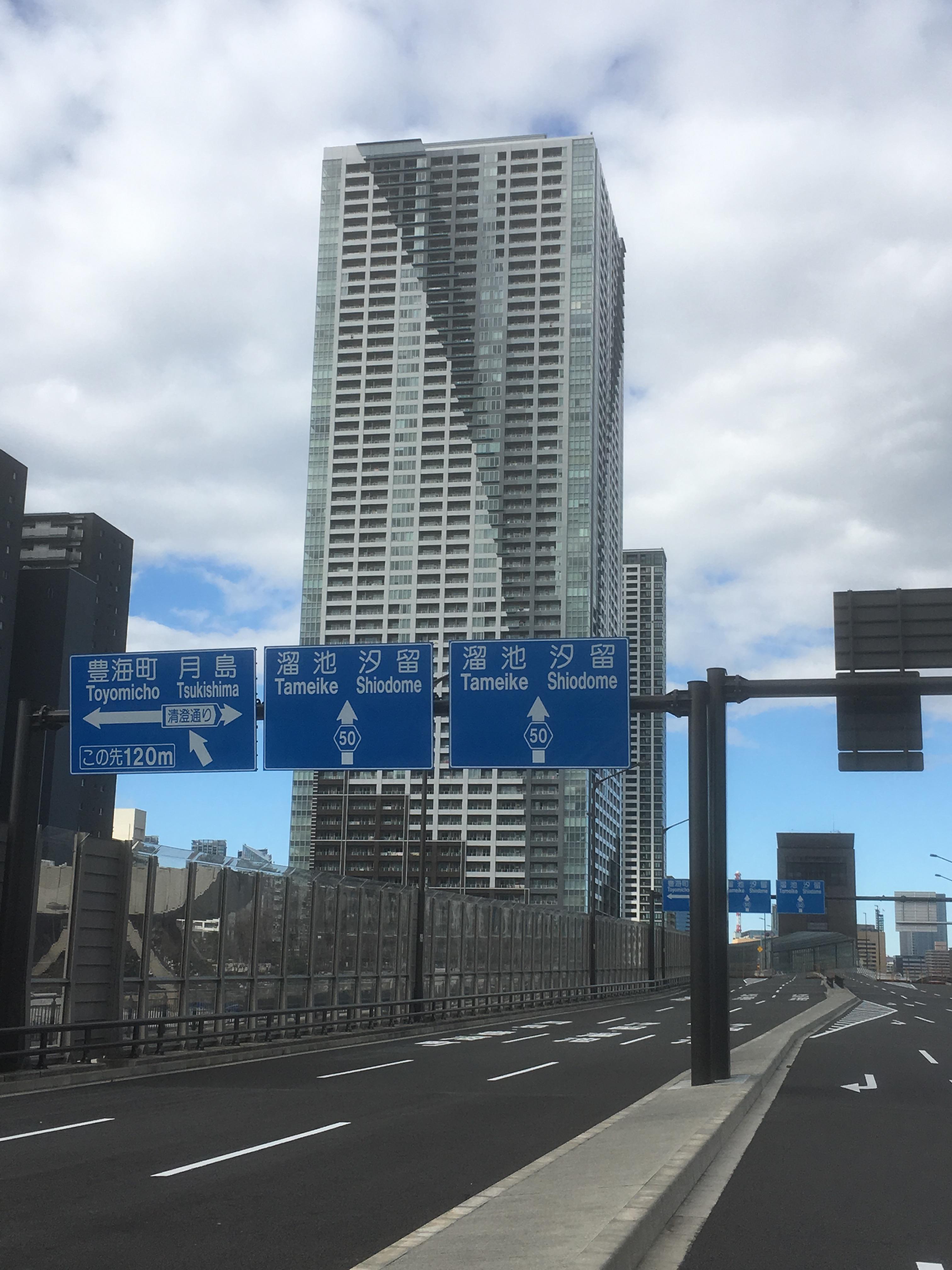
None of the roads are used, so there is no single car.
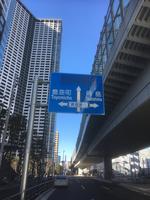 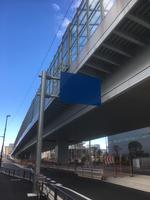
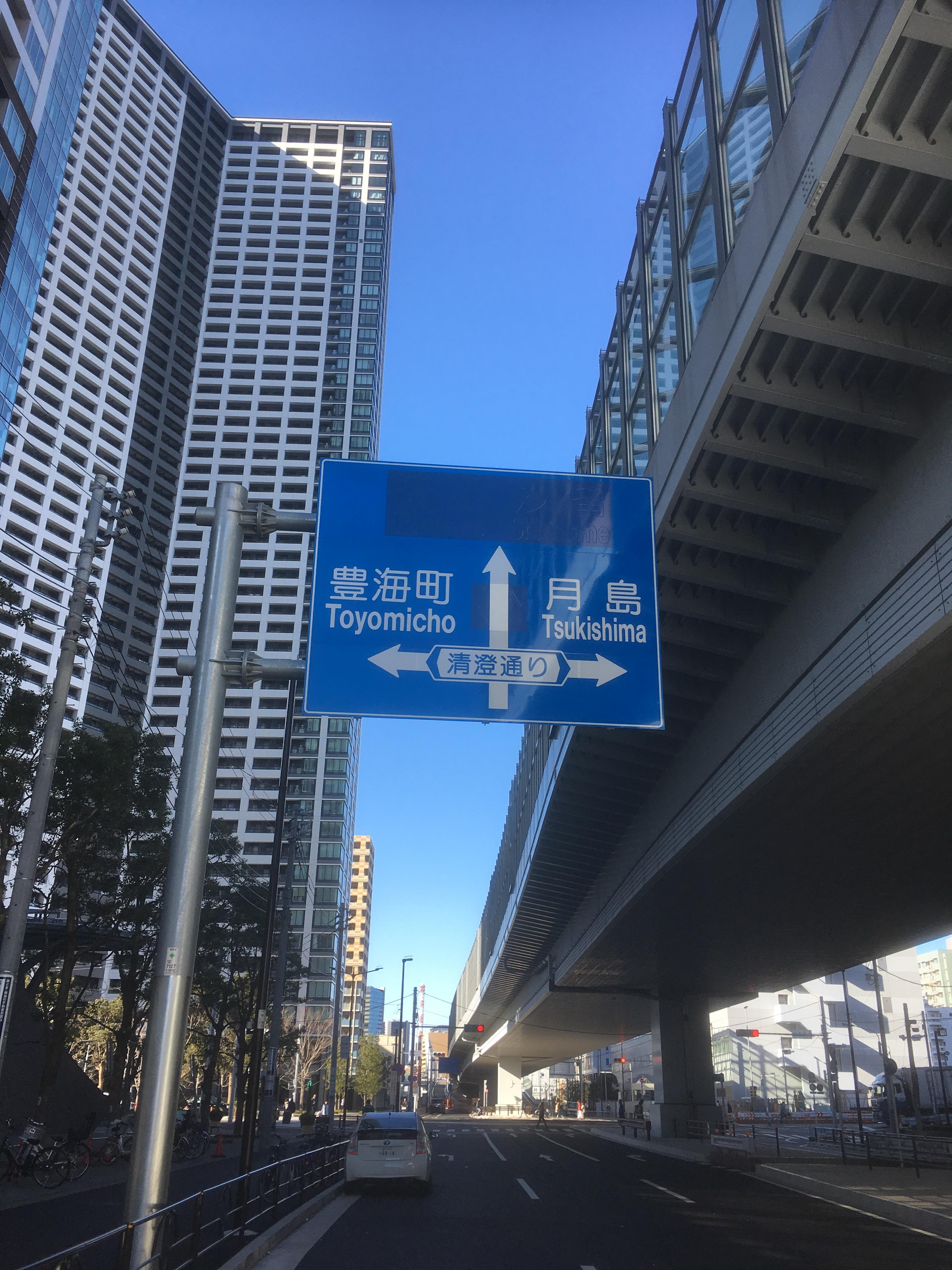
Information board with the place name erased and information board without anything written.
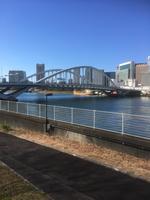 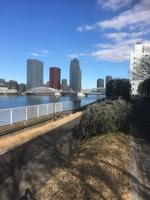
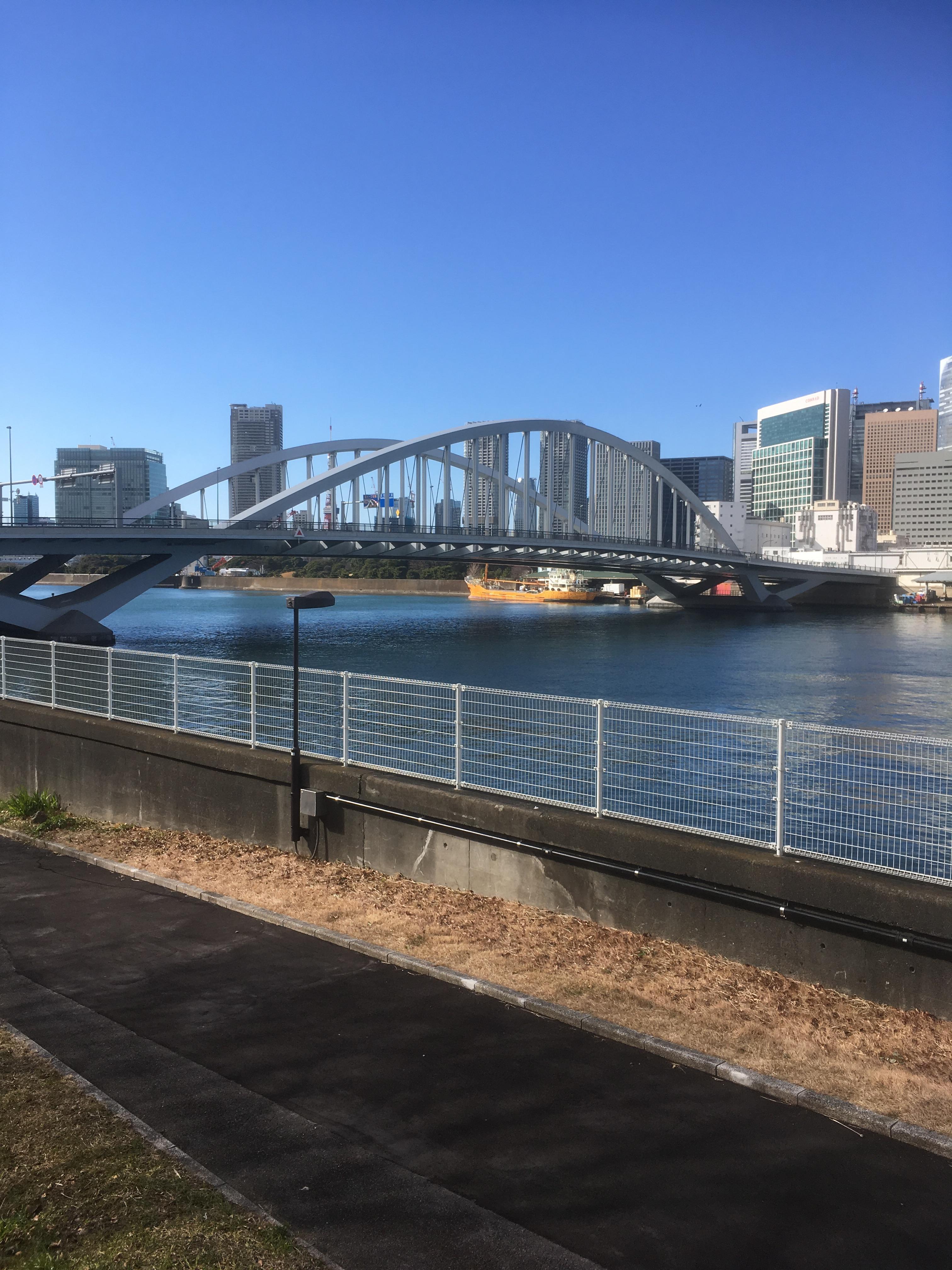
The photo on the left is Tsukiji Ohashi. Of course, the face-to-face side will be the Tsukiji market. There is no road ahead of here.
The photo on the right is Kachidokibashi. It does not open now, but it is famous as a Futaba bounce bridge. The bridge to the bottom of the Sumida River was Tsukiji Ohashi Bridge.
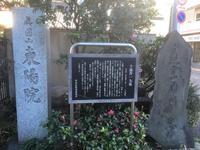
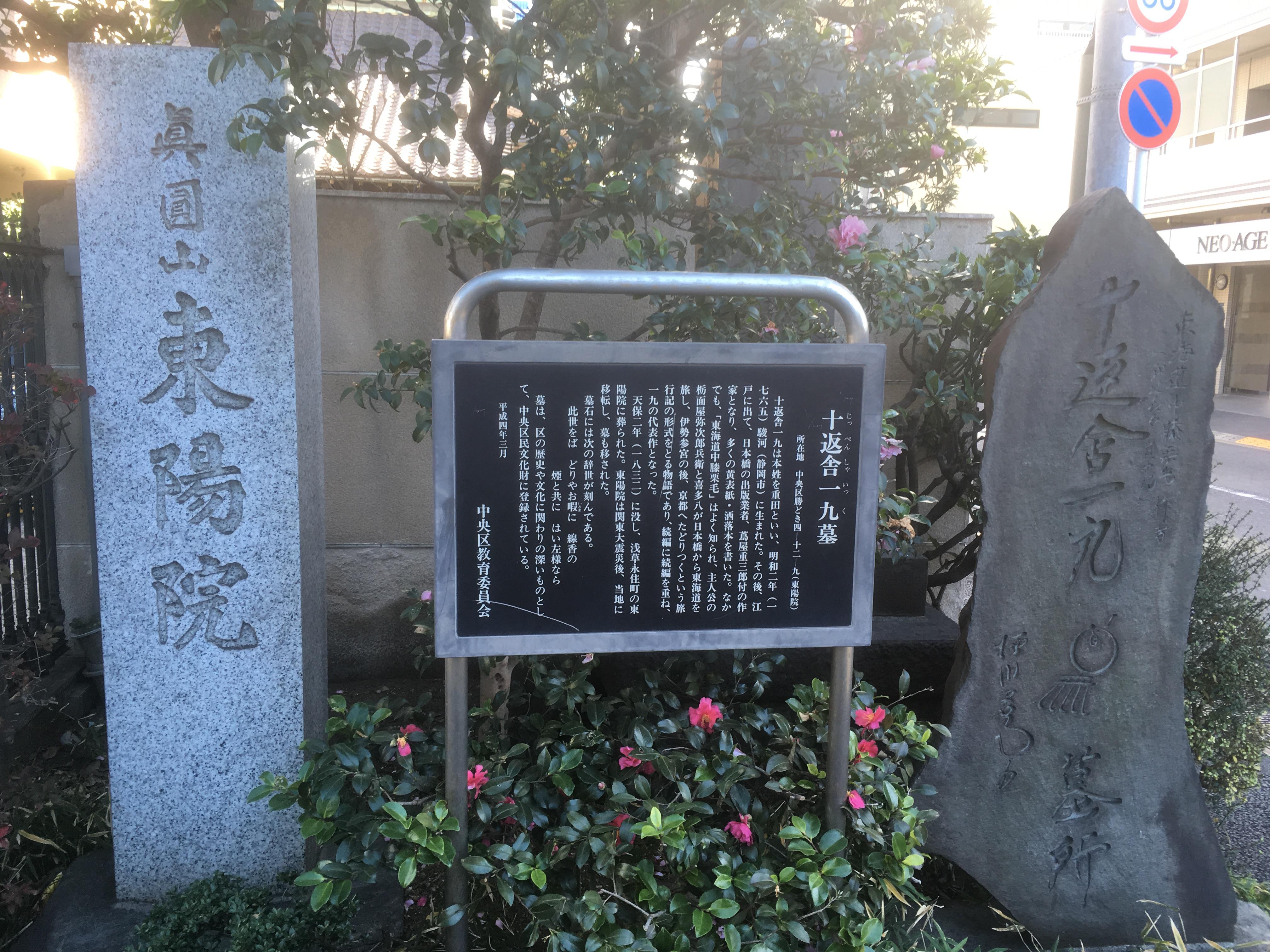
And I came by Shinensan Toyoin, where the tomb of Jippensha-Ikku, who wrote the Tokaido knee Kurige.
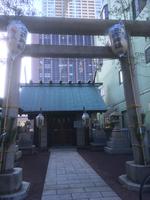 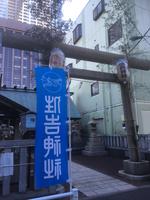
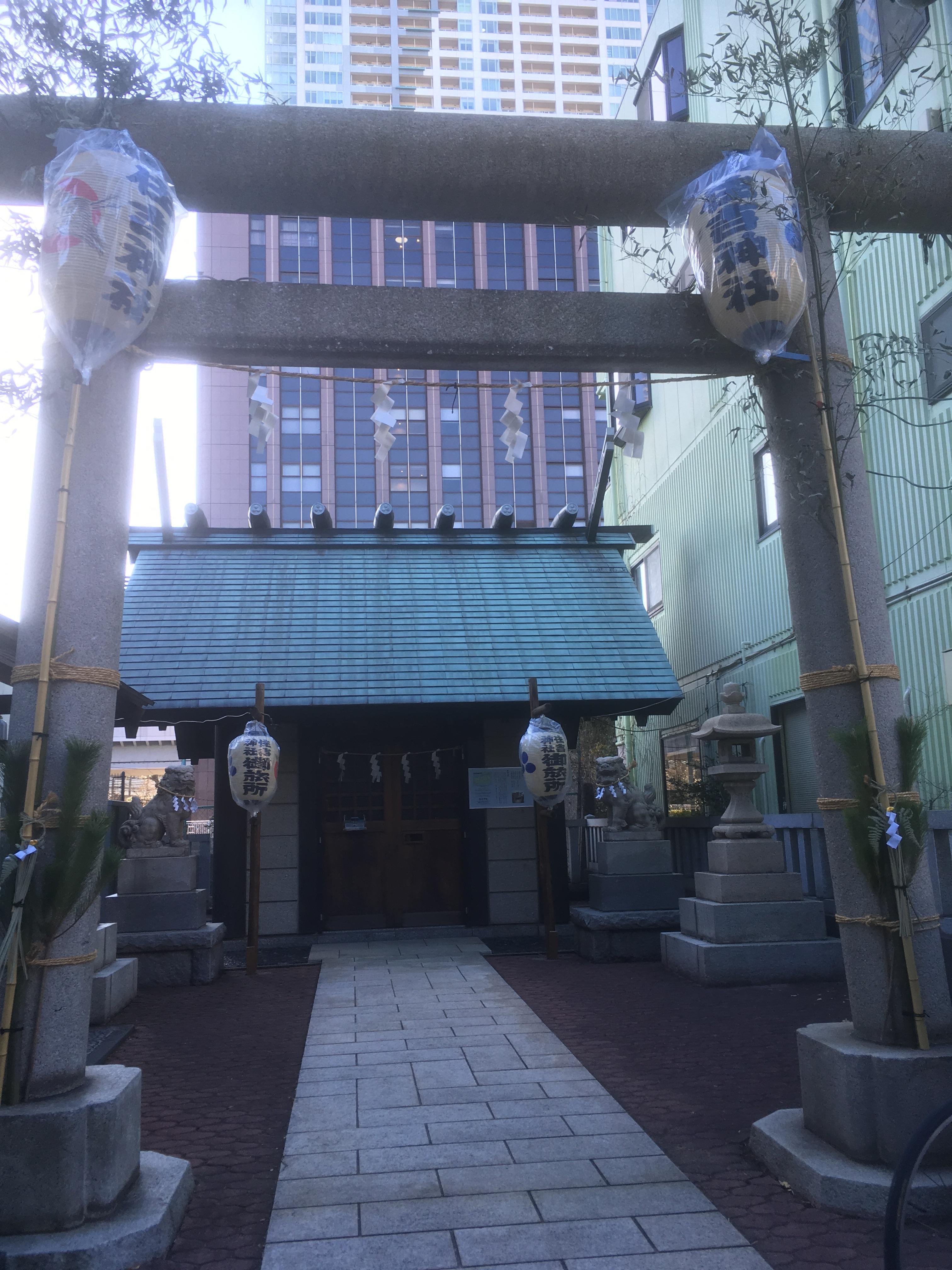
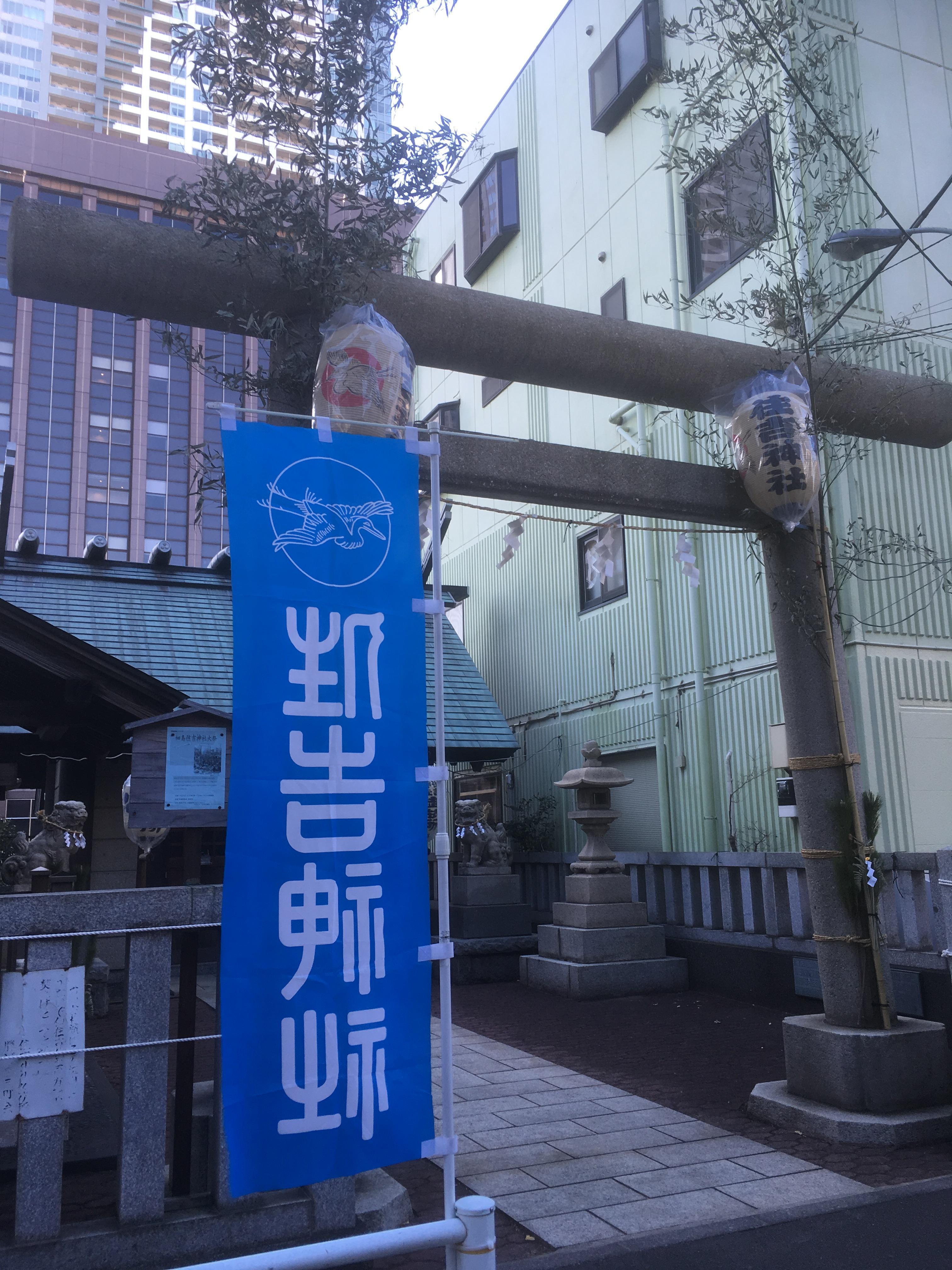
I found a building that looks like a shrine right next to Toyoin Temple. It was the resting place of portable shrines of Sumiyoshi-jinja Shirine. The Tsukishima area has been reclaimed, and with the expansion of the shrine parishioner area, an inn has been set up as a place of worship.
This walk around Harumi and Kachidoki was very interesting. Reclaiming has progressed from Tsukuda Island in the Edo period, Tsukishima and Harumi, and now the Tokyo Olympics are about to be celebrated in 2020, this area is about to change again. There are a lot of scenery that can only be seen now. Cold days continue, but I would like you to visit Harumi and Kachidoki to experience the changing cityscape and scenery with your own eyes.
[Desire purple]
18:00 on January 9, 2018
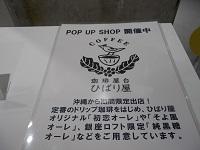 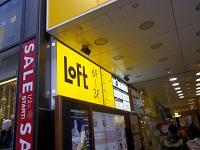
Happy New Year! This year, I would like to inform you of the delicious and fun topics of Chuo-ku. Immediately from today, I visited a limited-time coffee stall Hibariya.
Some of you may be the first to hear the name "Coffee Stand", but according to Hibariya's pamphlet, it is not a so-called coffee shop in the building, "A deep spot that is one from Kokusai Dori Street pioneering open space like a secret flower garden "and is a coffee shop open outdoors.
"Hibariya" is a popular restaurant that has almost appeared in Okinawa's gourmet guide. I also visited the shop before the relocation twice. It is a deep spot that can not be easily reached, and I remember the cafe in Saigon when I first visited in the mysterious space that seemed to have entered another world, the sun and wind of Okinawa coming in from the shade of trees, even though the immediate side is a road I remember. And a nice coffee with a little dark eye. I couldn't go last year, so I'm happy to meet you in Tokyo at the beginning of the year.
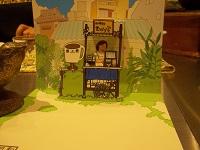 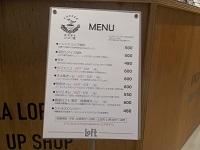
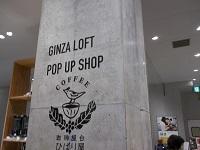 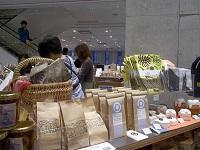
Unfortunately, it is only a counter, so you can't taste the atmosphere of the food stalls in Okinawa, but the taste of the selected coffee and the smile of Mr. Tsuji will not change. We also sell home-roasted coffee beans and sweets. Why don't you go out to Hibariya's original "Hatsukoi Ole" and "Soyokaze Ole" to feel the breeze of Okinawa? There is also a "pure brown sugar ole" limited to LOFT.
Coffee Stand Hibariya
Limited time OPEN January 6 to 24 11:30 to 20:00 on Saturdays, Sundays, and holidays (closed on 11 and 17 days)
Ginza 2-4-6 Ginza Bellavier Hall 4F
[Sam]
16:00 on January 9, 2018
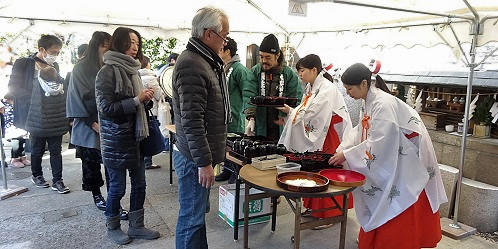 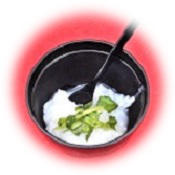 January 7 is a festival of jinjitsu. January 7 is a festival of jinjitsu.
At Tsukiji Namiki Inari Shrine, the New Year's annual "Nanakusa Shinto ritual" festival was held from 11:00, followed by "Nanakusa porridge" in the precincts.
New Year's Day 7 is the milestone of the New Year's event, and on the morning of this day, we eat seven herbs porridge containing spring herbs (Seri, Nazuna, Gokyo, Hakobera, Hotokenoza, Suzuna, Suzushiro) and wish for sound health.
Speaking of the 7th, the last day of the pine, the stomach and intestines tired of the New Year's feast are labored, and there is one aspect of nutrition supplementation in winter, which tends to be lacking in green vegetables.
Nanakusa porridge prepared by Chosei-an using rice from Shinsenden and seven herbs dedicated to Fujimoto Shoten, Tsukiji Outer Market.
The light-finished porridge is a hospitality that conveys warmth and tenderness under the cold sky with a fresh taste after a slightly darker Osechi dish followed.
|
Links
|