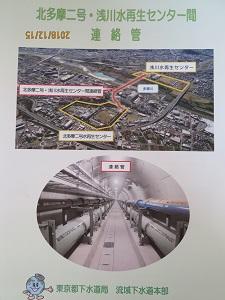
The other day, the Chuo-ku Tourism Association announced a recruitment of "Sewerage Infrastructure Tour", and I was elected, so I participated with my wife on December 14th. Meet at Tachikawa Station on the day. 21 participants and the public relations staff of the Tokyo Metropolitan Sewerage Bureau also moved by bus . Go to the Kitatama No. 2 Water Reclamation Center in Mazu Kunitachi City, go down about 11m by elevator and walk through the tunnel (about 1km) where the connecting pipe is laid, and visit
  the Asakawa Water Reclamation Center. We will attach the brochure you received at the center and a photo
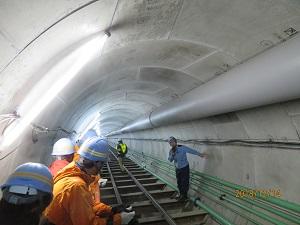
 of the tunnel on the day. It is said that the diameter is 3.5m, using machines used for subway construction and tunnel excavation.
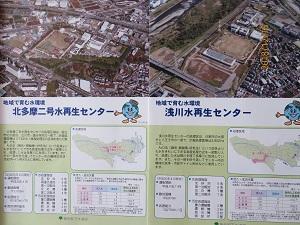
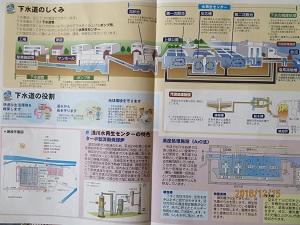
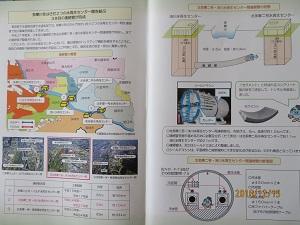
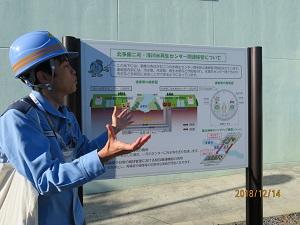
This is the director of the center who explained it.
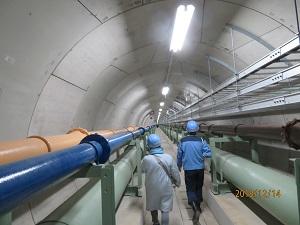
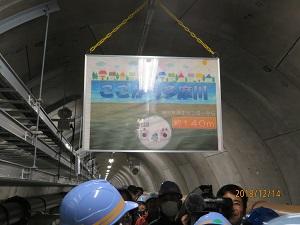
The tunnel runs under the Tama River. The pipes on the left and right sides of the tunnel connect both water regeneration centers so that sewage can be sent to each other (backup when one is damaged). We received an explanation of sewage treatment at the Asakawa Water Reclamation Center and saw the actual treatment equipment. There is no odor inside the facility, and it is confirmed that the sewage becomes clear water. It was really clean. It is then released into the river.
This is a picture of the manhole cover of sewage. The real thing is not colored, but it is represented by pink cherry blossoms, yellow ginkgo leaves, and the surrounding area is connected by a black Yurikamome. Are they all symbols of the city?
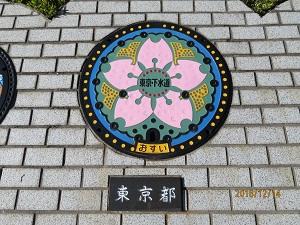
I didn't notice until now, but if you walk carefully,  you can see this manhole everywhere.
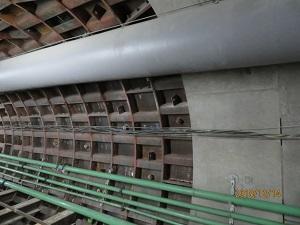
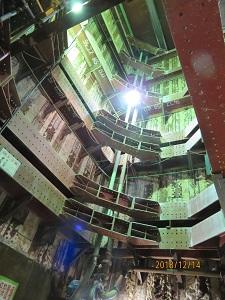
After that, we moved by bus and observed the construction of a huge reservoir currently under construction. "No. 2 Tagara River Trunk Line Part 2". Walk 18m and see a huge tunnel under construction. It seems that rainwater is stored here during heavy rain to prevent flooding of houses. 40,000 cubic rice (how many cups of 25m pool?) It is said that there is a storage capacity. Take a look at this photo too. The concrete segment and the steel segment are used differently, and the curves and other parts are made of steel and then finished with concrete. Drilling work is underway at the end of this tunnel. The rails are for trolleys that carry out excavated earth and sand.
Both the Water Reclamation Center and the Tagara River Trunk Line are major civil engineering works. However, it is easy to study if you visit facilities for sewage treatment and flood control that are not very familiar in this way. I was talking about the participants, but it was an "adult social studies tour". If you have the opportunity, I hope you will join us once. The next time is January 12, but the number of applications seems to be quadrupling. This time it was twice.