List of Authors
>>About this blog
Recent blog posts
|
[Blowing of Koi in Satsuki]
14:00 on March 10, 2016
I had the opportunity to participate in a panel discussion and it was interesting.
This time, I will post the contents of that time.
The panelist
Mr. Takatsu, President and CEO of Ninben Co., Ltd.
Mr. Nishikawa, President & CEO, Nishikawa Sangyo Co., Ltd.
Mr. Yamamoto, President and CEO of Yamamoto-noriten Co., Ltd.
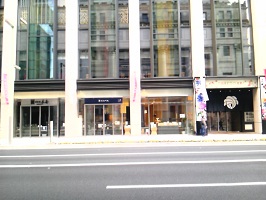
Ninben Co., Ltd.
Founded in 1699 1699
As you know, bonito is a Japanese food that uses mold, but its purpose seems to differ in Osaka and Edo in the first place.
For the purpose of preventing malignant mold in Osaka, molding was performed only once. --> Arabushi
It was made with mold several times for the purpose of making Edo delicious and good quality.
The difference in the purpose of molding influenced the culture of the east and west taste.
They struggled to deal with molds that occur when transporting katsuobushi from the main areas of bonito, Tosa and Satsuma.
It seems that he came up with a method to prevent malignant mold by producing excellent mold on the surface.
Bonitobushi gathered in Osaka were transported by boat to Edo, but depending on the weather, it took about a month.
There was still a lot of water and mold during transportation. In addition, each mold occurs while it is stored in Edo
The Edo wholesaler noticed that during this repetition, bonito flakes became good quality.
By saying that, it is exactly the same as "to poison with poison".
There are Arabushi, Satsumabushi, etc., but please visit the website.
The process of moulding was repeated while removing moisture by adding mold to the rough section.
It is said that it is the main verse, the dead verse, and the dead verse.
This section was molded around No. 3.
Molded with 4th or higher of Honzekibushi
In the Kanto region, honbushi and honkaibushi are called katsuobushi.
(It is said that Japanese food is preferred worldwide, but in the EU, import of molded foods is prohibited, but bonito is OK with the exception.)
Consumption has decreased for a while, but it is still on the table due to the development of products such as "Fresh Pack".
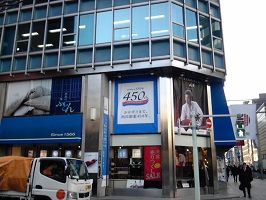
Nishikawa Sangyo Co., Ltd.
Bedding was after the Meiji period. Support quality sleep for athletes now->Improved performance
Promotion of Health->We are aiming to reduce medical expenses
Founded in 1566
There are many management crises, going back to history.
The Summer Camp of Osaka 1615 Okitsugu Tanuma Economic Growth Policy 1767-1786 Tenmei Famine 1782-1788
I think it's a big one.
It was originally a mosquito net.
It is said that the cost of dyeing this mosquito net green and making it feel cool, but it was sold.
This episode of the birth of the Oomi mosquito net is said to have been handed down in several historical materials.
Yamamoto-noriten Co., Ltd.
Founded in 1849 1849
The amount consumed at home is decreasing (breakfast changes from rice to bread), but the consumption of Japan as a whole has not changed. (Increase in demand for convenience store rice balls)
Yoko Yamamoto "The longest contract year in the world" has been certified as a Guinness Record.
In fact, Shima Iwashita, who has been a commercial character for Menard Cosmetics for many years, was certified as Guinness.
Mr. Nori Yamamoto also knew, and when he looked at the company's history, it was found that Yoko Yamamoto's contract history exceeded. It means that you have applied for Guinness and have been certified.
As a product development related to seaweed
The same-looking seaweed is classified into eight types.
Seasoned laver
Overseas Expansion and Internet Sales
Snacks with wasabi and plums
I think there's something.
[Blowing of Koi in Satsuki]
16:00 on February 23, 2016
There are rows of cherry blossom trees along the Sumida River and blooms as expected around the end of March.
This cherry tree blooms early every year. It blooms approximately one or two weeks early.
This year, 2/13 2/14 recorded temperatures above 20 degrees.
It seems to be faster than usual, probably because there were many warm days.
・
 ・ ・
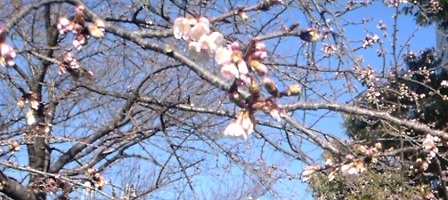 ・ 2/17 Photography ・ 2/17 Photography
・
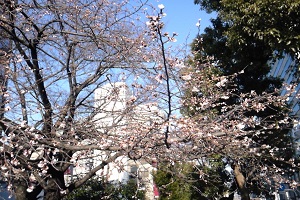 ・ 2/19 Photography ・ 2/19 Photography
・
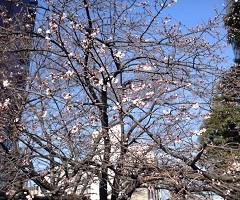 ・ 2/19 Photography ・ 2/19 Photography
・
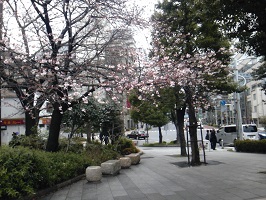 ・ 2/22 shooting ・ 2/22 shooting
・
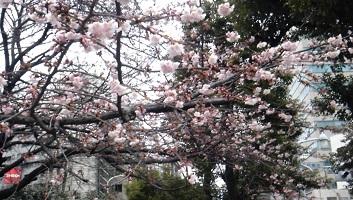 ・ 2/22 shooting ・ 2/22 shooting
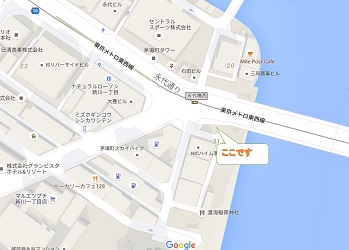
The place is on the lower side of Eitai Bridge Nishikawa. Please refer to the map.
If you want to see the cherry blossoms early, please come here.
It will be scattered in mid-March.
・
・
By the way, there is Sakura Anpan of Ginza Kimuraya, a well-known thing for cherry blossoms.
The other day, I experienced making this cherry blossom anpan. This is the first such event.
Even if you say "Sakura Anpan", the dough and bean are already divided into one piece.
The main content of the experience is to wrap an bean with dough and put salted cherry blossoms.
I couldn't do it easily, but I was instructed and somehow shaped.
I've got a delicious bean jam.
The dough is made from sake yeast, not yeast, and has a scent similar to sake lees.
I did it. Azuki beans are carefully selected from the Tokachi area of Hokkaido.
It's an elegant taste.
・
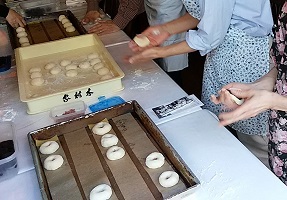
There was a factory in Kimuraya in Ginza, and it was baked in about 2 hours.
This is Kimuraya's factory, but about 50 years ago Tsukiji (now the side of Tsukiji River Park)
I remember that there was a factory.
I missed my childhood and remembered it.
[Blowing of Koi in Satsuki]
16:00 on January 26, 2016
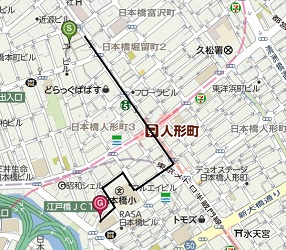
Ningyocho Course _1
1.. Sugimori-jinja Shrine → 2. Saigo Takamori House Ruins (Nihonbashi Elementary School) → 3.Koami-jinja Shrine
1.Sugimori-jinja Shrine Ebisu-jinja Shrine, Nihonbashi Shichifukujin
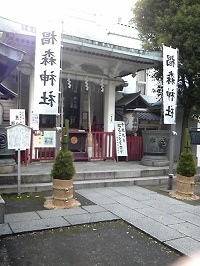 ・ ・
Sugimori Shrine is located in Nihonbashi Horidome-cho, Chuo-ku.
In the Edo period, it was counted as one of the Mimori (Kasumori-jinja Shrine, Yanagimori-jinja Shrine, Sugimori-jinja Shrine) under Edo Castle.
It is said that the religion of the Edo people was gathered and the lottery fortune boxing was also held.
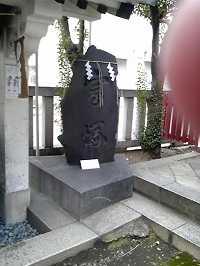
There is Tomizuka here, which was erected in 1920, but it did not collapse during the Great Kanto Earthquake.
After that, Tomizuka was rebuilt in November 1953.
It is said that this Tomizuka is unparalleled and is the only thing in Japan.
The lottery that appeared in the wealth of a rakugo inn was held.
I thought this was Sugimori Shrine, but unfortunately it was Yushima Tenjin.
However, the inn is said to be Bakurocho.
It is a shrimp sord of wealth in Rakugo inn. A storyteller
This fall of the inn's wealth should be said, "Customers sleep while wearing sandals."
I remembered that I had mistakenly said, "I'm sleeping with my sandals."
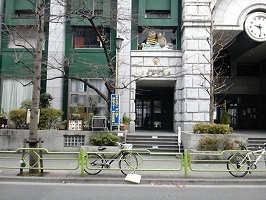 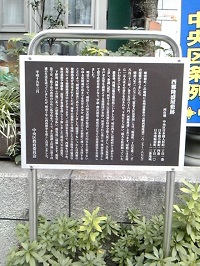
2. Saigo Takamori House Ruins (Nihonbashi Elementary School)
Around the present Nihonbashi Elementary School, this is the place where the residence of Saigo Takamori was located.
The photo of Saigo Takamori in history textbooks is unreliable
It seems to have been questioned in recent years.
There is a strong theory that the upper half of the photo is my brother Tsugumichi Saigo, and the lower half is my cousin Iwao Oyama.
I leave Chuo-ku, but there is a story that the statue of Saigo Takamori in Ueno is not similar.
This was my wife, Saigo, who was present at the unveiling ceremony, said, "Our man is a child."
There is an episode that shocked the people involved.
However, it seems that it is not clear what is not similar or what is not similar.
In addition, I kept my favorite Satsuma dog, and the name of the female dog was "Tsun".
It is said that he was dead at the time of making the statue, so it was created using a male dog as a model.
In addition, the actual Satsuma dog seems to be smaller than the statue.
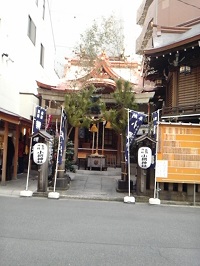 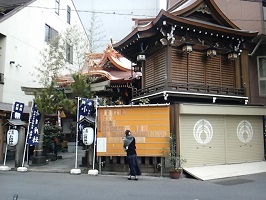
3.Koami-jinja Shrine
The restoration work was completed and the roof was beautifully laid. I took this picture on New Year's Eve.
There was no stopping those who came to visit this day.
[Blowing of Koi in Satsuki]
14:00 on December 23, 2015
From Suitengu to the Sumida River, you will find the Metropolitan Expressway Hakozaki Junction.
・

In this junction, the No. 6 Mukojima Line, No. 7 Komatsugawa Line, and No. 9 Fukagawa Line join together.
It is also one of the key points on the Metropolitan Expressway where Rotary is located.
・

There are temporary stops and traffic lights at confluences from rotories and tollgates.
Please be careful when you pass through here.
It is also a place where it is easy to get lost in the direction to go.
You can also make a U-turn on the Metropolitan Expressway if you make good use of this rotary.
(The directions are posted on the website.)
Looking up at this junction from the bottom, as you can see, the roads are concentrated and overlapping many layers.
・
 
・

・

・
There is Tokyo City Air Terminal under this Hakozaki Junction.
Just as many Metropolitan Expressways were built with reclaimed rivers,
Again, the river was reclaimed and completed in 1972 (Showa 47).
・
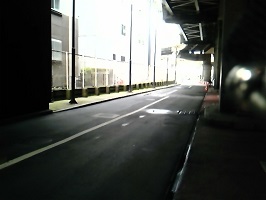 ・ ・
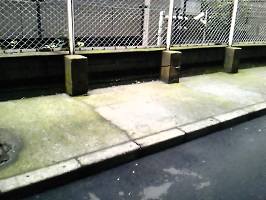 ・ ・
If you look at this photo, you can guess that it was once a river.
[Blowing of Koi in Satsuki]
09:00 on November 24, 2015
Suitengu Shrine is familiar with praying for safe delivery. From March 2013, we have been relocated near Meijiza Hamacho for rebuilding work.
・

・
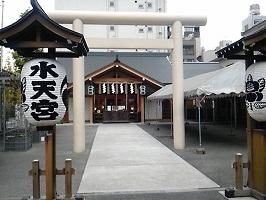
・November, 2015
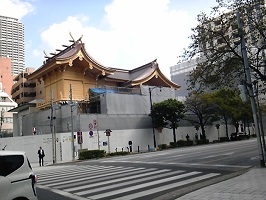
This under construction is now, a part of the scaffold was removed and a beautiful appearance was seen.
This photo was taken in October, but I think the scaffolding was removed in September. This is the same as in November.
New shrine hall is scheduled to be completed in the spring of 2016.
From the present (November 20, 2015), passing through amazake Yokocho and heading toward Nihonbashi River, you will find Koami Shrine.
One of the "Nihonbashi Seven Lucky Gods" offers the benefits of good luck and raising money. It’s also under repair right now.
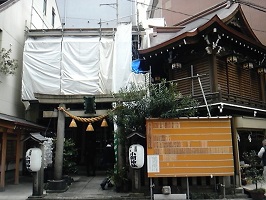
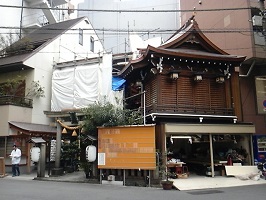
During the construction period, I could worship as usual, and when I took a picture, there were people who came to visit.
It is scheduled to be completed in November, so it may be done when this blog is uploaded.
[Blowing of Koi in Satsuki]
12:00 on October 27, 2015
Introduction of walking course
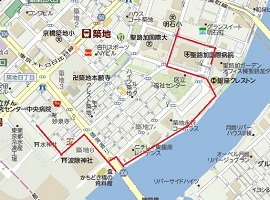
St Luke's Garden, Henry Falls Stone Monument, Tsukiji Catholic Church, Sumida River Terrace, Kachidokibashi, Namiki Shrine, Tsukiji Outer Market
The characteristics of this course are the first half and the second half, and the state of the town changes dramatically.
The first half is a calm and quiet environment from the vicinity of Akashicho to the Sumida River Terrace. In the second half, when I came to Kachidokibashi and Harumi-dori St., I changed my mind.
The traffic of cars and people increases, and you can feel the busyness of Tsukiji Market.
St Luke's Garden
I remember that there used to be a dormitory for nurses or nursing college students.
For a while after completion, there was a free observation room on the high floor and I could see it far away.
It is now closed. The night view was especially beautiful and free, but it was a shame.
Henry Falls Stone
Henry Falls conducted a fingerprint study here and published it in a scientific journal.
Since then, this research has been useful in criminal investigations and crime prevention.
In addition, we conducted medical activities, but Akashicho was a foreign settlement.
We opened a clinic in Minami-Odawara-cho (I think it's around 6.7 Tsukiji now).
This "Odawara-cho" has a "Odawara-cho police box" located at Tsukiji 6-chome Harumi-dori St., and the name of the town at that time.
You can know it.
Tsukiji Catholic Church
There was once a kindergarten in this church and it was named Josef Kindergarten.
Actually, I was a graduate of Josef kindergarten, and I called this church a temple.
I still remember that the stained glass on the front is beautiful. (I don't remember what it was.)
It is said that the name of Mido of Tsukiji Catholic Church is "St. Joseph".
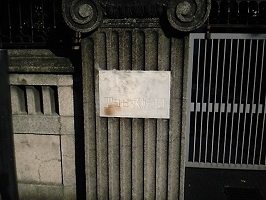
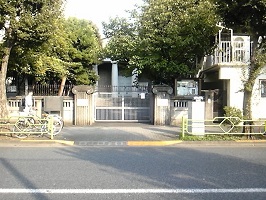
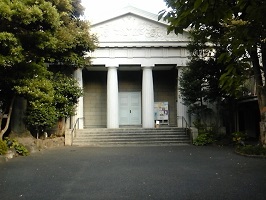
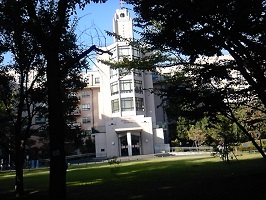
St. Luke's International Hospital
The current St. Luke International Hospital was completed in 1992, but the symbolic center of the old hospital was preserved.
Inside is a chapel, and flies and rats are drawn on the tiles on the floor.
I was wondering, but it seems that you can trampl on these unsanitary things that transmit infectious diseases with your feet.
Sumida River Terrace
The Sumida River embankment was formerly called razor dike and was separated from the river. However, at that time
(Before 1970), the smelly water was black and dirty, so I didn't want to approach it.
Now I recommend it for a walk to introduce it here. I think it's some kind of drama.
Photography is also taking place.
I think it was until around 1970, but the company of the Sumida River water bus was behind Mr. Jisaku and the boat was moored.
The names of the ships were "Urashima Maru, Ryugu Maru, Otohime Maru" named after Urashima Taro.
Kachidokibashi - Outer Market
From the Sumida River Terrace to Kachidokibashi and Harumi-dori St., it is full of vitality as if you came to another town.
As you know, the outside market from Namiki Shrine is not only Japanese but also overseas customers.
I enjoy shopping and eating.
|
Links
|