List of Authors
>>About this blog
Recent blog posts
|
[Sam]
18:00 on November 14, 2016
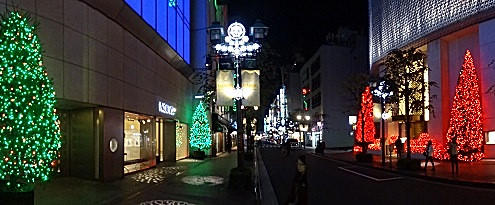
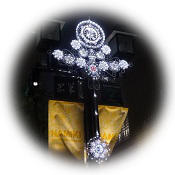 On November 11, at Ginza Nishi Namiki-dori St. (Ginza 5-chome to 8-chome), the year-end annual "GINZA NISHI NAMIKIDORI ILLUMINATION 2016 Namiki and Timeless illumination-" started. On November 11, at Ginza Nishi Namiki-dori St. (Ginza 5-chome to 8-chome), the year-end annual "GINZA NISHI NAMIKIDORI ILLUMINATION 2016 Namiki and Timeless illumination-" started.
Exhibition Period: From November 11 to January 15, 2017 16:30 to 24:00
This year, LED lighting objects with the motif of Linden, a street tree, are arranged on street lights (ashira), and a symbol design on the road surface by a gobo projector, etc. are also set up.
For planting the Shiseido Ginza Building (Ginza 7), the Shiseido Head Office building uses 38,000 red LED bulbs in corporate color, under the theme of "Glittle Rouge", a dynamic "Shiseido Winter Illumination" with a total length of 45m is lit from November 11 to December 29.
Two trees (tree species: Rei Randy) standing at the entrance of the main French restaurant "Roogie" with a light bulb blinking to imitate Shiseido's initial "S" The program is applied to create a light rhythm.
In front of the Noevia Ginza Building, opposite across the street, two trees are colored with green-based illuminations.
Ahead of the year, which is crowded with many people, it is wrapped in a glittering atmosphere.
[Sam]
12:00 on November 13, 2016
 
On November 10th, two types of "2016 Christmas Limited Lighting", "Champagne Tree", which looks like Tokyo Skytree as the world's tallest Christmas tree, and "Candle Tree", which looks like candles, started.
Lighting date: November 10 to December 25, 16:30 to 22:00
*From 22:00 to 24:00, smart or elegant lighting is turned on.
*Excluding November 12 and November 20 to 24
On November 10th, the first day, from 16:45 to 17:58, "Iki" lighting is lighted, and from 18:00 to 22:00 after the Christmas lighting ceremony, the lighting of "Champagne Tree" is lighted.
The Tokyo Skytree, inspired by a fir tree, is colored with champagne gold light and colorful intersection lighting.
From 22:00 to 24:00, the lighting of "smart" again.
Light blue light, which is said to have been based on the water of the Sumida River, illuminates the pillar that pierces the tower with a light blue light.
From Chuo-ohashi Bridge to Eitai Bridge, you can enjoy the lighting unique to this season that shines in the night sky again this year.
[Sam]
18:00 on November 12, 2016
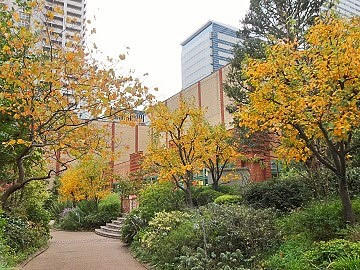 Harumi Triton Plaza 2F "i green Pocket Plaza Flowers, Water and Trees" is a monthly mini garden guide tour where you can stroll around the park under the guidance of the exclusive gardener. Harumi Triton Plaza 2F "i green Pocket Plaza Flowers, Water and Trees" is a monthly mini garden guide tour where you can stroll around the park under the guidance of the exclusive gardener.
This month was held on November 10th.
According to the calendar, the winter is rising on November 7, and the autumn color is finally getting deeper.
This time, pay attention to the so-called "real thing".
At the "Green Garden", Yurino Hana, U.S. Hanazou, U.S. Seifriboku, etc. are yellowing and are at their best.
Autumn leaves such as hazeki and natsuta also add color.
At the "Flower Garden", at this time, Lurimatsuri Modoki, Winter Cosmos, Prectoranças, Salvia Leucansa, Crerodendron, Gyoryubai, etc. are blooming in the "Green Garden", Nerine (also known as Diamond Lily), winter blooming sardon "Sappou" and so on.
As a "real thing", the edible Roselle species of hibiscus in the slope garden along the Asashio Canal are unique.
Raw material for beautiful ruby herb tea with sour taste.
In addition, you can enjoy "real things" such as kinkan, sarkakokka, Himeichigonoki, soyogo, mandarin orange, shishiyuzu, Himeringo, etc.
From left to right, Lulimatsuri Modoki, Winter Cosmos, Prectorantus, Diamond Lily, Seyeonard "Suffo"
    
From left, hibiscus, Salkakokka, Himeichigonoki, Mikan, Shishiyuzu
    
[Sam]
12:00 on November 12, 2016
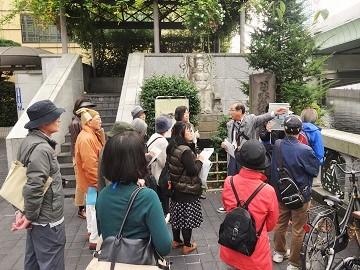 "Autumn Cultural Properties Tour" hosted by the Chuo-ku Board of Education, which tours cultural assets such as historical heritage inside and outside the city by bus and foot. "Autumn Cultural Properties Tour" hosted by the Chuo-ku Board of Education, which tours cultural assets such as historical heritage inside and outside the city by bus and foot.
This year, on October 29 and November 5, Mr. Shinichiro Iwakiri was invited as a lecturer, and the event was held entitled "About printing culture from Edo and Meiji to Showa."
Visit the land related to the printing culture from the Edo and Meiji eras to the modern era, and learn about its transition.
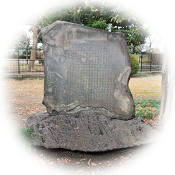 On the day of the trip, On the day of the trip,
① Nihonbashi area (Otohime no Hiroba - Waterfall Plaza - Flower Plaza
- The original square - Edo Sakura-dori St. <Surugacho> - Money Museum
- Joban Hashikado Site - Ichiishibashi - A place related to Yumeji and Minatoya -
Nipponbashinishi Riverside Jizo-ji Temple Church
② Ningyocho neighborhood (Sugimori-jinja Shrine - Sakaimachi, Fukiya-cho theater site)
Genji Store Ruins: Sanko Inari-jinja Shrine
③ Mukaijima Sankei-jinja Shrine in Sumida Ward (Kuniyoshi Utagawa Honoring Monument)
④ Suido, Bunkyo-ku Printing Museum (special exhibition "Samurai and Printing")
First of all, there are many publishers such as Jimoto wholesalers and woodblockers living in the vicinity of the past, and stroll through the Nihonbashi area, which was also the center of culture along with the economy and finance. In line with the theme, listen to episodes of Okura Shoten (published by Soseki Natsume "I am a Cat") located at the corner of Nihonbashi 1-chome <Nishikawagishicho>, and at the currency museum, the feudal clan bill of the Edo period It was a city with a slightly different perspective, such as re-recognizing the technique of "watermark" that partially thinned fibers, printing foreign characters that are difficult to distinguish, managing multiple prints, using special colors, etc. It was a city with a slightly different perspective.
Continue to stroll through the Ningyocho area around Genji store, where Kuniyoshi Utagawa, a representative of Ukiyo-e artists in the late Edo period, was once inhabited.
From the afternoon, first visit the Kuniyoshi Utagawa Honoring Monument in Mukojima, Sumida Ward, which was erected by disciples in 1873, the 13th anniversary of Kuniyoshi, and then the last visit destination, Kuniyoshi's warrior paintings, is also exhibited. To the "Printing Museum" in Suido, Bunkyo-ku.
Currently, special exhibition "Samurai and Printing" is being held.
This exhibition introduces the two aspects of samurai through contrasting printed materials, based on the fact that this samurai was involved in intellectual publishing such as maps and translations, while Ukiyo-e depicting brave samurai appeared in the Edo period.
In addition to a collection of about 150 works centered on warrior paintings by Kuniyoshi Utagawa, about 160 publications compiled by about 70 samurai are also on display.
Printing technology is also supported, one of which is printed. Ieyasu Tokugawa, who was particularly enthusiastic, made a copper type (Suruga version copper type), which is partly existing and is designated as an important cultural property.
On a refreshing autumn day, I was able to experience a new part of the history and culture of Chuo-ku through a tour of cultural properties.
[Sam]
12:00 on November 8, 2016
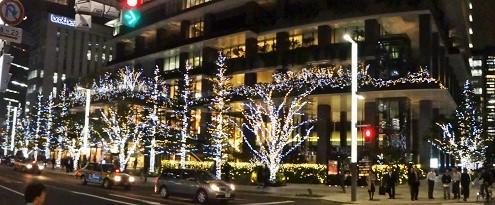
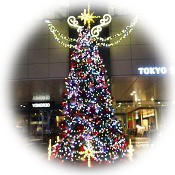
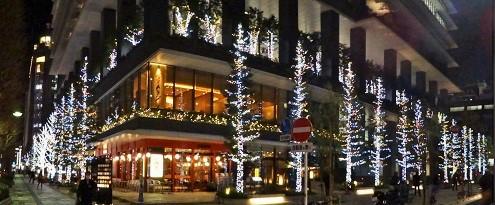
Tokyo Square Garden (Kyobashi 3) is celebrating its 4th anniversary this year.
At the forefront of the area, the annual "Winter Illumination 2016" started on November 1.
It is now one of the most famous landmarks in the Kyobashi area. I'm coloring the city with the top class scale feeling in the neighborhood.
Exhibition Period: From November 1 to February 28, 2017 16:00 to 24:00
Approximately 170,000 white & champagne gold LED bulbs set up in the multi-tatated greening space (Kyobashi Hill) surrounding the B1F subway Kyobashi Station Square, street trees, and the building's first to third floors create a high-quality space with a three-dimensional volume.
This year, the Christmas tree at Kyobashi Station Square is decorated with flowers and LEDs based on red and pink, giving a sparkling glow.
The display of the symbol tree is until December 25.
[Sam]
12:00 on November 2, 2016
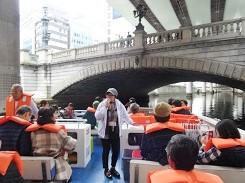 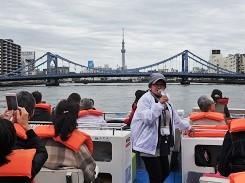
 On October 22, 23, 29, 30, and 31, "Nihonbashi and Fukagawa" Water City Resurrection Festival "was held in the Nihonbashi and Fukagawa areas. On October 22, 23, 29, 30, and 31, "Nihonbashi and Fukagawa" Water City Resurrection Festival "was held in the Nihonbashi and Fukagawa areas.
During the Edo period, when water transportation was thriving, the "Water Road" that connected both the commercial center Nihonbashi and the Fukagawa area, which represents downtown, was re-examined, and the appeal of both areas was re-examined.
The event will be hosted by the Nihonbashi Kitazume Store Association and Muromachi Odori Association in Chuo-ku, the Morishita Shopping Street Promotion Association in Koto-ku, the Takahashi Shopping Street Promotion Association, the Takahashi Shopping Street Takamori Association, and the Fukagawa Museum Street Shopping Association. I heard that this is part of the efforts of the Tokyo Shopping Street Promotion Association's wide-area support shopping district business.
On the 23rd and 29th, a cruising event "Ofunai Mizukami Line" was held to experience the "Water Road" of the Edo period in Nihonbashi and Fukagawa.
Water transportation between Nihonbashi and Fukagawa, which once contributed greatly to the transportation of various goods related to clothing, food, and housing, and was bustling.
This time, the boarding experience takes about 30 minutes from the Nihonbashi dock to the Takahashi boarding point via the Nihonbashi River, Sumida River, and Onagi River.
As the times have progressed, goods have become land transportation, landfilled, covered with expressways, buildings have turned their backs on the river, and while looking at the scenery far from the bustle and remnants of the past, you can see the remnants everywhere. You can get a glimpse.
This is a cruise that reminds you of the former "water road" with the guidance of a creepy tempo river guide.
|
Links
|