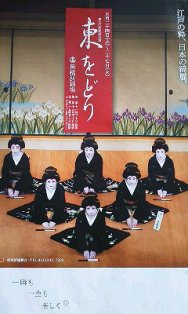
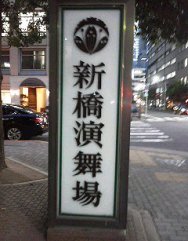
The annual "East Dance" by Shimbashi Geishas was held at Shimbashi Enbujo from May 24 to 27.
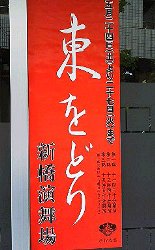
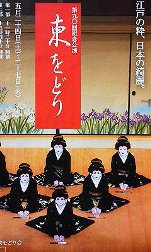
The first performance was held in 1925 at Shimbashi Enbujo, which was originally built as a place to show the improvement of Shimbashi Geisha's arts, even though there are restaurants, guards, and okiya around Ginza and Tsukiji.
Then, counting, this year will be the 90th anniversary performance, so I came to see it after a long absence.
First of all, when you enter the entrance of the theater, the Japanese lantern of "East Dance" is gorgeously decorated in front of you.
In the lobby, kimonos are more noticeable than usual, and the ryotei ladies are greeting here and there.
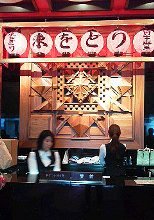
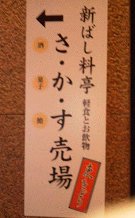
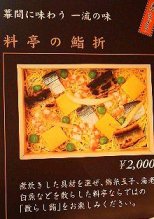
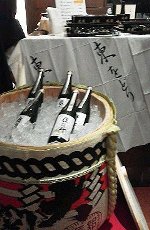
In the back of the left hand, there is a special corner of "Saka Su (Sake, Confectionery, Sushi) Sales Office", where drinks and sweets limited to the east, lunch boxes with different seasoning at each restaurant are sold. You.
The shop in front of the escalator on the opposite side also sells limited sweets and goods.
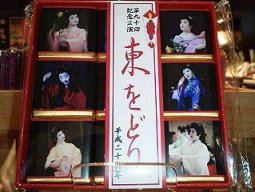
Just in the size of the CD, there was chocolate in a package with photos of the geisha people printed.
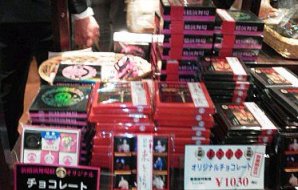
If you go up to the second floor, you will also find a corner for selling 1,000 shrines, fans, etc. with the name of the geisha people, selling sake masu, and selling Don Perignon glasses.
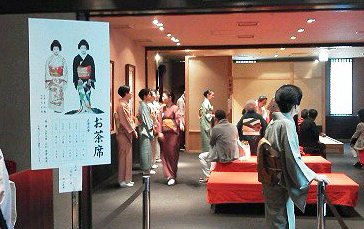
The place that is usually a dining room is a tea ceremony.
While I was watching here and there, the buzzer rang five minutes before the show started, so I rush to the audience for the time being.
"Omotenashi" has become a buzzword in the presentation of the Tokyo Olympics.
It is a tradition of Japanese hospitality that has been reviewed in various places, but it can be said to be the ultimate in Hanayanagi world.
Even so, the audience seats are full because you can enjoy the atmosphere of the top class Shimbashi Hanayanagi world.
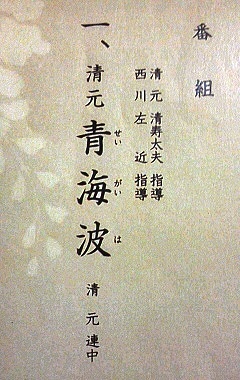
First of all, as soon as the curtain opens, the luster of the sigh spreads out in the hall.
Five veteran geisha people dance "Aominami" at a high level, but Kiyoharu and the local people of the shamisen are, of course, geisha people.
Take a break for 30 minutes if the curtain goes down.
That said, I can't relax.
After all, this theater is regarded as a restaurant, and various tastes are elaborated so that you can enjoy it during a break.
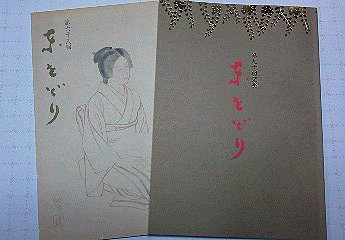 Then go to the shop and buy the program.
In commemoration of the 90th anniversary, the gold ground has the title "East Dance" in vermilion, and the wisteria flowers are stamped with gold on the top.
The stylishness that does not become gorgeous and is luxurious in casual places is a design that feels like "Shimbashi".
By the way, the cover of the 68th edition is a legendary Meiko Mari Chiyo statue by Meiji Hashimoto.
In addition, the title "East Odori" is based on the master of the predecessors of the restaurant "Kanada Naka".
And the letter "East Dance" on the red villa stuck in the city seems to be from the previous master of "Kanadanaka".
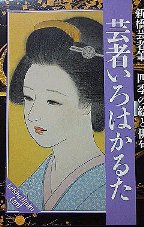
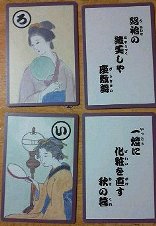
And what I found at the shop was "Geisha Karuta" in which both picture cards and bills were in the hands of Shimbashi Geisha people.
It has a very atmosphere and is rarely available, so I bought it immediately.
At the goods store, there was a geisha wearing a wig in costume, and they were casually answering your request for a commemorative photo.
At the tea ceremony, you can enjoy Oshira and Toraya sweets while looking at the front of the formal geisha, but this was a long line waiting in line.
There are many other corners, but while doing so, it will be time for the next curtain in no time.
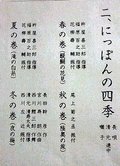 The second act is "Nippon's Four Seasons" divided into four scenes.
In "Daigo no Hanami" in spring, he appeared not as a geisha but as Hideyoshi, Kita no seido, Yodogimi, Chihime.
In the summer "Waterfall Shiraito", stunning water arts are performed using real water.
Autumn is entitled "Tour of Mutsu", and it is a group dance of folk song such as Mount Bandai in Aizu with a feeling of Tohoku.
Two veterans dance moistly under the theme of the famous "Love of Fujijuro" in the winter "Night Ume".
And finally, it’s the long-awaited finale!
On the dark stage, only the sound of drums and gongs resonates.
Oh, yet? By the time I thought, I finally got into the stage and changed to great hall, a restaurant.
In the middle, there is a Tobi's head, and there are geishas in costumes coming out on the left and right.
So-odori begins with a lively song called Sawagi, which is often used in the scene of Yoshiwara in Kabuki.
I've heard that some people say, "I've become a Shimbashi geisha because I want to go out here," but no matter how many times I see it, it's so beautiful that I'm in love with it.
If you can see it at a glance, on the stage, geisha people who have spread to the flower path will throw the Yaora hand towel toward the audience seats.
In the audience, it was a fuss to remove the towel.
On the 2nd and 3rd floors, there is plenty of opportunity because stakeholders are scattered around.
At the time, the sister, who becomes the "core" of the day, hits the stage with tons and feet, and the song and dance begins again.
・The lyrics of the east is the dance of Japan, and finally the dance of the world is the dance of the world.
As soon as it was over, there were voices from the audience saying, "Oh, it was beautiful!" and "Oh, it was wonderful!"
 For those who want to know more about Shimbashi Hanayanagikai, we recommend a book called "Qualification of Meiko-Shosho / Shimbashi Night Story" (published by Yuzankaku in 2007).