We participated in the "Takashimaya Nihonbashi Store Important Cultural Properties Tour" and guided us to the highlights. It was Mr. Kotani of the concierge who guided me.
The store (Sadataro Takahashi) built in 1933 was expanded from 27 to 1940 (Togo Murano) while inheriting the original design, and it is highly completed as an integral architectural work and represents department store architecture. It is a building designated as a national important cultural property in 2009.
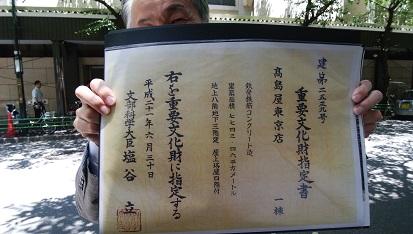
Last year (2016), Nihonbashi Mitsukoshi was also designated as a national important cultural property, but the reason for this designation is that it is "high value as a symbol of the development of department store architecture in Japan", and Takashimaya Nihonbashi store is a slightly different nuance from the purely valued building.
So, what are the characteristics of the Takashimaya Nihonbashi store?
Sadataro Takahashi's plan was awarded the first prize in a design competition based on the concept of "modern architecture based on Oriental hobbies".
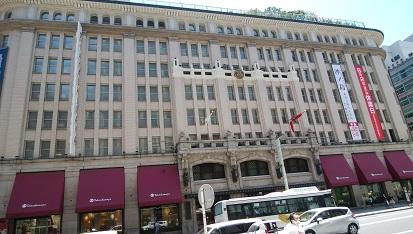
As you all know, the 1st and 2nd floors (red tent part) are granite, and the 3rd and 7th floors are Western-style buildings with tile tiles. It is easy to think that tiles are vulnerable to earthquakes, etc., but the pain of tiles during the Great East Japan Earthquake was less than 2%, reminiscent of the polite construction at that time.
And "Oriental Hobbies" can be seen everywhere.
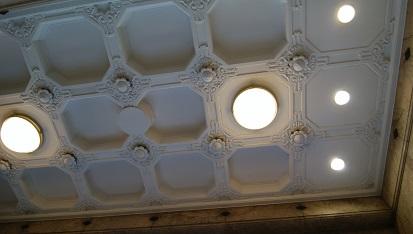
coffered ceiling. In addition, the sculpture of plaster remains unbelievable at that time.
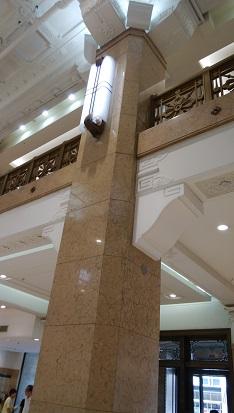
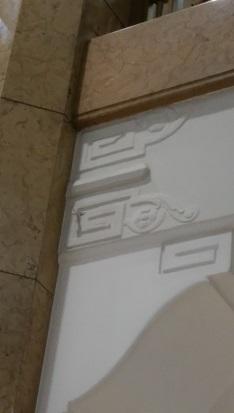
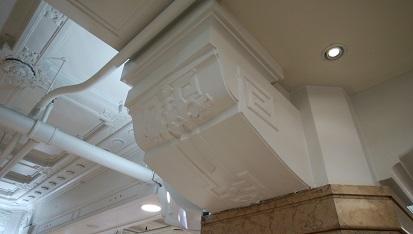
It imitates the nail hidden in Japanese houses.
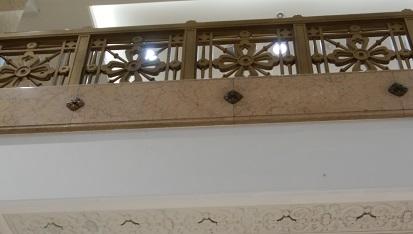
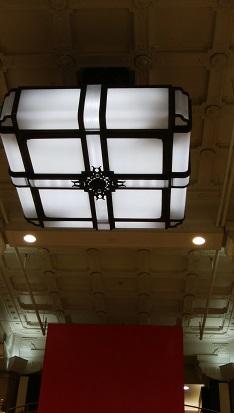
The chandelier was not the original one because it offered metal during World War II, but it is a Japanese-style lighting.
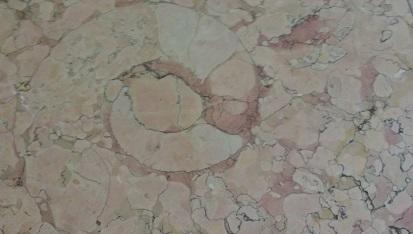
The stairs of the first building are made of marble and ammonite can be clearly seen (the middle of the 2nd and 3rd floors can be seen most clearly) It seems that many children can come to see during  summer vacation.
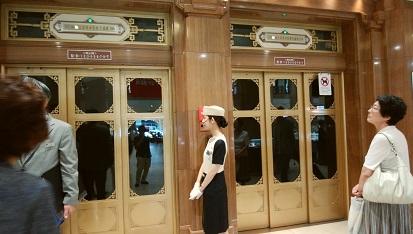
The area around the elevator is also marble, but unlike stairs, wood grain marble is used. The elevator itself continues to use the manual Otis that has been in use since the beginning.
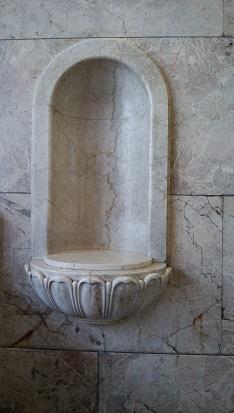
In addition, there is a remnants of the drinking fountain on the left side of the front entrance. The design below is
This is a lotus valve.
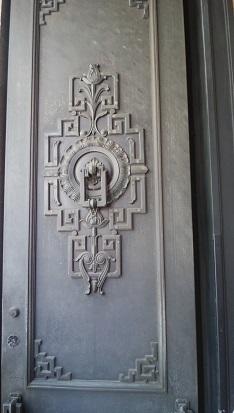
The iron door at the front entrance has a Japanese and Western design.
I mentioned that the exterior is Western-style, but Japanese-style is also incorporated in it. A balcony is made on the front entrance, but here the giboshi is designed.
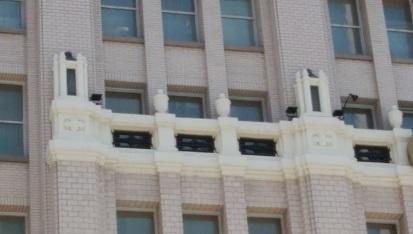
At present, the roof could not be seen during renovation, but the tower was made with an elephant motif in honor of the child "Takako", who had been on the roof for four years since 1950.
At that time, the rooftop of the department store was a small amusement park, but there was also an elephant on the roof of the Takashimaya Nihonbashi store. How did this elephant raise it on the roof, but it seems that he caught it from the outside with a crane. The elephant was very scared. It was 500kg at the time.
However, he ate 36 kg of food every day, and four years later he reached 1,500 kg, so he moved to Ueno Zoo. How did you drop the elephant down, he walked down the stairs at this time.
Also, at the department store, the first building a parking lot on the rooftop was at the Takashimaya Nihonbashi store, but the rooftop parking lot was lost due to the renovation.
At the Takashimaya Nihonbashi store, an important cultural property tour is held every second Friday at 11:00 and 15:00. Reservation is required for 10 people each time.
If you are interested, please apply below.
Takashimaya Nihonbashi Store: 03-3211-4111