List of Authors
>>About this blog
Recent blog posts
|
[No yaya]
09:00 on December 31, 2015
As announced in a blog post dated December 3 (/archive/2015/12/post-2910.html), construction work for major renovation of Heisei (such as rebuilding of shrine office) has been underway since November at Tepposhu Inari Shrine. The precincts were surrounded by white boards with dumps and construction equipment, so I was worried that new year worshipping would not be able to go as it was, but last week, construction was temporarily suspended and it was possible to enter and exit from the main gate. 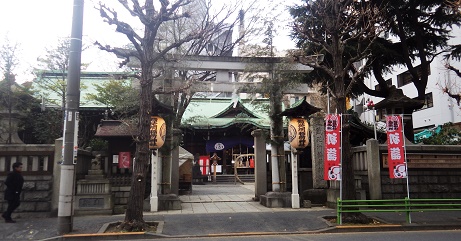 In front of main hall, the Chinowa for the New Year's Eve exorcism has already been prepared, and the part of the shrine office is still surrounded by white boards, but as usual, it is likely to be safe to visit this New Year. In front of main hall, the Chinowa for the New Year's Eve exorcism has already been prepared, and the part of the shrine office is still surrounded by white boards, but as usual, it is likely to be safe to visit this New Year.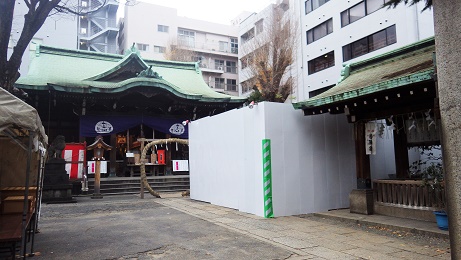
I thought you were worried about your blog readers, so I will let you know as soon as possible.
Postscript: The cold misogi (cold bathing tournament) on January 10 (Sun) seems to be held at Tepposhu Park from 11:00 am. 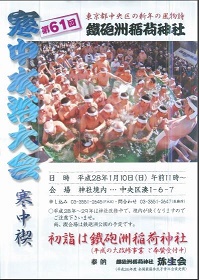 [Tenbosu Inari-jinja Shrine] [Tenbosu Inari-jinja Shrine]
Location 6-7 Minato 1-chome, Chuo-ku, 104-0043, Japan
Phone: 03-3551-2647
Access Get off at the Tokyo bus "Higashi 15" and Edo bus "South circulation" Tepposu stop. Near Chuo-ku community cycle "B01 Tepposu Children's Park" cycle port.
[The Minnie Cricket]
18:00 on December 30, 2015
On December 29 (Tuesday), "Mitsukoshi's Ninth" was played at the central hall of the main building of Nihonbashi Mitsukoshi Main Store, Nihonbashi Muromachi 1-chome.
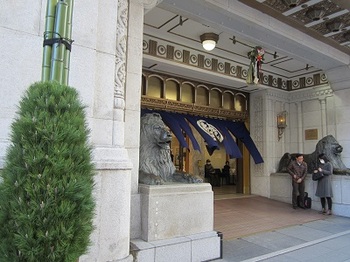
This is the 31st annual year-end event.
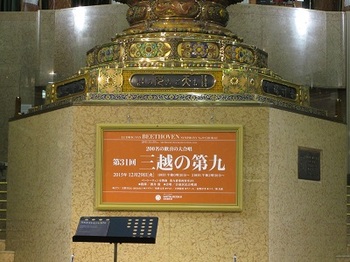
The performance time was from 12:30 for the first time and 14:30 for the second time.
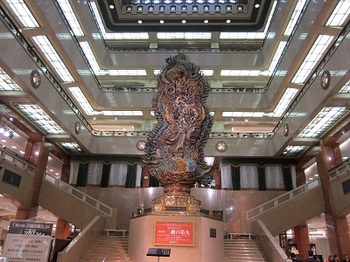
In about 30 minutes each time, I heard the first time from the atrium on the 5th floor.
Before the performance began, there were crowds at the stairwells on each floor.
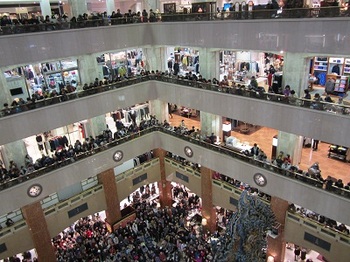
Approximately 200 people () and soprano, alto, tenor, and bus soloists performed "Beethoven Symphony No. 9 4th Movement" with piano accompaniment.
"The Song of Joy" echoed in the Mitsukoshi Main Building
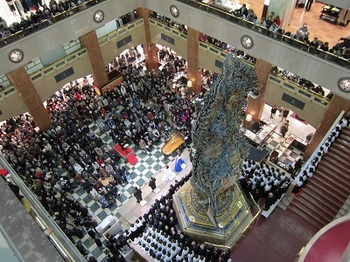
There are various theories about the origin of the "Ninth" at the end of the year in Japan, but when you hear the "Song of Joy" of "Ninth", I feel that this year will end.
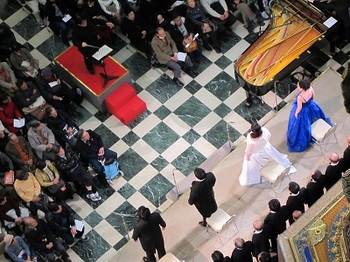
We were able to enjoy the year-end feature in Nihonbashi.

[The Minnie Cricket]
09:00 on December 30, 2015
At the "Japan Edition" self-editing sales floor on the 7th floor of Ginza Mitsukoshi, you can see various shimeji decorations from all over Japan.
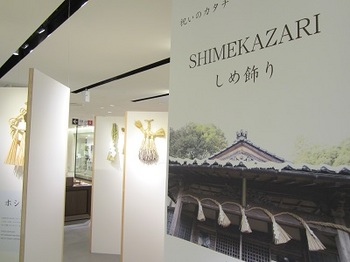
Various stain decorations in various regions

What we have in common is that the main material is straw?
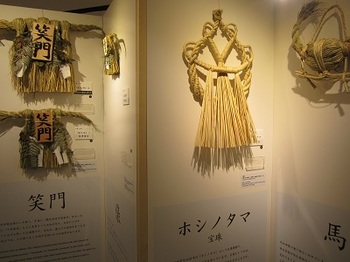
Motif also includes cranes, turtles, shrimps, horses, jewels, gates, etc.
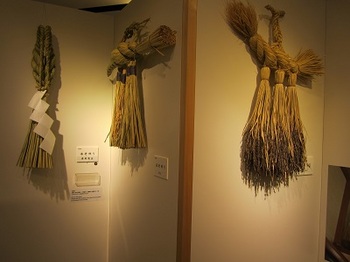
I am surprised that the "Celebration Form" was so varied.
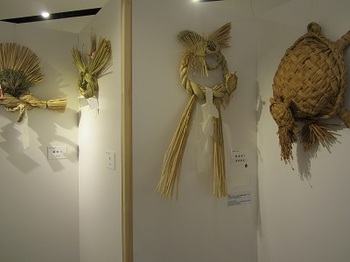
I am deeply impressed by the fact that each of them has a tradition that has been handed down since ancient times in various parts of Japan.
[Ginzo]
08:00 on December 30, 2015
I went to Yagenbori Real Estate "Neno-no-Yoichi".
The size of the city (Ichi) was that it surrounded Fudoson all the time, and there were many local Western clothing wholesalers and shoe wholesalers.
High-quality umbrellas were also sold. While walking, I will input the goods and prices of the shop.
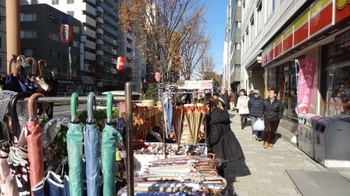
However, the quality is absolutely good and the price is surprisingly cheap, so if you like it (it's sold out if you want to buy it later), I think it's good to buy it immediately.
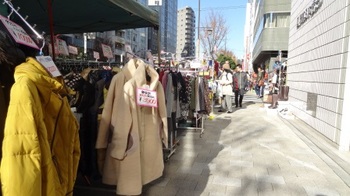
Chindonya is also a lively and fun city with sound and color. There was also a shop such as takoyaki.
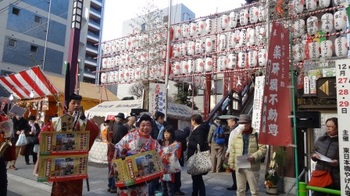
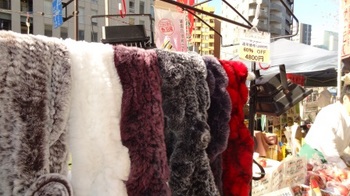
Today, I bought my own shoes, fur collar rolls, jackets for grandchildren, luxury gentlemen's belts, etc. for gifts to my wife.
The price is about one-third of the city price, and it is the price you really serve.
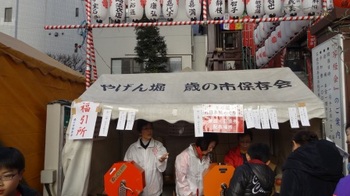
Oops, you can get a ticket for each purchase of 1,000 yen. Please bring your last good luck this year.
*On the last day of the 29th, the closing time seems to vary depending on the store.
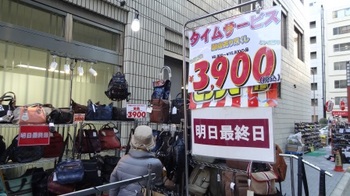
I think that the store that closes late is around 19:00, but please go out early while it is bright.
[No yaya]
09:00 on December 29, 2015
It is more than a week  until the 92nd Hakone Ekiden of the New Year. There is a sign saying "Notice of Traffic Regulations" on Kajibashi Street, which tells you that this will be the course of Hakone Ekiden on January 3 of the new year. until the 92nd Hakone Ekiden of the New Year. There is a sign saying "Notice of Traffic Regulations" on Kajibashi Street, which tells you that this will be the course of Hakone Ekiden on January 3 of the new year. 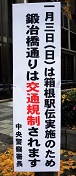 On the outbound route, start in front of the Yomiuri Shimbun headquarters in Otemachi, and go straight south along Hibiya-dori in Chiyoda-ku, but the last 10th ward on the return route on January 3 runs in Chuo-ku. In this way, Hakone Ekiden is a big event of the New Year, but in addition to running Chuo-ku in the most exciting final ward, this race is actually closely related to Chuo-ku. On the outbound route, start in front of the Yomiuri Shimbun headquarters in Otemachi, and go straight south along Hibiya-dori in Chiyoda-ku, but the last 10th ward on the return route on January 3 runs in Chuo-ku. In this way, Hakone Ekiden is a big event of the New Year, but in addition to running Chuo-ku in the most exciting final ward, this race is actually closely related to Chuo-ku.
At present, the start / goal point is Otemachi, where the Yomiuri Shimbun headquarters is located, but from the end of the war to 1971, the headquarters of the Yomiuri Shimbun was located in Ginza (currently the place   where Plantan Ginza is located), Ginza in Chuo-ku was exactly the start / goal of Hakone Ekiden. where Plantan Ginza is located), Ginza in Chuo-ku was exactly the start / goal of Hakone Ekiden.
Furthermore, unfortunately, of the 21 teams participating this year, there are no universities in Chuo-ku, three of them are universities that are closely related to Chuo-ku in history.
One is Juntendo University. This is a university with campuses in Hongo and Sakura (Chiba Prefecture), but in 1838 (Tenpo 9), Taizen Sato founded Wada Juku in Yagenbori (now Higashinihombashi) in 1838 (Tenpo 9).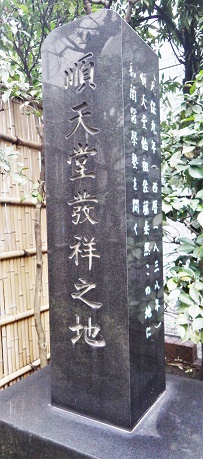
【Monument of “The Birthplace of Juntendo” in Yagenbori】
The second school is the Central School. This is currently headquartered in Abiko City (Chiba Prefecture), but its origin is Nihonbashi Simple Commercial Night School, which was established in Shinkawa in 1900. After that, Nihonbashi Simple Commercial Night School became Chuo Commercial School and Chuo Commercial Junior College, and junior college was abolished in 2000, but Chuo Gakuin University, which participated this time, draws on the flow.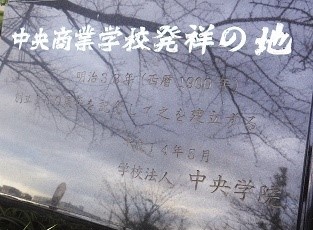
[Monument of "Chuo Commercial School (Chuo Gakuin) Birthplace" in Shinkawa Park]
And the third school is Aoyama Gakuin, who won last year. The current headquarters is located in Shibuya, but its origin is the Kokyo school building established in Tsukiji Akashicho by Julius Sober in 1878. Kokyo Gakusha subsequently merged with Azabu Women's Elementary School (later relocated to Akashicho and became Kaigan Girls' School) and Yokohama Yamate Bikai Seminar School, and became Aoyama Gakuin after Tokyo Eiwa School. 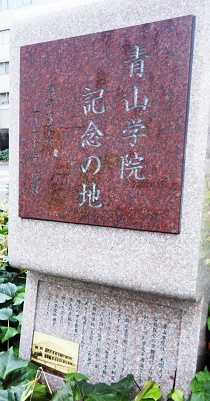 [Aoyama Gakuin Memorial Site" Monument in Akashicho] [Aoyama Gakuin Memorial Site" Monument in Akashicho]
The runners of the anchor who have climbed Hibiya Street in the 10th ward on the return road on January 3 will turn right at Baba front gate  (Marunouchi, Chiyoda-ku) and enter Kajibashi Street. After crossing the Shinkansen (Marunouchi, Chiyoda-ku) and enter Kajibashi Street. After crossing the Shinkansen guard and Sotobori-dori St., enter Chuo-ku, turn left in guard and Sotobori-dori St., enter Chuo-ku, turn left in  front of Tokyo Square Garden, enter Chuo-dori, cross Nihonbashi front of Tokyo Square Garden, enter Chuo-dori, cross Nihonbashi , and run through the ward at once to Tokiwa Bridge. In fact, it was a different course until 17 years ago. In 1999, the course was changed to Kyobashi and Nihonbashi to commemorate the 88th anniversary of the Nihonbashi Bridge and the 75th Hakone Ekiden Tournament. Along this line, there are many beautiful traditional buildings such as Meiji Life Museum (Marunouchi, Chiyoda-ku), Mitsubishi Ichigokan Museum, Tokyo (Marunouchi), Dai-ichi Life Mutual Museum (Kyobashi), Meijiya (Kyobashi), Takashimaya (Nihonbashi), Mitsukoshi (Nihonbashimuromachi), and the Bank of Japan (Honishimachi), and it is a final ward where det heat of each school anchor is expected. It's a good course to enjoy the cityscape with support! , and run through the ward at once to Tokiwa Bridge. In fact, it was a different course until 17 years ago. In 1999, the course was changed to Kyobashi and Nihonbashi to commemorate the 88th anniversary of the Nihonbashi Bridge and the 75th Hakone Ekiden Tournament. Along this line, there are many beautiful traditional buildings such as Meiji Life Museum (Marunouchi, Chiyoda-ku), Mitsubishi Ichigokan Museum, Tokyo (Marunouchi), Dai-ichi Life Mutual Museum (Kyobashi), Meijiya (Kyobashi), Takashimaya (Nihonbashi), Mitsukoshi (Nihonbashimuromachi), and the Bank of Japan (Honishimachi), and it is a final ward where det heat of each school anchor is expected. It's a good course to enjoy the cityscape with support!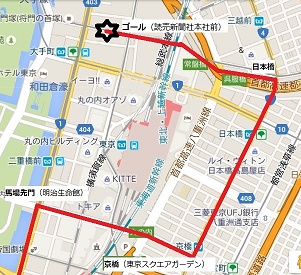
Last year's Hakone Ekiden was reported in detail by correspondent Tabitaro Edo with photos (/archive/2015/01/post-2270.html).
[Monument of the Birthplace of Juntendo]
Location 2-6-8 Higashi-Nihonbashi, Chuo-ku, 103-0004 (in the precincts of Yagenbori Fudo-in Temple)
[Monument of the Birthplace of Central Commercial School]
Location 1-32 Shinkawa, Chuo-ku, 104-0033 (in Shinkawa Park)
[Monument of Aoyama Gakuin Memorial Site]
Location 6-26 Akashicho, Chuo-ku, 104-0044 (in front of Nichirei Akashicho Building)
[No yaya]
17:00 on December 28, 2015
I will go to Yagenbori (Higashinihombashi) for coverage of another article (the birthplace of Juntendo). Although Yagenbori is the same Chuo Ward, it is a little far from the house and it may be difficult to go by subway, so I haven't stretched much until now, but this year there is a strong ally "Community Cycle (CCC)" It's safe.
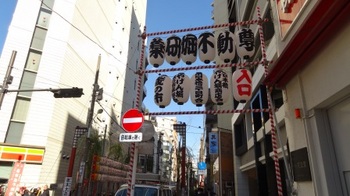
When you enter the side street to stop a bicycle at the port of the Industrial Hall (A04), a Japanese lantern was displayed and a store opened in fair from just before Yagenbori Fudoin. Yes, the annual old city of payment, the year-end departure city (Dekoichi) was opened. 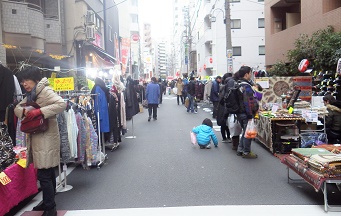 Of course, this is the first time I have come to Yagenbori's old market and the year-end departure market, but I can see stalls selling women's clothes, shoes, bags, etc. Is Yokoyamacho nearby and is there a lot of land? Of course, this is the first time I have come to Yagenbori's old market and the year-end departure market, but I can see stalls selling women's clothes, shoes, bags, etc. Is Yokoyamacho nearby and is there a lot of land?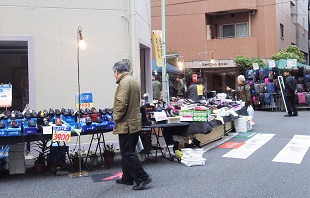
In Hong Kong and Taiwan, fair, a night market opened by shutting out cars completely from the road is not uncommon, but in Tokyo (it may be that I don't know) it was very fresh. It's fun to walk around.  Three colors of lanterns are beautifully decorated, so when you look at them, it says "Daihonzan Kawasakidaishi". Yagenbori Fudoin is a temple in Shingon sect, so I wonder if it is a lineage of Mr. Kobo Daishi, and this is a Tokyo branch temple of "Shingon sect Tomoyama school Daihonzan Kawasakidaishi Hirama-dera", and it seems to be known as one of Edo San Ofudo along with Meguro Fudo and Mejiro Fudo. Three colors of lanterns are beautifully decorated, so when you look at them, it says "Daihonzan Kawasakidaishi". Yagenbori Fudoin is a temple in Shingon sect, so I wonder if it is a lineage of Mr. Kobo Daishi, and this is a Tokyo branch temple of "Shingon sect Tomoyama school Daihonzan Kawasakidaishi Hirama-dera", and it seems to be known as one of Edo San Ofudo along with Meguro Fudo and Mejiro Fudo.
Since I am studying, the monster skin will peel off any more, so for details, please refer to the article "Yagenbori Toshi and Daideko (/archive / 2014/12/post-2264.html) ".
Carefully explained, "Why is the year old city open at this time (the origin of the name of the year old city to be paid)" and "Why are clothes and shoes sold here?" I am.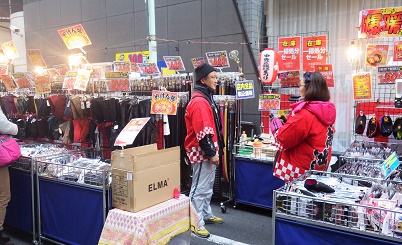
This year's old city, we are doing this until the 29th (Tuesday).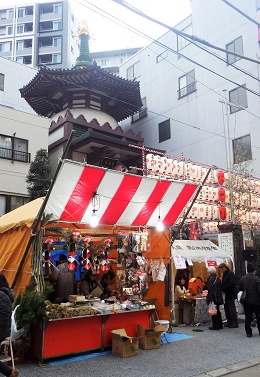
[Yagenbori Fudo-in's old city]
Venue: Higashi Nipponbashi 2-chome (around Yagenbori Fudoin)
Date: December 27 (Sun) - 29 (Tue)
Time: 11:00~19:00
|
Links
|