I participated in an event called "Tokyo Metropolitan Highlight Watching" (May 29).
This is one of the measures related to facility safety implemented by the Metropolitan Expressway. It is to gather opinions on services and services.
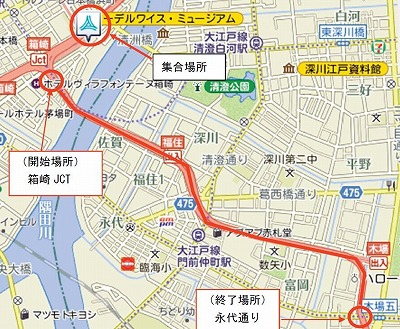
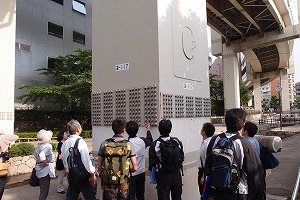
Set up at the Metropolitan High Administration Bureau Building in Nihonbashihakozakicho, walk along the road from Hakozaki Junction (JCT) under the Metropolitan Expressway No. 9 Fukagawa Line, and walk about 2 km to Kiba, Koto Ward.
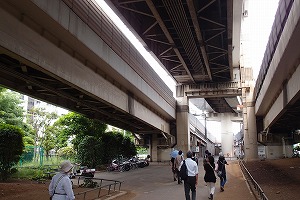
I looked up from the road under the overpass and looked at the structure, but until now I had never taken these structures seriously, so it was a fresh experience in a sense.
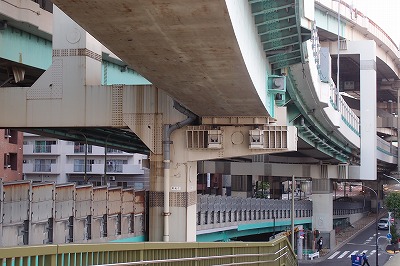
 The departure point "Hakozaki JCT" is a junction of the car connected to the No. 6 Mukojima Line and No. 9 Fukagawa Line, and the "Sumida River Ohashi" immediately after JCT is directly connected to the JCT, indicating that it is a fairly complex structure.
 Cross the Sumida River and enter the Fukagawa area of Koto-ku, passing through the back of Fukagawa Fudodo and Tomioka Hachimangu Shrine, finishing at Kiba.
On the way, check if there is a bird's nest or something that is likely to fall, and listen to stories about the structure and materials of the bridge.......It was a valuable time.
The Metropolitan High School was created using many rivers and waterways that have been used as water transportation since the Edo and Meiji eras.
Compared to the old map, it can be seen that the Metropolitan High Course that I walked this time was also made in the Hakozaki River on the Chuo-ku side and the oil Horikawa on the Koto-ku side.
Due to these circumstances, there are many places that are elevated, and it is necessary to give more consideration to the safety of cars, people and ships passing underneath them.
I think the engineers who made it were difficult, but I realized that maintaining and maintaining this was also a difficult task.
After watching, it is a waste to return as it is, so return to the original road and take a walk.
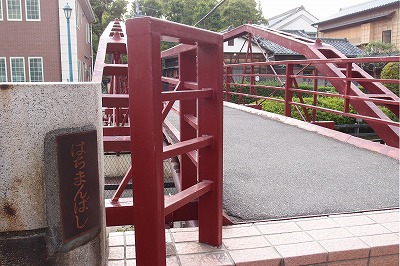
Hachiman Bridge is located east of Tomioka Hachimangu Shrine.
This bridge was relocated to one of the "Mitsuhashi" in Chuo Ward, "Bansho Bridge", and was built in 1878. It is the oldest bridge in Japan and an important cultural property of the country in terms of iron. It was relocated here after the Great East Japan Earthquake, but is still in use today.
It is a quaint bridge with a chrysanthemum emblem on a part of the bridge.
Finally, the Sumida River Ohashi Bridge.
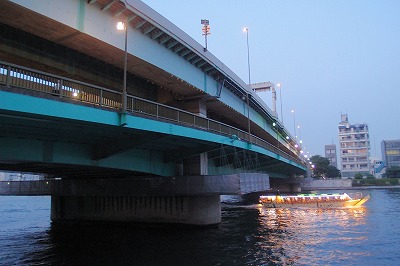 The lower part of this bridge is a double-layered bridge with a general road and the upper part is a metropolitan high, and the landscape wants wisdom and ingenuity in the future. However, the view from this bridge is impressive.
The upper Kiyosu Bridge area is one of the few spots where Skytree can be seen in the middle of the Sumida River, and the lower Eitai Bridge area is the rear condominium group that goes well with the view of the bridge.
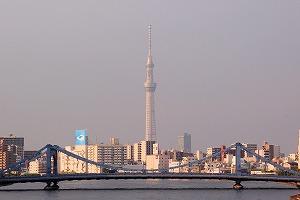
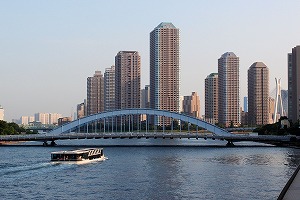
As a view I personally like.
In the direction of Kiyosu Bridge, especially when the Skytree turns pink several times a year. It happened to be pink on the day. It is in harmony with the pink light-up of Kiyosu Bridge.
In the direction of Eitai Bridge, was the sky slightly blue after sunset? You can feel the light blue light of Eitai Bridge more beautiful.
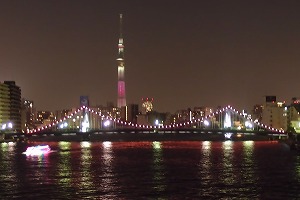
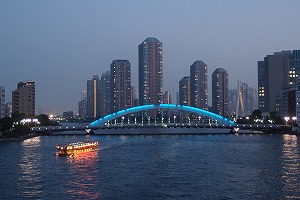
The Cheongju Bridge and Eitai Bridge are illuminated from evening until 21:00. The nearest station to Sumida River Ohashi is Suitengumae Station, and Ningyocho Station is also within walking distance.