List of Authors
>>About this blog
Recent blog posts
|
[Oldrose]
18:00 on June 3, 2015
From 7:30 on Saturday, Tai Chi on Saturday, Tai Chi is held every Saturday at the "water terrace" is held every Saturday at the "water terrace" of Harumi Triton Square. of Harumi Triton Square.
In case of rain , it will be held in the square in Triton Square. , it will be held in the square in Triton Square.
In various movements of Tai Chi, the gentle and clear voice of the teacher who teaches us will give us even more energy.
My favorite word is “put your eyes far away.”
I live a busy day every day, and only Saturday morning feels a very quiet and fulfilling morning . .
Also, my friends are very friendly . .
When enrolling, there is no need to enter the name, and there is no particular procedure.
You do not need to contact us on the day.
I'm also attracted by the teacher's gentle and sounding voice, and I go every time.
[The Minnie Cricket]
14:00 on June 3, 2015
While walking through Nihonbashimuromachi, I was walking in front of a building facing the Nihonbashi River near the Nihonbashi Kitazume Intersection, and over the glass door, a model of a red brick building placed in the lobby on the first floor stopped.
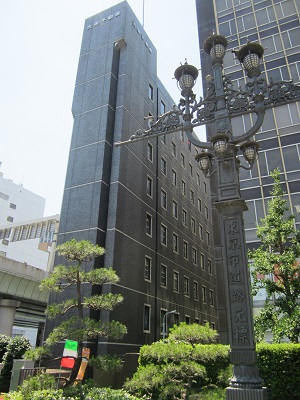

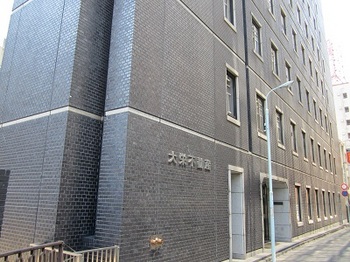
When I entered the building with curiosity, I was showing the model at the reception desk on the first floor lobby, and the actual circular window of the model was embedded and preserved on the wall of the lobby.
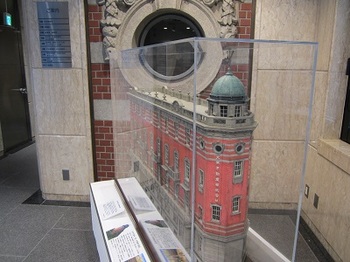
This company is Daiei Fudosan Co., Ltd. Established in 1950, we are engaged in a wide range of real estate businesses, from building rental to condominium development and sale.
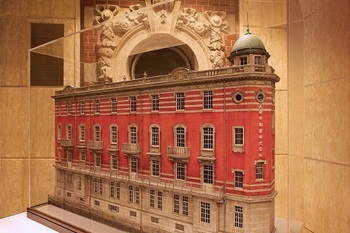
The model displayed in the lobby is the former headquarters building of the company. It was designed by Kingo Tatsuno, who has many wonderful buildings such as Tokyo Station, the Bank of Japan Main Office, and the Osaka City Central Public Hall.
The company's former headquarters building also has an appearance that clearly shows the characteristics of the so-called Tatsuno-style architecture, in which red bricks rotate white stones in a strip, and in fact, its beautiful appearance facing the Nihonbashi River is famous as "Nihonbashi Red Brick Building".
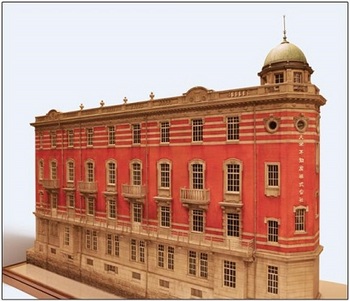
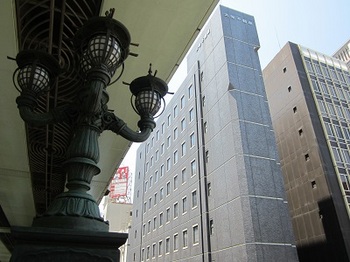
The current building (new head office building) completed in 1989 was built on the site of the former head office building (pictured below ). ).
By the way, this model seems to have been used in the movie "ALWAYS Tsuku 3-chome sunset", which accurately reproduced the cityscape of Tokyo in Showa with miniatures and CGs.
The actual thing might have been wonderful, but the model building is also wonderful to convey the beauty of the time.
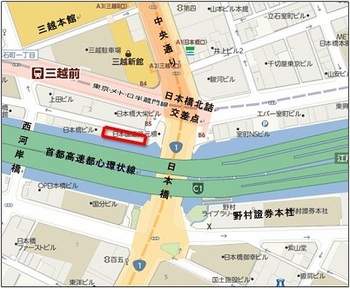
The location of the company is the part surrounded by a red frame on the map above. surrounded by a red frame on the map above.
This time, the company agreed to take photos in the lobby and provided information on the building.
Thank you for your cooperation. m(__)m
Click here for the website of Daiei Fudosan Co., Ltd. ⇒ http://www.daiei-re.jp/
[Tom downtown]
09:00 on June 3, 2015
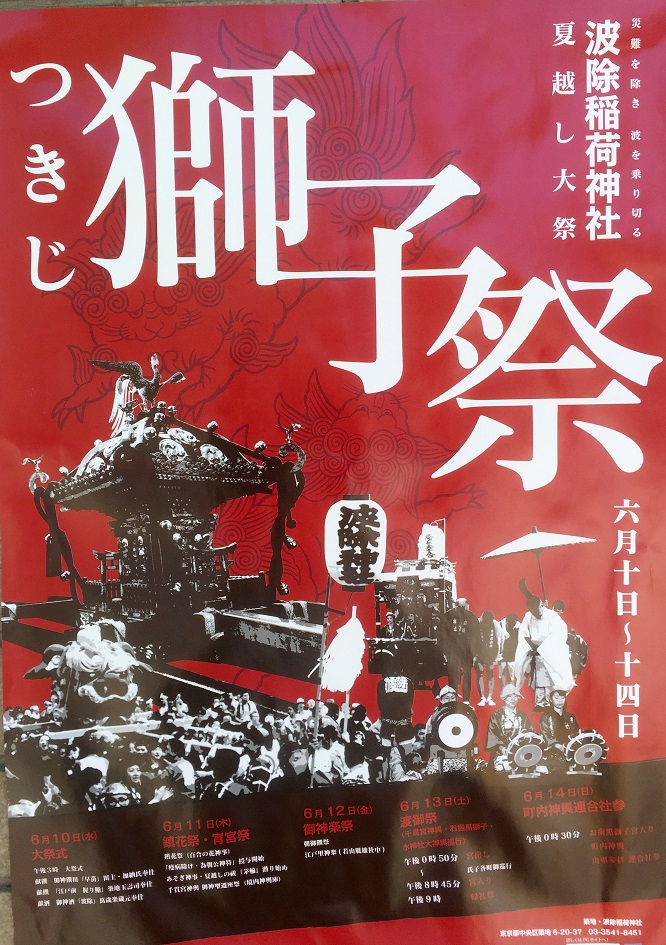
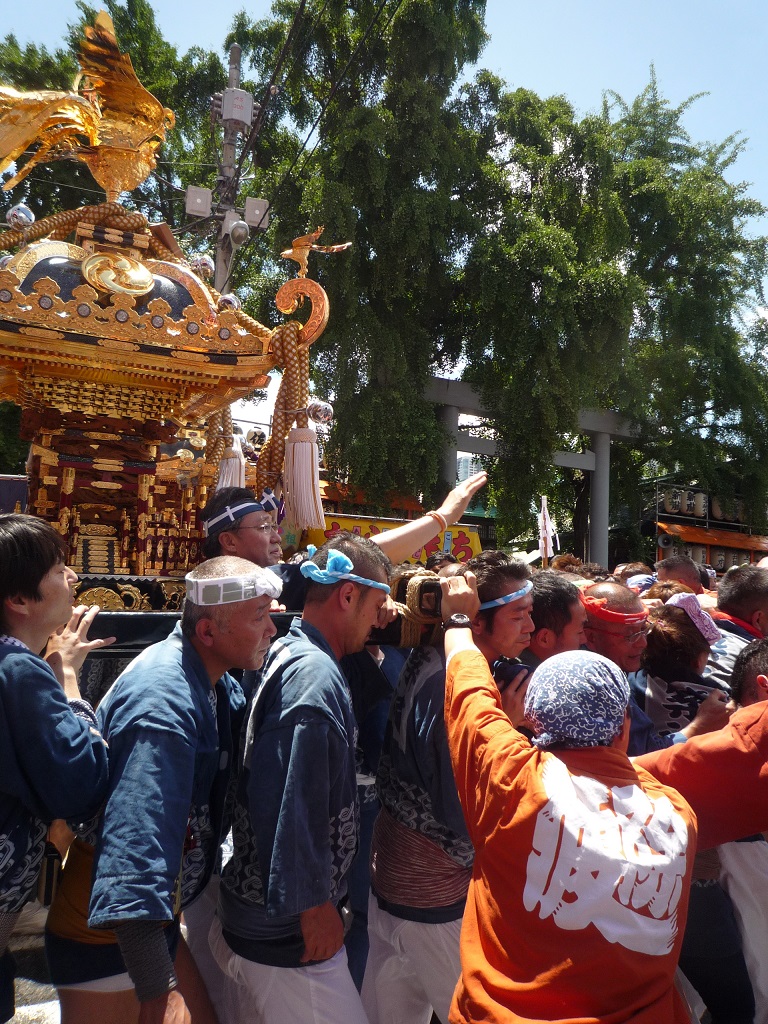
Chuo-ku is a summer festival season from early summer to midsummer. There are historical and distinctive festivals in each region. It is a valuable folk event that conveys Edo culture to the present day.

Among them, the "Lion Festival" of Tsukiji and Namiki Shrine, which will celebrate the "main festival" once every three years this year, is expected to be held grandly. In the first place, this festival, which is hand-made by people with strong local love in Tsukiji-cho, is peaceful and dignified, but this year it is likely to be even more attractive.
As you know, the Tsukiji Market in the town will finally move to Toyosu next fall, and this is the last time this year that market officials will work together to excite the festival. During the main festival, Miya portable shrine enters the market premises to celebrate the prosperity of the market and pray for the well-being of the people working on the fish shore.
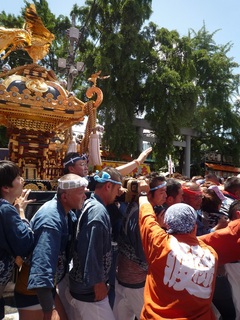 On the premises of Tsukiji Market, there is a shrine related to Kanda Myojin called [Mizu Shrine]. It was established as a place of worship for Mizukami, who was worshiped at its original location when the fish shore moved from Nihonbashi to Tsukiji. This shrine also holds its own ritual every year. On the premises of Tsukiji Market, there is a shrine related to Kanda Myojin called [Mizu Shrine]. It was established as a place of worship for Mizukami, who was worshiped at its original location when the fish shore moved from Nihonbashi to Tsukiji. This shrine also holds its own ritual every year.
And at this year's Tsukiji "Lion Festival", the collaboration between [Hazuki Shrine] and [Mizu Shrine] will be realized. An extremely rare Shinto ritual, where the portable shrine of both shrines goes side by side with memories of Tsukiji Market, is executed. Of course, the last one.
Please take a look at this memorable ritual. Originally, the "Lion Festival" has the meaning of exorcism in the turn of the year as the "Natsukoshi Festival". We hope that you will visit us to purify evil and survive this summer in good health. And I would like to pray that this land will flourish even after the relocation of the fish shore.
[Seize Lew ☆]
18:00 on June 2, 2015
The May Sumo Tournament was a place where Teruno Fuji could feel the arrival of a new era.
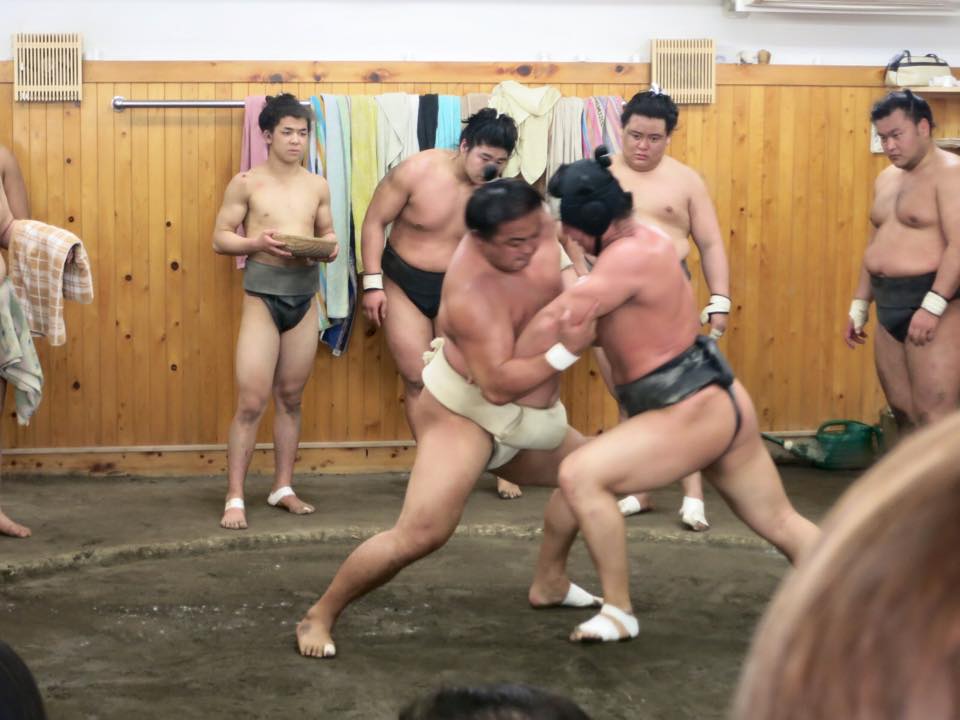
Sokuni Raiseki, the only Makuuchi wrestler in our Arashio room, was expected to look forward to the 7th floor east of the front, which is the highest rank....Unfortunately, it was closed on the way.
Sumo is tough
I went to a training tour in front of the place
The strength of Sokoku Raiseki was overwhelming and seemed to be good.
Amazing power is worth a look
We recommend that you visit the Arashio room once for a sumo room training tour.
You can also experience contact with wrestlers!

[Harine mouse miko]
14:00 on June 2, 2015
Guys, are you doing well?
I'm a mouse.
On May 30, we learned together with 10 wonderful students in the "Edo Town Walking Leader Guide Course".
This is a course sponsored by the Chuo-ku Tourism Association and can be taken as one of the benefits of becoming a correspondent.
Lecturer is Masayuki Ranchimi, a representative director of the Tour Guide Association, who has been a guide for more than 20 years.
I started taking classes in April, and this time as a collection, I decided on my own course and actually took a guide! For me as a beginner, I was nervous and seemed to lose weight.
...That's because Rachimi-sensei so far looked like an oni instructor. (Gomennasai)
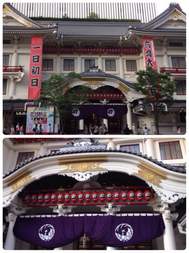
As a result of discussions with everyone, we decided to guide Kabukiza outside Tsukiji in an hour and a half.
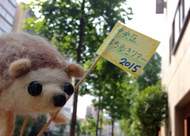
I was in charge of greetings at the beginning of the tour, briefing on the tour, and safety guidance, and started at Tsukiji Social Education Center!
(Miko first appeared! I don't have a needle yet.)
An hour and a half, that was a very intense time.
Dr. Rachimi showed me how to attract and delight the participants while sweating on their foreheads more than anyone else.
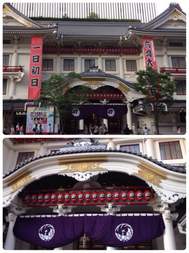 One of them is here. One of them is here.
(Upper: Photos taken in the recommended guide course by Dr. Rachimi, below: Photos taken from courses selected by students)
If you take a picture in front of Kabukiza, it would be nice to upload it, but it would be nice to have a photo that shows the whole thing.
In fact, even if you put people in and take pictures, the sidewalk opposite side where people come and go is small is a secret place for shooting.
I was told that the accumulation of such considerations would create satisfaction.
Harvest through such learning requires technology to convey the spirit of hospitality. And the more you continue to have the desire to be happy, the more your technology will deepen.
This time, we, who have been educated as volunteer guides, will serve as guides on this town walking tour.
http://www.chuo-kanko.or.jp/machiaruki/
By the end of the day, we will work hard to provide a guide that can be enjoyed more and more like Chuo-ku.
We look forward to your participation.
[CAM]
18:00 on June 1, 2015

"Autumn Tatechinu" is a work from 1960, but the location around Tsukiji River is a location (you can see the work on You tube).
This is a summer story of a boy who came to Tokyo with his mother (Nobuko Otowa) after his father died. At the beginning, the mother and child crosses Ginza-dori and Showa-dori from the Ginza 4-chome intersection to the Tsukiji area. The traffic is already substantial. The two pass through Kyobashi Elementary School at the time and cross the Shintomi Bridge over the Tsukiji River. This Kyobashi Elementary School was integrated into Tsukiji Elementary School in 1992, and the ruins of the school building are now Kyobashi Plaza.
One day in summer, a boy (6th grade elementary school student) goes to Ginza with a girl he knows and goes up to the roof of Matsuzakaya. At that time, I was able to see Tokyo Bay from the rooftop. After a while, they take a taxi to see the sea via Kachidokibashi to the landfill in Harumi.
In the movie, you can see the Tsukiji River before the landfill, but it can be seen in children's conversations that water pollution had progressed considerably. After the war, Ginza was also a "island" surrounded by the Tsukiji River and Sanjuma Horikawa to the east, the Sotobori River to the west, the Shiodome River (Shin Hashikawa) to the south, and the Kyobashi River to the north, and the rivers to all sides. After the war, in 1949, the Thirty-Ma Horikawa was reclaimed one after another by the rubble of the war, and all except the Thirty-Mabori have changed to expressways. The Tsukiji River remains until the end, but it has been reclaimed before the Tokyo Olympics.
The marriage of the Crown Prince at that time (now His Majesty Imagami) was in 1959, and television has spread rapidly since that time. It's also nostalgic that the Mizet (tricycle) is running. The Japanese economy has entered a period of full-fledged high growth from around this time, and Tokyo's infrastructure is undergoing major renovation (at least partially major deterioration) toward the Olympics in 1964.
At that time, I was in Chuo-ku, Osaka City (then Minami-ku, merged with Higashi-ku in 1989), but a considerable part of the city, including the river surrounding Semba and Shimanouchi, was reclaimed. Was. It still started around 1960.
|
Links
|