Cross the Saiwai Bridge (the site) and enter the Tsukiji Market Hall, immediately on the right, and at the end there is "Mizu Shrine".
There is a large stone monument "Hagiyama" beside it. "Hagiyama" has been submitted to the Chuo-ku Tourism Certification several times.
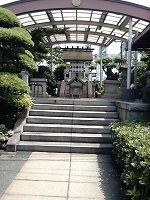
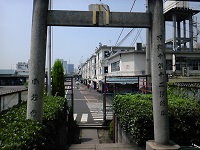
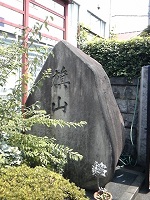
There was a naval facility near this area, and when I was a child, I often talked about "naval accounting school" in adult conversations.
I remember the word came out.
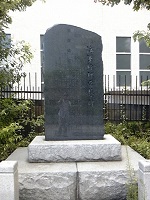
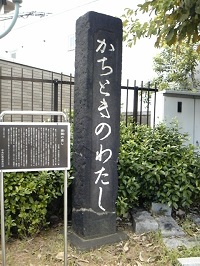
Naval Accounting School Stone Kachidokibashi Nishizume (It is located in Kachidokibashi)
There is a dining room between the seafood bridge (remain) and the water shrine.
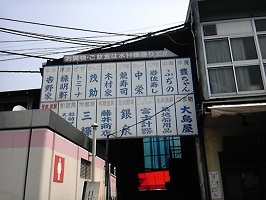
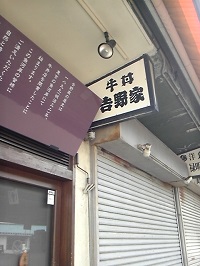
There is Yoshinoya's first store next to Mizu-jinja Shrine.
The situation at that time is posted on the homepage, but this area is almost the same as in the past.
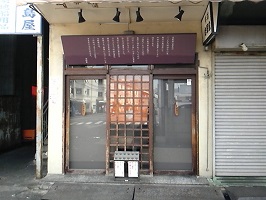
Previously, my family ran a liquor store and served sake beer seasonings etc. in some cafeterias.
The other day, a Western restaurant was introduced on TV.
It seems that there is a store in the cafeteria where the owner has changed, but the name is the same as before.
This sushi restaurant had an English menu for foreign tourists.
In addition, there was a "Omakase Course", but this "Omakase" seems to be unique to Japan.
(I featured "Omakase" on NHK's program.)

By the way, when you go through the hall and go to Hamarikyu, it has a gentle curve structure.
As many of you may know, this is where there was a draw line for freight cars.
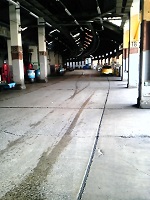
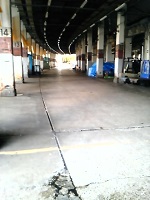
There are rails laid here, and when I was a child, a bicycle wheel
I remembered that I was caught in a rut and fell down and hurt.
Here is the road to Hamarikyu in front of the main gate of the market (where there is a traffic light)
There was a railroad crossing, a hut on the side, a manned man, and a breaker was lowered.
Not only by passing freight cars, but also by switching points somewhere.
I wondered if I had been waiting for a long time with the circuit breaker.