Chuo-ku Tourism Association Official Blog

Chuo-ku Tourism Association correspondent blog

We introduce "seasonal" information of Chuo-ku by sightseeing volunteer members who passed the "Chuo-ku Tourism Certification" conducted by the Chuo-ku Tourism Association and registered as correspondents.

List of Authors

>>About this blog

Recent blog posts

Asako Hirooka Exhibition [Yaesu Book Center]

[The Minnie Cricket] 14:00 on February 5, 2016

yaeasa06.JPG

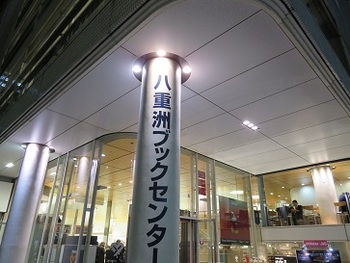
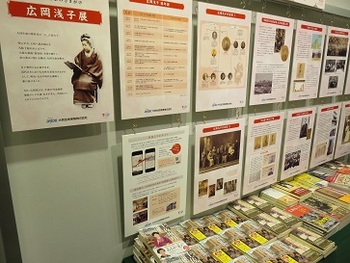
"Asako Hirooka Exhibition" is being held in a special space on the 2nd floor of the Yaesu Book Center Main Store.

yaeasa07.JPG 

The period is from February 1 (Mon) to March 7 (Mon).

yaeasa09.JPG 

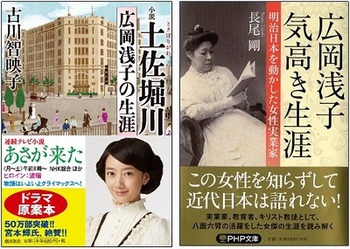
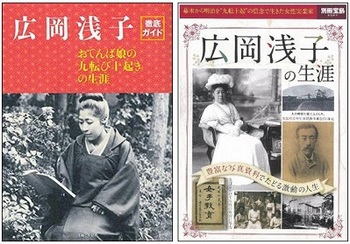
Asako Hirooka is a model of the heroine of the NHK serial TV novel "Asaga came".

yaeasa10.JPG

As the subtitle says "~ Previous for female entrepreneurs in modern Japan ~", he is also active in business and educational projects.

yaeasa02.jpg 

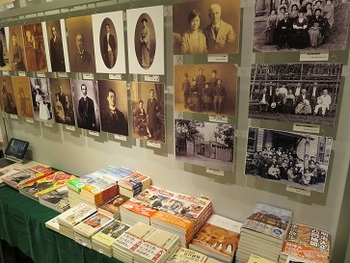
Photos from that time are displayed.

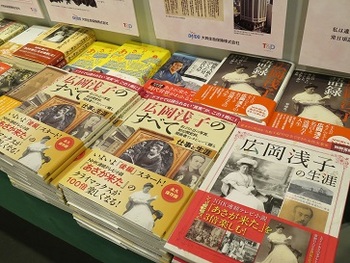
There are a lot of related books.

yaeasa01.jpg 

Click here for the website of Yaesu Book Center ⇒

http://www.yaesu-book.co.jp/

yaeasa11.JPG


Tepposhu Inari Shrine Setsubun Festival Performance Votive Kabuki will be held at Akashi Elementary School Gymnasium on February 7

[Ginzo] 09:00 on February 5, 2016

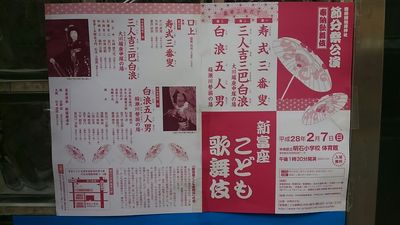
 Tepposhu Inari Shrine Setsubun Festival Performance Votive Kabuki will be held at Akashi Elementary School Gymnasium on February 7, 2016 at 13:30.

The performances are "Kotobuki-style Sanbaso", the second is "Sannin Yoshi Sanba Shiranami Okawabata Koshinzuka's place", and the third is "Shiranami Five Men Otoko Inasegawa Sezo".

1454540967117.jpg


Playing is a boy and girl star of Shintomiza Children's Kabuki.

For more information about how wonderful their performances are, please see how they performed at the museum last fall.

/archive/2015/11/in-autumn-ginza-2015.html


Please come out and enjoy it.

 Ginzo


Tokyo Selected Historic buildings (3)

[CAM] 18:00 on February 4, 2016

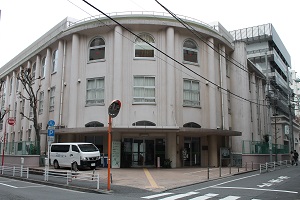
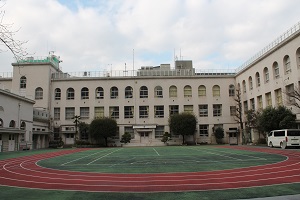
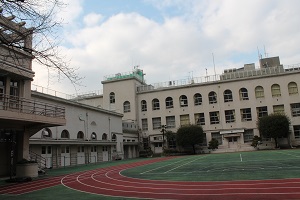
Jushi Square, Chuo Ward (former Jushi Elementary School, Chuo Ward)

IMG_2609.JPG

 Location    No. 5-1, Kodemmacho, Chuo-ku

Buildings    Construction year Showa 3 (1928)
Designer    Designer 

Structure and scale RC building 8th floor

Nearest Station    ・Kodemmacho Station on the Tokyo Metro Hibiya Line

Overview     One of the reconstruction elementary schools built after the Great Kanto Earthquake. The front entrance using a corner lot consists of curves, and the first and third floors have arched designs. Currently, it has been renovated and maintained and reused as a welfare-related complex.  

Former Jushi Elementary School opened in 1878, and the building currently used was rebuilt as a reinforced concrete school building with high earthquake resistance and fire resistance following the Great Kanto Earthquake.
 It is a representative work of highly decorative elementary school architecture created during the reconstruction period of the earthquake, and among them, it is highly evaluated as an excellent urban design building that emphasizes connection with the community. It is an architectural style called expressionism, characterized by its curved corners, arch windows, semicircular columns, etc. The southwest corner, where the front entrance is located, has a particularly large curve, and has a small plaza on the entire surface, making it the face of the building.
 In addition, the adjacent park was planned at the same time during the reconstruction period of the earthquake.
 After the closure of the school in March 1990, after renovation work, it has been widely used by residents of the ward as a complex "Jusshi Square" since 2001.

(From ee-tokyo.com)


Mitsubishi Warehouse Edobashi Warehouse BuildingIMG_2657.JPG

IMG_2660.JPG

IMG_2659.JPGIMG_2661.JPG 

 Location    1-19-1, Nihonbashi, Chuo-ku

Buildings    Construction year Showa 5 (1930)
Designer    Designer Mitsubishi Logistics Corporation

Structure and scale Wooden part RC building 6th floor (1)

Nearest Station    ・Nihombashi Station on the Tokyo Metro Ginza Line and Tozai Line
       ・Nihombashi Station on the Toei Asakusa Line
       ・Mitsukoshi Station on the Tokyo Metro Ginza Line and Hanzomon Line 

Overview     It is an early part of an urban warehouse (a warehouse that is located in the city and is used as part of a cargo distribution mechanism), and a representative work of expression style architecture in Japan. It has a unique appearance reminiscent of a hull, such as a tower on the rooftop that imitates Funabashi and a semicircular window on the upper floor.       

(From ee-tokyo.com)


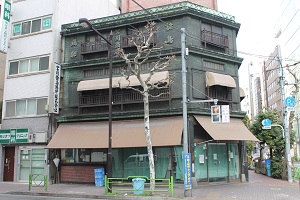
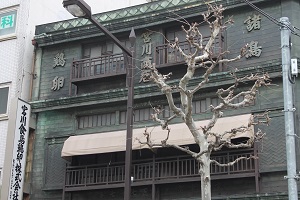
Miyakawa chicken eggs

IMG_2681.JPGIMG_2682.JPGIMG_2683.JPG


Tokyo Selected Historic buildings (2)

[CAM] 16:00 on February 4, 2016

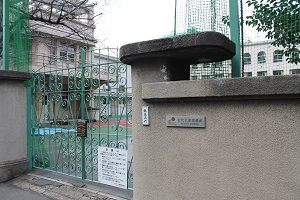
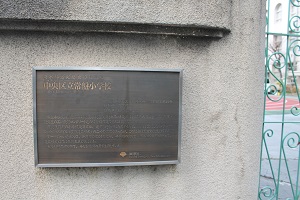
Tokiwa Elementary School in Chuo Ward

IMG_2666.JPGIMG_2667.JPGIMG_2668.JPGIMG_2670.JPGLocation    4-4-26, Nihonbashihongokucho, Chuo-ku

Buildings    Construction year Showa 4 (1929)
Designer    Designer Ichiro Okada, Tokyo City

Structure and scale Wooden part RC building 3rd floor

Nearest Station    ・Mitsukoshimae Station Exit A3 on the Tokyo Metro Hanzomon Line
       ・Mitsukoshimae Station Exit A7 on the Tokyo Metro Ginza Line
       ・Kanda Station on the JR Yamanote Line
       ・Shin-Nihonbashi Station on the JR Sobu Main Line

Overview     An early representative work of an elementary school built as one of the earthquake reconstruction projects.
        A valuable remain as an expressionist architecture.   

Joban Elementary School opened in 1873, and the building currently used was rebuilt as a reinforced concrete school building with high resistance to earthquake resistance following the Great Kanto Earthquake.
There were two trends  in elementary school building during the reconstruction period of the earthquake: an international style (international architectural style), which emphasizes decorative style and function, but this school building is a representative work of the former.
It is characterized by  geometric decorations such as entrances with arches, semicircular windows and their window stands, and han-circular furnishings, and is called expressionism as an architectural style.
 As the buildings stand in the forest, it still retains the scenery of the past.

(From ee-tokyo.com)


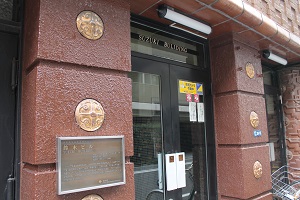
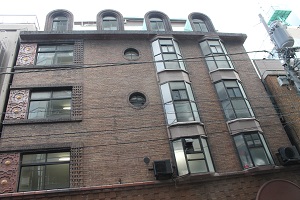
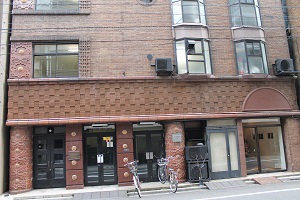
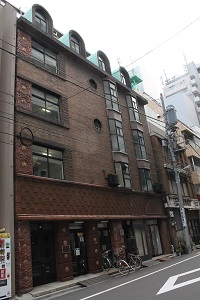
 Suzuki Building

IMG_2677.JPGIMG_2678.JPGIMG_2679.JPGIMG_2680.JPGLocation    1-28-15, Ginza, Chuo-ku

Buildings    Construction year Showa 4 (1929)
Designer    Designer Shinjozo and Yamanaka Design Office

Structure and scale RC 5th floor (1)

Nearest Station    ・Shintomicho Station on the Tokyo Metro Yurakucho Line 
       
Overview    This is a reserved seat building that rented rooms for performances and rehearsals. The exterior features a copper plate reed roof with horseshoe-shaped windows, a redesigned window, a geometric relief of a cylinder on the first floor, and a cloth tiles used on the inner wall.  

(From ee-tokyo.com)


The Dogwood Symbolizes U.S.-Japan Friendship by Akashicho and dogwood

[Ginzo] 09:00 on February 4, 2016

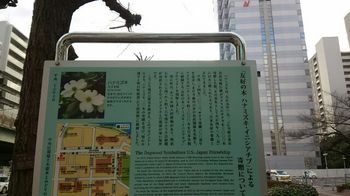
 At the intersection of Tsukuda-ohashi Bridge in Akashicho, there is an information board that I did not notice until now.
1454456130574.jpg

It is an information board set up by the Green Division of the Environment and Civil Engineering Department in Chuo-ku.


Donation by the Tree of Friendship dogwood Initiative

In 1912, when the then mayor of Tokyo Yukio Ozaki donated 3,000 cherry trees to the United States, dogwood was a tree that was sent to Japan in 1915 (1915) in return.

 In 2012, in commemoration of the 100th anniversary of the donation of Sakura, and in anticipation of future friendship between Japan and the United States, the United States launched the dogwood Initiative, a project to plant approximately 3,000 dogwood trees throughout Japan.

Akashicho is a place that has a deep relationship with the United States, with the establishment of the United States envoy for 16 years from 1874 (1874).

 Based on the history of this area, the project donated 20 dogwood trees and planted them on St. Luke Street and Akashicho Green Road (see left figure).

This is an explanation.


I see, I read the description of the United States and dogwood at Hibiya Park, but I did not know that it was newly planted on St. Luke Street and Akashicho Green Road.

I can't wait to see the spring where dogwood enjoys us with white flowers (actually Gakugaku).


According to the calendar, it is already spring.

The historic walk around St. Luke International Hospital will be fun.

On the premises of St. Luke's International Hospital, a monument to the site of the U.S. Embassy, and a stone monument with 13 stripes of star-line flags.

You can also see the related monument in the porch on the second floor of St. Luke's Tower,

The surrounding area is the birthplace of the mission school, so you can see the monuments of Kaigan Girls' School, the predecessor of Meiji Gakuin University, and Aoyama Gakuin University.


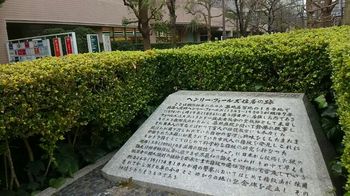
The photo shows the traces of Henry Falls' residence in the planting in front of St. Luke's Tower and his fingerprints academically studied and published in the British scientific journal Nature.
1454456153882.jpg


 Nearby is Mr. Shiose of Japan's bunsho.

On the way back to Tsukiji Station, you will also buy cakes at the newly opened "Ginza Sembikiya Tsukiji Store" opposite the daily sports.

If you are a little tired, we also recommend delicious Japanese tea and sweets with fish shore famous tea.

Personally, I like Tenchiku and "Takeno" and a cup near the outside market.

 Please enjoy meals and shopping around Akashicho and Tsukiji.


"Sake Poster Exhibition" [Matsuya Ginza]

[The Minnie Cricket] 14:00 on February 3, 2016

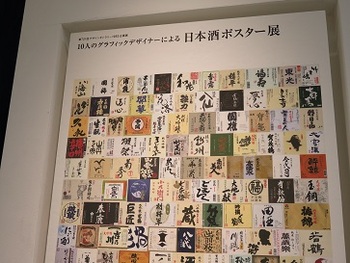
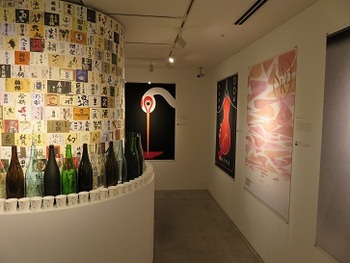
The 721st special exhibition "Traditional Future 02 Sake" Sake Poster Exhibition by 10 Graphic Designers" is being held at Matsuya Ginza 7th floor design gallery 1953.

nihonsh00.JPG

The period is from Wednesday, January 27 to February 21 (Sun).

nihonsh04.JPG 

Last fall, the Japan Design Committee developed an exhibition “The Future of Tradition” on the 8th floor of Matsuya Ginza last fall to explore the power and potential of Japanese culture. This exhibition, organized by graphic designer Makoto Matsunaga, was planned.

nihonsh05.JPG 

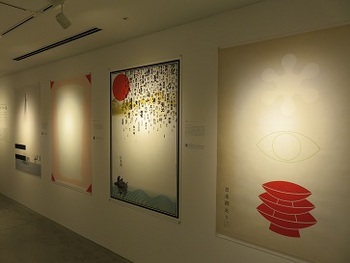
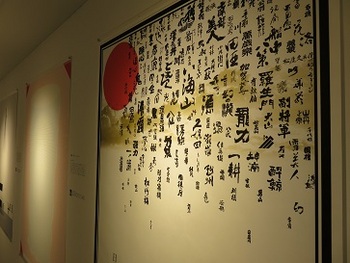
In this exhibition, 10 graphic designers representing Japan were asked to design a new poster on the theme of "sake", and posters and comments were displayed to show how each of them interpreted sake.

The freshness of the idea of making sake a poster was great, and the surprise that each of the 10 people actually looked at the poster was so different.
nihonsh06.JPG 

Click here for the website of Matsuya Ginza ⇒

http://www.matsuya.com/m_ginza/