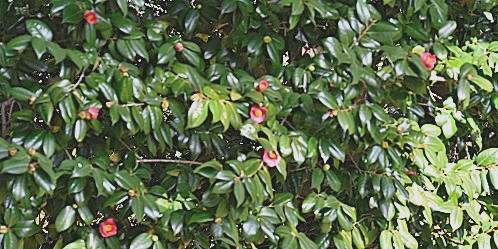
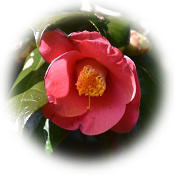
 On January 24, the Tokyo District Meteorological Observatory reported that one of the Japan Meteorological Agency's biological seasonal observation information, "Tsubaki Flowering".
It is said that 16 days earlier than normal and 29 days later than last year.
The camellia is an evergreen Takagi of the genus camellia.
It is also called "Japanese camellia", distinguishing from other types of camellia.
There are three types of wild species that grow naturally in Japan: Japanese camellia, Yukitsubaki, and apple camellia.
It is said that camellia was widely spread among the general public in the middle of the Edo period after the Muromachi and Azuchi-Momoyama periods when the tea ceremony and flower arrangement were developed, and many horticultural varieties have been created.
At Hamarikyu Onshi Garden, near the entrance to Ote-mon gate, "Kanttsubaki" (which is considered to be a horticultural species of camellia sasanqua, but there are some different opinions) is planted beside Bairin. However, "Japanese camellia" can be seen around Koshindo Kamoba because it has not been done much in the cultural property garden.
The petals are funnel-shaped without opening, divided into many branches, and are dense tree-shaped.
By the way, "Kan camellia" and "Winter camellia" are seasonal words in winter, but "Hana camellia" is seasonal words in spring.