Chuo-ku, Tokyo is the 22nd largest area among the 23 wards (the minimum is Taito-ku). Although it is such a small area, it includes bridges over the Sumida River, Kanda River, Nihonbashi River, Kamejima River, canal, etc. flowing through the ward, bridges that have been reclaimed and have become metropolitan expressways and ward roads, overpasses, etc. There are more than 70 bridges.
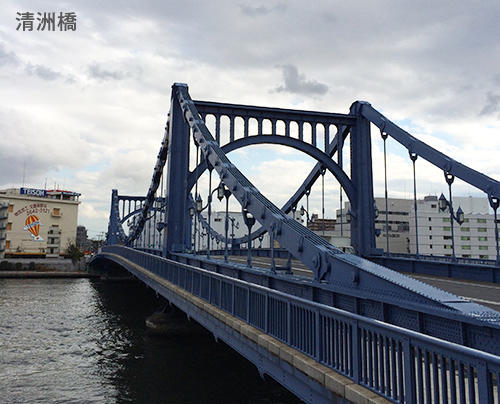
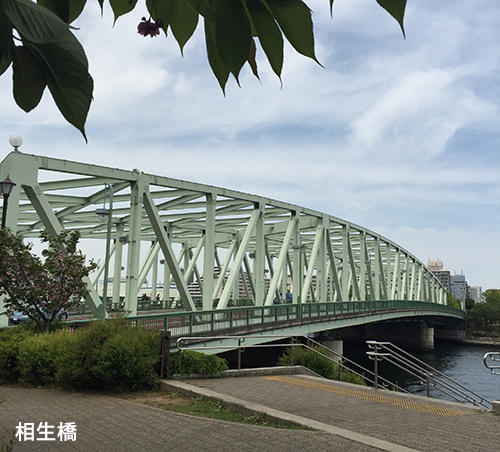
I have loved "bridges" since I was a child, and no matter where I go, I want to cross the bridge and I can't stand it. When I was a junior high school student, my research topic during summer vacation was "bridge survey" of Arakawa flowing through Saitama Prefecture and its tributaries, and the name of the company I made with my friends in Saudi Arabia is "○○○ Bridge". A few years ago, when people who see the past and the future looked at my ancestor's profession, I was told that I was a craftsman who designs and builds bridges.
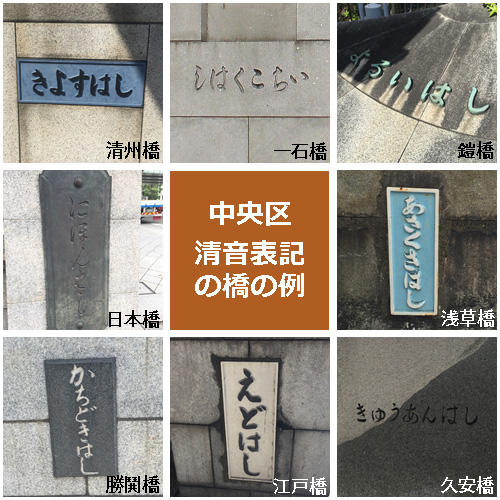
Well, it's a good time. It is the name of the bridge, but in many cases, one of the main pillars of the bridge is written in kanji and the other is written in kana. In the case of Nihonbashi, "Nihonbashi" and "Nihonbashi". That's not 'Nihonbashi' but 'Nihonbashi'. It's not a muddy sound. When you go to another bridge, Edobashi is "Edohashi" and armor bridge is "Yoroihashi". The main pillar of Kyobashi, which still remains, is "Kiyabashi", and the shipping bridge is "Kaiunhashi". You can see Shinohashi and Harumi Ohashi.
There was a reason for this. It is said that the person who built the bridge carved a letter with the wishes and prayers of the people so that the flow of the river flowing below would not remain clear forever. Of course, there are muddy notes on bridges that have been replaced or newly built, such as "Kayaba Bridge" and "Aioi Bridge", but when I examined them, all old bridges were written in Kiyone.
The name of the bridge was filled with people's prayers and wishes.