Take a walk from Tokyo Station Yaesu Exit. Toshin 300 meters along Yaezu Street, you will see a bronze statue of the familiar Kirin.
Crossing the pedestrian crossing south, see the monument of "Peace Bell", which was set up to commemorate the first anniversary of the Declaration of Peace City, which stands out, and go ahead in front of the Bridgestone Museum of Art under construction. You will soon reach Kuyasu Bridge.
Kuyasu Bridge was built in front of the residence of Matsudaira Etsunakamori during the Edo period and was called "Ecchu Bridge", but in 1868 (1868), the name of "Ecchu", a remnant of Edo shogunate, was taken and renamed "Kuyasu Bridge". It is said that the name of "Kusubashi" is due to the fact that there was a place of worship for the monk Kuyasu near this area in the past. The current bridge was a reconstruction project after the Great Kanto Earthquake, and construction was rebuilt in March 1930 along with the construction of Yaesu Street.
I will explain "Matsudaira Ecchu Mori Kamiyashiki", which was the basis of the name of "Ecchu Bridge".
Matsudaira Etsunakamori is the Matsudaira family of the Kuwana clan in late Tokugawa shogunate. The last feudal lord of the Kuwana Domain was Sadaaki Matsudaira, the younger brother of Kyoto guardian Aizu feudal lord Katamori Matsudaira. (One of the four brothers of Takasu)
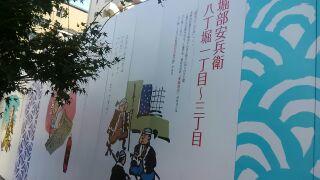
By the way, the building at the end of Kuyasu Bridge is under construction, but I felt that the panels covering the surroundings were excellent. There are about 12 panels in total, but in the Edo period, Nihonbashi and Kyobashi districts were towns where craftsmen lived.
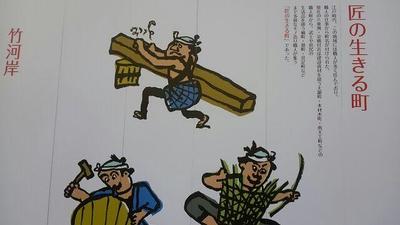
During the Edo period, many craftsmen lived in this area, and it is said that the town was named after the work of the craftsmen. In the vicinity of the current Yaesu and Kyobashi area, a variety of monozukuri craftsmen gather from artisan towns such as Ogamachi, Motozaimokucho, and Minamidaikumachi, which handle construction materials, to Okemachi, Tatamachi, and Gutarimachi, which handle samurai and common people's daily necessities. It was a town where craftsmen live. " By the way, during the Edo period, the place where the current Kyobashi Edgran is located was Tatamachi, and the Chuo-ku Tourism Information Center confirmed  it.
it.
From here, if you are taking a walk in the direction of Hatchobori, the panel explaining Hatchobori Concentric will be interesting.
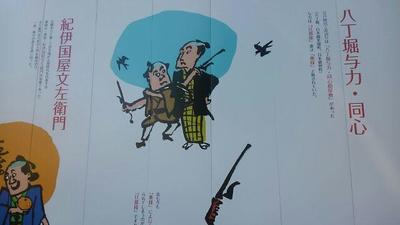
Yoriki was called 'husband' and his wife was called 'wife.'
How are you going for a walk with your wife? There are two Japanese sweets shops on Suzuran Street, and you can also buy delicious souvenirs.
In front of Keika Square, you can see a monument about Hatchobori's Yoriki and Doshin Kumiyashiki.
By the way, when you go to Kameshima Bridge, you will find a monument about Basho's stone monument, Tadataka Ino and Sharaku Toshusai. On the opposite side of the bridge, there is an explanatory monument that Yasubee Horibe lived.
The real thing
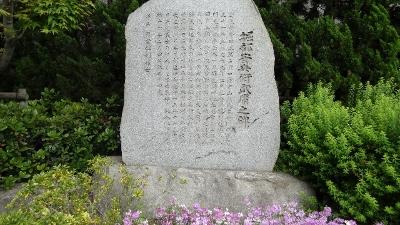
Please take a look at these monuments and monuments at Kameshima Bridge.
Also, the explanation about manners of hospitality was interesting.
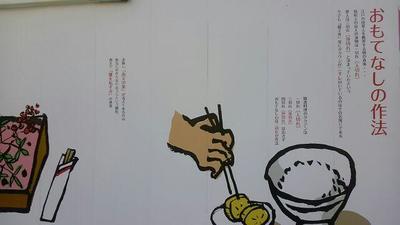
buddhist cuisine's Takwan served only one piece (slick), three pieces (slick) and four pieces (slick), and the spirit of hospitality explained that two pieces were manners. It's fun to share with you.
Please enjoy a walk because the weather is clear in autumn.