Chuo-ku Tourism Association Official Blog

Chuo-ku Tourism Association correspondent blog

Introduces "seasonal" information of Chuo-ku by sightseeing volunteer members who have passed the Chuo-ku Tourism Association's "Chuo-ku Tourism Certification" and registered as correspondents.

List of Authors

>>About this blog

Recent blog posts

2017 Ryujin Shrine Reisai Festival Sakura Festival

[Sam] 16:00 on April 3, 2017

DSC04033'ELS.jpg 

DSC04036RSG.jpg One of the precincts shrines of Tsukuda Sumiyoshi-jinja Shirine, "Ryujin Shrine" enshrines the god of water, Ryuhime Ogami.

Later, he enshrined Daibenzaiten in Nihonbashi Shirakiya, and today it is called "Ryuo Benzaiten" and is revered as a god with the virtue of good luck, rising fortune, thriving business, fulfillment of academic work, performing arts, and healing illness.

The Reisai Festival is held every Sunday near the Snake Day from late March to early April, and the cherry blossoms bloom in the precincts, so the Sakura Festival is held at the same time.

This year, the festival ceremony was held from 11:00 on April 2, and the Sakura Festival was held on April 1st and 2nd. Between 11:00 and 15:00, amazake juice flour is served in the precincts.

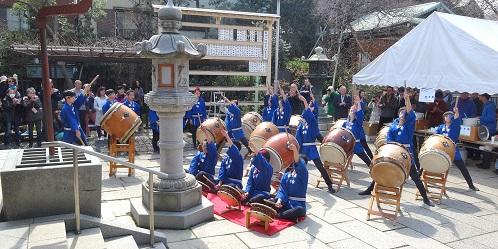
At 13:00 on April 2, a performance of Tsukuda Junior High School Taiko Club was performed, and a powerful traditional Japanese drum sound echoed throughout the precincts.

The cherry blossoms in the precincts have not yet bloomed, but the genpei blooming tree melon (boke) beside Kagura Hall is in full bloom.


Kyobashi Daikon Bank Hospitality Garden Grand Prize

[Ginzo] 12:00 on April 3, 2017

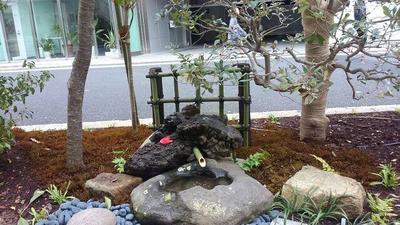
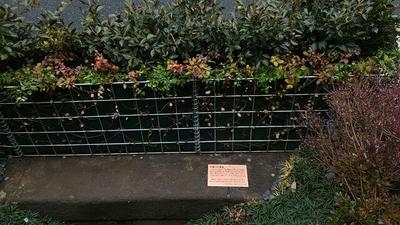
 The area with the "Kyobashi Daikon Riverside Vegetable Market Ruins Monument" has been improved.

In front of the monument, a pair of festive flowers were offered.

And in the depths, we were able to set up a quaint deer-like style of a Japanese-style garden.

1491029394854.jpg

The revetment of the Kyobashi River also appeared.

1491029354232.jpg

 "The Kyobashi River, which was excavated after Ieyasu Tokugawa entered Edo in 1590 (1590), was a riverbank on both banks and was an important river for logistics in the castle town. After that, it entered the present age, completed its role, and was reclaimed in 1948-40. Some of the seawalls have been reloaded since modern times, and are left underground as they were at the time of landfill. "

 In this way, it is difficult to maintain and manage a corner of Kyobashi, Chuo-ku, Tokyo. So, in March 2017,

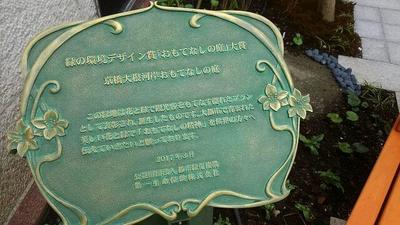
The "Green Environmental Design Award" Hospitality Garden "Grand Prize" was awarded to the "Kyobashi Daikon Bank Hospitality Garden".

1491029403119.jpg


Autumn leaves in early spring [benicanamemochi]

[The Minnie Cricket] 12:00 on April 1, 2017

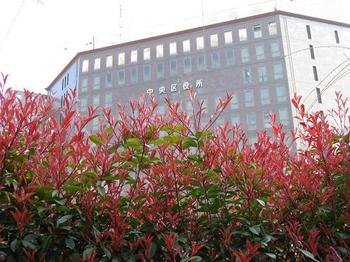
The early spring tradition, Benikanamemochi, is beautifully colored leaves.

benik01.JPG

The place is a planting space beside the Tokyo Metropolitan Expressway Toshin Beltway, on the north side between Tsukiji River Kamei Bridge Park and Miyoshi Bridge

There is Ginza Blossom across the road and Chuo-ku government office across the Metropolitan Expressway

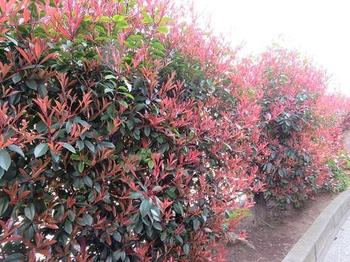
benik02.JPG

Benikanamemochi is a general term and does not seem to be registered as a clear variety, but it is a familiar Odaka tree that is planted as hedges, street trees, and park trees in the garden.

Nearby, the front yard of Kyobashi Library is also surrounded by red leaves.

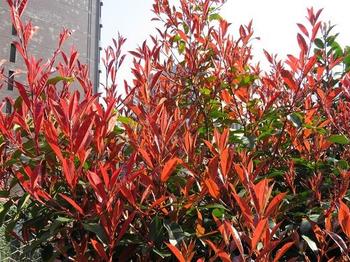
benik03.JPG

The red leaves (new shoots) facing the sky are impressive at this time of the cherry blossom season.


<< to the previous page 1 2 3 4 5 6 7 8