Chuo-ku Tourism Association Official Blog

Chuo-ku Tourism Association correspondent blog

Introduces "seasonal" information of Chuo-ku by sightseeing volunteer members who have passed the Chuo-ku Tourism Association's "Chuo-ku Tourism Certification" and registered as correspondents.

List of Authors

>>About this blog

Recent blog posts

Click here for the stage of the 2018 New Year period drama, the beginning of Dutch studies!

[The Shiba Inu] 14:00 on August 23, 2017


The heat of Sanada Maru is still cold in the fall of 2017, but the NHK New Year period drama of next year, 2018, was released as "Fun Children" written by Yuki Mitani! The era is the middle of the Edo period, and it is the story of Ryotaku Maeno and Genpaku Sugita who aspire to Dutch studies (European culture). Performed by Ainosuke Kataoka (Ryotaku Maeno), Shinya Shinno (Genpaku Sugita), Koji Yamamoto (Gennai Hiraga), Masao Kusakari (Okitsugu Tanuma).


New Year period drama "Fun Children: Reboryushi-"


If...


Of course, the stage is Tsukiji, Chuo-ku, in the middle of Edo!
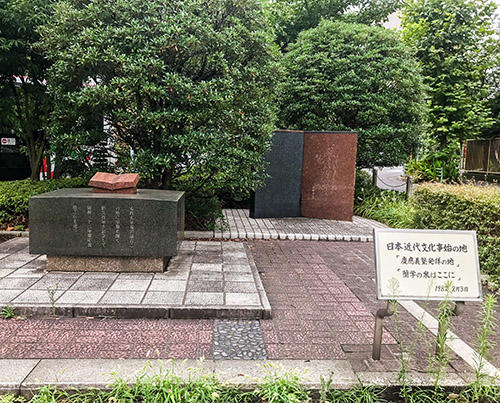

IMG_6524.jpg
This is the place where Sugita and Maeno became the birthplace of Dutch studies. The stone monument stands. Later, Yukichi Fukuzawa opened a Dutch Academy (later Keio University) at this place, and stands alongside the monument "the birthplace of Keio University".
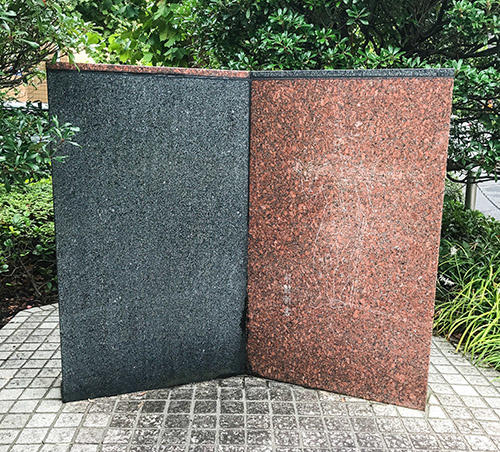
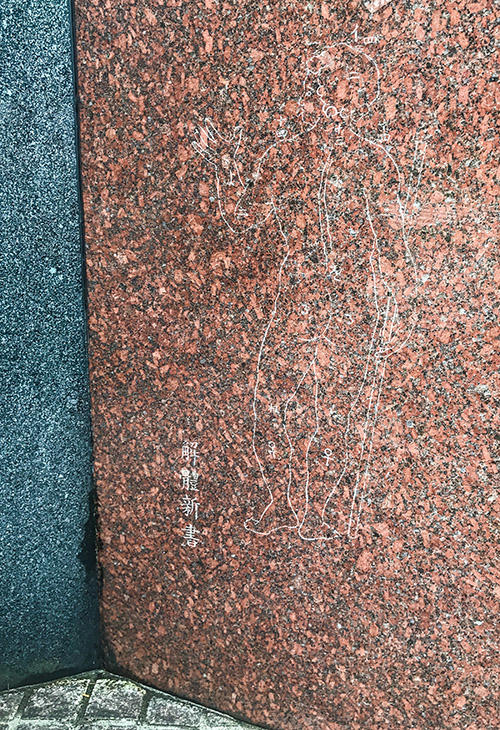
IMG_6525.jpg

IMG_6526.jpg

I think the image is hard to see, but it is a stone monument engraved with the "Dismantling New Book".


This place was the Nakayashiki of the Okudaira family of the Nakatsu Domain (now Oita Prefecture). You can also check the old map. Ryotaku Maeno, a feudal physician of the Nakatsu clan, will work with Genpaku Sugita and others on translation of the Dutch medical book "Taherl Anatomia" at this location.
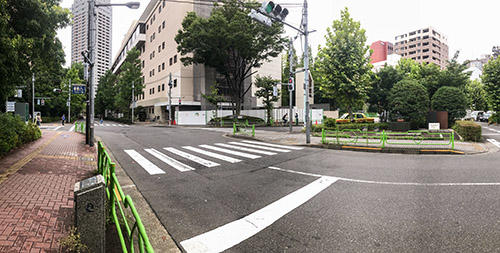

IMG_6527.jpg

The stone monument is located at 11 Akashi-cho, Chuo-ku. It is a small square near the entrance of St. Luke Hospital. This is the right of the image. On the map below, it is a triangular section near the center.
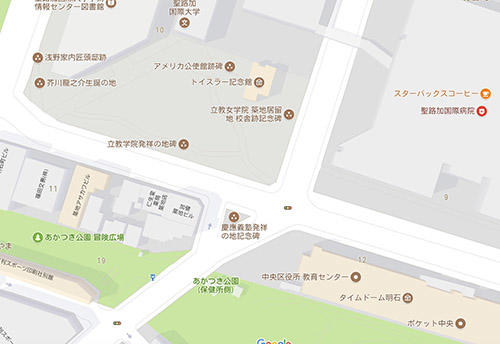

as.jpg


Here are the children of Dutch studies.

This place is the Time Dome Akashi, which is known for its planetarium, and the opposite is the Toysler Memorial Hall.
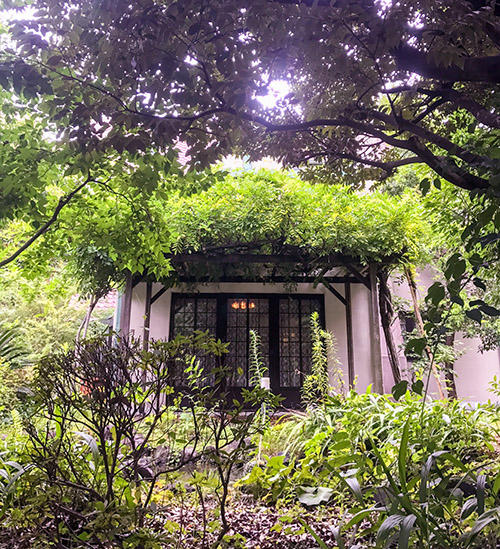
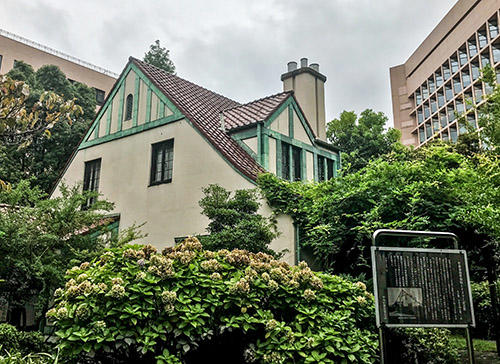
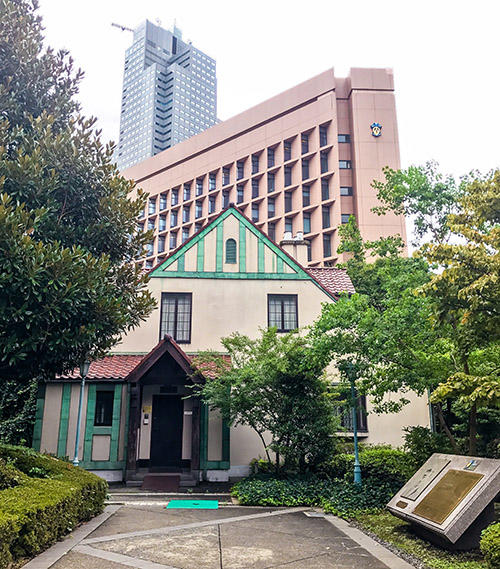
IMG_6528.jpg

IMG_6529.jpg

IMG_6530.jpg


It is a powerful tourist spot with Tsukiji Market, foreign settlements, late Tokugawa shogunate Historic Sites and literary sites, Showa Reconstruction Elementary School, and of course Tsukiji Honganji. Even if you don't know the sightseeing spots, it's a fun place to just take a walk with Brabra. It is about 15 to 20 minutes on foot to the center of Ginza.


Please come and see the stage of the pupils!

By the way, I think Nagasakiya will probably appear in the drama....


Nagasakiya was a medicine wholesaler for the shogunate in Nihonbashi, and also served as a lodging house, so many Dutch trading post and foreigners with expertise stayed there and many scholars gathered to listen to them. Gennai Hiraga, Genpaku Sugita, Ryotaku Maeno, Junnan Nakagawa, Koyo Aoki, etc. were among them. Nagasakiya and the scholars are depicted by Katsushika Hokusai.


The location is 4-4-10 Higashisho Building, Nihonbashi Muromachi, Chuo-ku, with an explanation board. It is very close to Coredo Muromachi and Mitsui Main Building. It is an important historical site that was the only window of Western civilization in Edo when isolation was severe.


Why don't you watch the drama stage from now on and enliven your feelings!


Kachidokibashi Konjaku

[Blowing of Koi in Satsuki] 18:00 on August 22, 2017

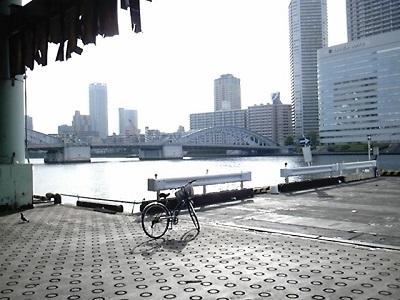
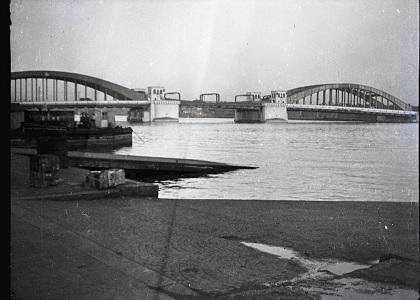
An old photo of Kachidokibashi from the Tsukiji Fish Bank has come out. (I think my father or uncle photographed it.)

I looked for other things, but unfortunately, I couldn't find any photos when I opened it.


042F_0008.JPG 

On the left side, there was a slope toward the Sumida River on the fish shore. You could have lifted the boat up and down.

On the other side of the Sumida River, Tsukishima and Kachidoki are not tall buildings as seen at this time. (I think it was around 1955.)


Kachidokibashi _150823_03.JPG

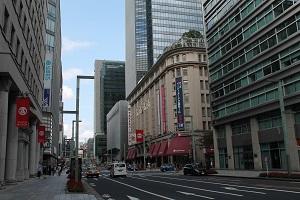
Compare it with photos from the same position.


Mona Lisa

[Tachibana] August 18, 2017 18:00

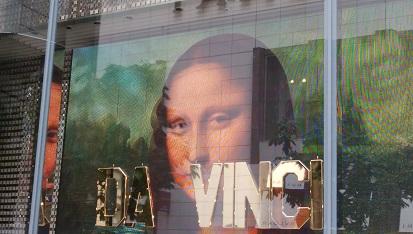
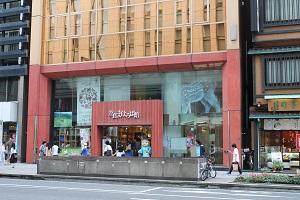
Mona Lisa is decorated in the showroom of "Louis Vuitton" on the 1st floor of Ginza Matsuya.

m1.jpg

Am I the only one who got the wink?

m2.jpg


If so, I'm very honored. 


2017 Tomioka Hachimangu Shrine Reitaisai festival Fukagawa Hachiman Festival

[Sam] 18:00 on August 15, 2017

DSC_0080ELS'.jpg 

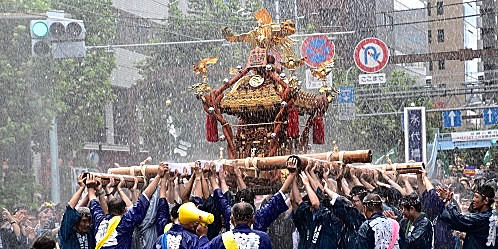
DSC_0051RS'G.jpg The festival of Tomioka Hachimangu Shrine is also known as the Fukagawa Hachiman Festival, and it is said that the celebration of the heir of the eldest son of Shogun Iemitsu (later Ietsuna) in 1642. Along with the Sanno Festival of Hie-jinja Shrine and the Kanda festival of Kanda-jinja Shrine, it is counted as one of the three major festivals in Edo, and is said to be "portable shrine Fukagawa, floatportable shrine Kanda, Dadahiroiga Sanno-sama".
This year's main festival is held every three years. Among them, 53 shrine parishioner towns (No. 1 to 55) were held on August 13. The Great portable shrine of the portable shrine Union imperial procession is a highlight.

Starting from Tomioka Hachimangu Shrine, cruises about 8km from Eitai-dori St. to Daimon Street to Edo Museum Street to Kiyosubashi-dori St. to Kiyosu Bridge to Hakozaki Minatobashi Street to Eitai Bridge to Eitai-dori Street.

One of the highlights is the Eitai Bridge West Intersection at the side of Eidai Bridge. A large amount of water is discharged with fire hoses from both sides and powerful. Stylish performances such as "rubbing", "giving", and "maiing" are also unfolded, and the bearer and the audience are united to show excitement. 


Street 3-chome bus stop → Nihonbashi → Tsukuda

[CAM] 09:00 on August 15, 2017


 I wanted to write a little after reading that someone was writing about the name of the "Street 3-chome" bus stop. Since I am a resident of Tsukuda, when I go to Tokyo Station, go through Chuo-ohashi Bridge and in front of Sumitomo Tinville. → Shinkawa → Kameshima-bashi Bridge → 2, Hacchobori → I'll use a route bus called Street 3-chome. When I go to Nihonbashi, I get off at "dori 3-chome" and walk a little along Chuo-dori. Therefore, this bus stop name "Dori 3-chome" is quite familiar.


The old town name "dori" was used from the Edo period to 1972 for the current Nihonbashi 1-3-chome. It was named "dori" because it was a town facing the main street, and large shops lined up along the main street along the highway, prospering as a representative downtown area of Edo. (Page 173 of the Monoshiri Encyclopedia)

 In the middle strip of Yaesu Street near this stop, there is the "Yang Jooss Ten Monument". It was established in 1989 to commemorate the 380th anniversary of the launch of Japan and the Netherlands. (Page 21 of the Monoshiri Encyclopedia)

IMG_3496.JPG


If you follow Chuo-dori, once the largest downtown area in Edo, you will find Takashimaya Nihonbashi on the right and Maruzen Bookstore on the left. The Takashimaya Nihonbashi store was completed in 1933 and was designated as an Important Cultural Property for the first time as a department store building in 2009. (pages 21 and 129 of "Monoshiri Encyclopedia")


IMG_3497.JPG


Recently, the Nihonbashi Tourist Information Center was set up just before the left of Nihonbashi.


IMG_3499.JPG


In front of Mitsukoshi Nihonbashi Main Store, there is the Nara Mahoroba-kan. I often visit.


IMG_3500.JPG


When I visit the vicinity of Nihonbashi, on my way home, I walk on Eitai-dori St. to Eitai Bridge.

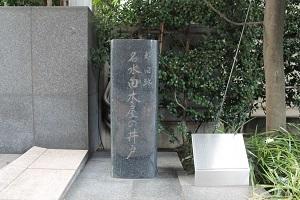
In Eitai-dori St., Cored Nihonbashi Annex Square, there is a monument of "Famous Water Shirakiya Well". (pages 21 and 134 of "Monoshiri Encyclopedia")


IMG_3501.JPG


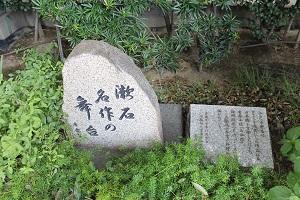
Next to the right is a monument about "The Stage of Soseki Masterpiece".


IMG_3502.JPG


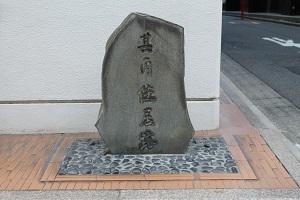
In addition, when you walk on Eitai-dori St., you will find a monument of "The Kakudo Residence Ruins". (Page 23 of the Monoshiri Encyclopedia)


IMG_3503.JPG


If you go further, you will pass through Reiji Bridge. It is a bridge that performs the function of the river. If you look at Hashigami, you can see "Shin Kameshima Bridge" and "Kameshima Bridge" first.


IMG_3505.JPG


IMG_3506.JPG


Normally, I like returning from the side of Eitai Bridge to the river terrace of the Sumida River while blowing in the river breeze, but today (July 13), I decided to return here to Yaesu Street and Kamejima Bridge.


IMG_3507.JPG


This area is called "Shinkawa" in the current place name, but until 1971 it was called "Echizenbori". ("Monoshiri Encyclopedia" page 174) The old place name remains in the store name.


IMG_3508.JPG


Today (July 13) is Reitaisai festival, Tomioka Hachiman. The photo shows the square in front of the Sumitomo Twin Building.


IMG_3509.JPG


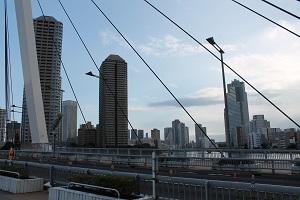
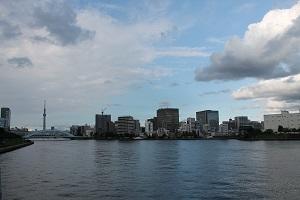
When you come here, Chuo-ohashi Bridge is already in front of you. Cross the St. Luke's Tower on the right, Tokyo Skytree on the left, Eitai Bridge, etc. while crossing this to enter Tsukuda.


IMG_3510.JPG

IMG_3512.JPG


Inari-jinja Shrine

[TAKK...] 18:00 on August 14, 2017

01.jpg


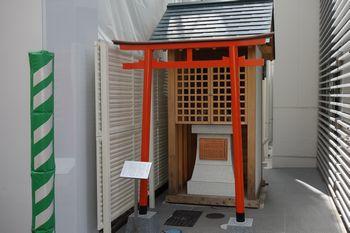
It is a brand-new shrine located in Nihonbashihoncho.

 
It seems that the auspiciousness is not clear, but according to the information board, it seems to be a shrine that has been popular with people in Nihonbashi since the early Edo period.
The shrine was once taken over with the rebuilding of the adjacent building in 2013, and it seems that it was newly built in 2016.