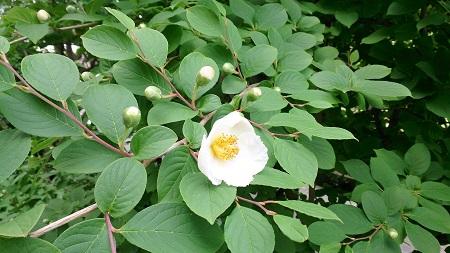
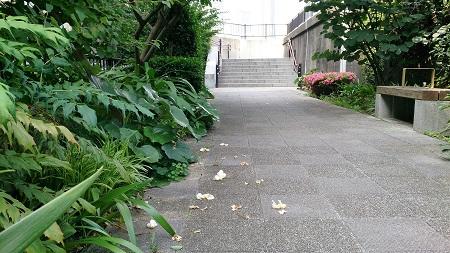
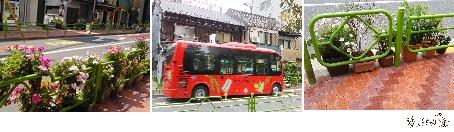
"Tsukuda Nakadori" is a street about 150 meters from Tsukuda 2-chome 11 to 17. This nickname came in 1989. The sidewalk is paved with colorful blocks, and the potted plants placed by neighbors are beautifully blooming. Sushi restaurants and udon shops with the season are lined up, and it is a street with a nostalgic atmosphere.
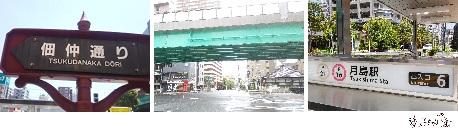
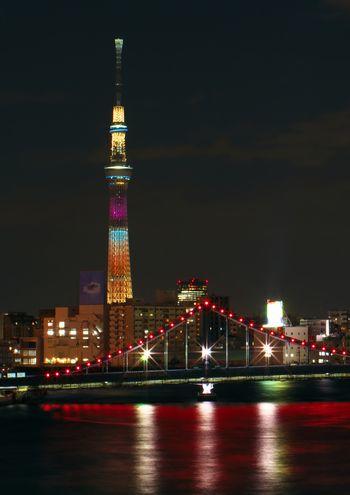
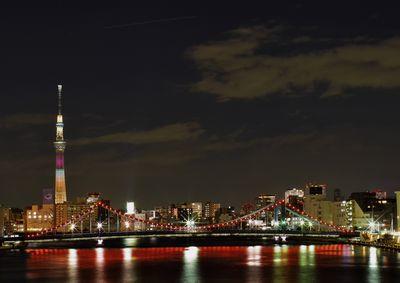
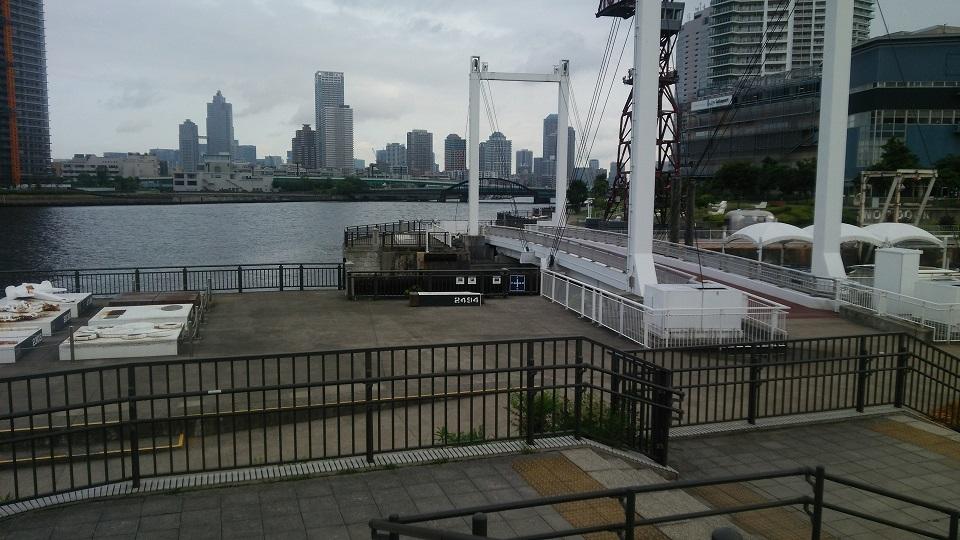
Along the street, there is a stop for the Edo bus "Tsukuda 2-chome" and Exit 6 of Tokyo Metro "Tsukishima Station", and the flower bed at "Hanasaki Town Corner" color the sidewalk. On the other side of the new moon bridge, you can see the red roof of Monja Street.
 Suddenly, I found a white tile with faded color. Surely the painting must have been painted. This is Tsukuda, so I wonder if it was a picture related to Tsukuda Island...I wanted to meet this path sooner...Minato kid thought about it.
I found a picture that seems to be in the image materials held in the regional library of the Kyobashi Library. The title is "Tsukuda 2-chome". It's exactly the address of Tsukuda Nakadori. It was a photo taken by Katsuo Hirai in 2005 (2005). There was a beautiful scenery of the old Tsukuda.
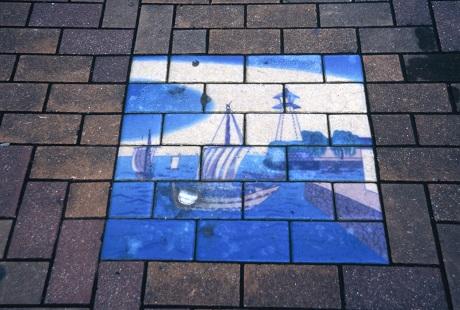
Photo courtesy of Chuo City Kyobashi Library
Benzai boat floating in blue waves. He seems to have brought supplies from a distant land. In the background, you can see the lighthouse of Ishikawajima. It is also depicted that the waterway is broken to Tsukuda moat. At present, Sumiyoshi sluice gate is built there.

Photo courtesy of Chuo City Kyobashi Library
This seems to be a Benzai ship that also carried supplies. We cover rain like Toma so that important products do not get wet with rain or waves. You can see the roof of Sumiyoshi-jinja Shirine over there. All of them look like the scenery of the Edo period. The Minato kid who found this photo was impressed. And I would like to thank Mr. Hirai for taking the picture.
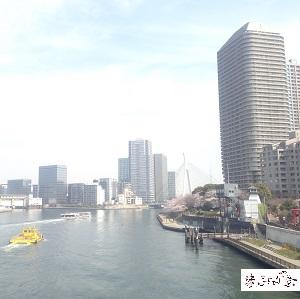 Many boats anchored at the mouth of the Sumida River, surrounded by Tsukuda Island and Eitai Bridge, and the surrounding towns were concentrated with Setori-juku and shipping wholesalers. This is the center of Edo Minato.
In Edo, there were no port facilities where large boats could land directly. This is due to the terrain of the Sumida River, because the flowing sand accumulated at the bottom of the river to create shallow waters.
For this reason, large cruise ships sailing from countries will anchor off the mouth of the Sumida River, which is "Edo Minato", or off Shinagawa, transfer goods to a small ship called the Setori ship (tea ship), and in Edo city. He carried the digging that was stretched like a mesh, and transported to the wholesaler's warehouse along the riverbank. (On the right, you can see the ruins of the current Ishikawajima Lighthouse, Tsukuda Island, and Sumiyoshi Lock. In front of Chuo-ohashi Bridge and Shinkawa buildings on the bridge in 1994. )
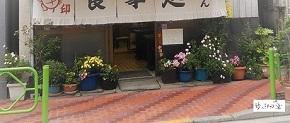 Another thing, "Usako Tsukuda", who was with me on the radio the other day, received special information. This "Tsukuda Nakadori" has a picture of Indian spot-billed duck! That's right. It was a Minato kid who was breathing out, but unfortunately, the pavement was new. There is no picture of Indian spot-billed duck in the Kyobashi Library. What kind of Indian spot-billed duck was it?...I disappointedly dropped my shoulder, but I just thought that there was a picture of Indian spot-billed duck, so it would be fun to walk. Thank you very much, Mr. Tsukuda's Usako.
The city of Tokyo does not stop. That’s why I think records are important. At the very least, I want to remember my favorite scenery and place.
※In posting photos, we have applied to the Chuo Ward Kyobashi Library and obtained permission.
Chuo-ku Tourism correspondent Minato kid
No. 14 May 24, 2018

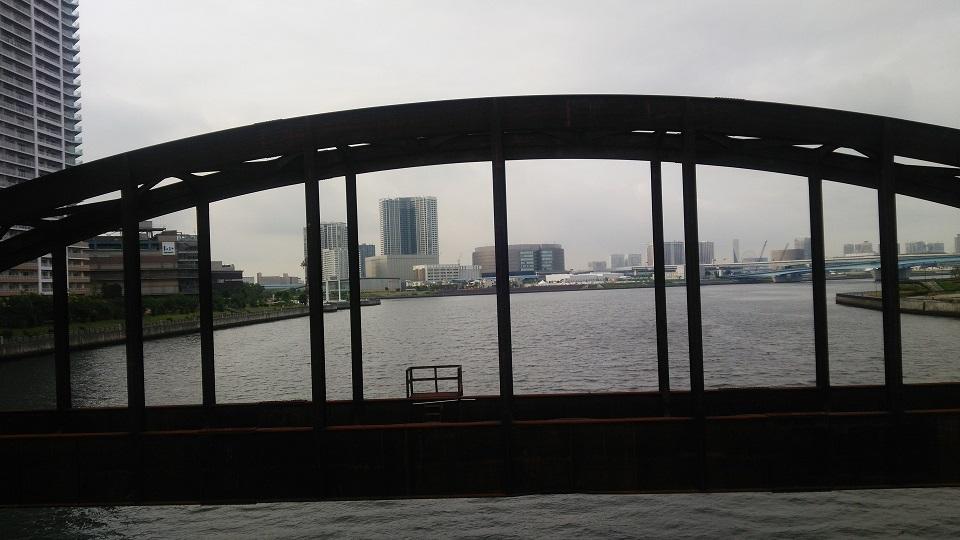
 the rainy season,
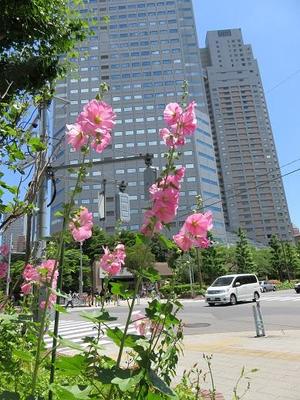

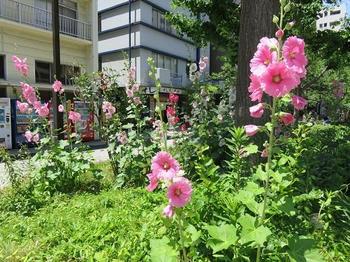

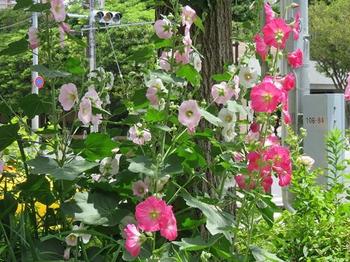
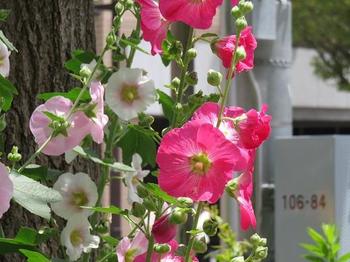
 just around the beginning of the rainy season and ends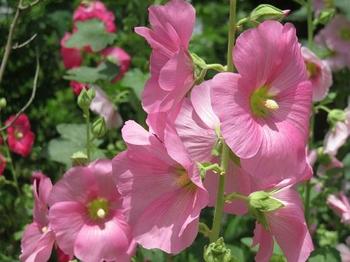
 )
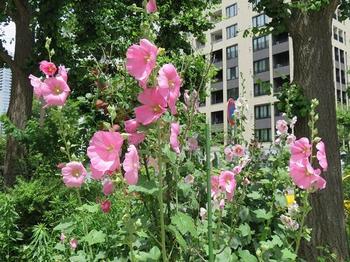
)

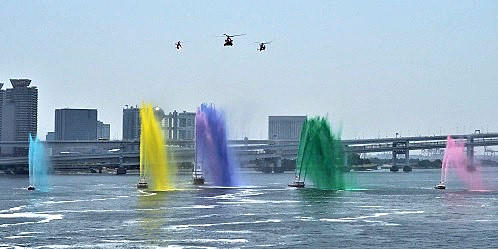
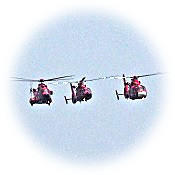 To celebrate the anniversary of the opening of the Port of Tokyo, which opened as an international trading port on May 20, 1941, Tokyo Minato matsuri is held every year on Saturdays and Sundays around May 20. This year, the 70th anniversary, various events were held on May 26 and 27 at the Harumi Passenger Terminal as the main venue.