[Minatokko-chan]
18:00 on June 2, 2018
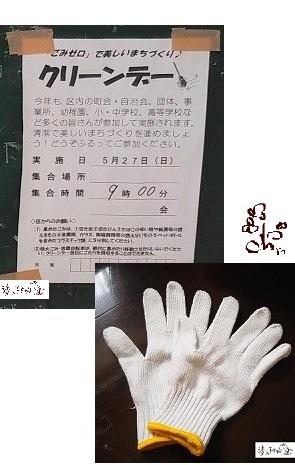 ♪Creating a beautiful town with zero waste
In the morning of May 27 (Sun), "Clean Day" was held by town associations, local governments, various groups, offices, kindergartens, elementary and junior high and high schools in Chuo-ku.
This is an initiative to clean empty cans and cigarette butts scattered on sidewalks, alleys, plantings and green belts at once, and to cooperate with the beautification of the town.
Minato kid also participated in Clean Day.
After all, what I noticed was the cigarette butts. I was especially focused around the parking lot.
Also, now is the time for vegetation to fly seeds, so many species-like things have fallen. I wish I had fallen on the soil, but on the asphalt, I thought that it was poor that the buds could not come out.
♪ Clean Gunsho Street and alleys
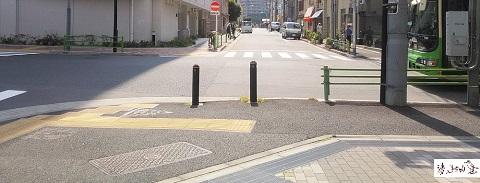
Cleaning started at 9 o'clock. In about an hour, every road is beautiful. There are voices saying, "It's so beautiful!" And some people are collecting garbage carefully until the end. You guys have a very clean look. I have been told that you have love in this city.
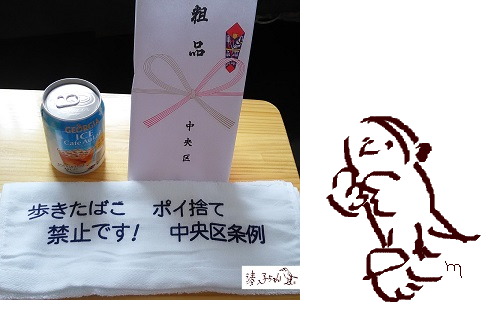 On the way home, I just got a drink and a towel.
It is Chuo-ku original towel! Thank you very much.
Chuo-ku Tourism correspondent Minato kid

No. 15 May 27, 2018
[The Minnie Cricket]
09:00 on June 1, 2018
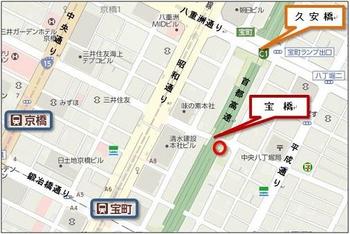
Takara Bridge is a bridge that spans the former Kaede River, which has already been reclaimed, but now the Metropolitan Expressway Toshin Beltway runs below.



Although there is not a lot of traffic on the treasure bridge, there are highways running not only under the bridge but also above.
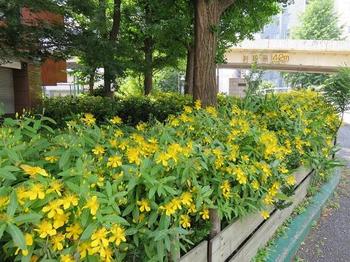
The planting space under the Hatchobori side of this treasure bridge is blooming all over the area.
The map below  is the location of red.
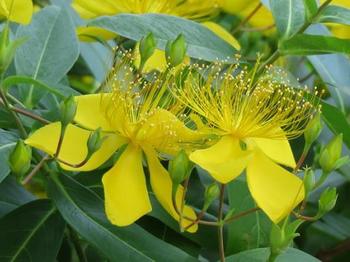
Biyo willow (Mioyanagi, Beauty willow) is a semideciduous shrub of the family Otogirisaceae.
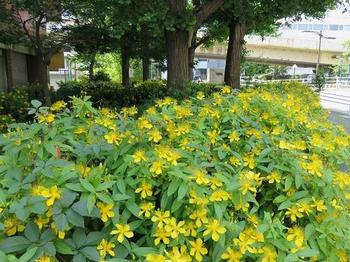
It is native to China and came to Japan about 300 years ago. The flowering season is around May to July, and blooms with five yellow petals with a diameter of about 5 cm.
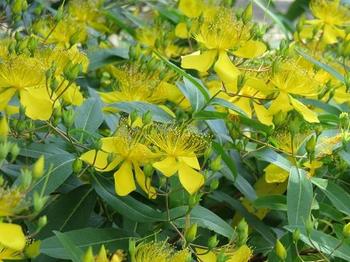
Kinshibai, which blooms yellow flowers at the same time, is also a member of the same Otogiri family, and it is very similar when viewed from a distance, and it is not possible to distinguish which flower is, but when you look at the flower itself nearby, the oshibe of the willow willow is long and well noticeable.
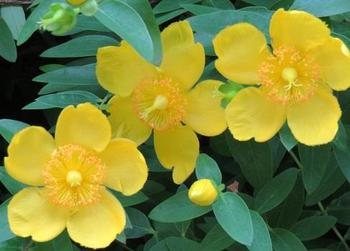
The photo above  is kinshibai, and the photo below is biyoyanagi.
Click here for a blog that introduced kinshibai and beau willow on St. Luke Street last June. ⇒
/archive/2017/06/post-4378.html