Hello. This is a new correspondent, Hanes.

Do you have anything to look at when you walk around the town?
I think there are various shops where you can line up, show windows, roadside flowers, passers-by, etc.
In addition to the water outlets (Part 1 and Part 2) that I talked about before,
You will also see the reference points (especially triangular points and reference points) used for mapping and surveying.
Some climbers may have seen a triangular point at the summit.
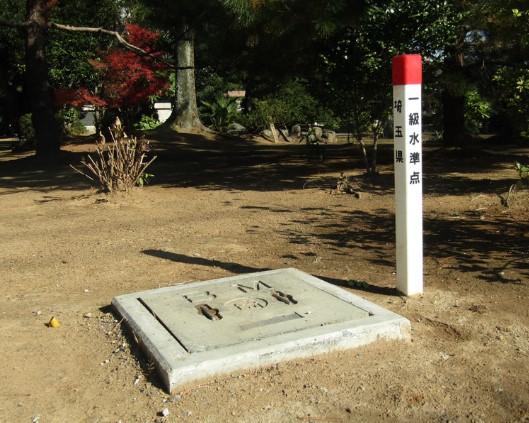
Among the many triangular points and level points in the country, I especially like it.
It's called Kigosui Juntenten!
The number of this level is limited even in the whole of Japan, and it remains biased to large cities.
Characteristic is a mark similar to "No" in kanji.
Unlike the normal level point, there is no easy-to-understand indication that this is the level point,
It's a strange mark that everyone who knows that exists secretly in unexpected places knows.
In the exhibition on sluice gates by supporters of the local Tenmonkan at Time Dome Akashi,
This kigo level point is also introduced,
In this blog, senior correspondent Jute of Shubo and Akira Makibuchi / Sai Sharaku were also featured.
In Chuo-ku, there is one kigo level point and one place related to it.
This time, I would like to introduce some examples that can be seen outside the ward.
■Encounter with Kigo standard points and mysterious relationships
The kindness of a resident of U.K. who took me to an old church....
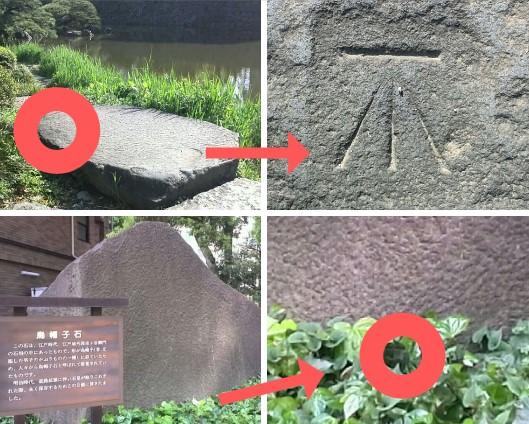
I found a strange "non" mark engraved on the outer wall.
At first, I thought it was like a joke or an engraving of stone walls in Japan, so I didn't care, but the more I visited the historic site, the more opportunities I saw it.
I began to wonder if this meant something.
About a year later, when I started volunteer guides in the cathedral of a city registered in World Heritage,
Coincidentally, I found the same mark screaked at the bottom of the church door!
When I checked with the volunteer leader, I found that the mysterious mark was true.
I understand that it is a kigo level point in Japan.
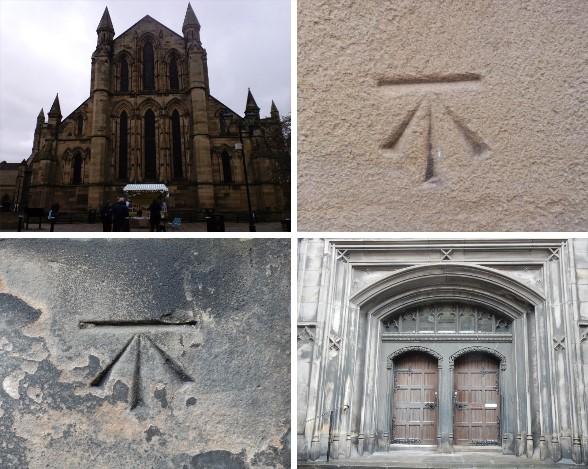
(Upper stage: Kigo-level points for encounters, lower stage: Kigo-level points for volunteers)
■Kigo Level Points and Triangle Points Tour in U.K.
Since then, I have begun to walk by taking pictures of punctuality levels and triangular points, like collecting stamps and commemorative coins.
Only the mark is engraved on the Historic buildings,
At the top of a new building, mountain or hill, we noticed that a numbered plate (called Flush Bracket locally) is installed.
The OSBM on the plate is an abbreviation for the Ordnance Survey Bench Mark (British Land Surveying Department level).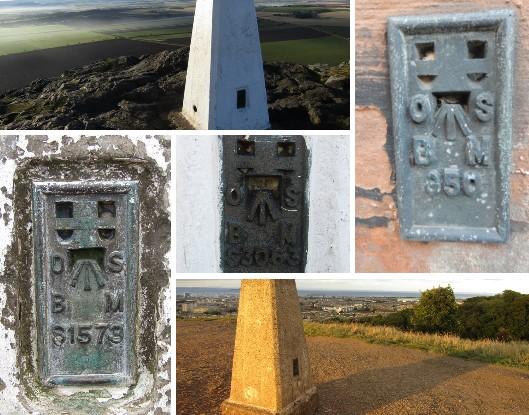
■Kigo Level Rounding in Japan
After returning to Japan, I heard that there are few levels of this type in Japan,
Taking advantage of the business trip, I first went to Osaka-jo Castle.
It was a shame that I was half hiding, but I was able to find it safely.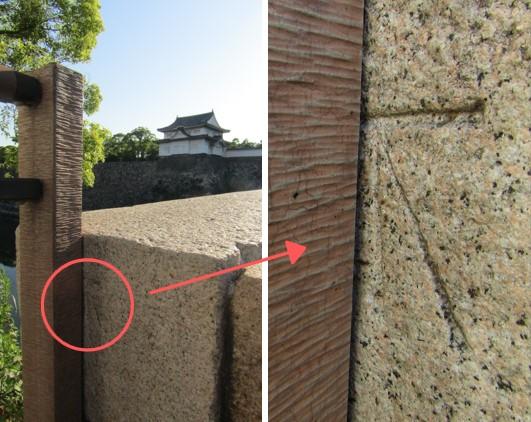
Next, to look at the example of Tokyo, a flat stone near the Shinjiike Pond in Hibiya Park
I went to see what was engraved on Eboshiishi and what remained in the Imperial Palace.

■Kigo Level Point in Chuo-ku
The preface has become longer, but there is one point left in Chuo-ku, so we went ahead....
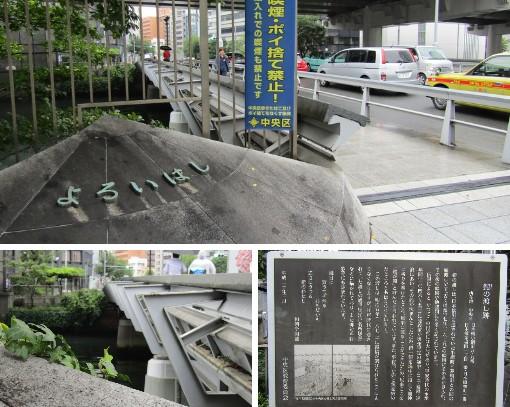
Ichiishi Bridge lost stone marker built in 1857 (1857) *!
(* Hanes style: I hate (18), this (5) Nana (7) lost child. It's safe (Ansei) (4). You can find it here .)
.)
It is engraved on the bottom, so please check it out when you go near you.
According to the exhibition commentary by Time Dome Akashi, English-style inches were used as standard stones in the early Meiji era.
It is said that the horizontal bar attached a "no"-shaped kigo-level point indicating the altitude to stone pillars, signposts, lanterns, torii, etc.
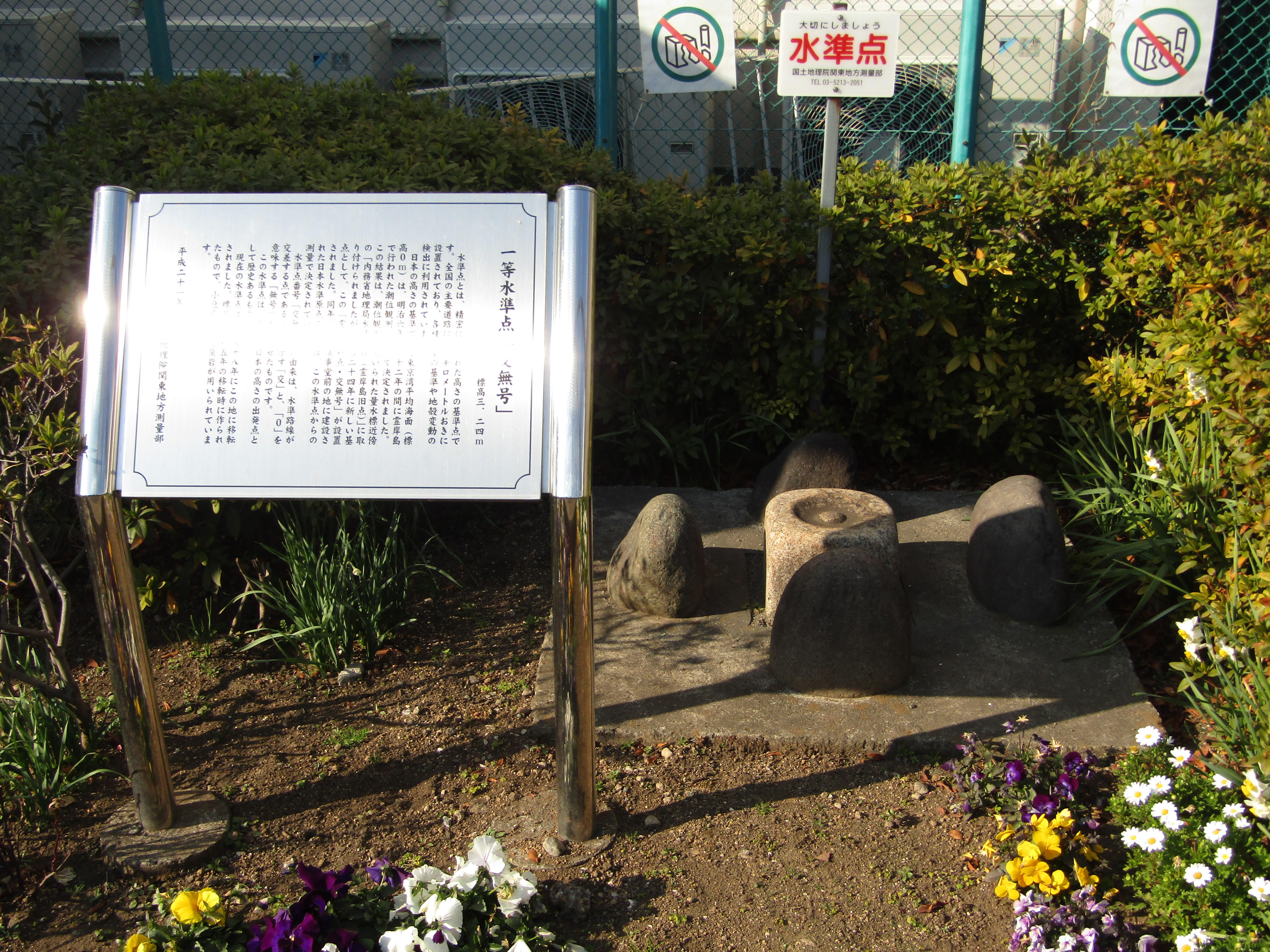
Later, the surveying business shifted to the German style, and in 1891, "Reishi Shimashin Point / Munishi" (meaning intersection No. 0 on the level line) was established.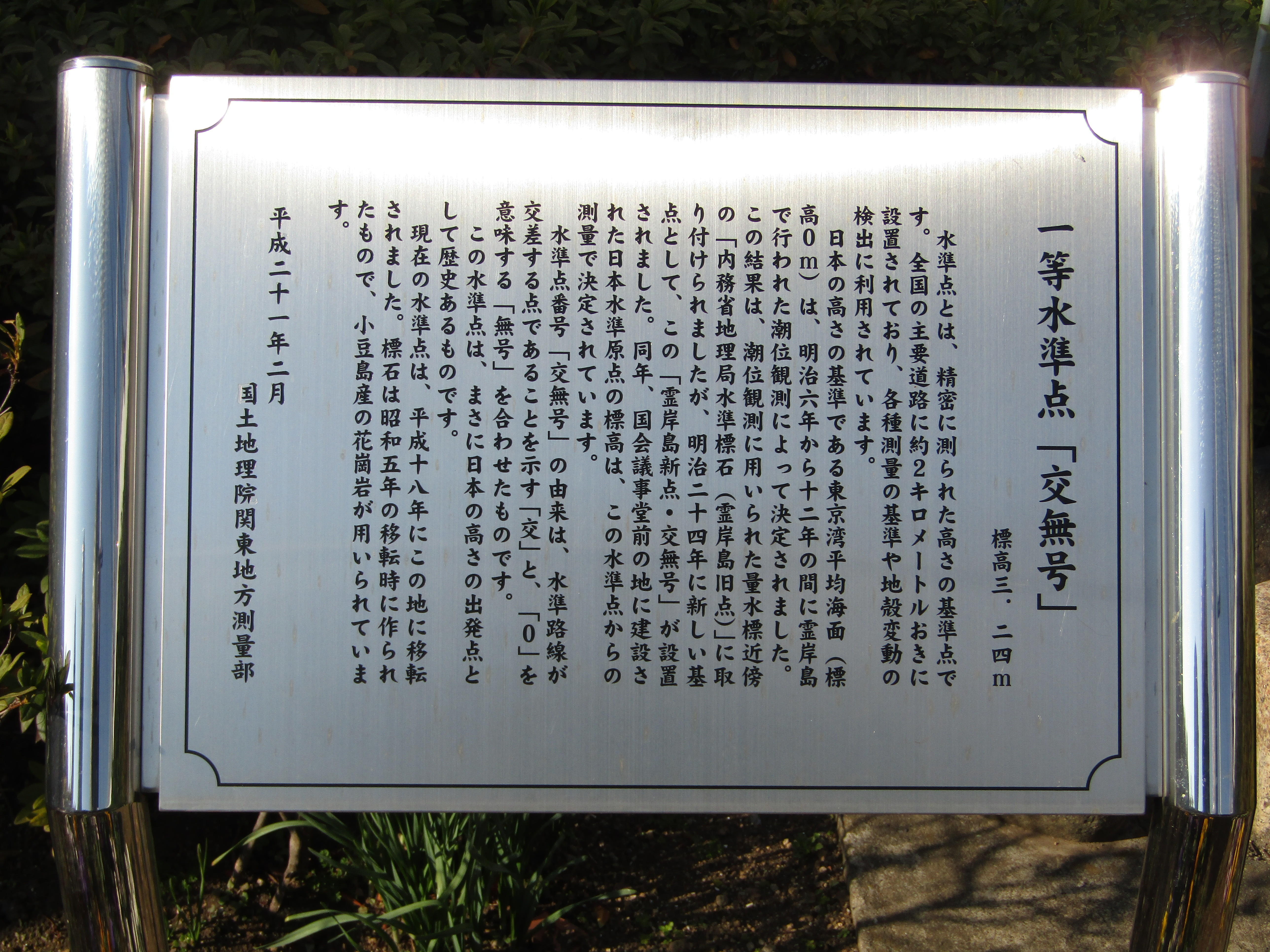
What is now near Chuo-ohashi Bridge is said to have been relocated in 2006.
In this way, in Chuo-ku, a part of the development history of the standard point can be traced.
■For those who are interested in kigo level points
At an event hosted by the Geographical Survey Institute held before and after the survey day (June 3),
The Japanese standard point on the premises of the Kensei Memorial Hall (the site of the Land Surveying Department) will be open to the public.
This is a valuable opportunity to see what is the standard of height in Japan up close.
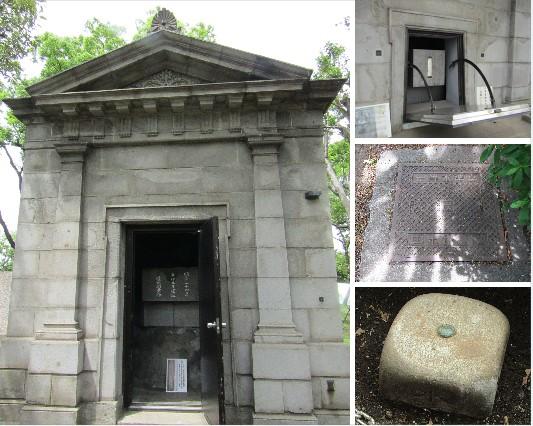
There are some interesting stories that can only be heard at this event,
If you are interested in the standard point, please come and visit here.
You may deepen your understanding of the symbols in the city.
Chuo-ku Tourism Association Official Blog
Chuo-ku Tourism Association correspondent blog
We introduce "seasonal" information of Chuo-ku by sightseeing volunteer members who passed the "Chuo-ku Tourism Certification" conducted by the Chuo-ku Tourism Association and registered as correspondents.
List of AuthorsRecent blog posts
|
Searching for the mysterious mark "No" and three thousand ri
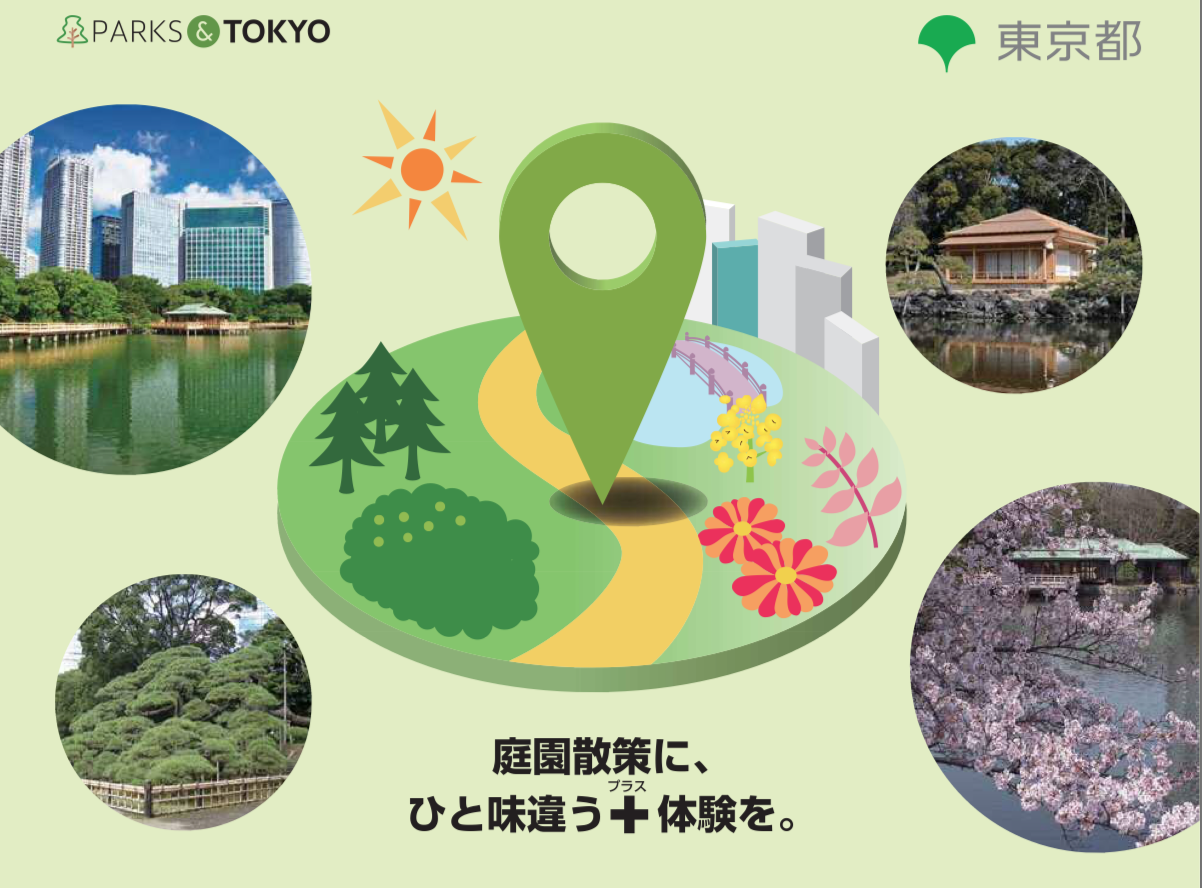
Tokyo Parks Navi - Visit Hamarikyu Onshi Park -
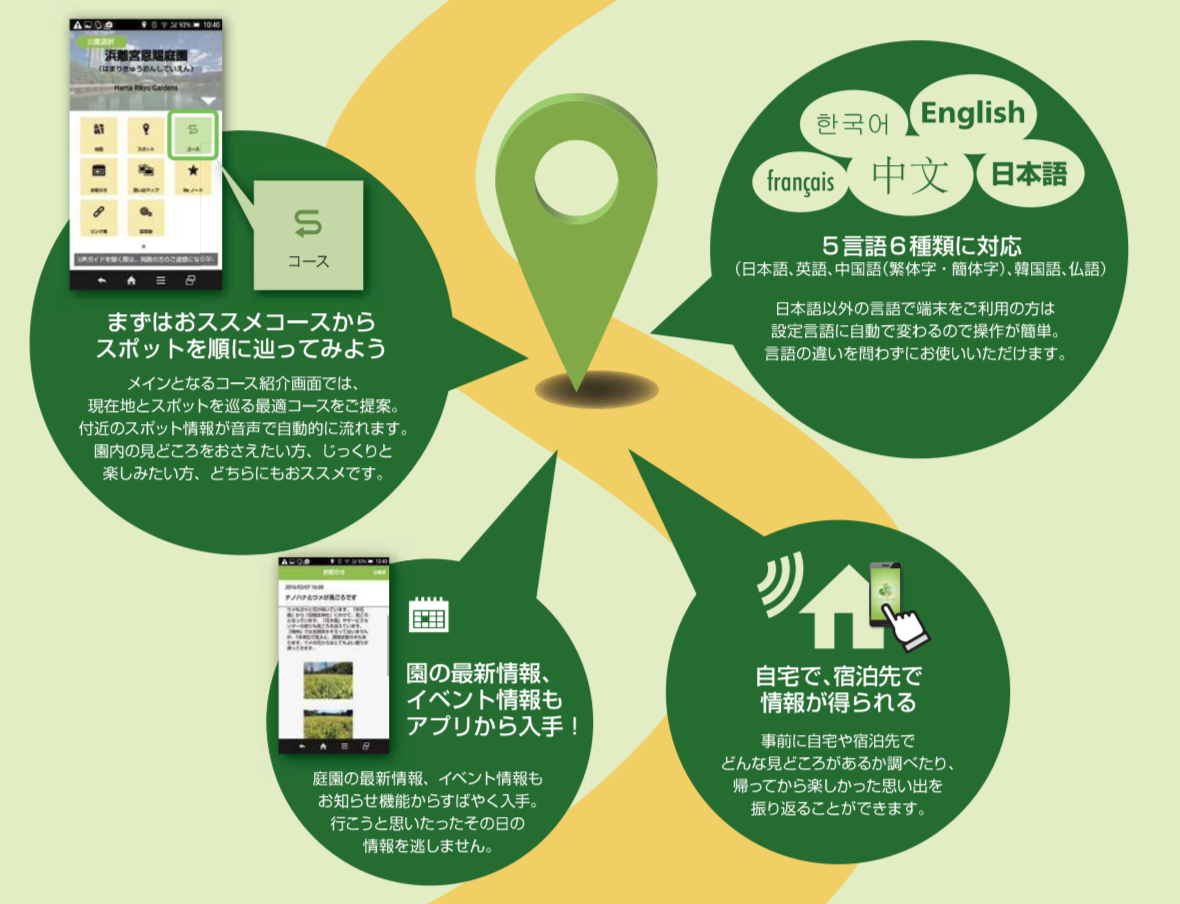
"Tokyo Parks Navi" is open to the public from Tokyo as a tool for enjoying sightseeing in Hamarikyu Onshi Garden.
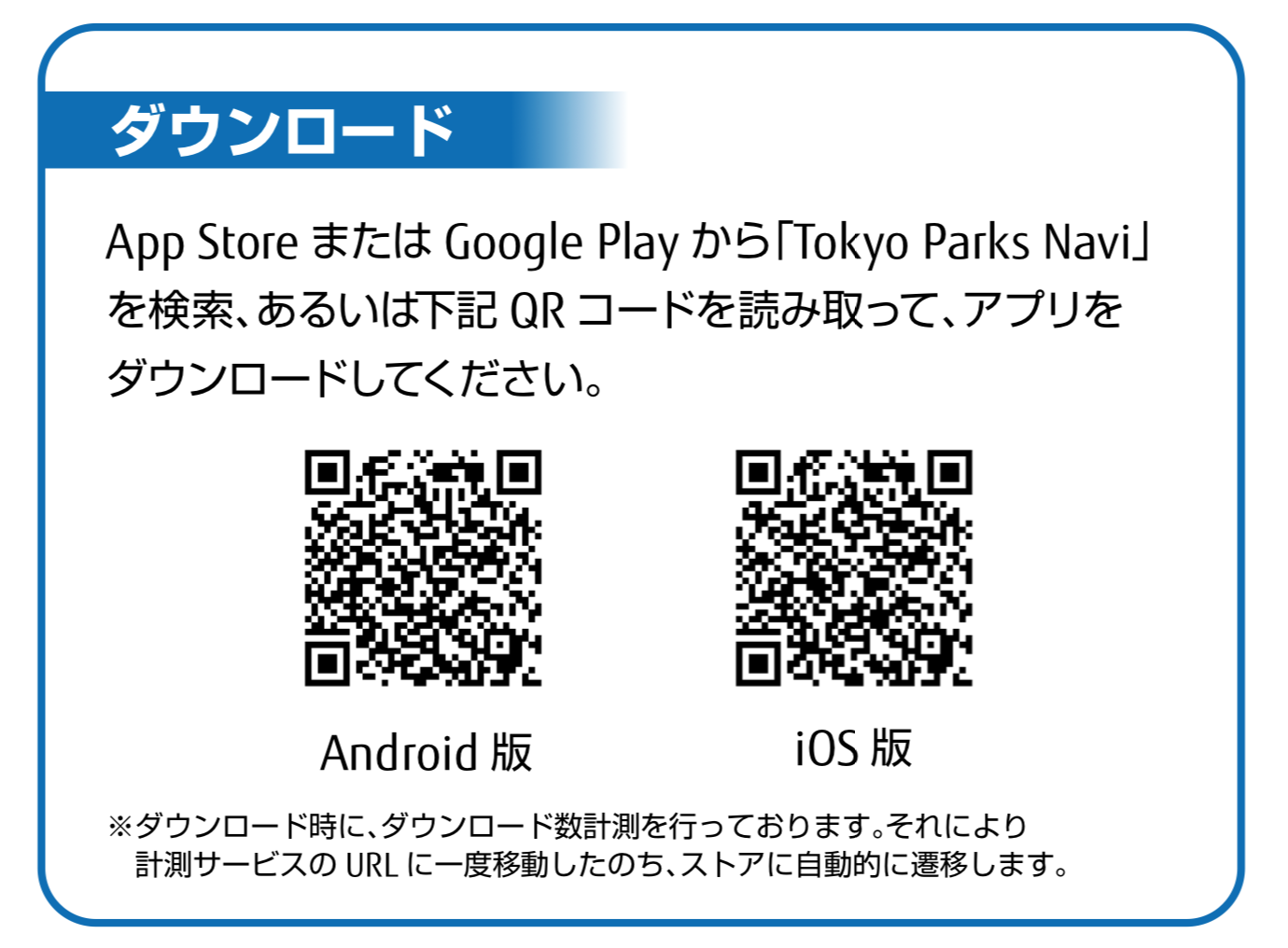
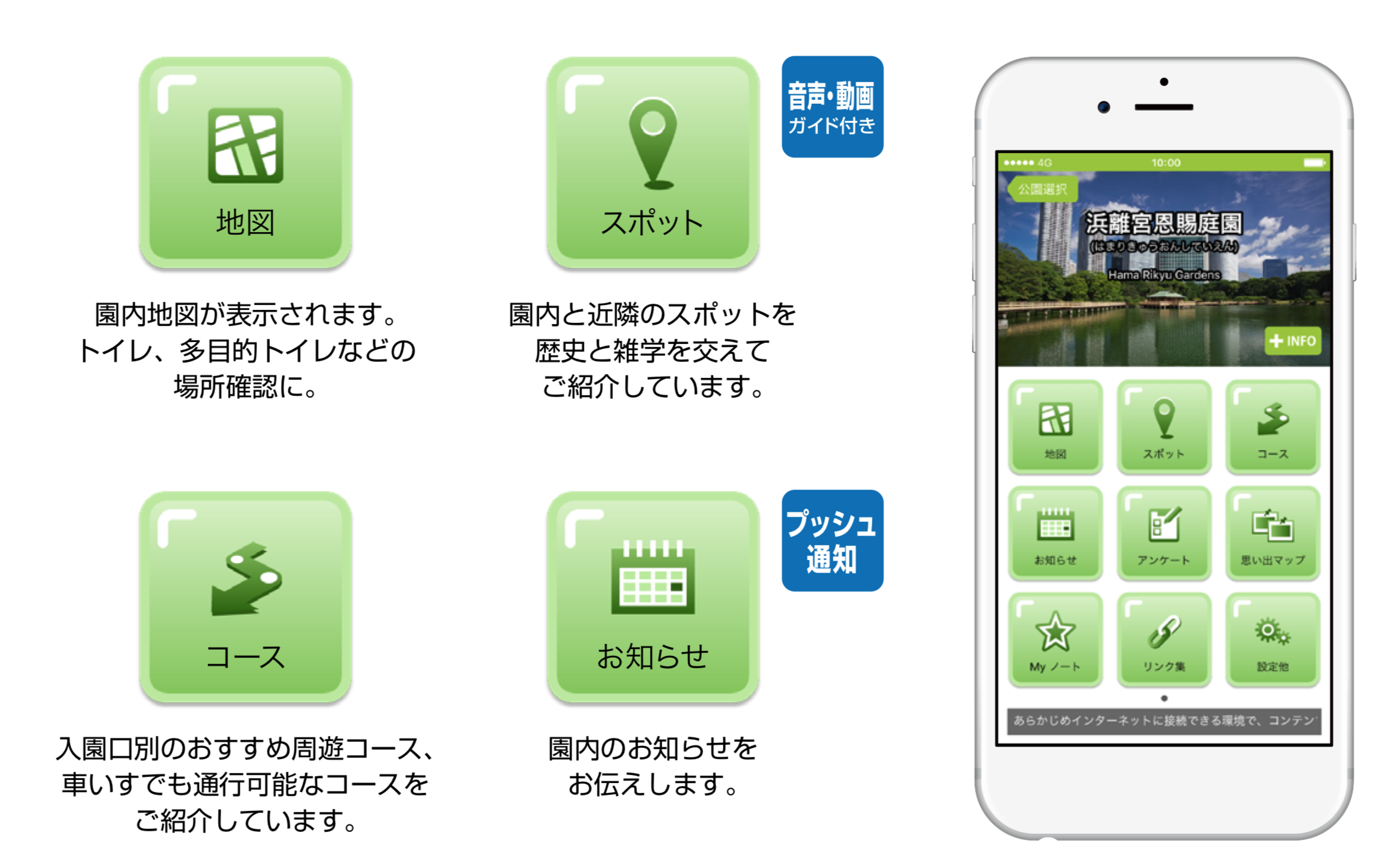
"A simple course that can be crunchy, a course that absorbs knowledge over a lot of time. A record of fun sightseeing. The Metropolitan Park Walking App `` Tokyo Parks Navi '' helps you walk around the park according to your purpose with abundant data such as map function and route display function, audio and video, etc. You can download the app from the Apple Store or Google Play. Tokyo Dumbo is fast in your smartphone!
When you approach the guide spot set in the park, the terminal responds automatically (or touch the tag, read the QR code), and detailed information on the spot is provided by text, audio and video. Information that cannot be known just by strolling through the park can be obtained by simple operation. In addition, there is also a guide function and a notification function such as events, so that you can use it for an efficient and enjoyable walk in the park.
In addition to Japanese, there is also information in English, Chinese, Korean, and French, so it is very useful when you bring overseas people.
Although the cold days continue, Tokyo Dumbo took a leisurely stroll around Hamarikyu with the guide of Tokyo Parks Navi. In the flower garden, the yellow blooming canola flower and pink colored red plums taught me that spring is not far away.
Tokyo Metropolitan Park Association https://www.tokyo-park.or.jp/teien/contents/tokyoparksnavi.html 【Excursion Series 11】 What is the charm of Higashine City, a friendship city?
[The 10th Excursion Series] Chuo-ku Historic Site where you can enjoy traveling around Tohoku
"Ginza 9-chome" found in Aizu
I took a short trip to Aizuwakamatsu City, Fukushima Prefecture on the Tobu Limited Express Towards the Chuo-ku Tourism Examination
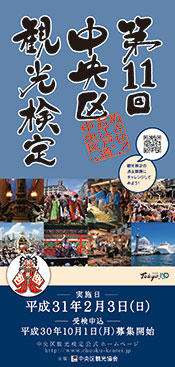
For those who are studying for the 11th (held on February 3) Chuo-ku sightseeing certification test, I will guide you through effective learning methods from my experience so far.
Naturally, be sure to prepare the official text "Chuo-ku Monoshiri Encyclopedia" and a collection of past problems. First, read the text diagonally and input the outline. You don't have to try to remember the details here, so you can grasp the whole image. Next, try focusing on past problem collections. You may only be able to do about 50%, but you don't have to worry too much. By solving past problems for three years, I think that you will understand the approximate "question tendency".
For example, "The Origin of ●●●", "People related to ■■■■■■■■■■■■"...The predecessor, old name, alias, and current name "is often mentioned. "Number" is also easy to make a problem, so keep in mind the places related to the numbers. Once you understand this approximate trend, I will read the text carefully. I mark this place where I think it's likely to come out and read the text repeatedly. I think it is a good idea to read while assuming the problem of filling up for yourself. Make sure you can image the photos and maps posted in the text well.
Also, it is better to remember the events, news, etc. that have been over the past 1-2 years. Since it is the theme of the 11th test, "Heisei no Chuo-ku", problems related to Heisei are expected, so it may be fun to try yama.
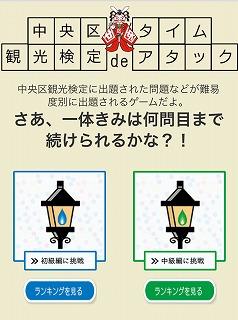
Recently, a site has been set up on the website of the tourist association that can solve the past question "Chuo-ku Tourism Examination de Time Attack" on the website, so I think it would be nice to use this. http://www.chuo-kanko.or.jp/#we-page-quiz
Since the pass line is 75 points, we do not aim for 100 points, but target 80 points. In other words, there is room for mind that you don't have to be able to do 20 points. Please calm down and do your best.
1
|
MenuArchiveLinks |



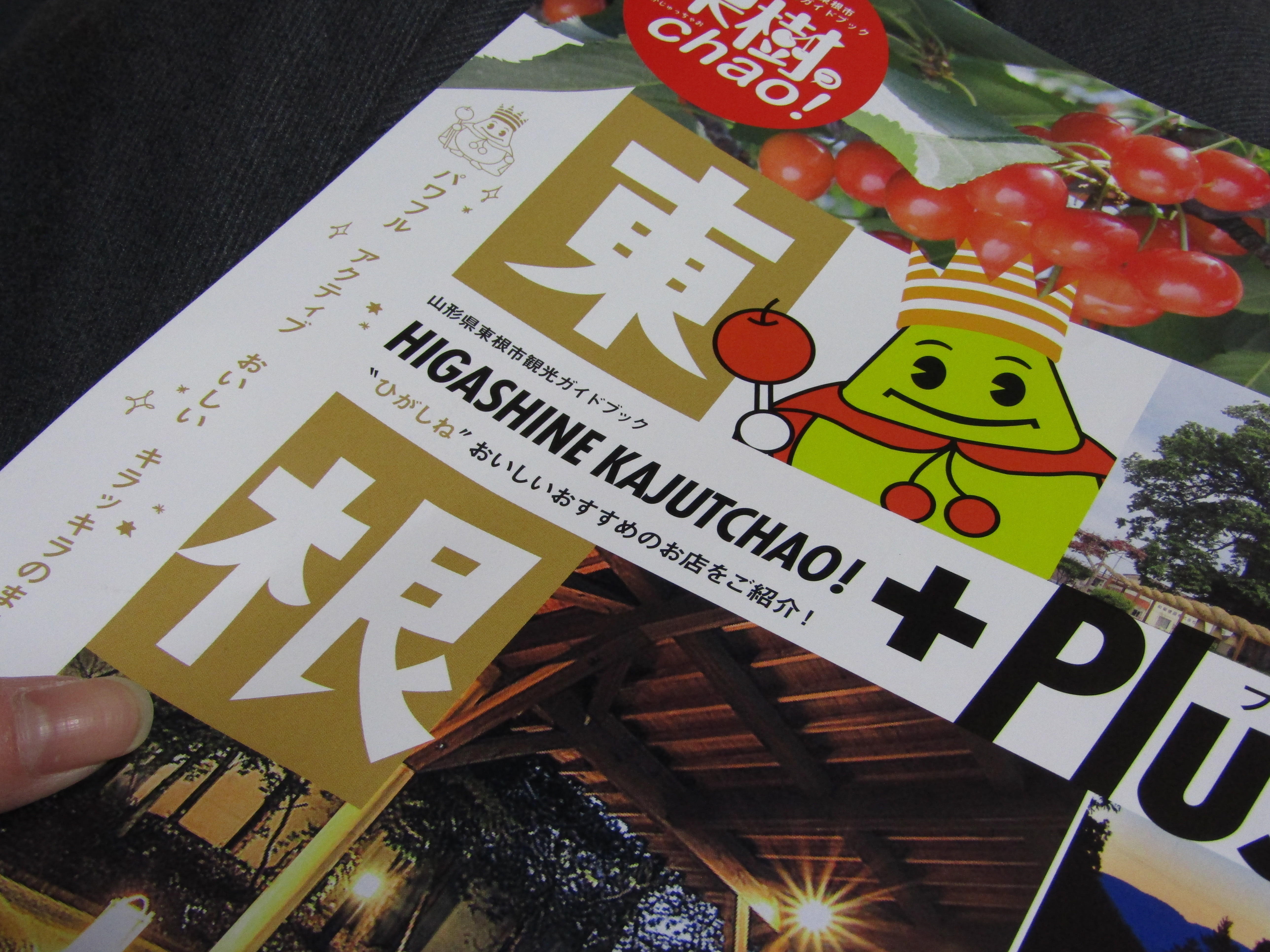
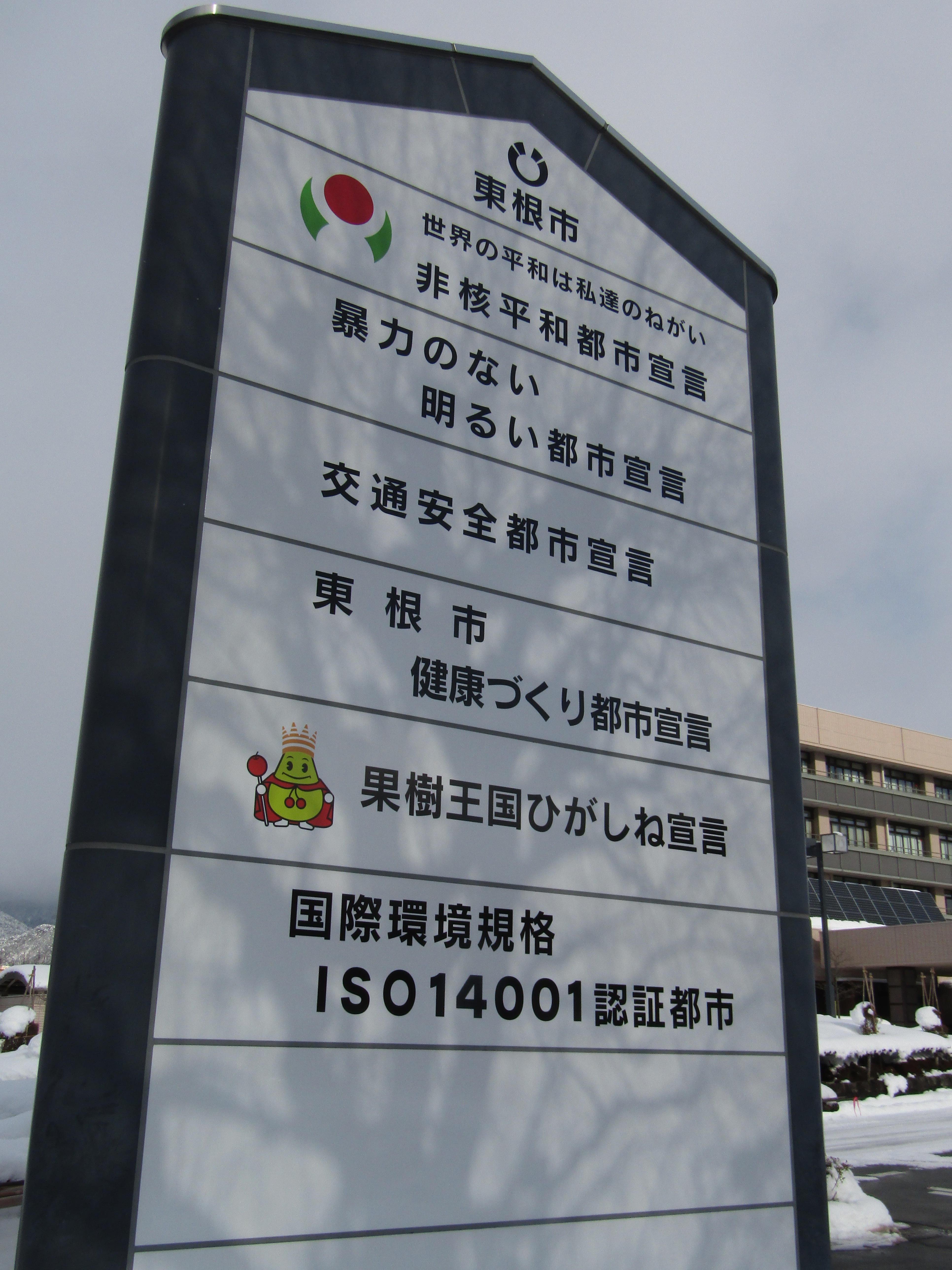
 " and "cherries
 "!
"!




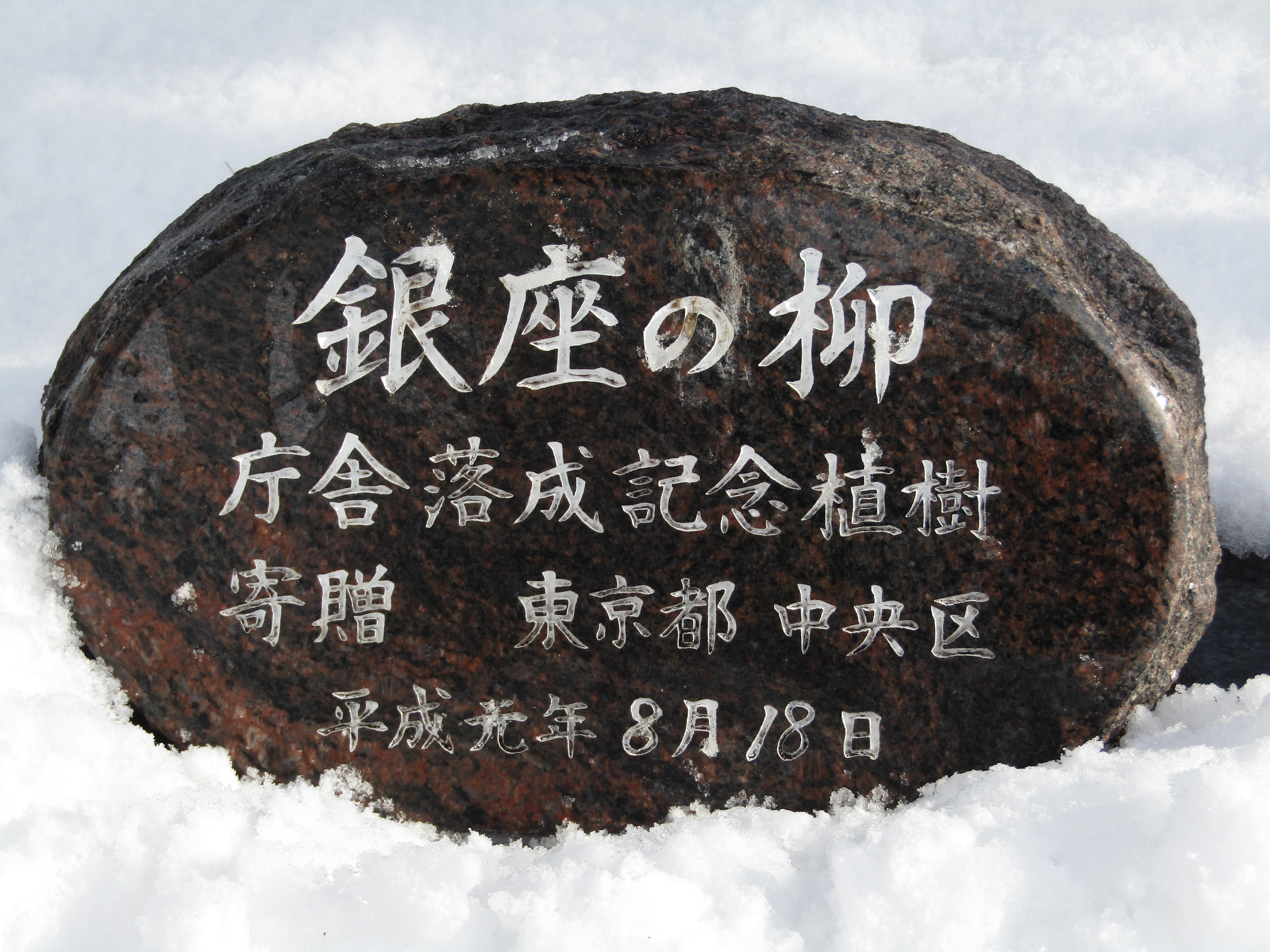



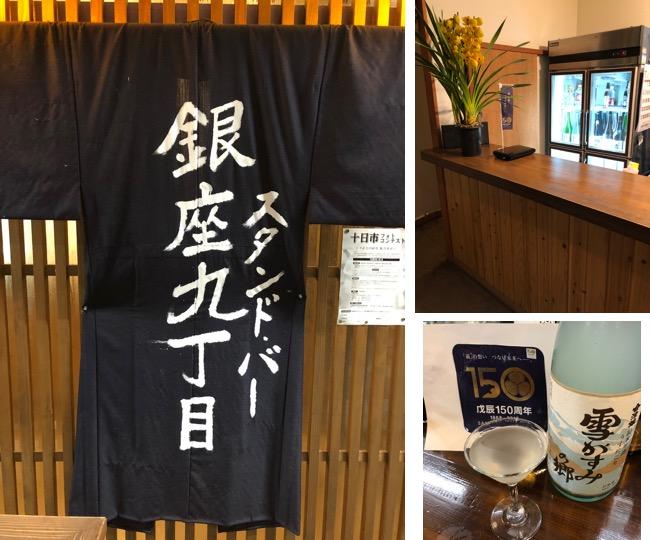
 "Liberty Aizu" during the consecutive holidays. In the evening, when I was walking near the station, I saw the word "Ginza" and entered the store without hesitation. According to the story, he used to run a shop in Ginza 8-chome before, so when returning to his hometown Aizu, the name was changed to "Ginza 9-chome".
 (about 70ml?) As you can enjoy various kinds of sake at a time, you can enjoy various kinds of sake at a time. It's all right. Aizu is delicious in water and rice, so there is a lot of good sake.
 every week, and he takes off his hat to his ability to act.