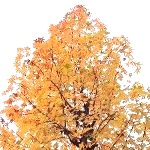
The other day, I took a walk near Hamacho Park. The weather was fine and the ginkgo was shining in the soft sunlight of the evening.
It was golden rather than yellow, and I felt that there was something good, so I took it on the camera unexpectedly.


Chuo-ku Tourism Association Official Blog
List of AuthorsRecent blog posts
|
Yellow leaf production Hamacho Park
The other day, I took a walk near Hamacho Park. The weather was fine and the ginkgo was shining in the soft sunlight of the evening. It was golden rather than yellow, and I felt that there was something good, so I took it on the camera unexpectedly.
Ginza / Christmas Illumination Walk Recommended Course
Finally, December is the season when the city shines with Christmas illuminations.
Especially in Ginza, the whole city is gorgeous with illuminations. We will introduce a walk course where you can enjoy the Christmas season
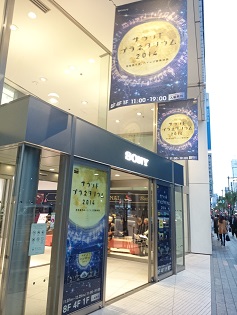
First, go to the Sony Building at the Sukiyabashi intersection. Until December 25th, "Sound Planetarium 2014" will be held.
A program where you can enjoy a trip to the moon on a high-quality high-resolution sound source in the beautiful starry sky of "MEGASTAR-II", a planetarium that can project 10 million stars. The starry sky reflected in the whole room is very romantic.
In the second half of the program from December 1st, you will be able to listen to the unicorn “Feel So Moon”, Ken Hirai “Tomorrow” and Fumiya Fujii “Breath of Dawn”
From 11:00 to 19:00, it is projected at 5, 25, and 45 minutes per hour. It seems to be crowded on weekends and holidays and after 17:00, so weekdays are recommended.
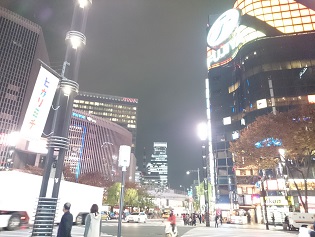
Especially, it is recommended for illumination walks around 16:00. Because when I went out after seeing the planetarium at that time, it was already dark, and the neon in the city of Ginza looked like a star, it was very beautiful.
After leaving the Sony Building, proceed along Harumi-dori St. toward Tsukiji. Turn at the corner of Wako at the Ginza 4-chome intersection and take Chuo-dori toward Nihonbashi.
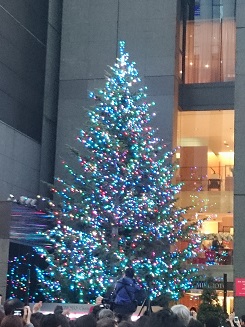
A beautiful Christmas tree in front of Mikimoto At every hour, you can enjoy the illuminations that change the dazzling color.
This tree, which has been popular as a winter tradition, is said to be the last year due to the rebuilding of the Mikimoto Building. It lights up until 22:00 every day until December 25th.
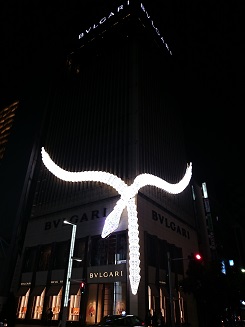
Take Chuo-dori a little further towards Nihonbashi, and Illuminations of Bvlgari Tower Bvlgari's distinctive design "Serpenti" is shining. The eye color is different every year, and this year it is purple.
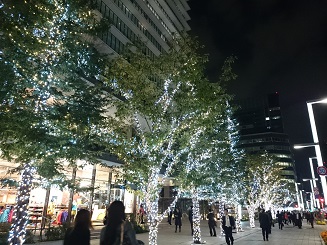
The Chanel building on the opposite side of Louis Vuitton and Bvlgari Tower is also beautifully illuminated.
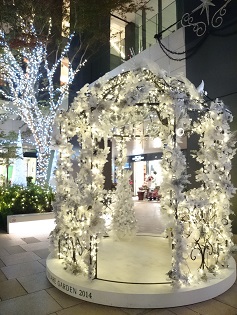
Then, go further toward Nihonbashi and pass through the elevated highway of Ginza 1-chome, you will see Tokyo Square Garden. This is also colored with beautiful illuminations every year.
In the underground garden there is a romantic gazebo There is also a bench inside, so be sure to take a commemorative photo
There are many fashionable cafes, restaurants and bars in Tokyo Square Garden, where you can enjoy tea and meals, and Tokyo Metro Kyobashi Station is directly connected to the square, so it is convenient to go somewhere next.
About 1km from Sukiyabashi intersection to this point, Christmas illumination walk course If you have time, please enjoy it. 2014 Koami-jinja Shrine Doburoku Festival
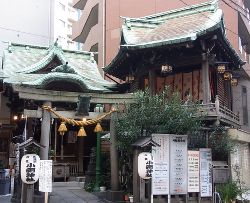
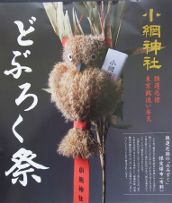
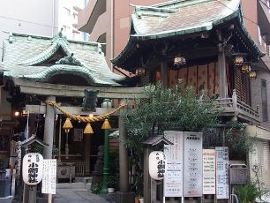
It is said that he acted to worshipers at the Nigori sake "Doburoku" in offering at "Niiname-no-Matsuri" to appreciate the harvest of five grains. Niiname-no-Matsuri is usually held on November 23, but it is said that the area is usually held on November 28 (29 for Sunday and 27 for Saturday) due to the declining population on holidays. On the day of the event, since the limited distribution of one bottle of sake "Good luck" and "Mimizuku" of good luck eradication will be distributed, it is also a long line early in the morning. "Mimizuku" is based on Susuki, which represents the seven herbs in autumn, in connection with the Doburoku Festival in November, and the benefits of good luck elimination and business prosperity are given to the "Mi" (body) and the family's "Mi" (body) for "Tsuku". Doburoku is served by worshipers from 9:00 a.m. to the evening. (Three types of paper cups with different capacity are available) After the festival from 12:00, the nationally designated Intangible Folk Cultural Property “Sato Kagura Dance” will be dedicated to Kamimae. Koami Shrine was enshrined in 1466 and is said to be 550 years old in 2016. In celebration of this honorable festival, the precincts have been improved sequentially since last year. In 2013, the relocation of the amulet reception counter and the relocation of the Zenarai no Ii. I heard that the roofing of shrine hall and Kagura Hall is planned in the future.
Information on rigid tennis classes in Chuo-ku
Chuo-ku is held twice a year in spring and autumn.
1 Business name: Hard tennis classroom
The schedule is from April 11 to May 20 in the spring of 2014, and Tuesday and Friday from September 9 to October 17 in the fall.
2015 is undecided.
2 times: 10 times in total In principle, Tuesday and Friday
3 hours: From 6:30 pm to 8:30 pm
4 Venue: Schoolyard of Kyobashi and Tsukiji Elementary School
5 Lesson fee: 2,500 yen in total 10 times
6 Targets :Over 18 years old
7 Capacity :60 people
Details will be published in the announcement of the city [center] March 1 and August 1.
I also participated in a hard tennis class for the first time. There are Class A for those who are first classed and have never played any tennis, Class B for those who have played a little tennis, Class A for those who graduated from Class A, and Class C for senior who is in the game. In each class, 3 to 5 coaches can be kind and politely taught, so it is safe for beginners. Sometimes, after the hard tennis classroom is over, there is a social gathering, where you can make friends and it is a very fun classroom. If you want to start playing tennis, why not join us? 100 years of birth in memory of Michizo Tachihara
You're smart and pure. I had to live in purity See you again I have to die soon! (Tatsuji Miyoshi's "Bureharu Sorrowing") The poet Tatsuji Miyoshi, who mourned his premature death, was Michizo Tachihara (1914-1939), born in Nihonbashi, who was born. This year marks the 100th anniversary of his birth and the 75th anniversary of his death.
In the area of poetry writing, he became interested in All the buildings he designed were lost. However, he dreamed of a newlywed life with Asai Mitobe, whom he met at work, and was preparing until just before his death. It was built in 2004 with the efforts of volunteers based on sketches. (It seems that the place he was thinking was on the other side of the swamp.) It will be just 10 years this year.
[From the photo] ● Around the present birthplace of Tachibanacho Many poems and architectural drawings were created in the attic of a newly built house after the earthquake. ● "Michizo Tachihara Learn here" monument on the left side of the main gate of Hisamatsu Elementary School ● Tomb of the Tachihara family at Taho-in Temple in Taninaka ● Fushinko-so (Hiyacinth House) in Besshonuma Park, Minami Ward, Saitama City
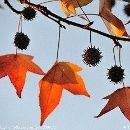
"Seven Colors of Autumn Leaves" of Momijibafu
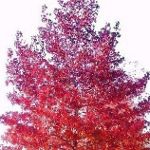
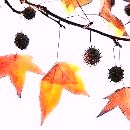
Finally the end of autumn. The row of ginkgo trees on the Akashicho Green Road have also turned yellow and are at their best. By the way, on November 25, "Ginkgo Yellow Leaves" in the Tokyo region, one of the Japan Meteorological Agency's plant seasonal observation information was announced. It is said that it is five days later than normal and one day later than the previous year. This time, the autumn leaves of "Momijibafu" (also known as the United States Fu), which is also planted along the Akashicho Green Road. Deciduous Takagi of the genus Mansacaceae, native to North America, Central and South America. The bark is brown, shallow and longitudinal. The flowering season is around April. The fu is written as maple and the shape of the leaves is also palm-shaped, but it is reciprocal, whereas the maple (general term for the maple family maple) leaves are opposite and have propeller-shaped wing fruits. It is a neat tree shape and leaves in a variety of colors from green to yellow to yellow to orange to red, so it is also called "seven colors of autumn leaves" and gorgeous. The fruit of "Iga" with a long pattern that remains on the branch even after the fall of leaves is also impressive. |
MenuArchiveLinks |










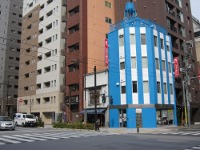 For a person to live a life as a poet
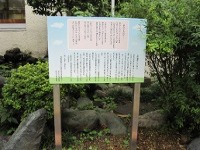 Michizo Tachihara was born in July 1914 (1914) at 3-1 Tachibanacho, Nihonbashi-ku (currently around 3-9-2 Higashi Nihonbashi, Chuo-ku). The ancestors of the maternal side are the famous Confucian scholar Suiken Tachihara, and his son, painter Kyosho Tachihara. The family business of the birthplace was the manufacture of wooden boxes for packing, which were quite extensively operated in the center of the wholesale district of Nihonbashi. He grew up in the downtown culture and proceeded to Hisamatsu Elementary School, Yotoku Kindergarten in Hamacho, and was said to be a Shundo since its opening at Hisamatsu Elementary School, and passed the chief for six years. After that, as with Ryunosuke Akutagawa and Tatsuo Hori, he proceeded to Sannaka, Ichitaka, and Teikyo Univ., but at the university he studied architecture rather than the Faculty of Literature, demonstrated his talent here, and was given to the best student The Tatsuno (Kingo) Award "three times. After graduation, he joined the architectural firm of Kikuji Ishimoto, a prominent architect on the banks of Sukiya Bridge, and designed several buildings.
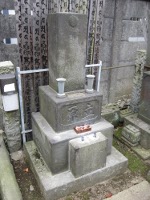 poetry from an early age, such as visiting his home in Setagaya Wakabayashi, Kitahara Hakushu in junior high school, and after entering university, his activities began in earnest as a doujin in the monthly "Shiki" which was launched. In the year of joining Ishimoto Architects (1937), he continued to publish a collection of poems "Following Kayakusa" and "Poetry of dawn and evening", and in March 1939, the month before ending a short life due to a sudden change in tuberculosis. Was selected as the first winner of the Chuya Nakahara Award. His poem is a fourteen-line sonet form, described as a delicate, pure and musical lyric poem. Tatsuji Miyoshi says, "It's a subtle and light music that can be spoken in our language and can be sung." There is a feeling of excellent lyric poetry built with a design drawing called sonet and a building material called Japanese. His poems are often said to be musical, but it seems that there is a phrase "Architecture is frozen music", so it is inevitable. Sensitual and exotic things that are common in Japanese lyric poems seem to be lyric poems by science-based brains, such as abstract paintings that are eliminated as much as possible.
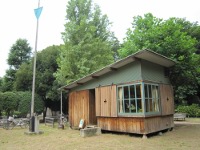 This year, the 100th anniversary of his birth, commemorative events were held in Karuizawa and Bessho-numa in Shinshu, which often visited on the edge of Tatsuo Hori and were often the stage of his poems. It seems that there was no special event in Chuo-ku, which was a fabric and spent most of his short life. Is he not familiar with himself because he did not leave the original Edo-like part outside or set the local area as the stage for his work? I feel a little lonely. So, on the day of Koharu weather, in memory of Michizo Tachihara, I walked around my birthplace, Hisamatsu Elementary School, Taninaka's tomb, Bessho Numa Hiyacinth House, etc. Was.