List of Authors
>>About this blog
Recent blog posts
|
[The Ten Hands of Shufusa]
14:00 on May 4, 2017
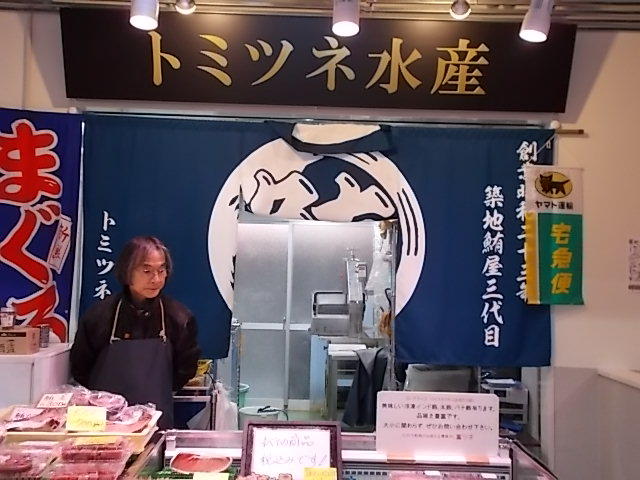
 I would like to introduce you to Mr. I would like to introduce you to Mr.
It is said that it is a long-established wholesaler who has been running for three generations in Tsukiji.
(The photo was taken with the permission of the clerk.)
It is located in the Odawara Bridge Building of Tsukiji Fish Bank. I was told that you would ask me anything about tuna.
It's a delicious tuna.
On this day, I bought it on a fence and decided to warm sake.  I'm drinking Dondon. The tightening is still a tekkadon. The chopped seaweed that is sprinkled with paraparagus is Maruyama seaweed. I'm drinking Dondon. The tightening is still a tekkadon. The chopped seaweed that is sprinkled with paraparagus is Maruyama seaweed.  Oh, it was good Oh, it was good
It’s also nice to your wallet.  What if you look at it once? What if you look at it once?
[Sakura is good]
14:00 on April 24, 2017
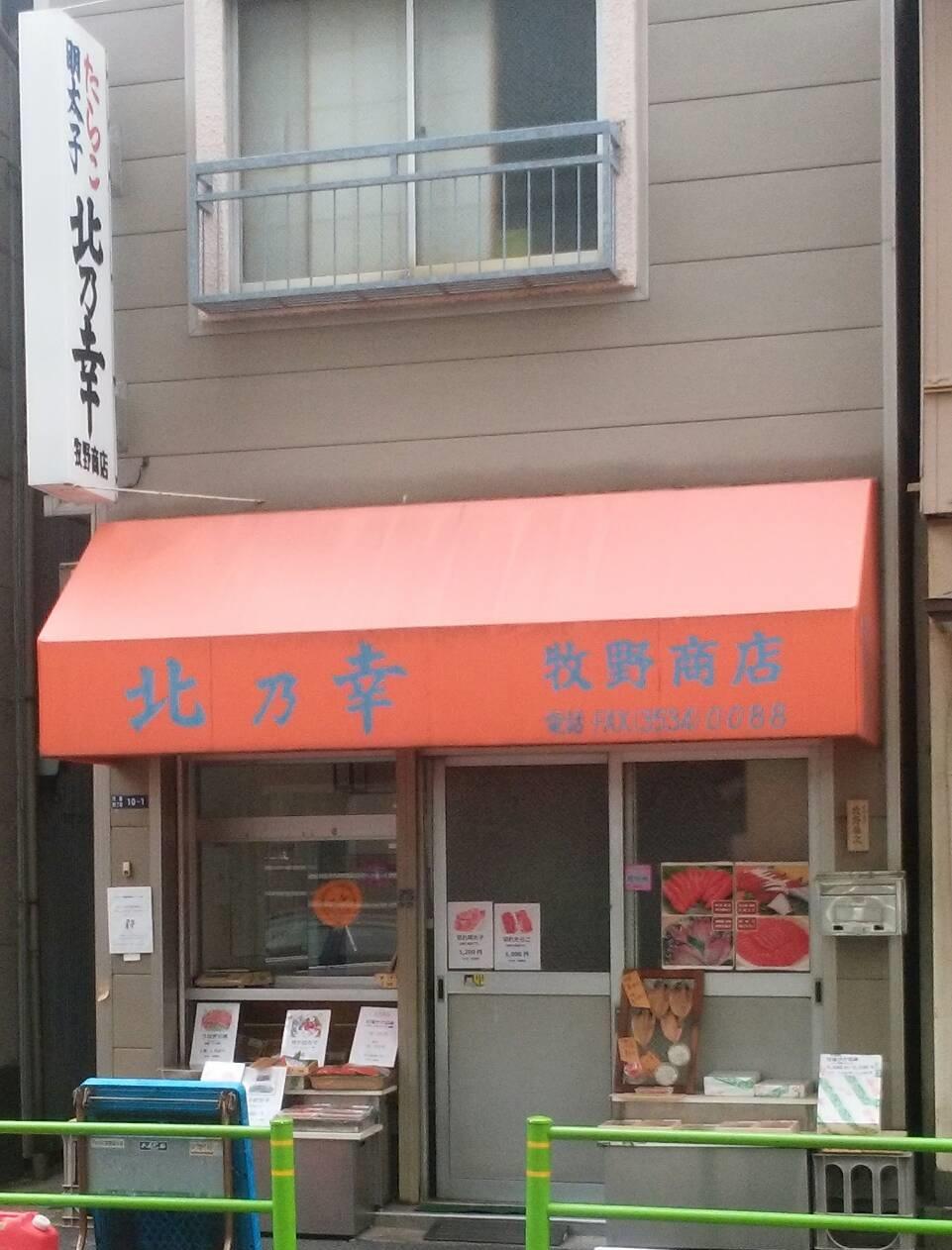
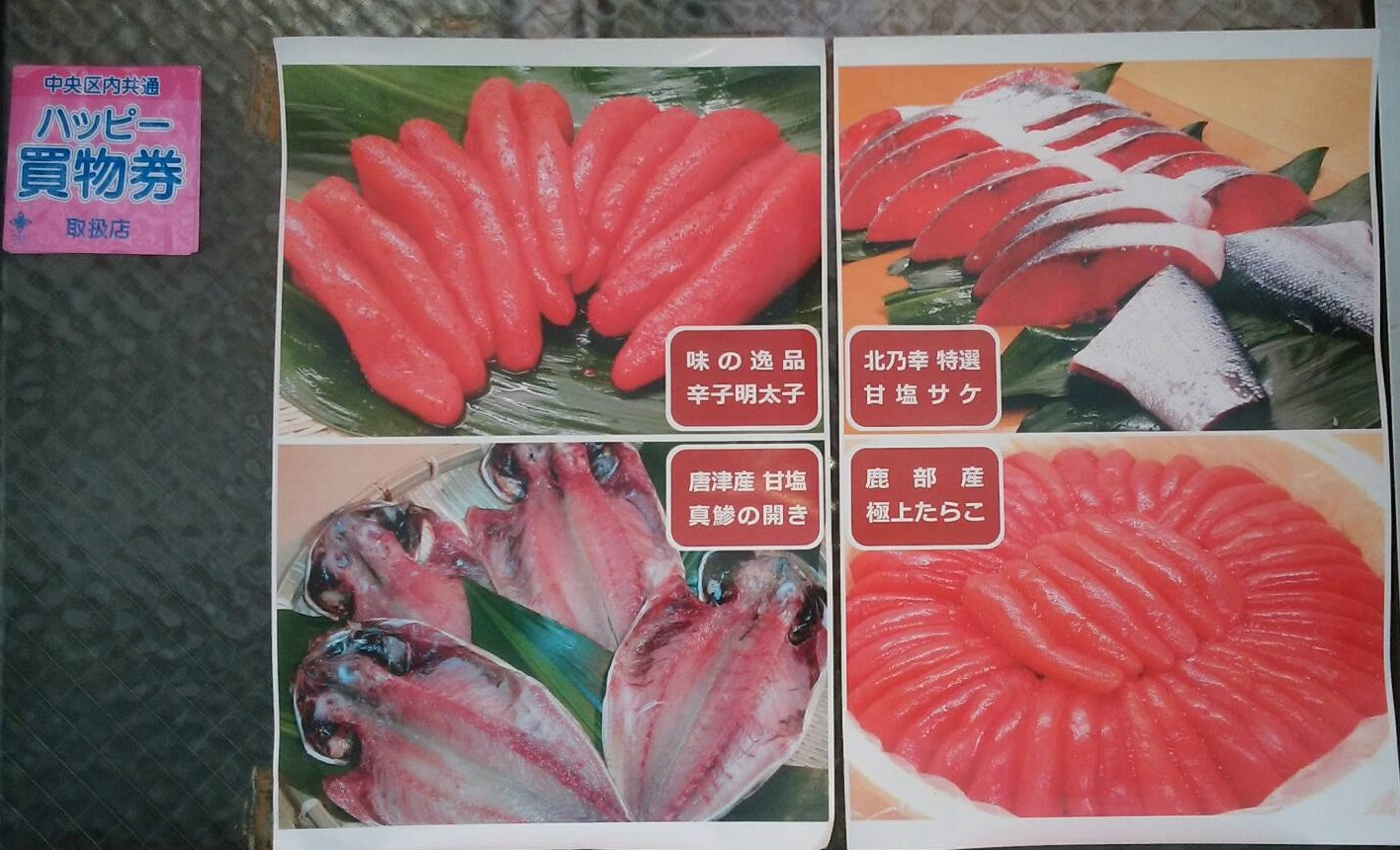
"Kitano Komakino Shoten" April 21, 2017
Opening hours: 9:00-19:00 Closed - Sundays and public holidays (closed only on May 6 during GW)
Tsukishima 4-10-1 ☎03-3534-0088 □[email protected]) is introduced.

There is a shop located a little away from the shopping street near Tsukishima Daiichi Park.
We spoke with the owner, Fukuji Makino. Opened in 1979 as a codoko wholesale specialty store. After that, sales increased the number of items such as salmon, dried fish, silas, etc. It spread only by word of mouth, and now it is time to see catalogs and receive orders from all over the country. The number of fans continues to increase nationwide. That's amazing.
 In addition, when asked about Makino's delicious secrets of salmon, he said that he was carefully wrapped in salangrap one by one, and worked hard to keep his heart safe so that the taste of salmon does not escape. In addition, we sell with confidence under the motto "Food safety", "Delicious to eat", and "If you think it's delicious, please introduce it to your friends". And offer at a reasonable price. I'm happy. In addition, when asked about Makino's delicious secrets of salmon, he said that he was carefully wrapped in salangrap one by one, and worked hard to keep his heart safe so that the taste of salmon does not escape. In addition, we sell with confidence under the motto "Food safety", "Delicious to eat", and "If you think it's delicious, please introduce it to your friends". And offer at a reasonable price. I'm happy.
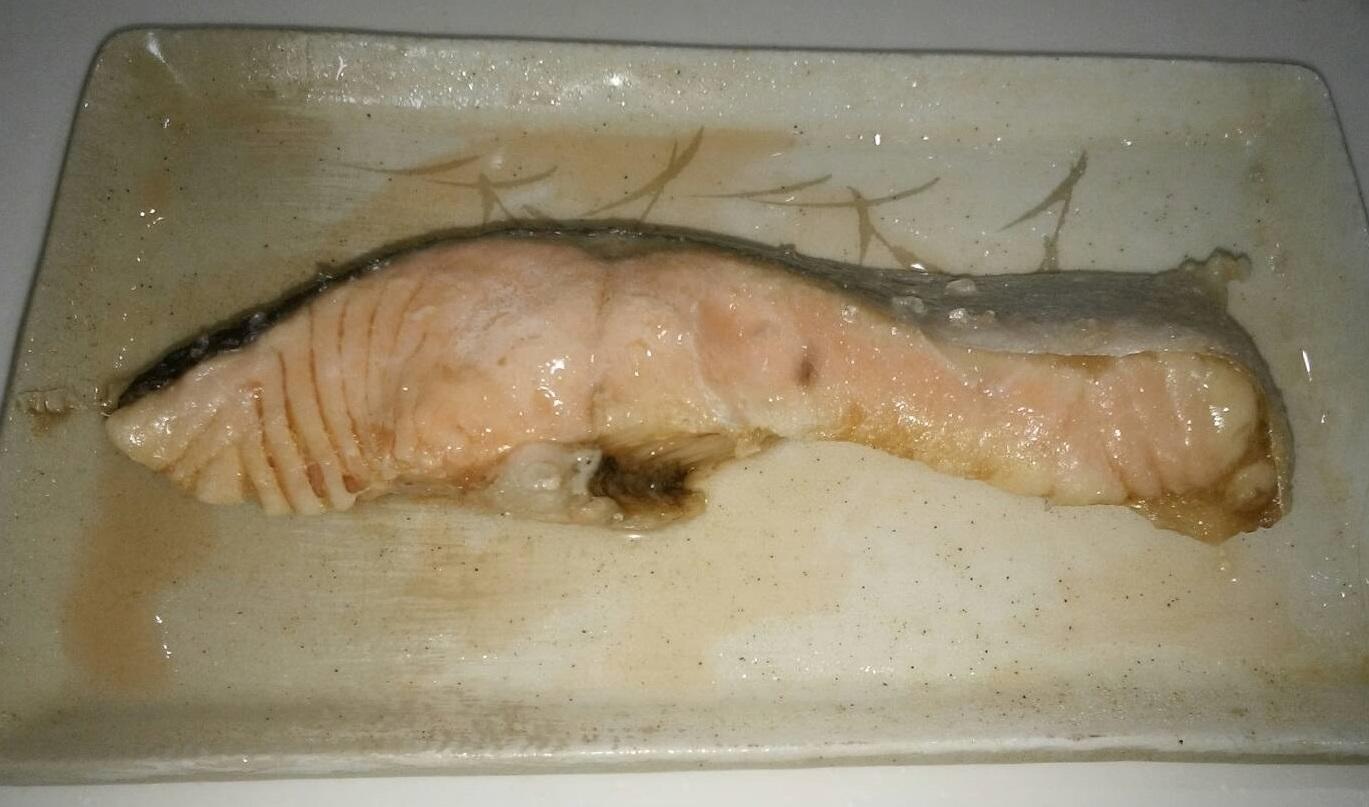
 Quickly, thick sliced salmon fillet (There are also thin slices. I bought a thick slice) and went home and ate it as grilled fish. The food went on and I replaced the rice several times. The salt content of sweet salt is subtle and delicious. Quickly, thick sliced salmon fillet (There are also thin slices. I bought a thick slice) and went home and ate it as grilled fish. The food went on and I replaced the rice several times. The salt content of sweet salt is subtle and delicious.
I was able to eat such salmon and feel happy.
I would like you to enjoy it. It's my best.
(I have been photographed with permission from Mr. Makino.)
[The Shiba Inu]
16:00 on December 26, 2016
Ozu Washi is one of the leading historical shops in Nihonbashi.
It opened in 1653. Starting from Matsuzaka in Ise, I came to the current Edo-dai Temmacho.
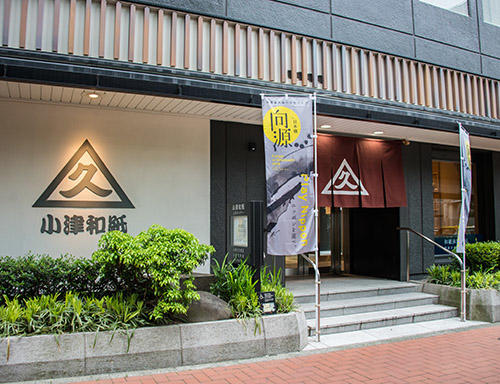
In addition to the store on the first floor, Ozu Washi is a historical museum (free!) boasting about 1,000 historical materials of ancient document registered by Chuo Ward Tangible Cultural Property. Guides can also be requested), various cultural classes, Japanese paper galleries nationwide, and paper making classes where you can experience with one coin, it is a full facility that you can enjoy all day.
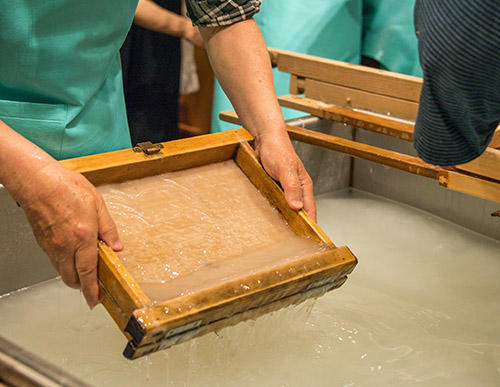
A paper making experience that can be done for 500 yen. Of course, you can take your own paper home.
Souvenirs are very substantial, so I think some people may be wondering what to buy, but in such a situation! Absolutely recommended, the size and price that is perfect for a small Nihonbashi souvenir! I have a product.
That's here!
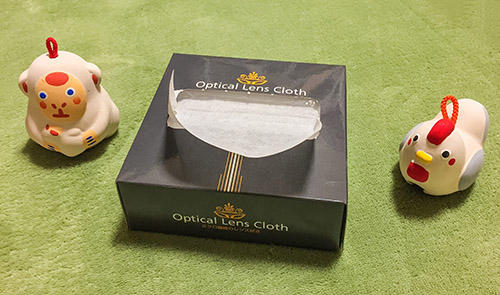
Do you know something?
(By the way, the doll placed next to it is a Chinese zodiac bell that you can visit Ginza Hatcho Shrine.)
This is a lens wipe made of microfiber.
The product name is "Optical Lens Cloth Glasses", but of course it is not just glasses that can be wiped. Oil stain on screens of smartphones and PCs, camera lenses, fingertips. It will be really beautiful just by wiping it quickly. You can take quite a bit of dirt attached to your smartphone screen just by gently stroking it several times. Moreover, once you wipe it off, you can use it repeatedly until it breaks instead of poi.
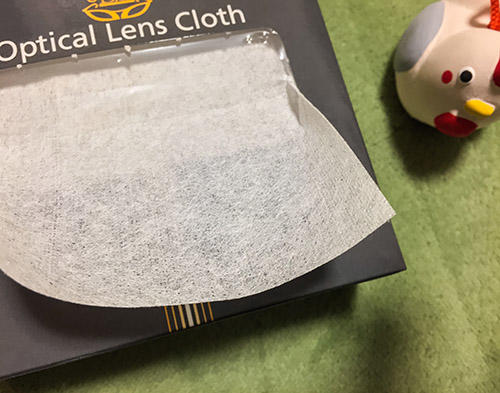
Non-woven fabric of micro fiber developed by a long-established Japanese paper company. Do you know the details of your eyes?
There is also a small pocket type that is hundreds of yen even in a box.
When I use this for the first time, everyone says, "Oh,...I think that it is a product that is suitable for practical and souvenirs.
In the store, it is often placed next to the cash register, but it may be a little difficult to find, so I would like to ask the clerk.
If you would like to know more about Ozu Washi's historical archives and hands-on classes, please check the site. There are shopkeepers who are fluent in English, so even foreigners can feel safe!
Ozu Washi homepage ← Click here.
[Usako of Tsukuda]
09:00 on July 5, 2016
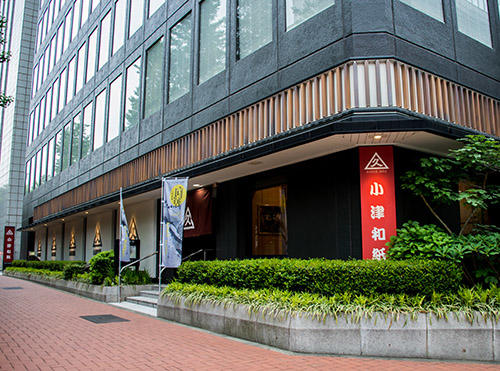
The other day, I visited the long-established Edo Komon "Zhusen" in Nihonbashikobunacho for a course of a long-established tour of Chuo Kumin College.
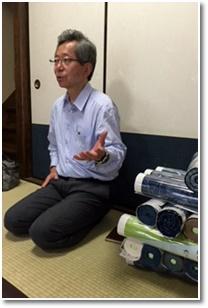
What you explained,
This is Fumio Ogawa, the fifth head of the family.
Jikusen was founded in 1842 (Tenpo 13), the same year when Kabuki Edo Sanza moved to Asakusa Saruwaka-cho. For 174 years, "model dyeing" has been continued, which is hand-stained with hand-carved pattern paper.
His dyeing was also featured in Tokyo's specialty in 1901, and made his name from yukata to Edo Komon.
After the war, it was relocated to Nihonbashi due to voices from famous department stores and luxury clothing stores.
Jikusen's commitment to "Edo" has inherited the technology and color from the first generation, and has been conveyed to the present day the characteristics of Edo.
"Business that has a pattern. Whatever happens, keep the pattern first."
It is said that he escaped the difficulties of the Great Kanto Earthquake and the Great Tokyo Air Raid.
I showed you two yukata.
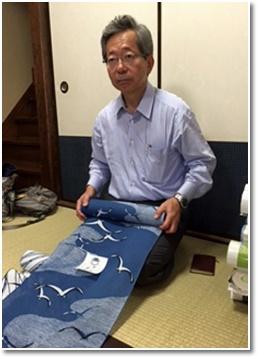 Tsubame and Ogu Tsubame and Ogu
While the people of Edo love nature, the heart pattern that enjoyed them abundantly in their daily lives is vividly revived.
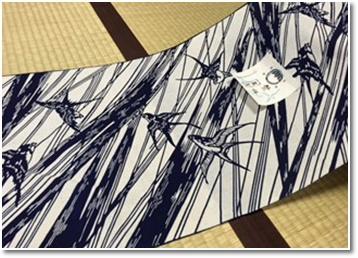 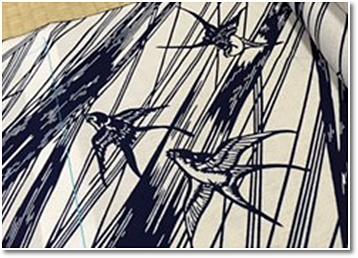 The boldly expressed bird design that the people of Edo liked. The boldly expressed bird design that the people of Edo liked.
I'm going to fly around the sky of the 21st century.
As the number of birds you meet in Chuo-ku on correspondent blogs increases from April,
I came to think that the characteristic that did not change beyond time and space from Edo was wild birds.
How do you guys feel?
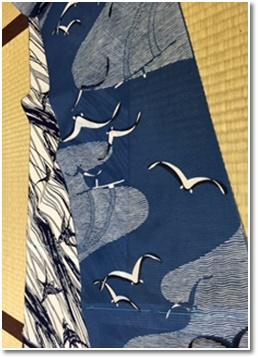 Among the types inherited from generation to generation, other wild birds are cranes, sparrows, staggers, and hawks. Among the types inherited from generation to generation, other wild birds are cranes, sparrows, staggers, and hawks.
We also want to have the time to love the nature of Heisei.
According to Mr. Ogawa's view, the duck's cloth suits the 40s and the swallow's cloth suits the 60s.
2-3, Nihonbashi Kobuna-cho, Chuo Ward, Tokyo, Japan Yukata and Komonjiku
URL:http://www.chikusen.co.jp/
[Saheiji]
09:00 on March 30, 2016
Shirakiya Denbei is a long-established store that manufactures and sells Edo brooms.
It was founded in Ginza in 1830, and then moved to Kyobashi.
Of course, zashiki brooms have existed for a long time, but it was Denbei Shirakiya who started manufacturing and selling brooms as "Edo broom".

Until then, shuro was common as a material for parlor brooms, but "Edo broom", which is made from grass of bouki Morokoshi, is perfect for brooms on tatami mats, living in a tenement house, soft and firm, so it is easy to sweep out without putting effort.
The Edo Houki, which was created in pursuit of a well-balanced and light broom, is selected and knitted using natural grass called Houki Morokoshi as a raw material, but the beauty of the knitting is It is also said to be "Edo's best".
Using natural materials, late-night cleaning can be easily done without hesitation, suitable for tatami mats, can be used for carpets and pet hair removal, no electricity bills, no static electricity, etc. Sales are growing because they want to live and live.
However, in order to make a high-quality broom, it takes a lot of effort to produce and sort raw materials.
First of all, according to the sense of the craftsman's hand, the grass is selected to about 20 degrees according to the criteria such as "softness, stiffness, and fineness" of the grass, and even skilled craftsmen can only knit 3 to 5 pieces a day with a long pattern.
Therefore, the finest "Edo Houki" is very expensive (higher than the Dyson vacuum cleaner), but in the case of "Edo Houki", if you use it for about "about 5 years", the tip of the ears decreases due to friction and "chick", but if you cut the ears tightly, the stiffness will return and the ease of use will return, so if you finally use it to the entrance sweep, the Edo Houki itself can be used for at least "10 years".
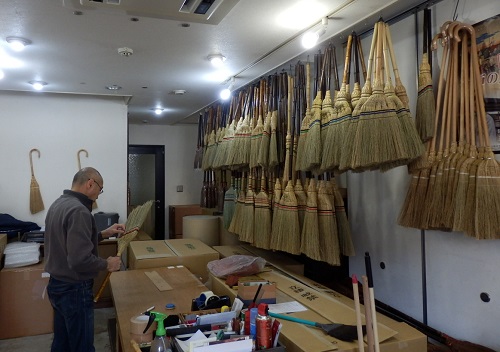 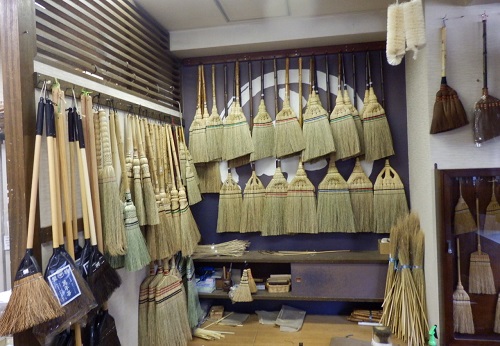 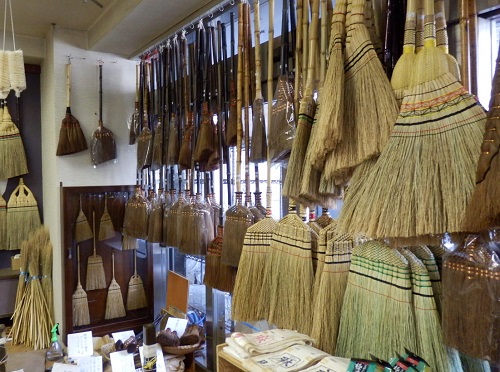
Of course, there are also small brooms for desks and dining tables, and small brooms for dust removal of clothes.

The interesting thing is that there is a "broom for praying for safe delivery", which has been said for more than a thousand years in Japan, the broom has a Shinto and Buddha spiritual power, and a pregnant woman's stomach with a new broom will give birth.
I think it's too bad to give a gift to those who are about to give birth....。

In addition, there are various brooms on display in the gallery.
http://www.edohouki.com/
1F, Hakuden Building 3-9-8 Kyobashi, Chuo-ku, Tokyo
Toll-free number : (0120) 375389 (Mina garbage haku)
TEL : 03(3563)1771 FAX: 03(3562)5516
Business hours : From 10:00 to 19:00 (Sun and public holidays)
[No yaya]
12:00 on November 3, 2015
It's time for my hair to grow, so I'm going to the barber shop where I always go. The location is "Ginza Inns 3" which I introduced in my blog before. 。 。
Yes, it is a shopping street under the Tokyo Kosoku Doro that goes around Ginza. This is a unique shopping street under the highway, but the tenant inside also has attractive shops such as "Japone (/archive/2015/08/post-2652.html)" which I introduced last time. This time, I would like to talk with a barber shop in Ginza Inns 3 about the phantom street name "Ginza Nishi 1-chome" about the third installment of "Tokyo Kosoku Doro".
Open the glass door at the entrance of Ginza Inns 3 above Ginza 1-chome Station on the Yurakucho Line and enter inside. If you go through the side of a tailor with a Showa atmosphere and enter the back, you will see a rotating pole with a red, white, and blue three colors striped pattern. 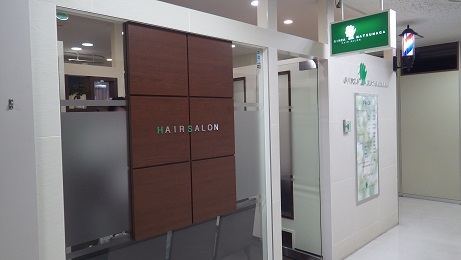 The name of the shop is "Ginza Matsunaga Yurakucho Store". I think there are some people who have questions after reading so far, so please give a supplementary explanation. This is the Yurakucho store, but the place is located in Chuo-ku. Ginza Ins 3, where the Ginza Matsunaga Yurakucho store is located, is located under Tokyo Kosoku Doro, which was originally built by reclaiming outer moat (river), so it is located just on the border between Chuo-ku and Chiyoda-ku. In fact, because the administrative districts are unclear, it is still an unusual address called "Ginza Nishi 1-chome 2nd place (Sasaki)". Currently, the display of residences in the Ginza area is integrated into Ginza 1-8-chome, but these were once divided into place names such as Ginza West, Ginza, and Ginza East (formerly Kibikicho). The name of the shop is "Ginza Matsunaga Yurakucho Store". I think there are some people who have questions after reading so far, so please give a supplementary explanation. This is the Yurakucho store, but the place is located in Chuo-ku. Ginza Ins 3, where the Ginza Matsunaga Yurakucho store is located, is located under Tokyo Kosoku Doro, which was originally built by reclaiming outer moat (river), so it is located just on the border between Chuo-ku and Chiyoda-ku. In fact, because the administrative districts are unclear, it is still an unusual address called "Ginza Nishi 1-chome 2nd place (Sasaki)". Currently, the display of residences in the Ginza area is integrated into Ginza 1-8-chome, but these were once divided into place names such as Ginza West, Ginza, and Ginza East (formerly Kibikicho). 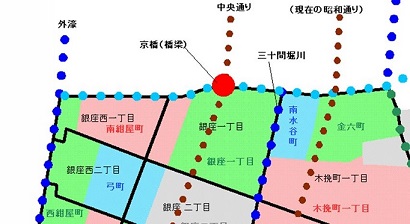 [Source]: From wikipedia, "Contraction map of old and new town names before and after the earthquake disaster (Ginza area)" [Source]: From wikipedia, "Contraction map of old and new town names before and after the earthquake disaster (Ginza area)"
The place name Ginza Nishi 1-chome is originally Minami Konnyacho from the west side of Ginza Gaslight Street to Sotobori-dori St. in the current Ginza 1-chome. The town name Nishikonyamachi was changed to Ginza Nishi 1-chome in 1930, and furthermore, it was integrated into Ginza 1-chome due to the change of residence display in 1968, and became Ginza 1-chome. As a result, the name of Ginza Nishi 1-chome seemed to have disappeared, but thanks to Tokyo Kosoku Doro, it has remained exceptionally until now.
Return to Mr. Matsunaga's story. When you open the door and enter inside, it is a clean and fashionable space separated by wood grain partitions under bright lighting. I go here on a regular basis because of my close proximity to the company, but I have a variety of options, as well as hairdressers' promise cuts, shampoos, shavings, and shoulders. Not only high technology, but also polite and friendly correspondence makes you very comfortable and enjoy a blissful time. The photo is Mr. Kozawa, a stylist who always takes care of me.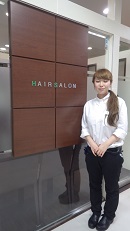
Ginza Matsunaga, as the name implies, opened in Ginza in 1968 for 47 years. Currently, there are 18 stores not only 3 stores in the Ginza area. It is a global barber shop that expands overseas and supports the lives of Japanese people who work hard in Germany and Vietnam.
The Yurakucho store is located in a convenient place to stop by for a while on the way back of Ginbra, but this is close to the office area and it is quite crowded in the evening, so it may be better to make a reservation in advance.
[Hair Salon Ginza Matsunaga Yurakucho Store]
〒104-0061 Ginza Nishi 1-chome, Ginza-Nishi, Chuo-ku Ginza Inns 3 1st floor
(Soon Exit 1 of Ginza 1-chome Station on the Yurakucho Line)
TEL: 03-3567-3887
Business hours 1030-2000 (until 1900 on weekends and holidays)
|
Links
|