Chuo-ku Tourism Association Official Blog

Chuo-ku Tourism Association correspondent blog

We introduce "seasonal" information of Chuo-ku by sightseeing volunteer members who passed the "Chuo-ku Tourism Certification" conducted by the Chuo-ku Tourism Association and registered as correspondents.

List of Authors

>>About this blog

Recent blog posts

The History of Benmatsu-san - Nihonbashi Benmatsu Sohonten-

[rosemary sea] 12:00 on March 7, 2019

"Gift and Enjoy yourself" is Rosemary Sea.

IMG_20190130_115816 (2)a.jpg IMG_20190130_115830a.jpg

IMG_20190214_124112 (2)a.jpg

・・・・・・・・・・・・・・・・・・・・・・・・・・・・・・・・・・・・・・・

・・・・・・・・・・・・・・・・・・・・・・・・・・・・・・・・・・・・・・・

・・・・・・・・・・・・・・・・・・・・・・・・・・・・・・・・・・・・・・・

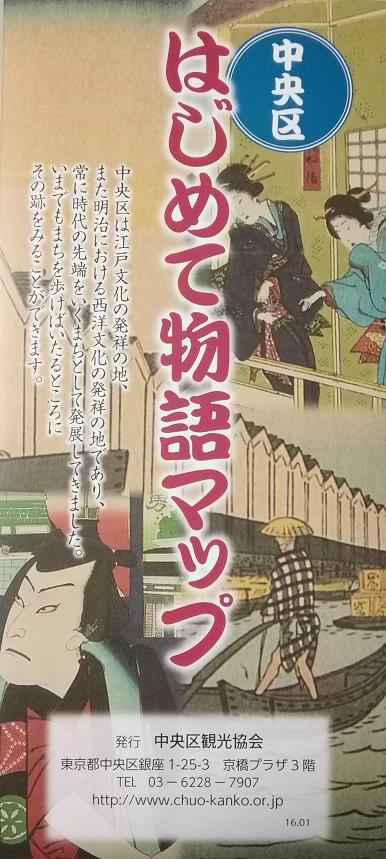
According to the "First Time Story Map" issued by the Chuo-ku Tourism Association, Nihonbashi Benmatsu Sohonten is introduced as a "store originating from a specialty store for folding dishes".

Click here for the previous presentation.

/archive/2019/02/post-6111.html

This time, I would like to introduce Mr. Benmatsu's history.


This time, we also took care of Mr. Junichi Higuchi, the eighth generation of Nihonbashi Benmatsu Sohonten.

I took a picture in front of the shop in a half-wear image at the top.

Then...

・・・・・・・・・・・・・・・・・・・・・・・・・・・・・・・・・・・・・・・

・・・・・・・・・・・・・・・・・・・・・・・・・・・・・・・・・・・・・・・

・・・・・・・・・・・・・・・・・・・・・・・・・・・・・・・・・・・・・・・

3-1SKMBT_C22014021505490_0054.jpg3-2SKMBT_C22014021505490_0055.jpg

 From opening of the restaurant "Higuchi-ya" to "Benmatsu" who specializes in selling lunch boxes


As you all know, from the opening of Edo to the Great Kanto Earthquake, there was a fish shore in Nihonbashi.

In the 7th year of culture (1810), Yoichi Higuchi, born in Echigo, opened a restaurant called Higuchi-ya on the shore of the fish river in Nihonbashi.

This is the beginning of Mr. Benmatsu.

Higuchiya became a reputation for its good food, and it seems that it was very prosperous.

But the people on the shores of the fish are so busy that they can't afford their time.

Even if you have a meal, you have to sit down before you finish eating everything.

So Mr. Yoichi recommended that the remaining dishes be wrapped in gyogi (thin wooden board: in this case, wooden folded) or bamboo skin and taken home.

This trend became even more popular, and the number of customers who wish to take home has increased.

This is the root of Benmatsu's folded lunch box.
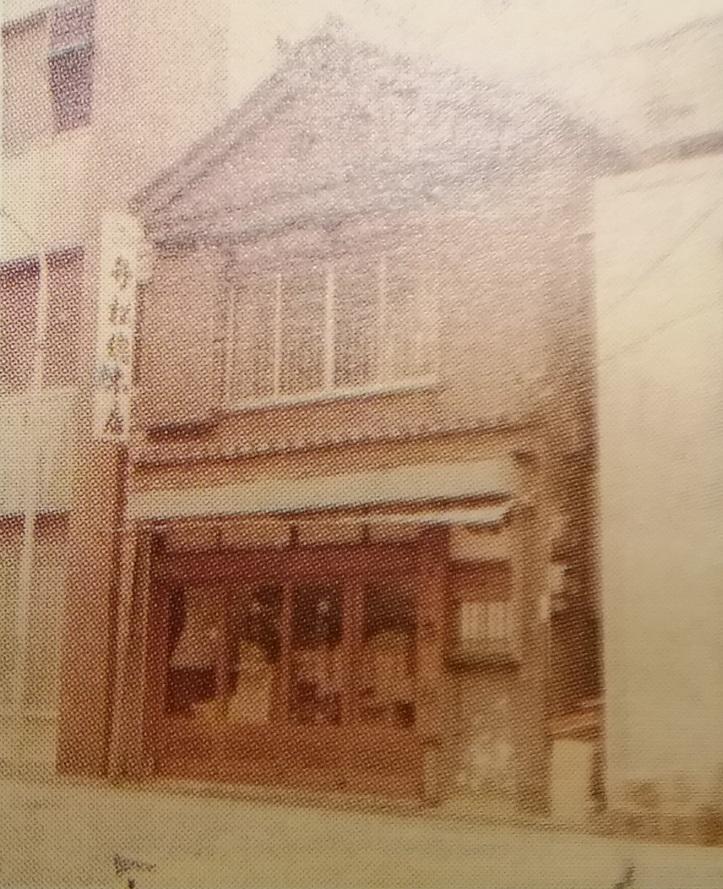
IMG_20190130_110445 (2)a.jpgAnd in the era of Takejiro, the second generation, he began to sell lunch boxes wrapped in bamboo skin from the beginning.

In addition, Mr. Shojiro, the third generation, changed from a restaurant to a specialty shop specializing in folding dishes. This is said to be the first specialty store in Japan to sell lunch boxes.

At this time, the name of the store was shortened to "Benmatsu".

Therefore, Mr. Benmatsu is also listed in the "Chuo-ku First Story Map" issued by the Chuo-ku Tourism Association as "a shop that originated in a folding dish specialty store".
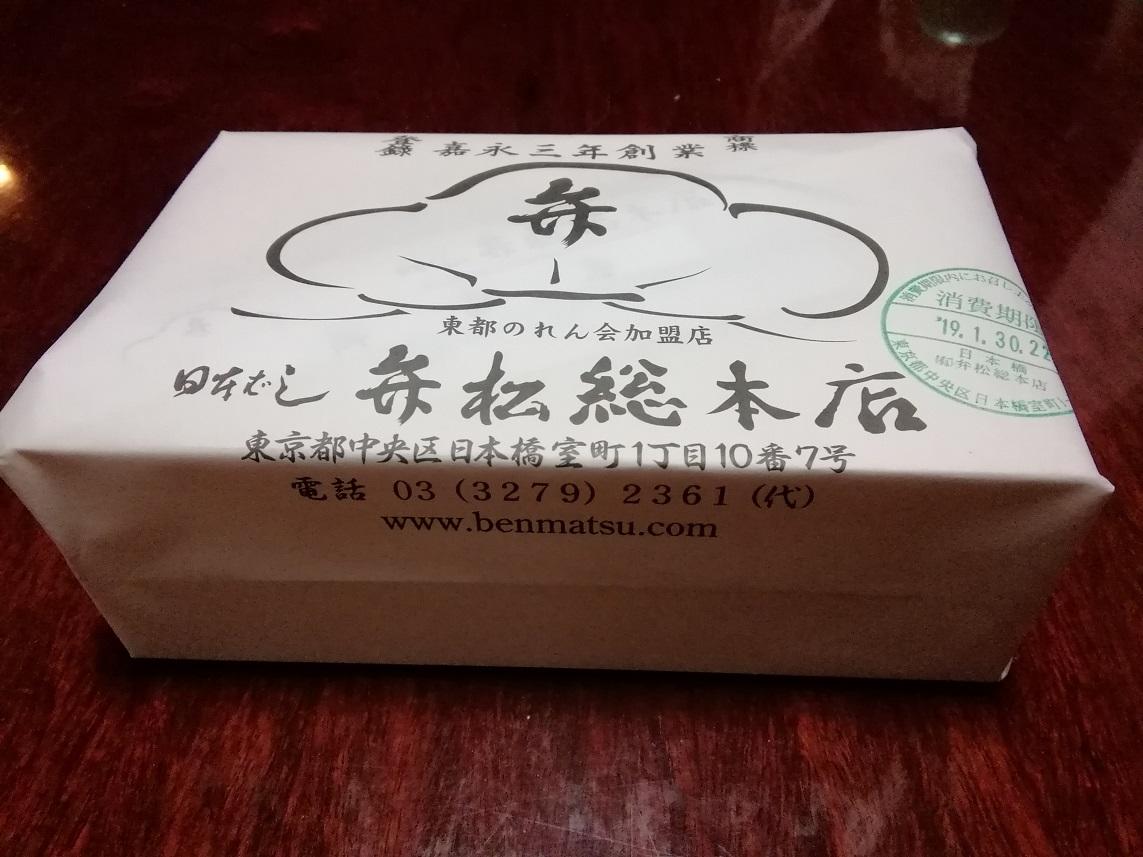
IMG_20190130_192729a.jpg

 Benmatsu's dishes arranged by Tsugumichi Saigo


Toshimichi Okubo: Former Order of the Meiji Restoration and the first Minister of Home Affairs.

Together with Saigo Takamori and Takayoshi Kido, they are called "The Three Masters of the Restoration."

Toshimichi Okubo was assassinated on May 14, 1878 (1878).

This is the 'Kioi-zaka Incident.'

Before that, he was defeated in Saigo Takamori and Satsuma Rebellion, who were Shimotsuke from the conflict over Seikanronism.

Okubo, an ally who had already split, was killed by the complainants in this incident in the aftermath.

Tsugumichi Saigo, who longed for Okubo and stayed in the government without following his older brother Takamori Saigo, would have been shocked many times. But he was really calm and clever.

After hearing about this incident, Tsugumichi Saigo prepared a large box dish to Okubo's residence and delivered it.

This is Benmatsu's dish for 150 people. For the people who gathered in the incident.

The food and lunch boxes to deliver would have been Benmatsu-san.
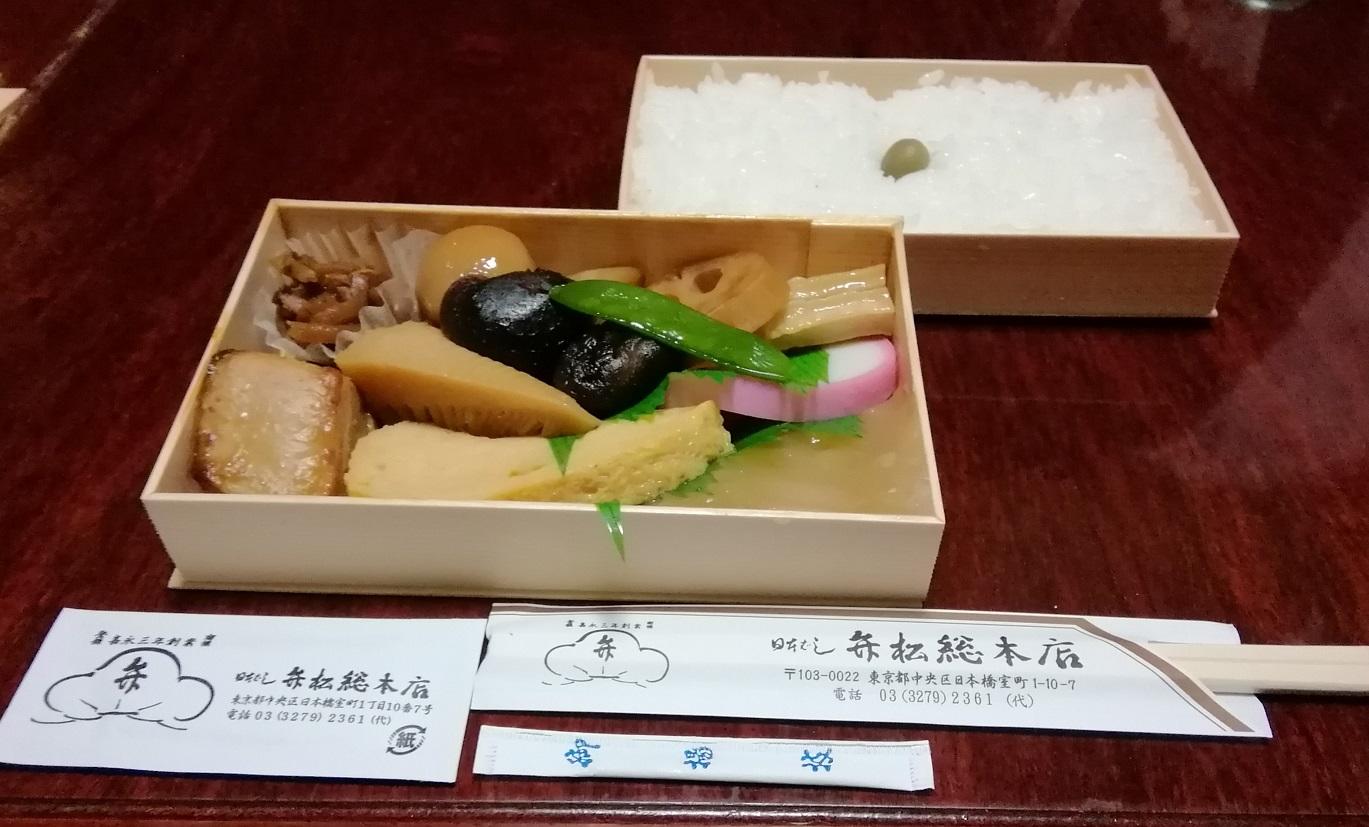
IMG_20190130_192959 (2)a.jpg

 "Dark Yui" taste inherited from the Meiji era to the present day


Sweet, spicy, thick seasoning. This is the taste of Benmatsu who has been inherited.

At first, it may have been a means for high calories for physical workers working on the fish shores of Nihonbashi.

And because of the nature of a lunch box, it is also possible to make it last longer.

However, the lunch box that used plenty of sugar, etc., which was expensive at the time, seems to have been accepted by high-society layers.

The folding of Kyogi has been continued until now.
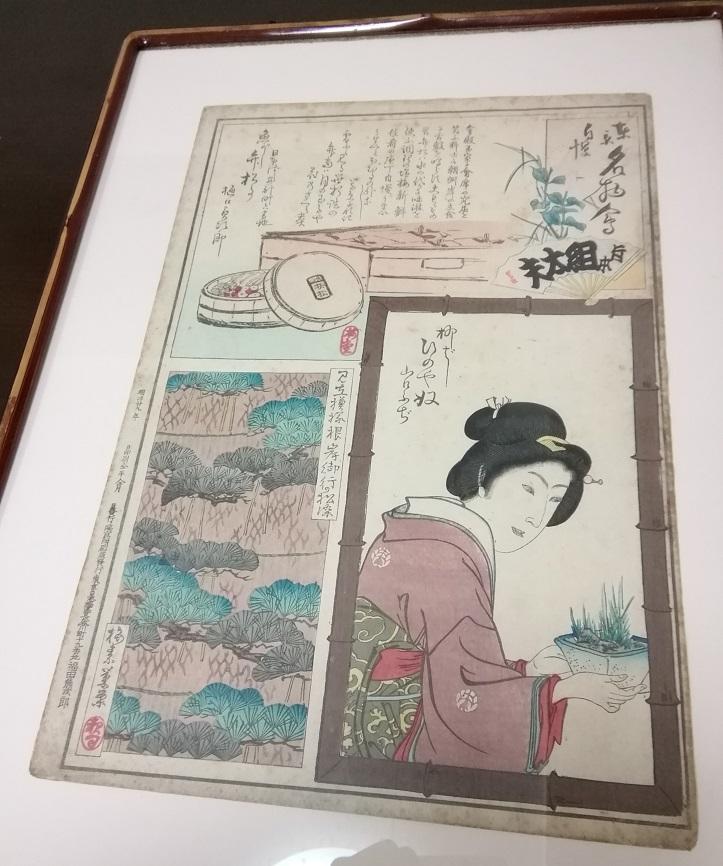
IMG_20190130_115339_3 (2)a.jpg

The upper part of the image is Benmatsu's advertisement. It's from 1896.

The shape has changed a little, but the lunch box from the Meiji era, the taste of Edo in front of it, and it is still handed down to Benmatsu-san.

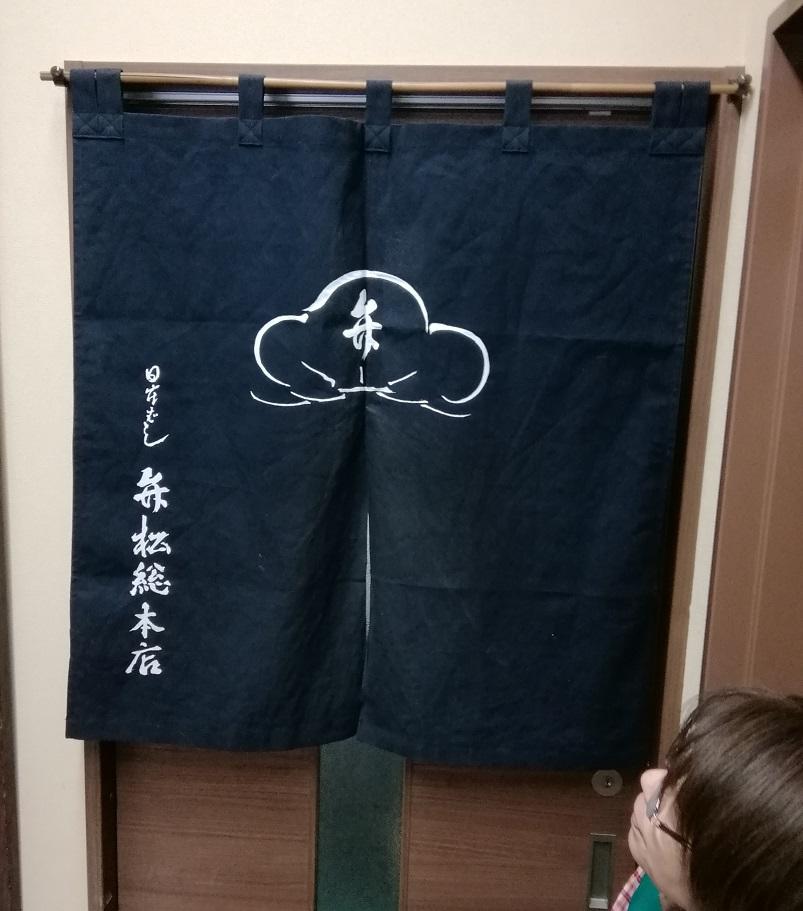
 

IMG_20190130_105719_1 (2)a.jpg IMG_20190130_120026_1 (2)a.jpg

In front of Benmatsu's shop, there is a wooden signboard.

President Higuchi said he did not hear that the signboard was probably after the war, and he escaped the raid with it. He is the eighth generation of Benmatsu.
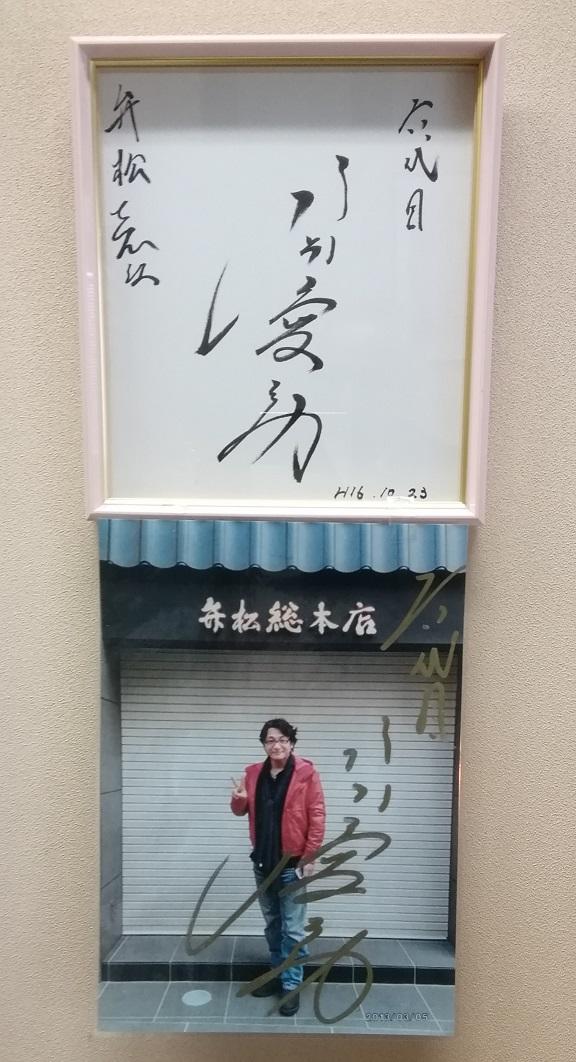
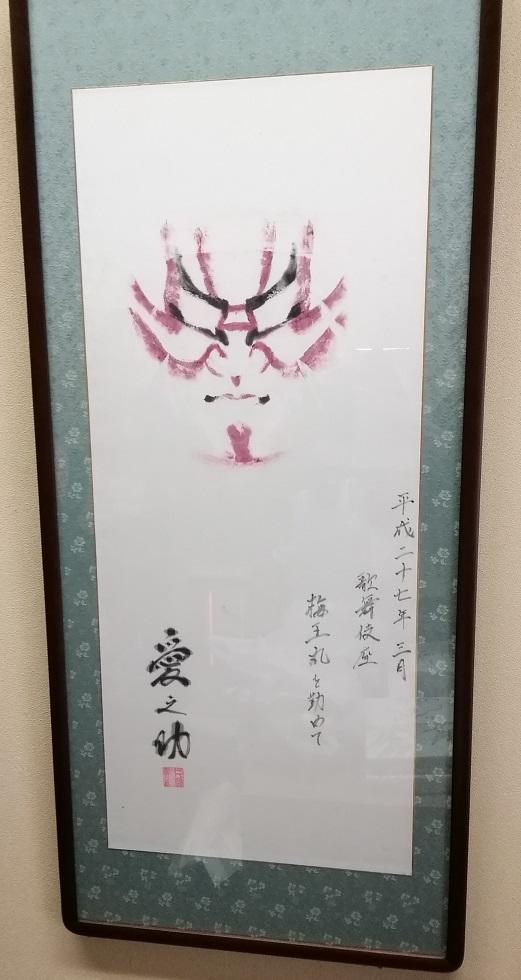
 

IMG_20190130_105617 (2)a.jpg IMG_20190130_105631 (2)a.jpg

 6th generation Ainosuke Kataoka's favorite shop


On the right side of the store, the signature of Kabuki actor Ainosuke Kataoka, the sixth generation, and a photo taken in front of the store. Matsushima-ya, right?

Ainosuke and Benmatsu's bento are welcomed.

IMG_20190128_162858 (2)a.jpg

Benmatsu of "Dark Yui Taste" because he likes a clear taste.

You say it's easy to diminish the taste. However, it seems that the taste of the tradition will be blurred.

It is said that such a change will no longer be Benmatsu's lunch box.

As long as there is at least one customer who likes this taste, we are willing to continue protecting it.
g-2SKMBT_C22014021206320_0016.jpg


 About Toto noren-kai


As I mentioned in the article by Funasa Nihonbashi the other day, Nihonbashi Benmatsu Sohonten is also a member of the Toto Norenkai. ・・・

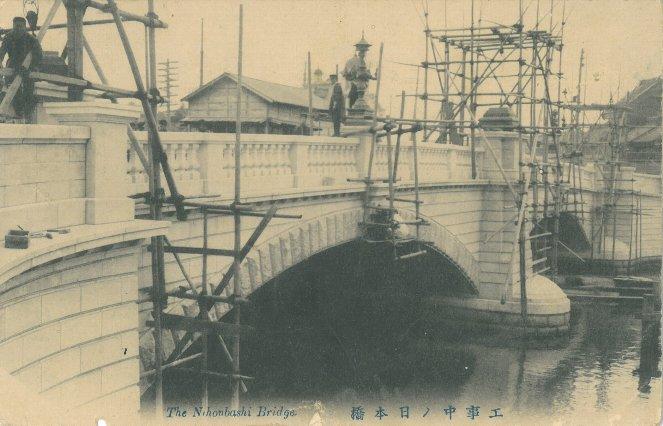
President Junichi Higuchi is serializing "<Nihonbashi Benmatsu Sohonten> Junichi Higuchi's" Nihonbashi postcard surprise exhibition "" in the corner of "A little good story of great husband" on Toto Renkai's homepage.

It is now on the 5th. I heard that it will be a series of 10 to 12 times in total.

President Higuchi personally collects “Old postcards of Nihonbashi” and carefully selects and introduces them.

Please take a look.

Click here for the homepage of Toto Norenkai

⇒  http://www.norenkai.net/


・・・Next time, we will continue to have an exhibition of Nihonbashi postcards collected by President Higuchi on this blog, as well as an interview with the president.
 

IMG_20190130_105709 (2)a.jpg


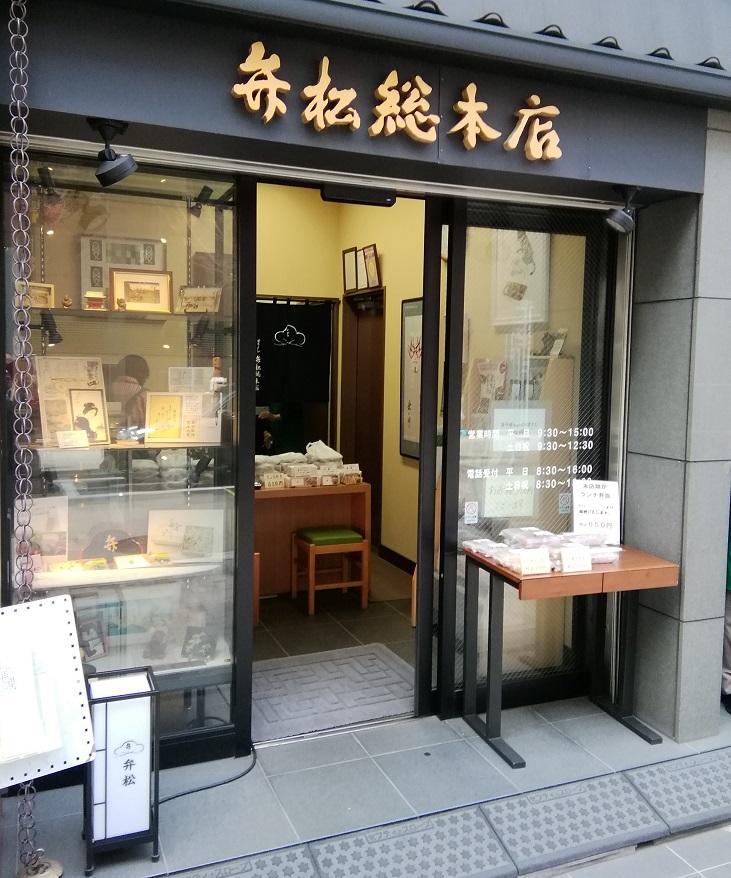
Nihonbashi Benmatsu Sohonten

1-10-7, Nihonbashimuromachi

3 minutes walk from Mitsukoshimae Station on the Tokyo Metro Hanzomon Line and Ginza Line

03-3279-2361

Business hours Weekdays 9:30 to 15:00

      Saturdays, Sundays, and holidays 9:30 to 12:30

Telephone reception Weekdays 8:30-16:00

      Saturdays, Sundays, and holidays 8:30 to 13:00

Click here for the website of Nihonbashi Benmatsu Sohonten
⇒ http://www.benmatsu.com/


◆ Kyobashi Monogatari 6: Town at the end of the corner

[Sumida Fireworks] 09:00 on March 7, 2019

The epilogue of Kyobashi Monogatari. This is the last time.

Until the last time → 【①【②】【③】【④】⑤】


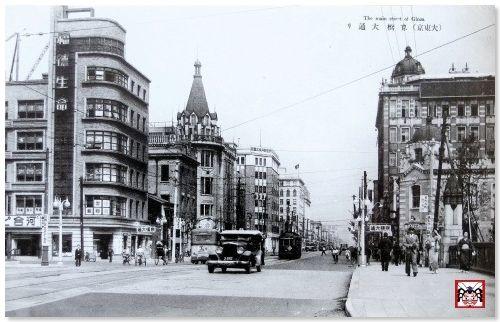
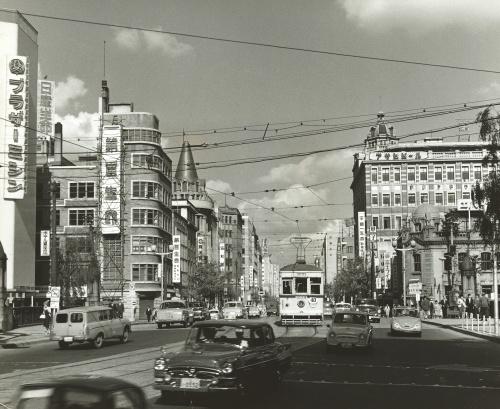
Below is the cityscape of Kyobashi seen from Ginza around Showa 37 (1962) after the war.

s_hanabi_73-1.jpg

Photo courtesy of: Chuo Ward Kyobashi Library


The building standing on Kyobashi Street has hardly changed since the last post-war postcard. The remnants of the Taisho era when it was Minami Temmacho can be seen that overcame the Pacific War and continued in the Showa 30s.


However, before the Tokyo Olympics, reclaiming the Kyobashi River began in 1963, and Kyobashi disappeared, and after that, the buildings in the town of Kyobashi changed one by one.


Just 50 years ago, in May 1969, the dismantling ceremony of the first mutual building, the most famous building in Kyobashi, was held. Until now, a metropolitan inhabitant who has been watching the landmark of Kyobashi seemed to have a letter saying, "Is it possible to leave at least that red brick dome roof that rises on the roof?" Was. However, this sturdy building, which survived the Great Kanto Earthquake and the Pacific War, was difficult to dismantle.


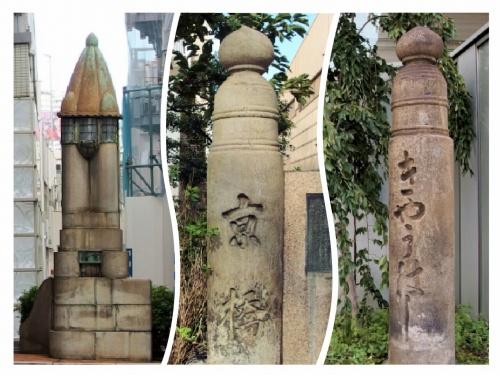
On the other hand, on the bridge over the river, there are still things that are left at the site of Kyobashi even when the bridge is gone. This is the main pillar. There are three main pillars left, two of which are the main pillars of giboshi's design, which are said to be from Ishibashi in 1875, and the other is the main pillars of the Taisho era bridge that looks like a rocket.

s_hanabi_73-2.jpg 

The most popular one is the main pillar of Meiji period, which retains the scent of the Edo period, and some people think that the design of the main pillar of the Taisho era is strange because it is not familiar to that era.


The main pillar was always with the city of South Temmacho. In the Taisho era, we built a cityscape with a sense of unity with Minami Temmacho, overcoming the earthquake, watching the reconstruction of Ginza, and overcoming Pacific War together. But now the companion is gone, and in a sense, I feel lonely and poor.


This is the main pillar of the Taisho era, but what is the motif of this design in the first place?


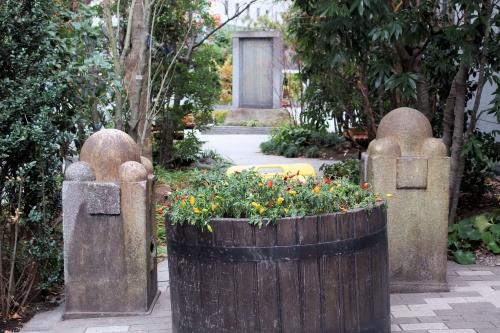
Many of you may know that there is a monument on the banks of the radish and a monument to the birthplace of Edo Kabuki in the current Kyobashi Ruins Hashizume Garden of the Kyobashi Daikon Riverside Hospitality. However, it seems that it is not well known that the "sleeve pillars" of Kyobashi, a bridge between the Taisho era, is left in this place.

s_hanabi_73-3.jpg


At present, this sleeve pillar is given an important role as a stopper in the park. It seems that the position has moved a little due to the recent renovation of the park, but it may be difficult to look at this and imagine that it is an old sleeve pillar.


But this design is great. Let's take a closer look. There is a large hemisphere in the middle, and there are four small ones around it, and there are mokomokomokomokomokomoko. Doesn't this look like something? 。 If you've been involved in this long story, I think there's something you can imagine.


s_hanabi_73-4.jpg

Early Showa period, Photo provided: Chuo Ward Kyobashi Library


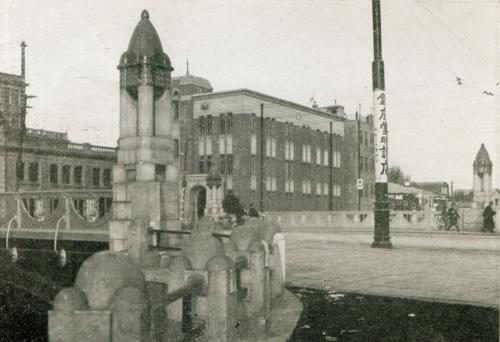
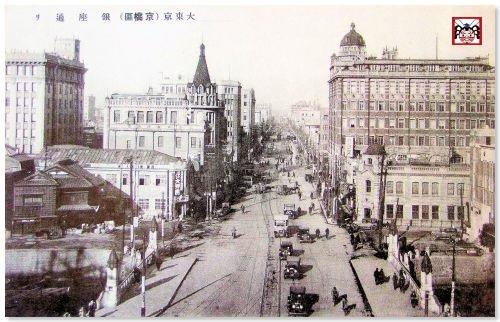
I can only see the "three dome roofs" of a building in South Temmacho.


Then, isn't the main pillar simply using the roof of the building in Minami Temmacho as a motif? I guess I just stretched the image of the sleeve pillars on top of the guy-n. As if the dome roof of the former Daido Life Building became the Tongari roof.


It’s free and fun to imagine. History is a mystery, and it is interesting because there is room to imagine those who do not know what they are. Don't worry, I'll try to imagine a little more.


There are still friends in the main pillars of the Taisho era.

s_hanabi_73-5.jpg

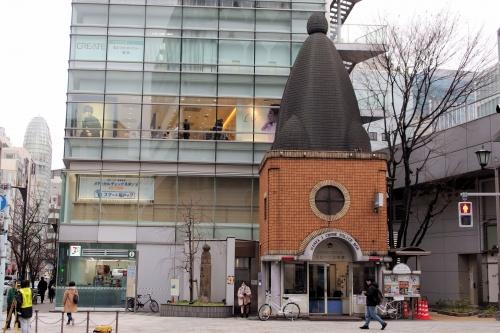
Ginza 1-chome police box located in Hashizume, the site of Kyobashi. I'm always watching the city of Ginza from the chopsticks in Ginza.


It is said that this police box building was built in the 1980s, but the design of the roof is undoubtedly the main pillar of Kyobashi on the Tongari roof of the Taisho era.


But is that all?


Looking at the design of the eaves and windows, I saw the streets of the "end of the corner" that watched the reconstruction of Ginza from the Taisho era to the early Showa era, not the brick streets of Ginza in the Meiji era. Toyokuni Bank, Daido Life Building, Daiichi Mutual Building, Hoshi Pharmaceutical, Sanjushi Bank, Chiyoda-kan ... And Kyobashi with Tongari roof.


The old bridge and the cityscape of Minami Temmacho have become one building, and now they are watching the city of Ginza as a police box. With that in mind, the design of this police box seems very wonderful.

s_hanabi_TheBendInTheRoad_73-6.jpg 

When you walk along Ginza Street, Kyobashi is a city that can be seen at the end of the corner. When I tried to find out around the Meiji and Taisho eras in the library, there were many books in Nihonbashi and Ginza, but there were few books in the town of Kyobashi in the middle, and I couldn't grasp the image of the city and the background of the times. When I thought so, I found something. This is a picture of the postcard. Postcards are first-class historical materials that can image past cityscapes, and the town of Kyobashi has postcards that are as competitive as Nihonbashi and Ginza. We collected postcards of Kyobashi, arranged them in chronological order, and spun them together in sentences.


In this story, I would be grateful if you could walk through the streets of the current "end of the corner" while imagining the streets of the Meiji, Taisho era, and early Showa eras. I’m sure there’s something wonderful ahead of you.

I'm sorry.

***

<Kyobashi Monogatari and Reference Materials>

“Do you know Antonin Raymond, the father of modern Japanese architecture?” Project Committee, Kyobunkan Co., Ltd. / 2016

"80 Years with Matsuzakaya and Ginza" Matsuzakaya Co., Ltd. / 2004

"Hundred Years of Matsuzakaya History" Matsuzakaya Co., Ltd. / 2010

"Matsuya Hundred Years History" Matsuya Co., Ltd. / 1969

"From the Townscape of the Earthquake Reconstruction <Ginza> (Shimizu Gumi Photos)" Ginza Society of Cultural History / 1995

"Meiji and Tokyo Clock Towers Revised and Revised Edition" Mitsuo Hirano and Meikeisha, 1968

"The Story of the First Mutual Pavilion," Dai-ichi Life Insurance Company, 1971

"The people are weak and the government officials are strong" Shinichi Hoshi and Shinchosha, 1967

"Chuo-ku History Zushu Kyobashi Hen" Chuo-ku Kyobashi Library / 1996

"Ginza-dori Renaikai 60 Year Historical Materials" Ginza-dori Renaikai / 1980

"Bridges in Chuo-ku, Hashizume Plaza-Chuo-ku Modern Bridge Survey-" Cultural Property Section, Social Education Division, Chuo-ku Board of Education / 1998

"Tokyo Rediscovery: Talking about Civil Engineering Heritage" Takashi Ito and Iwanami Shinsho, 1993

"Tokyo Past Walk Viewing from Painted Postcards and Old Maps" Harashima Hiroshi, Nakakei Co., Ltd. / 2008

"Chuo-ku Monoshiri Encyclopedia" Chuo-ku Tourism Association / 2018

"Kyobashi Library Image Data" Details column on the website

"Pre-war picture postcards" self-owned (collected using the expenses of correspondents)

***

*The names and company names of the buildings have changed depending on the times, but for the sake of the story, they have been unified and described.

*We tried to match the age of sentences and postcards as much as possible, but due to the sake of the story, there are some things that do not match.

*Click on some of the images to make enlarged images and explanatory images appear.


Reference: An article about the current cityscape of Kyobashi → Here


Tokyo Skytree "Sakura Special Lighting"

[Sam] 14:00 on March 6, 2019

DSC08778ELS'.jpgDSC02029'RS'G.jpg On March 1, "Sakura Special Lighting" began lighting on Tokyo Skytree.

From 17:30 to 18:30, it is a simple production of all white and shining intersection lighting.

From 18:30 to 22:00, the lighting "Mai" with the theme of the beauty of cherry blossom petals dancing. The tower body is colored with pink shades, and the white intersection lighting shines like cherry blossom petals.

From 22:00 to 24:00, one of the standard lighting "Nobori" is turned on.

At this time, "Sakura Waku Waku stamp rally 2019", a participatory dance program "Sorakara-chan's Sakura ☆ Dance!" Various spring events such as "SKYTREE ROUND THEATER" special video screening are scheduled.

From Chuo-ohashi Bridge, you can see the shine of shades that create a spring-like atmosphere.


I read the FY31 budget (draft) in Chuo-ku

[wienerhorn] 12:00 on March 6, 2019

Hot Plaza Harumi IMG_5710.jpgI looked through the FY2009 budget (draft) published on the homepage of Chuo-ku.
The general account exceeded 100 billion yen for the first time in the initial budget.
It is a budget that takes into account population growth, the Tokyo 2020 Games, and the infrastructure maintenance committee with a view to the "200,000 cities" beyond that.
Of the new major businesses, I focused on the following businesses:

・Local Rat Control Promotion Project
・Revision of bridge life extension repair plan
・New Subway Line Study
・Maintenance of "Edo Bus" Free Wi-Fi
・Noh and Kabuki appreciation classes
・Participation in Brasilian Youth School Games
・Development of Tokiwa Elementary School (Annex)
・Origami Crane Project (tentative name)
・Renewal of warm bath Plaza Harumi

In particular, I'm worried about the new subway line and the Plaza Harumi.
What kind of business are you interested in?


One reflection meeting of correspondent Part 4-From the 11th Chuo-ku Tourism Examination-

[Edamame] 09:00 on March 6, 2019

This is Edamame, a correspondent with children.

Part 1 → /archive/2019/02/11-14.html

Part 2 → /archive/2019/02/11-15.html

Part 3 → /archive/2019/02/11-16.html

Continue to

From the "11th Chuo-ku Tourism Test" conducted on February 3 (Sun)

I'd like to take up the problem you care about.


Q34 "Bettara City", which is held every year on October 19 and 20, is a feature of autumn in Chuo-ku.

It is said to have originated in the city that sold the offering of the event held on October 20.

So, which of the following events were customary to take place on October 20?

A. Nineteenth Night Lectures Tori-no-ichi Fair U. Kayabacho Yakushi Pilgrimage D. Ebisu-ko


For those who have studied or taken a walk about Chuo-ku a little

Is the answer itself not so difficult? I thought.

The correct answer is ... a picture of the past Betara city in my smartphone.

DSC_2095-1.jpg

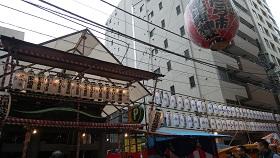
There is a very large Japanese lantern in the upper right.

It is written "Ebisu Shrine" in it.

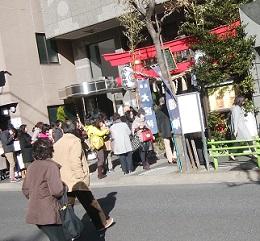
"Bettara City" was held in front of "Takarada Ebisu-jinja Shrine" in Otemmacho.

"Ebisu-ko" is the beginning.

By the way, what is 'Ebisu-ko'?

This is an event dedicated to Ebisu, a paper for commerce and agriculture.

It is accompanied by lucky items such as image of deity, Uchihatsuchi, Kaketai, Kirisansho, etc.

I pray for business prosperity.

Speaking of which...

DSC_2102-1.jpg

Edamame, when I went to Bettara City, I bought Kiri Sansho.

DSC_2103-1.jpg

This was also the offering of Ebisu-ko, so it was sold there.

I remember that the refreshing flavor of Sansho was pleasant.

So that’s the answer, E.


Why was he “careful” about this problem?

“What is a nineteen-night course? ?」

B. Tori-no-ichi Fair is

It is also held at Matsushima Shrine in Ningyocho in Chuo-ku.

DSC_2609-1.jpg

(Photo is the New Year's Day)

A senior correspondent, Shiba Inu, took up Tori-no-ichi Fair before.

/archive/2018/11/post-5817.html

C. I divided a page with plenty of official text about Kayabacho Yakushi pilgrimage.

The explanation is in detail, right?

The statue of Yakushi Nyorai at Chisenin in Kayabacho gathered the religion of the common people of Edo.

And Ueki City was also opened in fair on the 8th and 12th of every month, and it was very lively.

DSC_0594-1.jpg

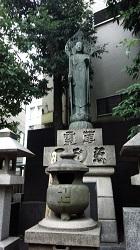
(This is a standing statue of Jizo Bodhisattva in the precincts of Chisen-in Temple where Kayabacho Yakushi was located.)


But I had never heard of the nineteenth night lecture.

I decided to check it out.

[Koyasugami]

God of safe childbirth. "Nihon Sandai Jitsuroku" in the article of July 11, 876, Jogan

As you know, the name has already been revealed, it has been faithful.

It was done widely in various places.

Nowadays, many of them are associated with other religions such as Koyasu Kannon, Koyasu Jizo, and Koyasu Yahata.

In eastern Japan, there is a place called Koyasu-ko, where women gather and worship Koyasu-sama.

Because it gathers on the 19th of the month, it is also called the 19th night lecture or the 19th night of the month.

(From the description of the Small Item Encyclopedia of Britannica International University)


I see. It was a "ko" of Koyasujin's faith.

And the 19th and date of "Bettara City" are on!

It might have been perfect in a sense to make it a "mistake option" (laughs).

・・・And is there a place in Chuo-ku that worships Koyasujin?

As I did not study, I could not find Edamame...

It seems that there are several shrines in Tokyo that have the name "Koyasu".

In the future, I would like to check out the enshrined deity of the shrine during a walk.


That's why we talked about the faith of the Edo period.

It was a little problem.

If you dig deeper into the problem that you solved, you will find a lot of discoveries.

You don't want to miss out on what you doubt or get caught.


KH GALLERY GINZA, HIROKO KOSHINO 

[Ginzo] 18:00 on March 5, 2019

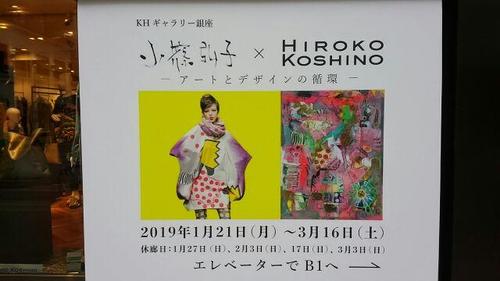
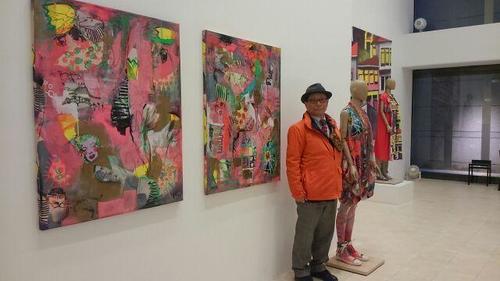
KH Gallery Ginza is located in Ginza 4-3-13 Wako Namiki-dori St. Building B! The first floor of the building is the BOUTIQUE of HIROKO KOSHINO.

 While walking around Namiki-dori St., I visited the gallery after seeing an exhibition on the theme of "Hiroko Koshino X HIROKO KOSHINO Art and Design Cycle" being held.

1550791075231.jpg

 This time, I was allowed to take photos after seeing the wonderful exhibition.

Design and landscape drawn in bold colors. I feel like standing on the street corner of Paris.

1550791180310.jpg

 It is held until March 16, but please check the closed days on the website. http://www.kh-gallery.com/ginza