In September 1869, a Naval Training Center was established in Tsukiji. It was renamed the Naval Academy in 1870 and the Naval Academy in 1876, and moved to Etajima in 1888, and has supported Japan's Navy as a training school for naval officers. Just as many former Shogunate served the Meiji New Government and contributed to the modernization of Japan, the former Shogunate also served in the Naval Military Dormitories, and in particular, Professor Noriyoshi Akamatsu from Numazu Military School of the Shizuoka Domain (Tokugawa Family) Many excellent human resources were provided, such as Professor Yoshiyoshi Yamamoto and the first-year capital student Masanori Nishio.
This time, together with the Naval Academy in Tsukiji, we will introduce Numazu Military School, which is closely related to it.
■Numazu Military School
 The Shogunate was dismantled, but in the Shizuoka Domain, where the Tokugawa family was relocated, Numazu Military School was opened in 1868 at the site of Numazu Castle Ninomaru to establish a military school for training officers. The highest school in Numazu, which is at the forefront of the era not only merely training officers, was born in Numazu.
Abe and Soroku Ebara worked hard to establish Numazu Military School. Amane Nishi, the first principal of the school and the former enlightenment scholar of the era, was appointed. The students who are said to be Shigyo students were selected by examination by clansman of Tokugawa. The exams were conducted from the first to the eighth term, and about 200 students joined the course and became qualified students.
The subjects included English and French, Chinese studies, mathematics, instrument studies, drawings, horse riding, gunnery, and maneuvering. The professors included language Atsushi Watanabe (translator of the Aesop story) and Taroitsu Otsukotsu. Because he actively taught mathematics that was not popular, he was called "Mathematics Numazu", and produced many engineering officers.
The reputation of military schools has increased nationwide, lending to other clans has begun to be carried out, and excellent human resources have gradually disappeared from military schools. In particular, in the Meiji government, when the establishment of an army and marine military dormitory was planned, even better human resources were pulled out. In May 1872, it was absorbed into the new government army dormitory and disappeared in more than three years, but its personnel were active in a wide range of fields such as the Army, Navy, government officials, education and business circles, contributing to the modernization of Japan.

Numazu-jo pictorial map history map
Sightseeing at Numazu Military School
 In the direction of the south exit of Numazu Station, there is Central Park, the site of Numazu Shiromoto Maru. Numazu Castle Ninomaru Goden is the school building of the Numazu Military School established by the Tokugawa family and Shizuoka, and there are also boarding dormitories, attached elementary schools, medical offices, and medical offices nearby, and horses of the former Numazu clan used by military schools. There was also a Baba.
On the precincts of Jooka Shrine in Otemachi, there is a monument of Numazu Military School built by the former Tokukawa family in 2015.
It was a short period of only four years, but there are the following people:
In the Army and Navy (officers), there are many such as Shogo Iguchi, Sadakichi Kato, Shuichi Yabuki, Shoyoshi Hayakawa, Noriyoshi Akamatsu, Hisataka Kuroda, Nobuyoshi Furukawa, Shinrokuro Nishi, Jun Murata, Shinkichi Mukoyama, Masaru Yamaguchi, etc. Other than military personnel, Amane Nishi, Ukichi Taguchi, Saburo Shimada, and Bunji Mano.
Numazu City Meiji Museum - Many materials from Numazu Military School are on display.

 gallery space
 Library
 On January 20, 2019, a ceremony commemorating the 150th anniversary of the founding of Numazu Military School was held at the Numazu Citizens' Culture Center.
Professor Yuhiko Higuchi of the National Museum of History and Folklore will give a lecture entitled "What to Learn from Numazu Military School" by the 18th head of the Tokugawa Soke family, Tsunetaka Tokukawa, "On the 150th anniversary of the founding of Numazu Military School". On the day, sales of "Numazu Junior High School Memorial Magazine" (1,000 yen per copy).
The Numazu Military School, established by the Tokugawa family who ruled the Shizuoka clan, celebrated its 150th anniversary, and on the 20th, the commemorative ceremony and the unveiling ceremony of the monument attached to the school (Tachinuma Tsu Hospital of the Shizuoka clan) were held in Numazu City. We planned to learn about the achievements of the school, which practiced an advanced education system and produced human resources who contributed to the modernization of Japan.Invited Mr. Iehiro, 53, the eldest son of the 18th Tokugawa family head, Tsunetaka Tokugawa, to unveil the monument of Numazu Hospital on the north side of the municipal first elementary school on the site of the hospital. Tomiko Suzuki, 83, a great-grandchild of Gentan Sugita, the first director of the hospital, also attended the event and pulled down at the invitation of the host. Mr. Suzuki, who saw the completed monument, said, "I am full of gratitude that I can't speak."At the ceremony held prior to the unveiling ceremony, Mr. Iehiro and Professor Yuhiko Higuchi of the National Museum of History and Folklore gave a commemorative lecture. Mr. Iehiro explained the background of the establishment of a military school and the contents of education. Professor Higuchi introduced Ukichi Taguchi, who promoted free trade theory, and former students who were active in politics. He pointed out five points, including rebellious spirit and learning foreign languages and different cultures, and emphasized that "there are countless things to be taken from military schools."
The first elementary school in Japan was opened in Numazu Castle in September 1868 as a Daigikan, and later as an elementary school attached to Numazu Military School, and is still the first elementary school in Numazu City.
Former shogunate retainers who moved to Numazu focused on educating their children even in a difficult life, and in September 1868, he started a school called 'daigikan.' The tenement house in the sojoji was placed on the school building, a goza, and a shutter was used for the blackboard. In December, it was taken over by the elementary school attached to Numazu Military School, and became the first school in Japan.
The students were warriors and children of common people over the age of 7 or 8, and the subjects were arithmetic, geography, gymnastics, horse riding, swimming, etc., and later became an advanced elementary school with English and French. In 1872, the school system was established, and this elementary school became a school called Shuseisha. After that, while changing the name of the school many times, such as 'Numazu Ko,' it was developed into the current Daiichi Elementary School and Daini Elementary School while repeating integration, separation, and new establishment.
Naval Academy in Tsukiji
History of Naval Academy
The Age of Creation
| September 18, 1869 (1869) | Established Naval Training Center (the predecessor of the Naval School) in Akibashi Bridge in Tsukiji, Tokyo |
|---|---|
Masujiro Omura, a military officer, should start a Western-style modern naval school.
July, 1869 The Ministry of Hyobu (Ministry of Hyobu) was established and the Naval Training Center was established.
September 18, 1869: The Naval Training Center was set up in Akibashi, former Geishu residence in Tsukiji, Tokyo (one corner of the former central market) Mitsugu Shin's naval studies (18 to 20 years old - 5 large clans, 4 middle clans, and 3 small clans)
January 11, 1870: The opening ceremony of the Naval Training Center was held and the first ceremony of the Naval Navy was the origin of the ceremony.
February 23, 1870: The 'Chiyoda-kata' was designated as a training book attached to the Naval Training Center.
March, 1870 He ordered two students to join an English book.
May, 1870 "Education of Marines" is the spirit of a warship with a naval officer.
On November 4, 1870, the Naval Training Center was renamed Naval Academy. We selected more than 70 dormitory students, 15 young students, and 29 middle-aged students, and all entered the dormitory at government expense.
January 8, 1871: The students of Arisugawa Hyobukyo (Minister of Hyobukyo) were wearing short coats with gold buttons from this day.
January 10, 1871: "Naval Academy Dormitory Rules" promulgated
February 22, 1871: 11 students of the Naval Military School and 6 students of the warships (an apprenticeship officer of Heihachiro Togo) First overseas student dispatch to the United States and the United States
June 15, 1871 "Mount Fuji" warship deployment
August 5, 1871 The instructor was appointed as a military officer.
February 27, 1872 With the abolition of the Ministry of Hyobu, the Department of the Navy and the Department of War were established under the jurisdiction of the Department of the Navy.
For young students, pre-students and middle-aged students are changed to main students. There were many students with magnificent skins of Sojikitori and the sail breeze was floating. It is said that the rough warriors in the history of war dismissed the instructor who did not know the battlefield, and fought with the instructor's office.
In July 1873, after the arrival of U.K., Major General Kuranosuke Nakamuta, the Military School, was appointed as a naval officer with five officers, 12 lower officers, and 16 sailors from the U.K., Maj. Gen. Kuranosuke Nakamuta, a military school. Major Douglas presupposed that "be a gentleman before being an officer," a British Navy officer-style gentleman education. The department focused on English and mathematics, and developed an educational policy that puts emphasis on both textbooks and protests in English and practical training rather than classroom lectures.
November 19, 1873 Two graduates of the first term
In 1874, the Department focused on English and mathematics, and implemented an educational policy that focused both textbooks and protests on English and practical training rather than classroom lectures. The results of education have improved, and the education of elementary officers is on track in earnest. We hold the first athletic meet in Japan by performing style physical education and play for students.
November 1, 1874 17 graduates of the second term Gonbee Yamamoto and Sonojo Hidaka
August 31, 1876: Naval Academy was renamed Naval Academy.
October 1876: The Marine Military Academy was attached to the Naval Academy and was called the Tokyo Military Branch School.
June 1878: All students of our institution were transferred to Yokosuka Naval Academy affiliated school.
In 1879, the Tokyo Hyo branch school was abolished and transferred to our school.
In July 1881, it was separated from the Naval Academy and became a Naval Institutional School.
June 1883: Yoichi Azuma, the first red brick building in Tokyo, was constructed as a school building for the Naval Academy after the completion of the new building, and was a large two-story building. The Wooden Department of the Navy looked like a poor and small storeroom. The facilities are also ready.
| August 1888 (1888) | Naval Academy Moved to Etajima |
|---|
The training of naval officers in the bakufu took over the route that had been laid in orbit, led by the warship magistrate Kaishu Katsu.
A list of human resources who went from the shogunate to the Navy from Numazu Military School
Principal Ko Yatabori late Tokugawa shogunate vassal, the head of the Navy, and government officials during the Meiji period
Professor Noriyoshi Akamatsu: Naval soldier (Middle Captain) during the Meiji period. Commander-in-Chief of Sasebo Chinju-fu
Commander-in-Chief of Yokosuka Chinju-fu, Baron
Professor Nami Yoshigi Yamamoto Naval soldier (Colonel) during the Meiji period
Students Masayuki Nakagawa late Tokugawa shogunate's retainer, naval officer and mathematician during the Meiji period
Naval soldier (Minor General) during the reign of Kenmitsu Nagamine
He was a naval officer (middle general) in the Meiji period of Shinkichi Mukoyama. Maizuru, adopted son of Koson Mukoyama, Maizuru
Director of Sasebo Naval Arsenal, Baron
Kenzo Ogasawara Naval Training Center
Tokiyo Yokoi, a member of the Navy's Central Engineer
Affiliated elementary school student Sadakichi Kato Naval officer (general) from the Meiji period to the Taisho era, Commander-in-Chief of the Second Fleet
Commander-in-chief of Kure Chinju-fu, baron
Shinrokuro Nishi: Naval soldier (middle general) from the Meiji period to the early Showa period
Chief of Staff of Sasebo Chinju-fu (Chief of the Chief of Staff), Chamberlain Officer, Commander of Mako Port Department, Baron
The main purpose of Numazu Military School was to train the army, but at the same time, the fact that human resources were also active in the Navy learned modern military law from France, and the new Meiji government was able to form an army immediately. I knew that the education of Numazu Military School was a pioneer.
Until now, the Tokugawa shogunate collapsed, and I wondered what happened to the shogunate's human resources on behalf of the Meiji government. Kaishu Katsu, Tesshu Yamaoka, Takeaki Enomoto, etc. were famous for their human resources, but it was also known that the new Meiji government utilized human resources from the bakufu.
(Professor, National Museum of Folklore, Prof. Yuhiko Higuchi, Numazu City Meiji Historical Museum)
This article is written with the consent of the curator Ryo Kiguchi. )
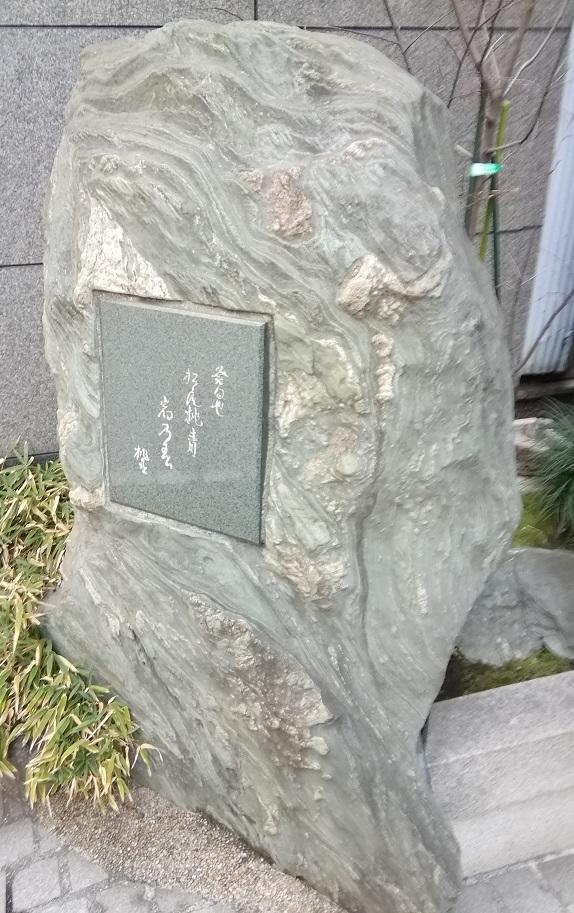
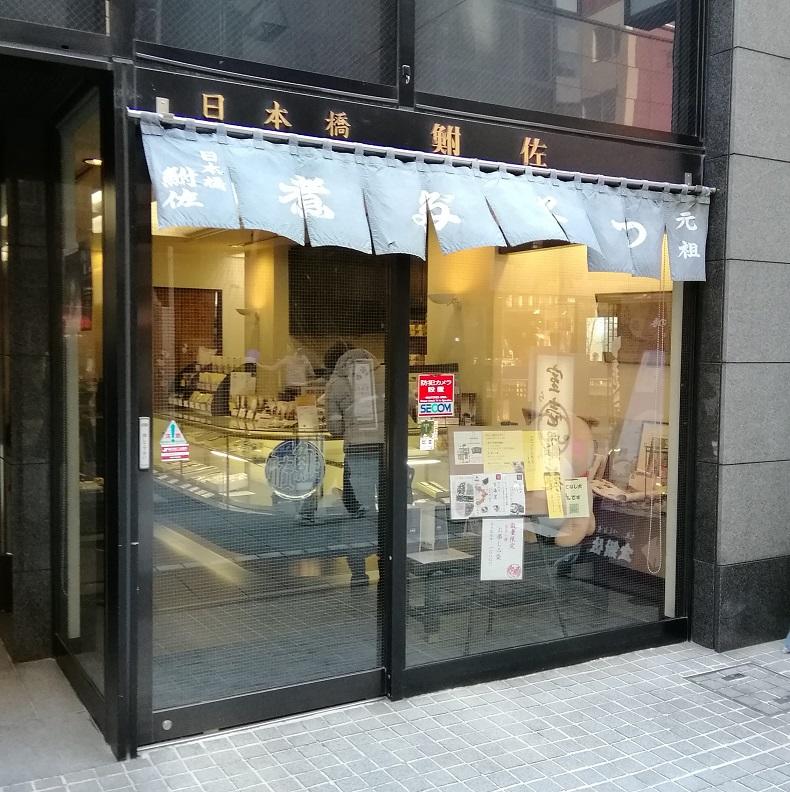

 will be full of office workers.







 in
in  and
and