Chuo-ku Tourism Association Official Blog

Chuo-ku Tourism Association correspondent blog

We introduce "seasonal" information of Chuo-ku by sightseeing volunteer members who passed the "Chuo-ku Tourism Certification" conducted by the Chuo-ku Tourism Association and registered as correspondents.

List of Authors

>>About this blog

Recent blog posts

Tsukiji River Ginza Park Agapanthus during flowering

[The Minnie Cricket] 20:00 on June 13, 2016

agapan01.JPG

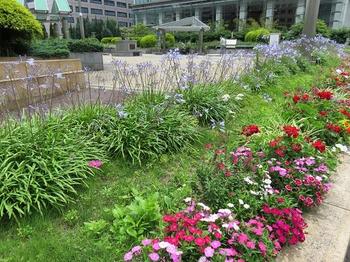
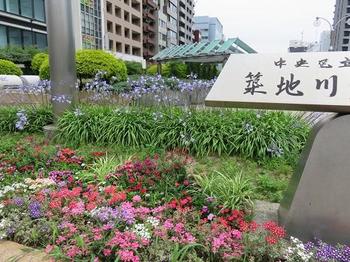
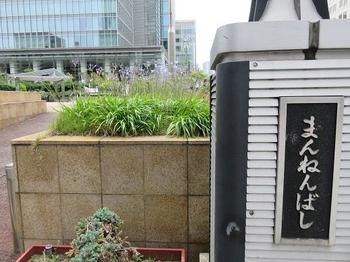
When the Tsukiji River was reclaimed, a park was created beside the bridge that was built, and the bridge was named (Kamei Bridge Park, Iwai Bridge Park, Unemebashi Park), but only the park beside Mannen Bridge Park is Tsukiji River Ginza Park, not Mannen Bridge Park.

agapan02.JPG

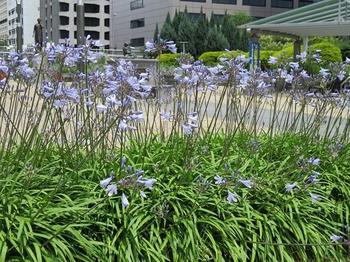
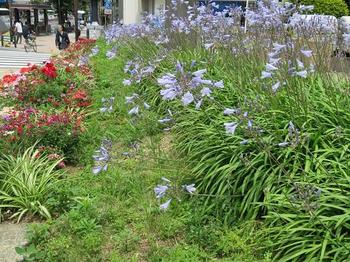
In this flower bed of Tsukiji River Ginza Park, Agapanthus is blooming light purple flowers.

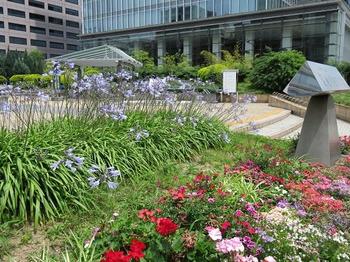
agapan03.JPG

It is a park along Harumi-dori St.

agapan04.JPG

Agapanthus is said to be native to South Africa and many horticultural varieties are made.

agapan05.JPG

It is a relatively compact type planted in Tsukiji River Ginza Park

agapan06.JPG

It is a flower that has a strong image of blooming in the hot season, and makes you realize that the hot summer is coming in the future.


2016 Early Summer Hydrangea Garden

[Sam] 16:00 on June 13, 2016

R0037713SQLS (3). jpg R0037710SQLS (2). jpg


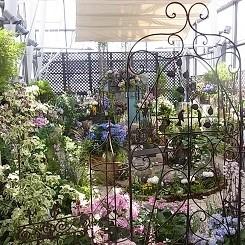
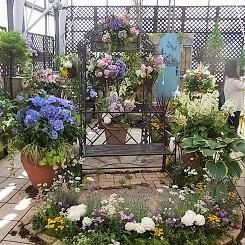
R0037714SQRSG (2). jpgOn June 10th, "Early Summer Hydrangea Garden" opens at the salon space "Royal Room" with terrace on the 10th floor of Fancl Ginza Square (Ginza 5).

Exhibition Period: June 10 to June 17 11:30 to 18:30

It is a hydrangea with a strong image of "wa", but this year it is a picture book-like rural scenery with a Cotswolds style, which is considered to be "the most beautiful village in U.K." It exudes.

The lovely and delicate flowers of the undergrowth enhance the soft and gentle color of hydrangea.

Attention is the so-called "Autumn Hydrangea".

The viewing period is long, and you can enjoy the view of the antique flower color gradually changing until autumn.

I hear that there are pink and blue systems, which change green over time, and then the deep redness increases.

From June 12th to 15th, a "gardening mini lesson" entitled "Mini Lease of Hydrangea Made with Dry Flowers" will be held.

It is a color space for hydrangeas where you can relax in the garden in the sky of Ginza.


R0037657SQRRS.jpg R0037672SQRRS.jpg R0037676SQRRS.jpg R0037696SQRRS.jpg R0037686SQRRS.jpg

R0037682SQRRS.jpg R0037663SQRRS.jpg R0037656SQRRS.jpg R0037654SQRRS.jpg R0037661SWRRS.jpg


Paula Museum Annex "Tamagawa-do 200-Year Exhibition"

[mill] 12:00 on June 13, 2016

DSC_7527.JPG


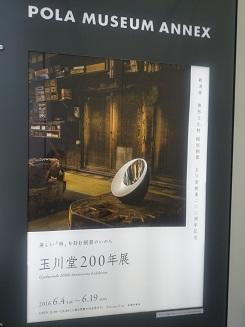
Attracted by the impressive poster, we visited the "Tamagawa-do 200-Year Exhibition" of Paula Museum Annex in Ginza.


I entered without any prior knowledge, so I was very excited about what kind of exhibition it was.


DSC_7522.JPG

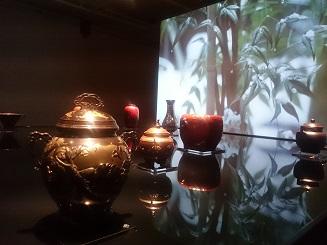
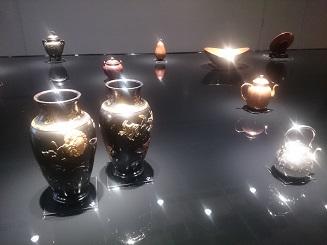
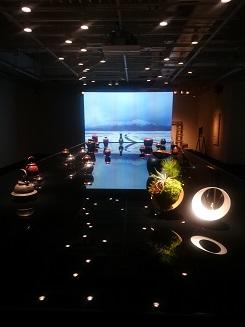
When you enter the exhibition room, you will see works shining like stars in the space where the lights are turned off.


I was fascinated in an instant.


Tamagawa-do is said to be a company that produces Tsukiki copperware in Tsubame City, Niigata Prefecture, one of Japan's leading metalworking products.


Tsuchiki copperware is a technique of creating vessels while breaking copper with a hammer, and is also designated as Intangible Cultural Property in Niigata Prefecture.


DSC_7511.JPG

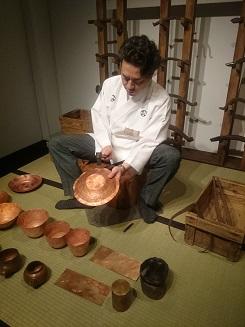
We were able to see a demonstration at the venue.


It was very interesting to see how to shape it by shrinking or rolling while tapping and extending copper.


This technique of Tsuchiki copperware was passed down to Tsubame by a migrant worker in Sendai in the late Edo period, and was passed down in 1816 (Culture 13) by Tamagawa Kakubei, the founder of Tamagawa-do.


DSC_7512.JPG

In this exhibition, you can see the works of seven people who have spanned 200 years, from the first generation Kakubei Tamagawa to the current seventh generation Motoyuki Tamagawa.


Since the work is installed on a platform filled with oil, the mirror reflection is beautiful, and it is an impressive exhibition with a moist texture.


DSC_7516.JPG

Tamagawa-do has been exhibited at about 30 overseas expositions before the war, including the Vienna World Exposition in 1873, and has been awarded.


It is a number of beautiful and wonderful works that convey the scent of the good old days and the pride of Japan.


DSC_7521.JPG

A small universe of beauty that continues to tickle tranquil times for generations.


Please go out for an exhibition of the memorable year of 200 years.


"Tamagawa-do 200 Year Exhibition"

June 4 (Sat) - June 19 (Sun)

3rd floor of Paula Ginza Building, 1-7-7 Ginza, Chuo-ku, Tokyo

11:00 to 20:00 (Entry until 30 minutes before closing)


Please see the Tamagawa-do website for details on events such as demonstrations.

http://www.gyokusendo.com/news/4680


2016 Sanno Festival Hie-jinja Shrine Shinko Festival Report 2016

[Ginzo] 09:00 on June 13, 2016

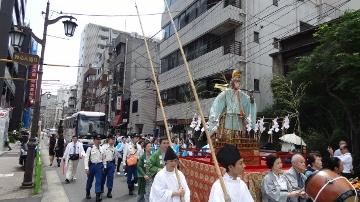
 On the afternoon of June 10, 2016, I visited Kyobashi, Hatchobori, Nihonbashi Hie-jinja Shrine (auxiliary shrine), and Nihonbashi 1-chome to Kyobashi, Ginza, and Corridor Street.


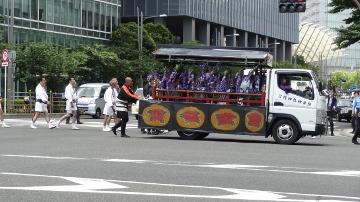
First, the leading car crossing the intersection of the blacksmith bridge. The wisteria-colored decoration creates gorgeousness.
DSC00850 (360x202). jpg


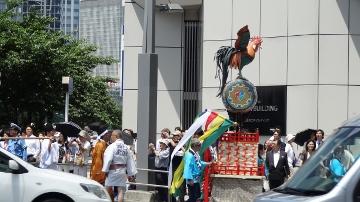
The first ladder group will be led by Shinto priesthood, Deputy Prime Minister, Goboko, Takebomochi, Kankodori, Taiko, Hie-jinja Shrine Shinto Festival Nobori, Vice-Chairman of the festival riding horses, gold rods, Takahari lanterns, vermilion umbrellas, and supporters of Hie-jinja Shrine. The photo shows kankodori.
DSC00853 (360x202). jpg

 Behind it, those with the flags of Nishiki, Holy Landlessness, and Taihei Tenkai proceed. A lot of others will continue.


 The second ladder team consists of Deputy Prime Minister, Gonnegi, Misacred horse, Mikyu, and arrows, Mihoko, Mitachi, Gonmiyaji, Gonnegi, Maihime, Dojo, musicians who play Sho, Nishiki flag, Suga lid, etc. will proceed.

For the roles of the third and fourth ladder groups, please see the official website of Hie-jinja Shrine.


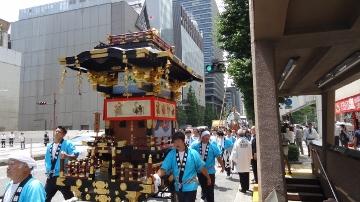
 Floats passing through Takaramachi Station, followed by floats and Mr. Miko
DSC00882 (360x202). jpg


 On the Suzuran Street of Hatchobori,

DSC00885 (360x202). jpg


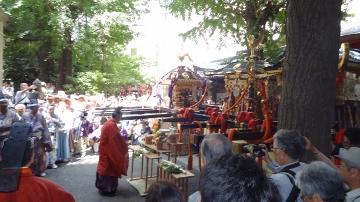
 Nihonbashi Hie-jinja Shrine (auxiliary shrine) is resting place of portable shrines. It's about an hour's break.

Many people listen to Shinto priesthood, where the three portable shrines are served in auxiliary shrine.
DSC00904 (360x202). jpg


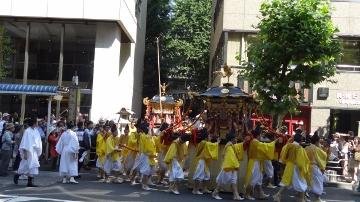
 Three portable shrine units will come out from the company after an hour.
DSC00926 (360x202). jpg


On this day, people from far away, such as Kanagawa Prefecture and Sakura City, Chiba Prefecture, came out. In any case, he saw the news of the commercial broadcast and said that he was rushed. Sakura City has the edge of floats.


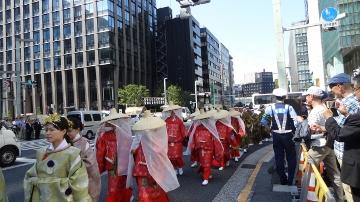
A group of cruises from Nihonbashi to Kyobashi. What an elegant cruise. You look at a historical picture book.
DSC00941 (360x202). jpg


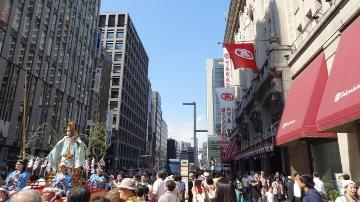
People watching the Shinko Festival near Takashimaya saw a lot of smiles.
DSC00957 (360x202). jpg


 In Kyobashi, (probably) students from Sakamoto Elementary School to Yasuaki Elementary School students. These children will take over the Sanno Festival.

The camera of the mothers watching, the sound of continuous shutter sounded.
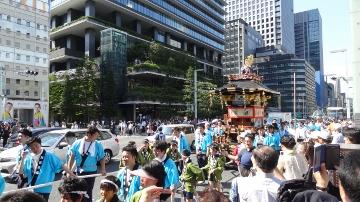
DSC00974 (360x202). jpg


The Shinko Festival goes to the city of Ginza. It's in front of Yamano instruments and Kimura family.
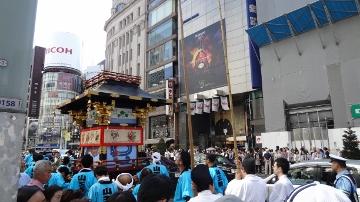
DSC00987 (360x202). jpg


Visitors from foreign countries were also very pleased with the unexpected event.
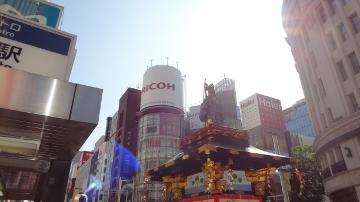
DSC00988 (360x202). jpg


 In front of heaven. This doll was moving up and down.
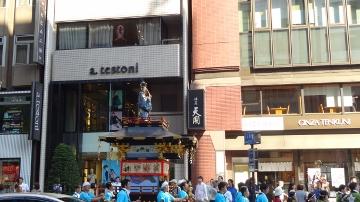
DSC00996 (360x202). jpg


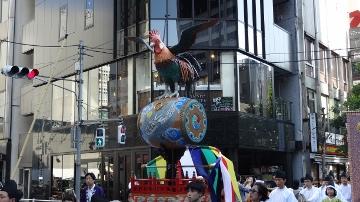
In the town of Corridor, it is daytime, but "Kanko birds" are not singing. There were a lot of spectators. Business is thriving!
DSC00999 (360x202). jpg


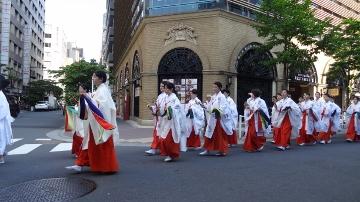
Next up, Miko. It's neat and beautiful. We see our hearts are washed.
DSC01018 (360x202). jpg


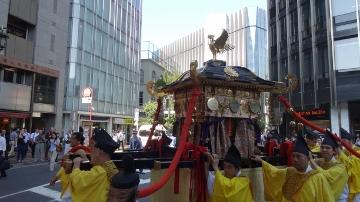
Miyuki Street, where Yasuaki Elementary School is located. Phoenix, a symbol of streetlights. Overlapped with the Phoenix of portable shrine, both looked divine.
DSC01023 (360x202). jpg

It is a traditional Shinto festival of Hie-jinja Shrine. I strongly wished that you will continue to work with the efforts of your children. Ginzo


2016 Sanno-sai Festival Hie-jinja Shrine Shitamachi Union June 10th is Shinko-sai Festival

[Ginzo] 09:00 on June 10, 2016

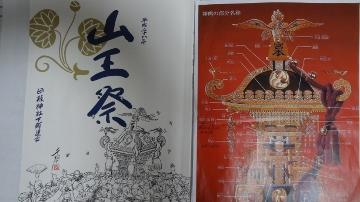
 In a lecture on "Enjoying the Tenka Festival Sanno Festival" held at "Edo Town Juku" in April and May, I heard about the history and traditions of the Sanno Festival, so I decided to go out for support and watching. Was.

DSC00849 (360x202). jpg

 It is written in the wonderful guide book that I received.


On June 10 (Fri), Jinkosai is performed separately at the largest ceremony of the Sanno Festival.

Two Gohoren, one Miya portable shrine, and three floats form a line of 300 meters, and travels through the shrine parishioner area of the city center for a full day, accompanied by senior officers and young shrine parishioner.


And the route and time of the Shinko Festival on Friday, June 10 will be excerpted only in Chuo-ku.

Kajibashi Crossing 12:30, Hatchobori Suzuran Street entrance 12:50, Nihonbashi Hie-jinja Shrine (auxiliary shrine) 13:10-14:10,

Nihonbashi Intersection 14:30, Kyobashi 3-chome 14:45, Ginza 1-chome 14:50, Ginza 4-chome 15:00, Ginza 4-chome

Shimbashi 1-chome 15:15-15:35, Corridor Street 15:45, Tokyo Takarazuka Theater 15:55, and Imperial Hotel 16:00.


For more information, please visit the official website of the Sanno Festival.

http://tenkamatsuri.jp/nittei/index.html

 I'm thrilled. By all means, I'm going to rush with just a pilgrimage in Chuo-ku. Ginzo
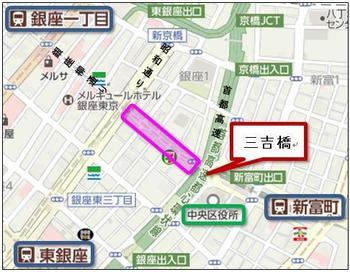


Hydrangea on the street from Showa-dori to Miyoshi-bashi Bridge

[The Minnie Cricket] 18:00 on June 7, 2016

ajisaid01.JPG

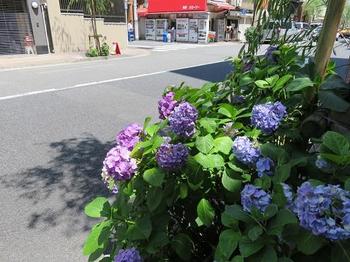
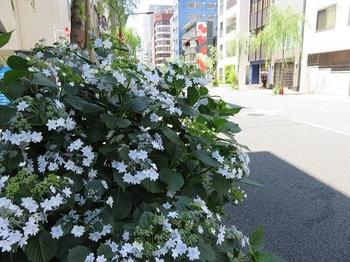
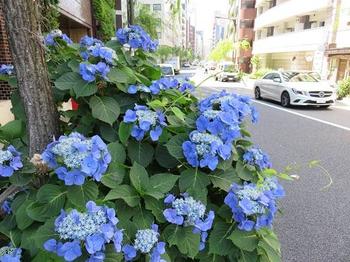
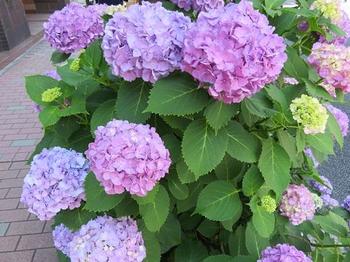
Hydrangea on this street is blooming beautifully this year.

ajisaid9.jpg

At this time, the Hydrangea Festival is held in various places in Tokyo, and the Bunkyo Hydrangea Festival, which is held every year around Shirayama Shrine in Bunkyo-ku (this year, June 11 (Sat)-19 (Sun), is famous, but the hydrangea on this street is also paired with willow, a tree in Chuo-ku, making the street gorgeous this season, and I love it

ajisaid02.JPG

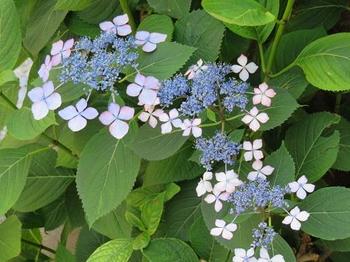
There are several kinds of bigleaf hydrangea and Hong Hydrangea each and they are beautiful.

ajisaid03.JPG

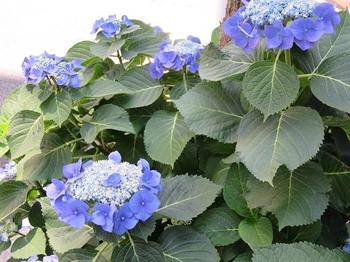
Hydrangea seems to change color depending on the acidity of the soil planted (alkaline, redish, acidic and blue), and you can also enjoy subtle blue (indigo blue) changes.

ajisaid04.JPG

In the first place, the name of hydrangea is said to have changed "Azusaai (Chushin Ai)," which means that indigo flowers gather.

ajisaid05.JPG

If you crunch the relationship between Chuo-ku and Hydrangea fairly forcefully,

ajisaid06.JPG

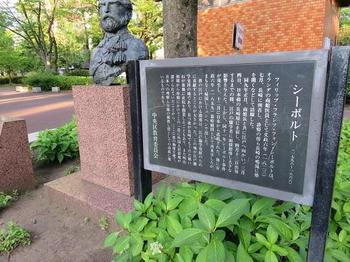
In the late Edo period, Siebold, who worked to spread Western medicine in Nagasaki, was also a naturalist and gave hydrangea the scientific name Hydrangea Otaxa, but this otaxa is derived from the name of Siebold's mistress Kusumoto Falls, commonly known as "Otakisan" (inferred by Dr. Tomitaro Makino)

ajisaid07.JPG

His bust was built in Akatsuki Park, partly because Siebold had a daughter "Ine" with Mr. Taki, opened a maternity hospital in Tsukiji.

The one planted around the statue of Siebold was bigleaf hydrangea, which began to bloom.

ajisaid08.JPG

By the way, Hydrangea consists of Greek hydro (water) and Andrzej-on (container), which is interpreted as "water vessel" and "water turtle".

We are entering the rainy season, but during that period, the blue, indigo, and pink of hydrangeas that continue to bloom are refreshing.