 Click here for the latest Chuo-ku Tourism Association correspondent blog
Hello. This is a new correspondent, Hanes.

In mid-February, I heard that there is a special exhibition that I can't miss for British lovers.
I went to a very interesting gallery in Ginza.
The gallery is a senior correspondent, Dimini ☆Mr. Cricket (2016, 2017, 2018) and Mr. Tsukuda's Usako were introduced.
MUSEE GINZA was created by preserving and restoring modern architecture (retro building) built in 1932!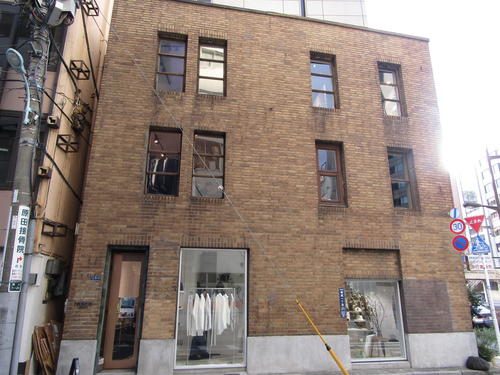
(The entrance is on the left side.)
The details of the building itself are detailed in the article of Usako Tsukuda, so this time I omitted it.
I would like to introduce you from what I was interested in inside the building.
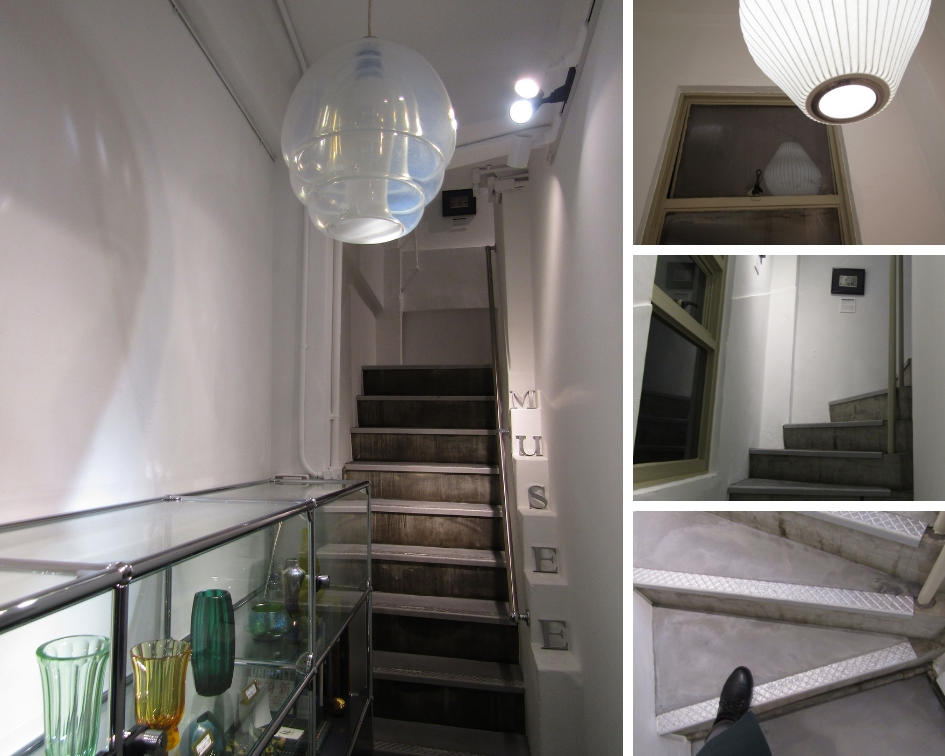
■Entrance to the stairs
First, press the intercom to open the door.
On the left side of the door is the Parnas Vienna interior filled with the charm of the Vienna Separatists displayed in the showcase.
And on the wall next to the elongated stairs that stretches in front,
It is decorated with postcards at the time that you can see the state of Ginza for 90 years that this building has walked (Sanjuma moat, cafe-the heyday, occupied Ginza, etc.).
As you go up the stairs, rare historical materials will make you back in time.
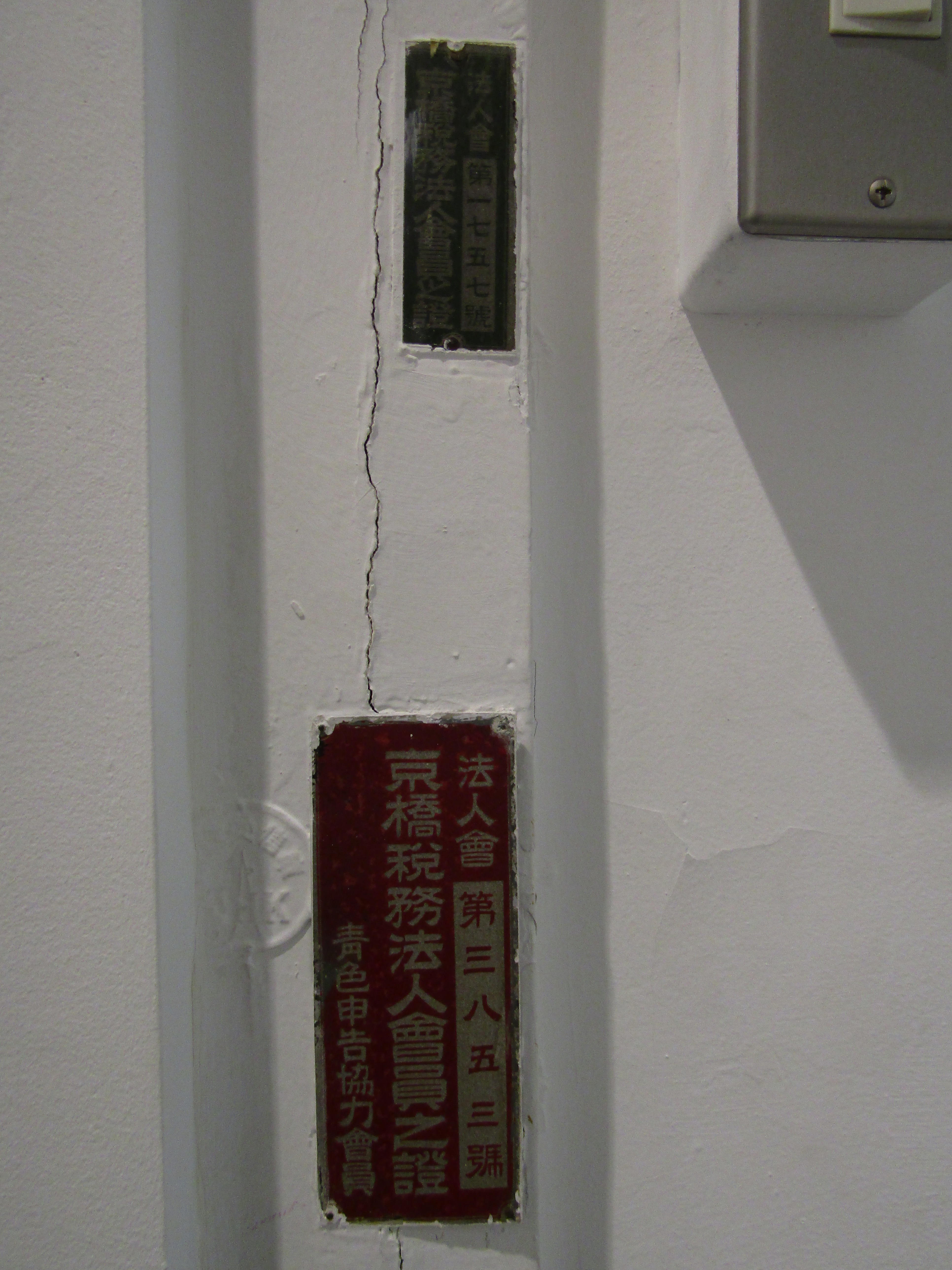
In addition, since it is a building in the early Showa era, an old Kyobashi Tax Affairs Corporation member's certificate was found in the middle of the stairs!
There are several buildings built at the same time in Ginza.
Even if the exterior is retro, there are not many things left at the time.
Therefore, such casual things are actually rare
■Observation and Experimental Space
When I visited the gallery, there was a customer who had an aesthetic eye.
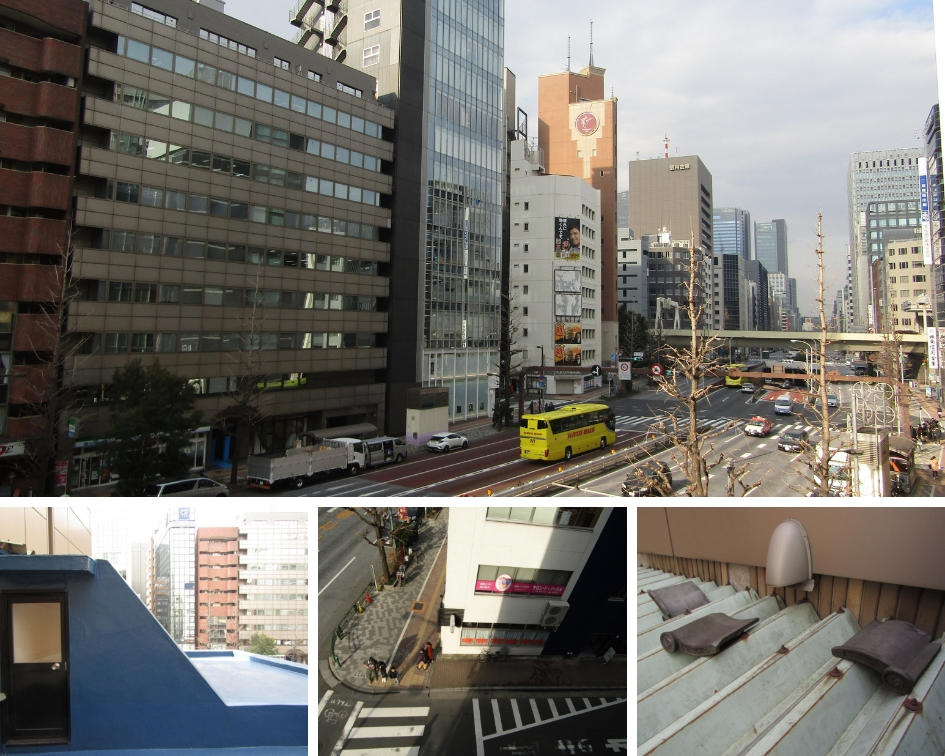
I showed you the roof before the exhibition.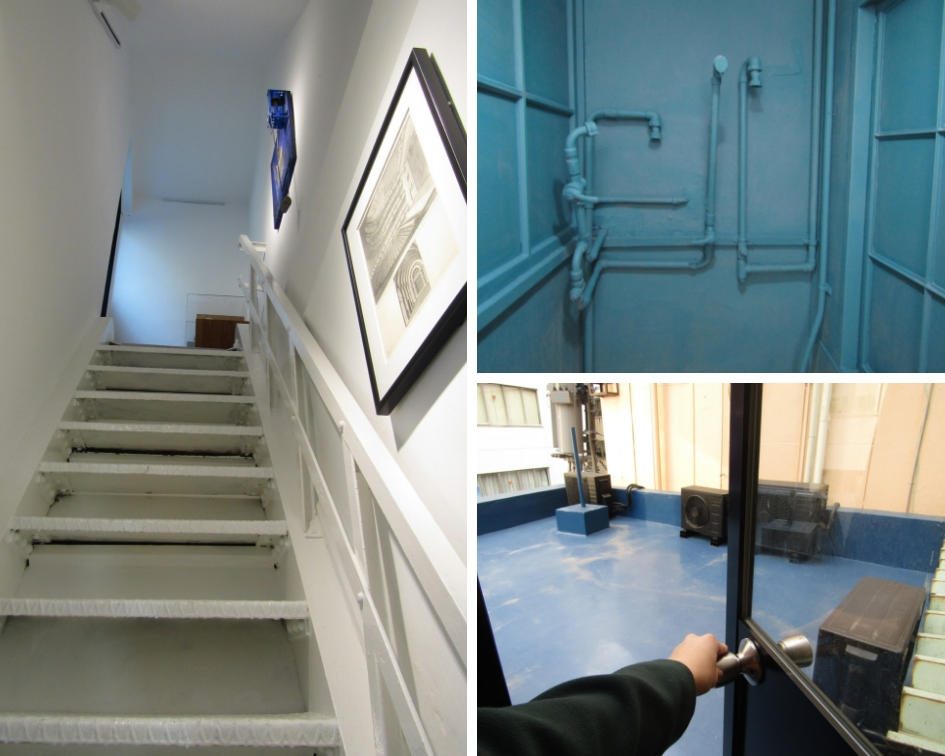
Usually, the roof of buildings is not open to the public.
It seems that installations and performances are also being conducted experimentally here,
It is a valuable spot where you can see Showa-dori from an open space.
■Exhibition "The World of British Theater"
After enjoying the rooftop for a while, go to the long-awaited exhibition
This exhibition focuses on the goodness and historical axis of British theater architecture that flourished in the West End.
Exhibits of 16 copperplate prints extracted from ancient book literature (published in the early 19th century) that conveys its history.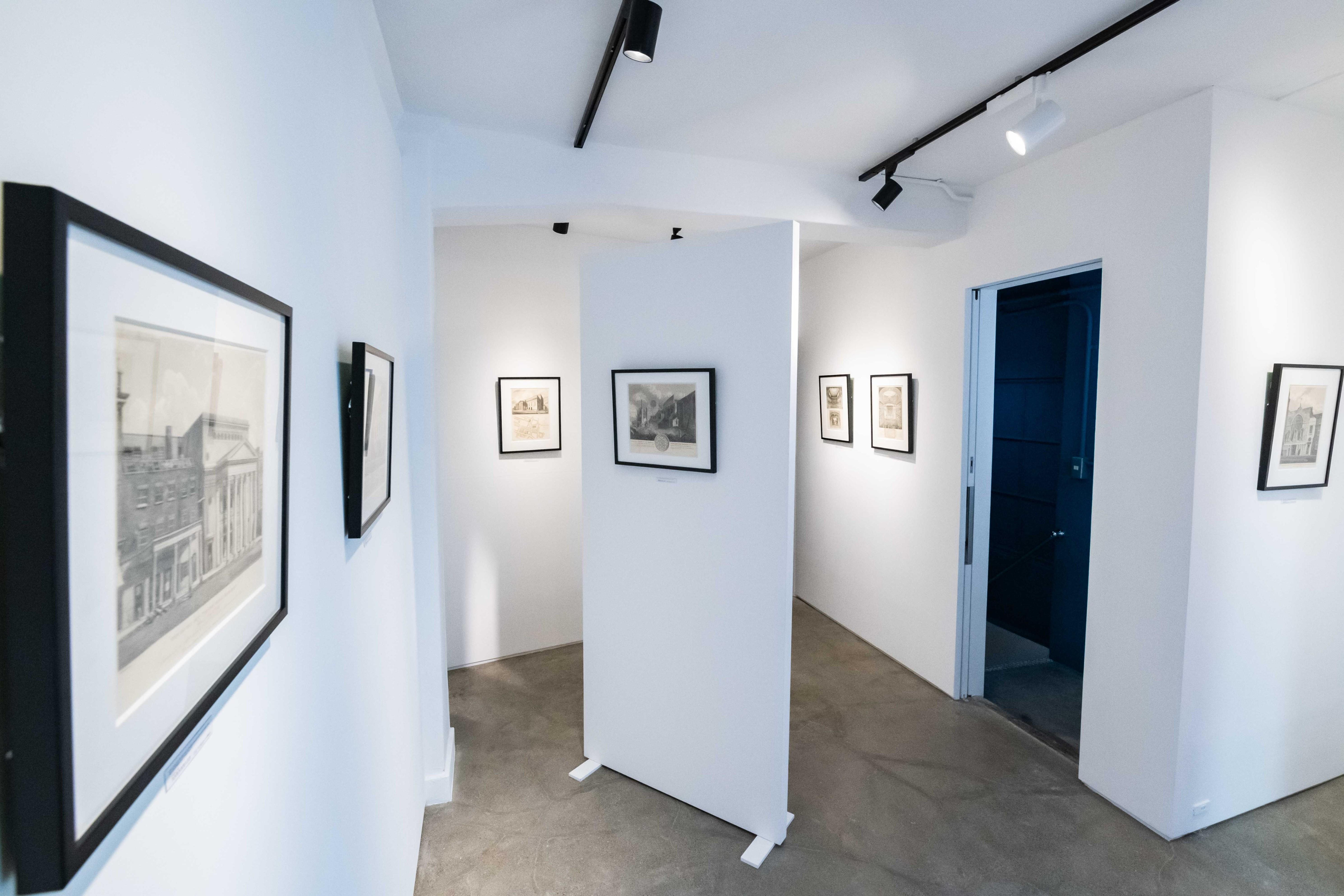
(Photo courtesy of MUSEE GINZA_KawasakiBrandDesign)
The British theater, which is the theme of this time, has been updated with the times.
The younger generation in Japan will also visit the theater.
It can be said that traditional Japanese performing arts still have little support from the younger generation.
In addition, it is difficult to use old buildings that have once completed their role in Japan as they are.
It is often demolished and reborn as a new building.
However, Rikihiro Kawasaki, who bought the building, updated the architectural space like the British theater.
We have succeeded in preserving and regenerating the building by giving a new role by taking advantage of the land of Ginza.
In this way, this exhibition is linked to Mr. Kawasaki's idea of preserving the building.
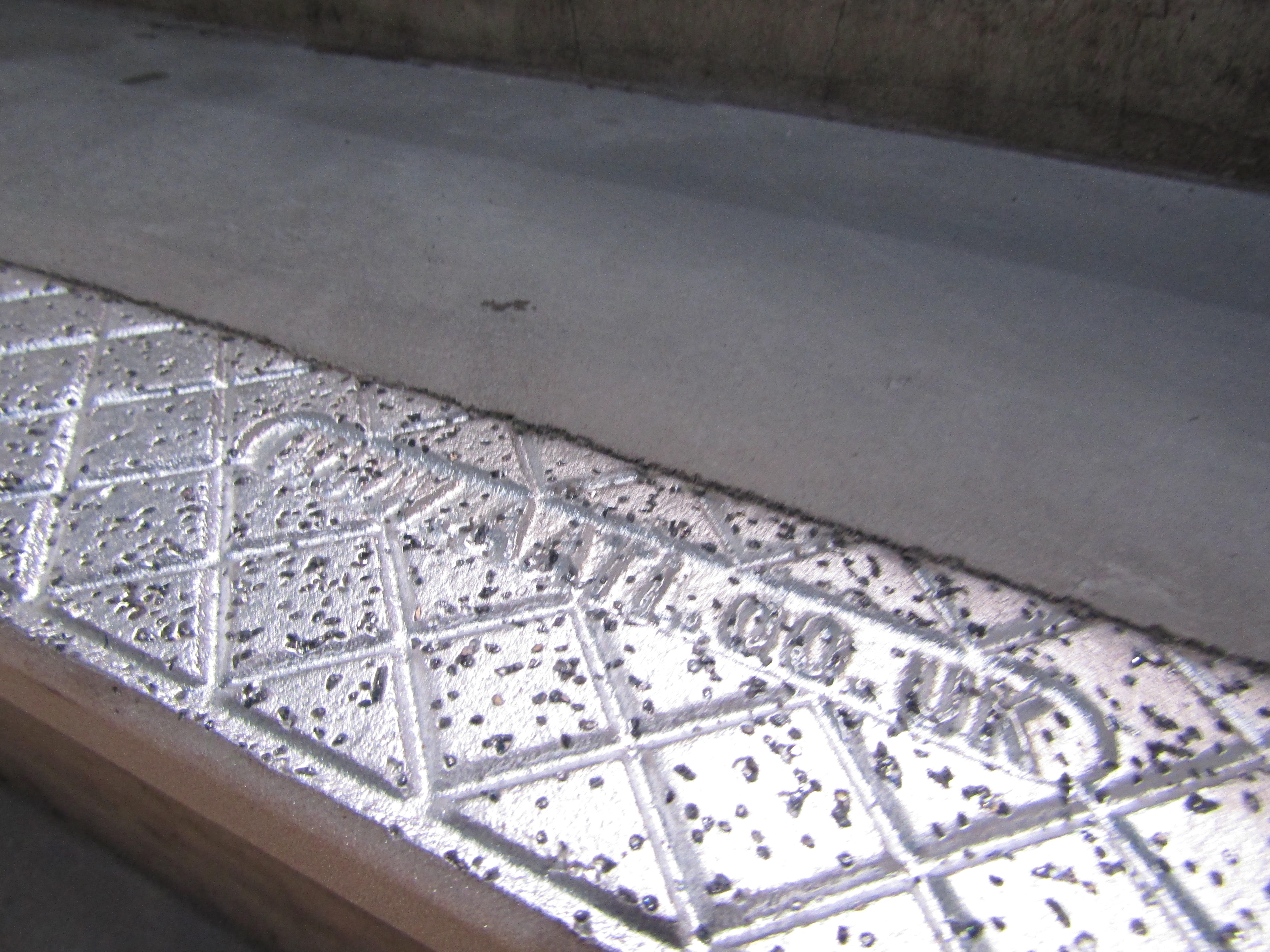
It is said that it is actually used in London's subway station for this exhibition.
We obtained Stair Nosings (Stair Nosings) from AATi, UK, which will be adopted for the first time in Japan, as a special order after six months of negotiations.
Surprisingly, it was installed on the stairs by yourself.
This may be possible because it was originally a construction company in Kyushu.
This hardware is often used in British theater architecture, and the attention to such details is one of the highlights.
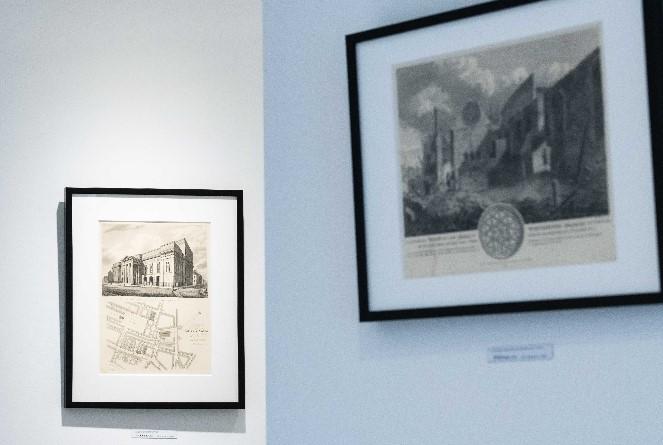
And as you can see in the illustration below (The New Theatre Royal in Hay Market in 1821),
There are some pictures of gorgeous and glittering British theatre, but that's not the only one!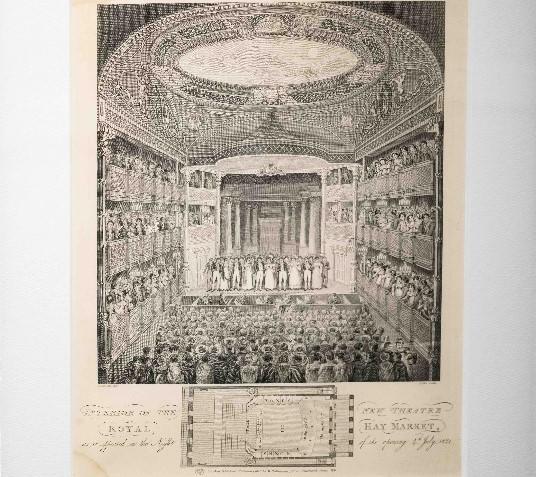
(Photo courtesy of MUSEE GINZA_KawasakiBrandDesign)
You can see the uniqueness of the era, British culture, and architectural elements everywhere in the illustrations, so your imagination will expand.
For example, an illustration of St Saviour's choir (1 January 1814, Robert Wilkinson Published).
I get the impression that clear hymns are echoing in the church, but if you look closely at the details, you will find it even more interesting.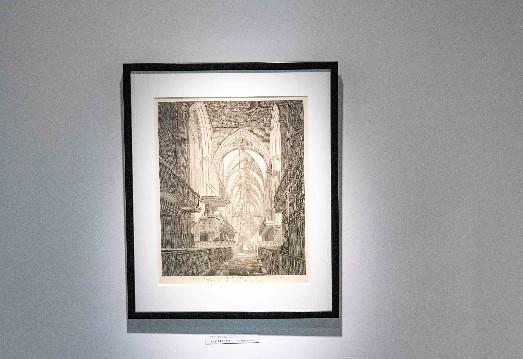
(Photo courtesy of MUSEE GINZA_KawasakiBrandDesign)
(upper photo) A rose-like floating decoration near the ceiling of a pointed arch unique to Gothic style (boss) :You can see ribs (reinforcement members provided at key points such as boards to increase the strength of steel-frame structures, and decorations attached to the intersection of "ribs").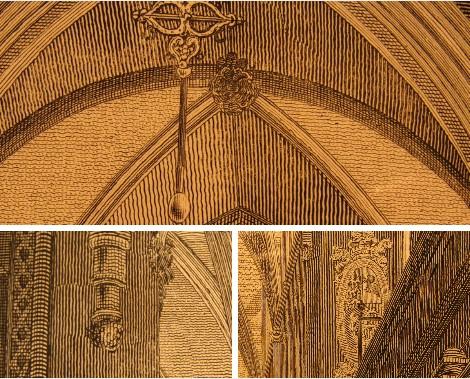
(Left left of the photo) An angel-like sculpture decoration
(lower right) like the Royal Standard of England
I will omit the details, but the British church architecture is not only a characteristic style and stained glass.
In these details, “What is this?” There is a charm like "I'm worried!"
And Mr. Kawasaki says that the most horrifying work in this exhibition is
It depicts the Drury Lane Theatre on fire on the night of February 24, 1809.
At that time, the method of evacuation and the time required to extinguish fires were different from modern times....
How did the people around you evacuate and what kind of sight they saw?...
I think you can know that from this illustration.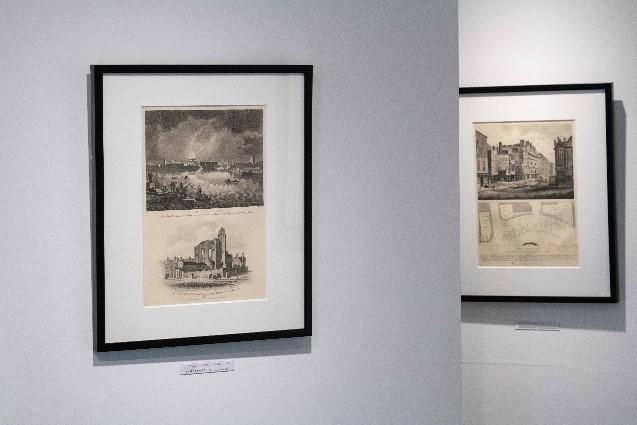
(Photo courtesy of MUSEE GINZA_KawasakiBrandDesign)
The old books handled this time are also published by the publishing company of Robert Wilkinson (1768-1825), who produced maps.
Check not only the illustrations depicting the theater, but also maps.
You can see the record of the fire and where the people of what occupation lived, so it's interesting to watch. 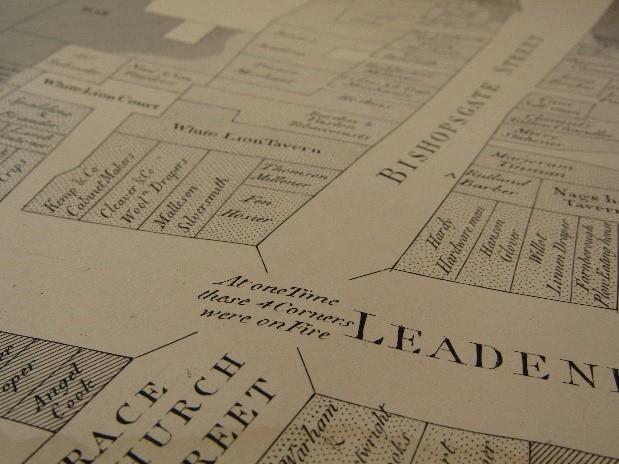
A Plan of the Fire in Bishopgate Street, Cornhill and Leadenhalal Street
You can also purchase this exhibition!
Unlike ordinary antique illustrations, it may be available at a very affordable price.
This is also surprising because three illustrations were sold on the day of the visit alone.
(Photo courtesy of MUSEE GINZA_KawasakiBrandDesign)
I will not be able to introduce all the works on this blog.
You can see the old British illustrations up close, which you don't usually see.
It’s also nice to be able to shoot in the gallery like a British museum.
<Asident> Adolf Loos
Designed by Roth, famous for “art is guilt” (i.e., “progress in culture is to remove decorations from daily necessities”), the café Museum is characterized by a simple interior.
The gallery also displays a rare chair with a design similar to the Muzeum chair there (available for purchase).
This Roth's idea sounds somewhat radical,
It was so simple that some buildings were stopped by the authorities because they were so simple....
However, he later became a pioneer of Modernism architecture, and now he is a representative of Vienna, no.
I don't know much about art, but I look at the chair about this cafe Museum,
I feel like I have understood a little bit of MUSEE GINZA's vision and stance again.
As I mentioned earlier, it is difficult to enter a gallery that does not face the road surface.
I don't know what it is in the first place.

But here, as you can see in the gallery name, it feels like going to “MUSEE”
I felt like it was an open space where everyone could enjoy art.
And the uniqueness of "MUSEE" that appeals to the sensitivity of visitors.
It is an art-sensitive land called Ginza, which is embodyed while being updated!
This special exhibition, which the owner Kawasaki was particular about, will be held until March 17th.
Please drop in when you come near you.
■MUSEE GINZA Exhibition "The World of British Theater Architecture"
Venue: MUSEE GINZA (Kawasaki Brand Design Building, 1-20-17 Ginza, Chuo-ku, Tokyo)
Exhibition Period: February 6 (Wednesday) to March 17 (Sunday), 2019 11:30 to 17:30
Closed: Moon and Fire
Entrance fee: Free
Official Website: https://kawasaki-brand-design.com/
※MUSEE GINZA Kawasaki Brand Design Co., Ltd. has obtained permission for photography and introduction.

Click here for the new Chuo-ku Tourism Association correspondent blog


 (* It's just my guess.)

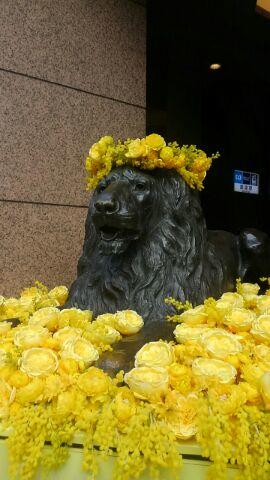
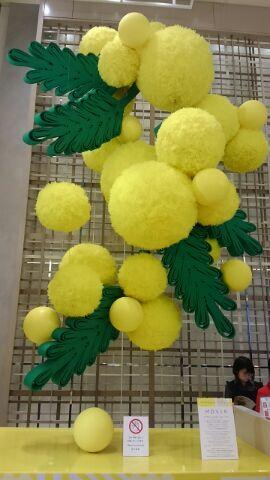
 in Ginza Mitsukoshi
 , the venue, and saw the stage on display.
 .
.