 Official
There was a cafe Paulista "Ningyocho-dori St." shop
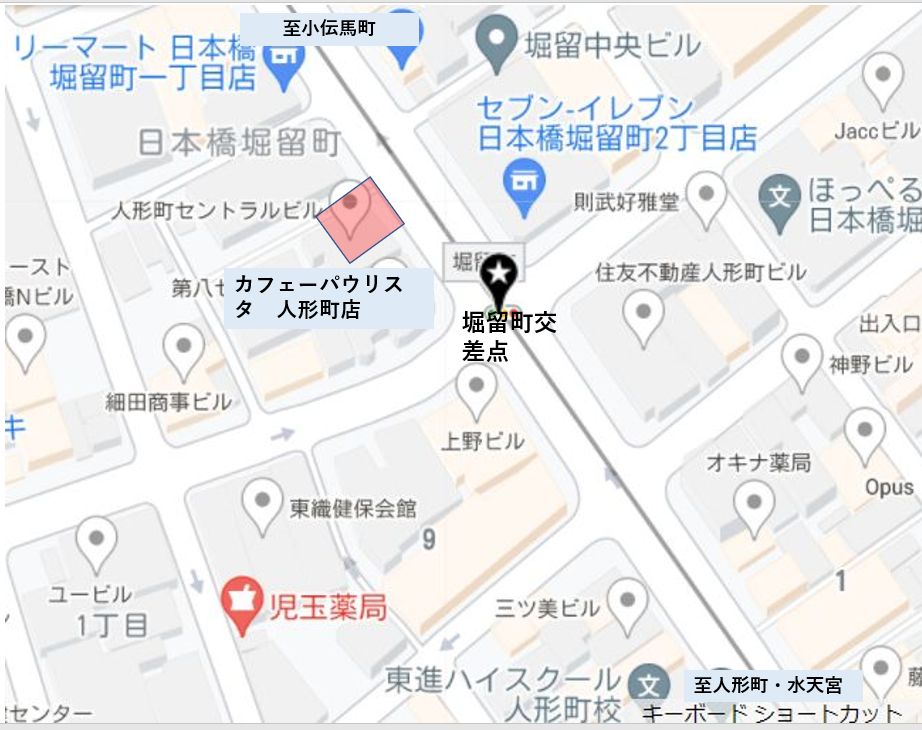
In 1909 (1909), "Cafe Paulista" was opened in Kyobashi Minaminabe-cho (Ginza 6-chome). After that, it opened in Marunouchi, Kanda and Asakusa, and opened in Ningyocho-dori St. in 1913. From the Hori Tomecho intersection to Kodemmacho, there was "Cafe Paulista Ningyocho-dori St." on the fourth west side. The height of the building is about 10 meters and the capacity is 40 to 50 people. 5 yen (¥750 at present value) It is a splendid store, such as an "automatic organ" that sounds when a white copper coin is inserted. A beautiful red-faced boy (man boy) brought food and drinks. I'm not a woman's salary.
Note: At that time, the price of Moriya and Kake was converted from 3 yen, and the price of public bath was converted from 3 yen for adults (currently ¥460).
The menu of the early Taisho era is as follows:
Lemon pie 10 yen = ¥1,500 -
Apple pie 10 yen = ¥1,500 -
Pudding 15 yen = ¥2,300 -
・・・・・・・
Cutlet (with bread) 20 yen = ¥3,000-
Curry rice 15 yen = ¥2,300 -
It's expensive. The building was burned down in the Great Kanto Earthquake, but it was rebuilt immediately and opened until 1942.
There were many cafes (emerging cafes) in Ningyocho.
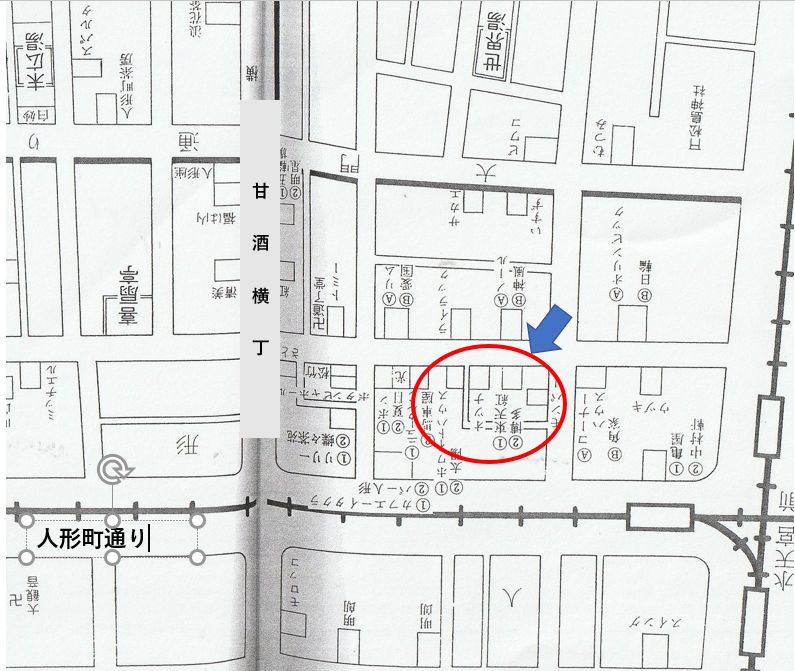
At that time, there were two types of coffee shops in the coffee shop.
① Pure coffee: Put out coffee and listen to music from the electric acid
② Emerging Coffee (Cafe): "Cafe Shop" where female salary serves tea and rice crackers. → Sake and beer are served, and food is procured from a nearby store.
From this definition, "Cafe Paulista" means "pure coffee".
Emerging cafes appeared on the alleys on both sides of Ningyocho-dori St., and it seems that there were more than 80 houses around 1935, when it was heyday. The store opens at 10:00 a.m., during the daytime, rice crackers with service, coffee and tea are 15 yen (¥2,300), beer tidbits is 60 yen (¥9,000), and sake tidbits is 45 yen (¥7,000).
It seems that there were 4 to 5 female employees at each store and served with their favorite kimono or dress. The attached cut picture shows the cafes at the time of 1974.
A series of cafe buildings
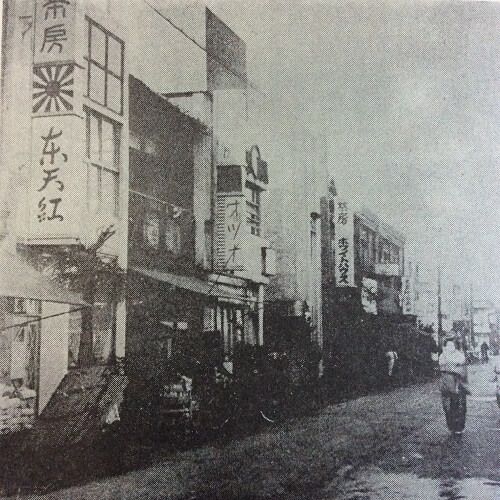
Many cafes were gathered on the road starting from Totenko in an alley that entered one east side of Ningyocho-dori St..
(References)
Nihonbashi Ningyocho New Edition Ningyocho Shopping Street Cooperative Edited (2002)