 Official
180 years of birth! In honor of Thomas Wortles.
Hello. This is Hanes.
2022 is the 180th anniversary of the birth of Thomas James Wortles, the designer of the Ginza Brick Street.
Born in 1842 in Barry County, Ireland (then Parsons Town), he later came to Japan and worked extensively in Kagoshima, Amami Oshima Island, Osaka, and Tokyo, from land surveying, buying, selling and managing to roads and water supply maintenance and building construction.
He was 30 years old when he started the Ginza brick street in 1872, which is best known for his achievements.
It can be said that at the turning point of the times, Japan was young and the benefits he received from him were enormous.
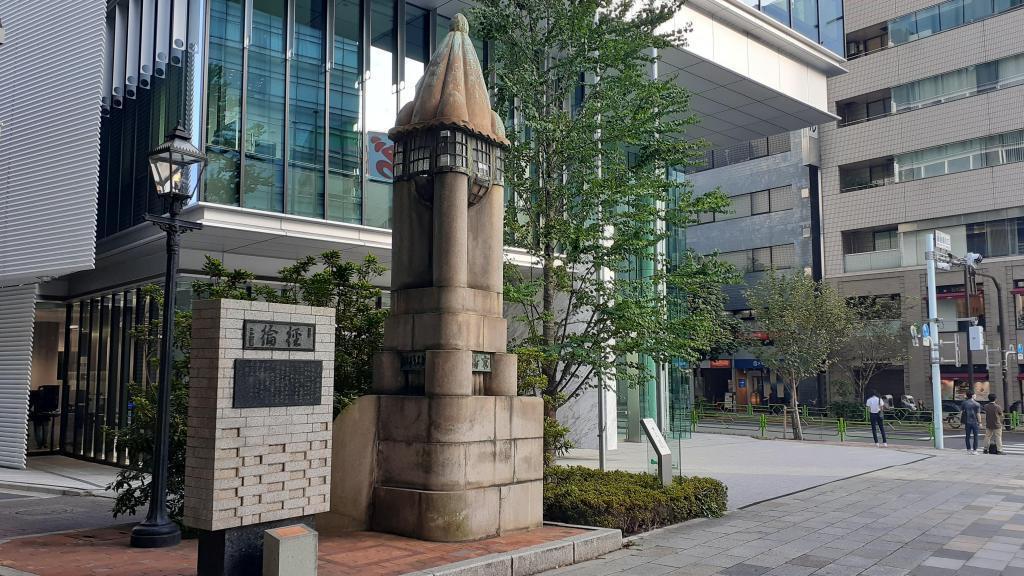
Recreated and restored bricks and gaslights
At the time he was born, Ireland was under the control of the U.K.
Therefore, it is true that in Japanese literature and historical sites he is described as "British" and "British" and is rarely recognized as "Irish".
Also, according to the Ginza Cultural History Society, the Dutch accent was the mainstream in the architectural world of Meiji period.
Therefore, it is still popular as "Waters" instead of English reading "Waters".
Even if you take the country or name you were born, you can see that it has been greatly influenced by the times.
This time, I would like to celebrate the 180th anniversary of birth and dig deep into the achievements of Waterls in Chuo-ku.
Aritsunsha, Japan's first Western-style papermaking company
Aritsusha is Japan's first Western-style papermaking company established in 1872 in Nihonbashi Ward (near Mizutengu Shrine) by Nagakoto Asano, the head of the Asano family of the former Hiroshima clan.
He was recommended by Wortrus, whom he met with Ikusaburo Sugii, who had already sold paper in Ginza and Yokohama, and Sugii.
The reason I chose near Suitengu Shrine as the construction site of the paper mill was that because the surrounding area was a former samurai area and there were few private houses, it was judged that soot and smoke emitted from the chimney and noise of machine operation could minimize inconvenience to the neighborhood.
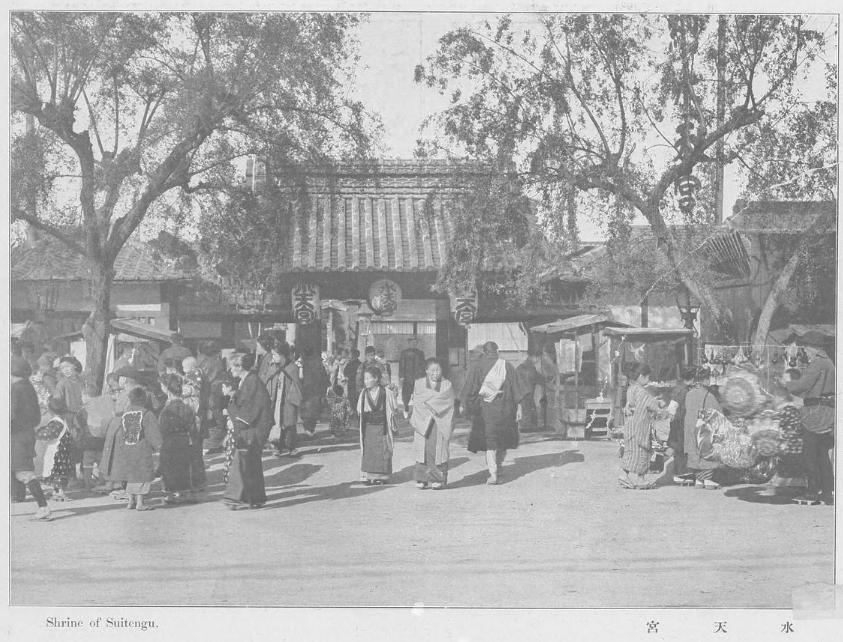
Suitengu Shrine 1900 years ago (Source: Meiji and Taisho eras in photographs from the photo book owned by the National Diet Library - Suitengu Shrine, expiration of protection period)
At the time of the establishment of Aritsusha, Wortles designed, constructed, and supervised a two-story brick factory, procured and maintained a papermaking machine, and arranged for a paper-making engineer.
It is clear that his brother Albert Wortles was also involved in it.
(Unfortunately, due to the revision of the city in 1906, this factory was forced to relocate and close.)
One year ahead of the establishment of Oji Paper's predecessor, the papermaking company, it is not well known that Wortrus also contributed to the spread of modern Western-style papermaking technology.
Launched Tokyo's first daily newspaper "Nipposha"
The time was 1873. The largest brick street building was completed in the Ginza brick street maintained by Wortles.
There was a kimono shop "Emi Suya" run by Shimada Gumi, a money changer and kimono dealer since the Edo period, but it went bankrupt in 1874.
Nipposha, which founded the Tokyo Nippo Shimbun, the first daily newspaper in Tokyo in 1872, has moved to the brick building.
Nipposha moved from Asakusa to Ginza 2-chome in 1874, but moved to this large building because the number of copies became too small.
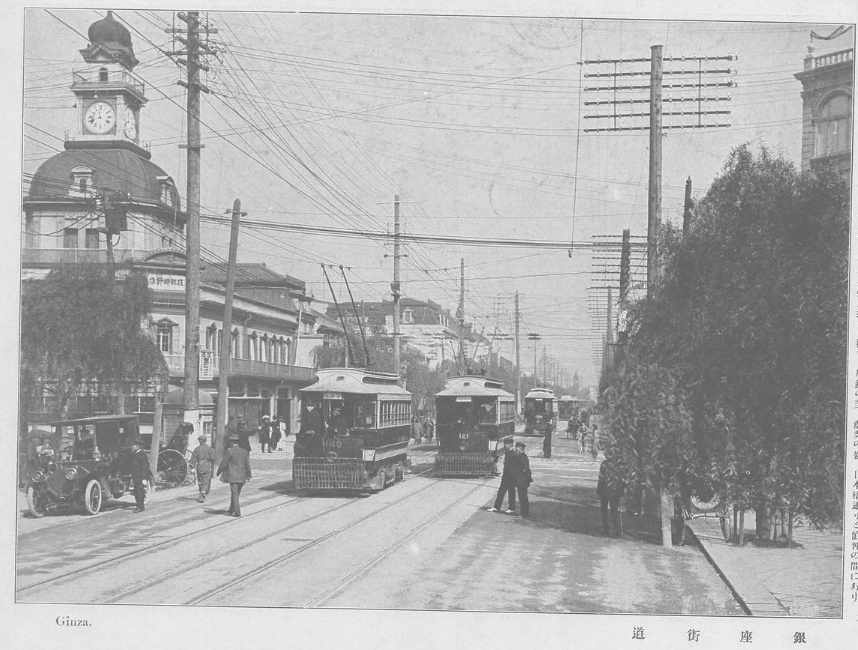
Ginza-kaido Road (Source: Meiji and Taisho eras in photographs from the photo book owned by the National Diet Library - Ginza-kaido Road, expiration of protection period)
Even if the brick street was completed, many people prefer traditional wooden houses and refrained from moving in due to moisture and rain leaks, while kimono shops and newspaper companies set up shops and companies in brick street, which is a symbol of Civilization and enlightenment in Japan.
In particular, the fact that newspapers can move into the largest first-class brick house in brick town may make you feel the beginning of a new era.
Where is the residence of Waltles
The last thing to note is the location of the residence of Waltles, which greatly contributed to the development of Ginza at the time.
In Akashicho, there is a stone monument showing the remains of the residence of Henry Falls, a British doctor and missionary who discovered that fingerprints can be used for personal recognition, but unfortunately there is no indication of Waltles residence in the city.
Is there any record of his place of residence?
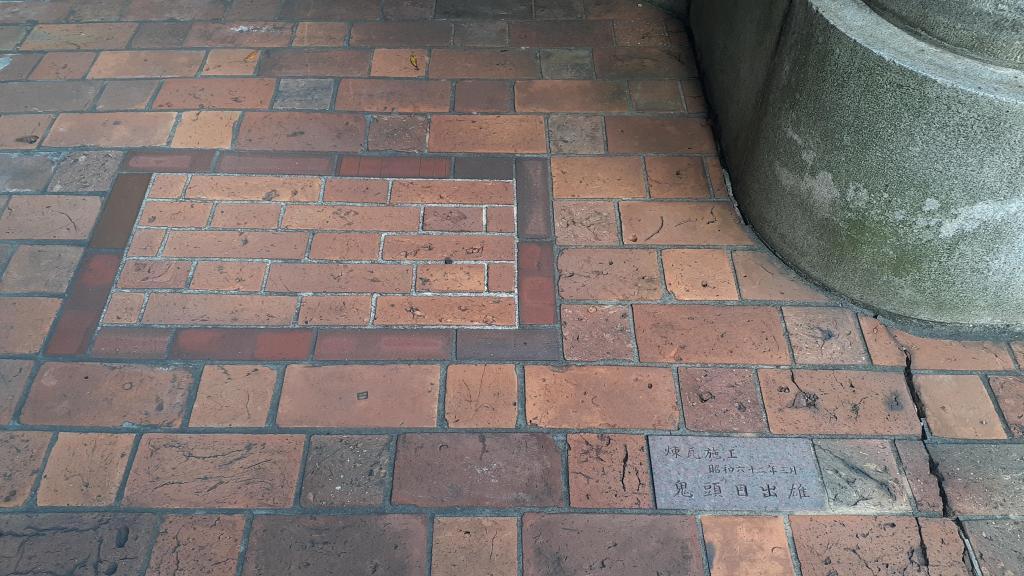
Bricks recreated in French piles at that time
According to research and research by the Ginza Society of Cultural History, "Meiji Industrial History" has a record that the Wartrus government building was completed in Kibiki-cho in 1870.
Before the Great Ginza Fire, there was a government building at 3-chome Kibikicho, and it is said that Kimimasa Yuri and other prominent figures at the time lived around it.
From such a surrounding environment, it can be guessed how much Wartors was an expected foreigner.
There are various theories about the specific place of residence, so if you are worried about consideration, please see pages 114-115 of "Following the Mysterious Employment Foreign Waters-Flowprints before and after Ginza Brick Street".
At the end
In this article, we have briefly introduced the achievements in the papermaking field, the use of houses in brick streets, and the residence of Walters.
I was surprised not that he was very involved in Japan's first Western-style papermaking company, and I learned about the specific residents and uses of the houses in Ginza brick street, which led to learning.
This time I omitted the details, but there are several interesting historical records about his place of residence at the time.
In the future, I would like to check from various angles to see if you can get any information about life in Waterls in Kibiki-cho.
It has been 180 years since the birth of Waltles, and 150 years since the Ginza brick street construction.
The cityscape of Ginza has changed drastically, but the remnants of the brick cityscape realized by employed foreign nationals who once came from distant island countries can still be seen in the Ginza and Kyobashi areas.
References and Websites
[References]
Tetsunori Iwashita, ed., "The Dictionary of Foreigners to Japan in the Edo period" Tokyodo Publishing, 2011.
Ginza Society for Cultural History “Following the Mysterious Employment of Foreigners: Footprints before and after Ginza Brick Street” Ginza Society for Cultural History, 2017.
Wajiro Kon, Kenjiro Maeda, Iwao Yamawaki, Bunzo Yamaguchi, "The 3rd Shiseido Gallery and Its Artists Ginza Modern and Urban Design," Shiseido Department of Corporate Culture, 1993.
Chuo-ku Tourism Association edition "Chuo-ku Monoshiri Encyclopedia" JTB Communication Design, 2017.
[Reference Website]
Ginza Motoji "People of Edo and Meiji also flooded! History of bargain sale|Enjoying to know" https://www.motoji.co.jp/blogs/reading/bargain_sale202107 (viewed September 5, 2022).
Sumitomo Mitsui Trust Real Estate “Ginza in the Meiji Period” https://smtrc.jp/town-archives/city/ginza/p02.html (viewed September 5, 2022).