 Official
Edo Kiriko's store flower glass
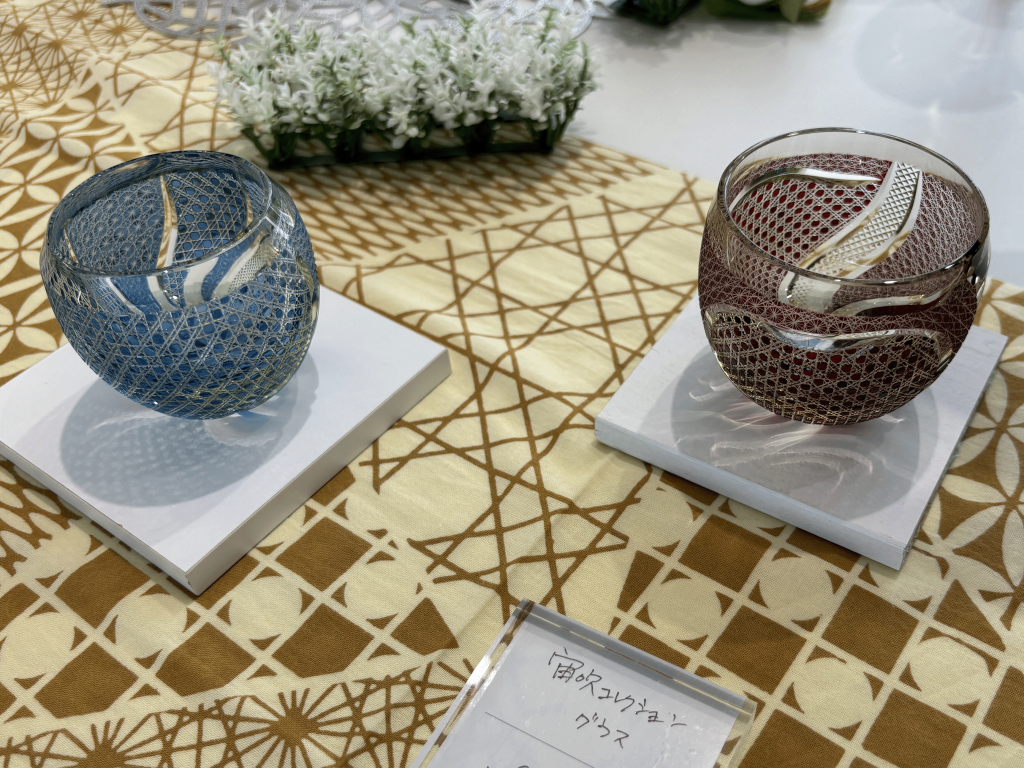
This time, I went to Hanasho from Edo Kiriko, who has a store in Nihonbashihoncho.
In 1946, the first company opened a workshop in Kameido, Tokyo, and it was initially a subcontractor for a manufacturer.
In the 1990s, the second generation Ryuichi Kumakura launched his own brand and started selling it. Since then, he has continued to send out works with high artistic and originality to the world.
The connection with Chuo-ku is derived from the fact that Edo Kiriko itself originated in Nihonbashi in the first place.
Kanitra also opened a store in Nihonbashihoncho in June 2016, and the stores in Nihonbashi are located as dealers.
We play a role in delivering excellent works made in Kameido's workshop to customers.
In addition, it also plays a role as a base for transmitting Edo Kiriko culture through customer service and Edo Kiriko experience courses.
Because it is perfect for Nihonbashi souvenirs and gifts, not only Japanese but also overseas visitors come to the store, making it one of the most popular shops in the Nihonbashi area.
What is Edo Kiriko?
First of all, what is Edo Kiriko? I'll tell you from that point
In a nutshell, it is a beautiful craft made by skilled craftsmen carved fine patterns on thin glass.
In 1834, the bedro shop in present Nihonbashiodenmacho, Kagaya Kubei used Kongo sand to sculpture on the surface of glass.
It is said that the pattern was applied to the beginning, and it is a very closely related craft to Nihonbashi, Chuo-ku.
One of the major features of Kanitra is the design of unique patterns with high artistry.
And in the process of polishing, we are thoroughly implementing hand polishing by craftsmen.
Edo Kiriko itself is an era in which people other than Kanitra can easily purchase by mail order etc.
Edo Kiriko, which is made by mass production, is produced efficiently by processing such as "acid polishing and washing" using chemicals. Edo Kiriko, which is made by acid polishing and acid washing, is inexpensive, but does not produce gloss, etc., and in terms of quality, it is popular that Edo Kiriko is not comparable to "hand polishing".
At Kanitra, we thoroughly polish our hands without regretting a great deal of effort and effort.
No matter what beauty, gloss, and fine detail, we send out Edo Kiriko to the world.
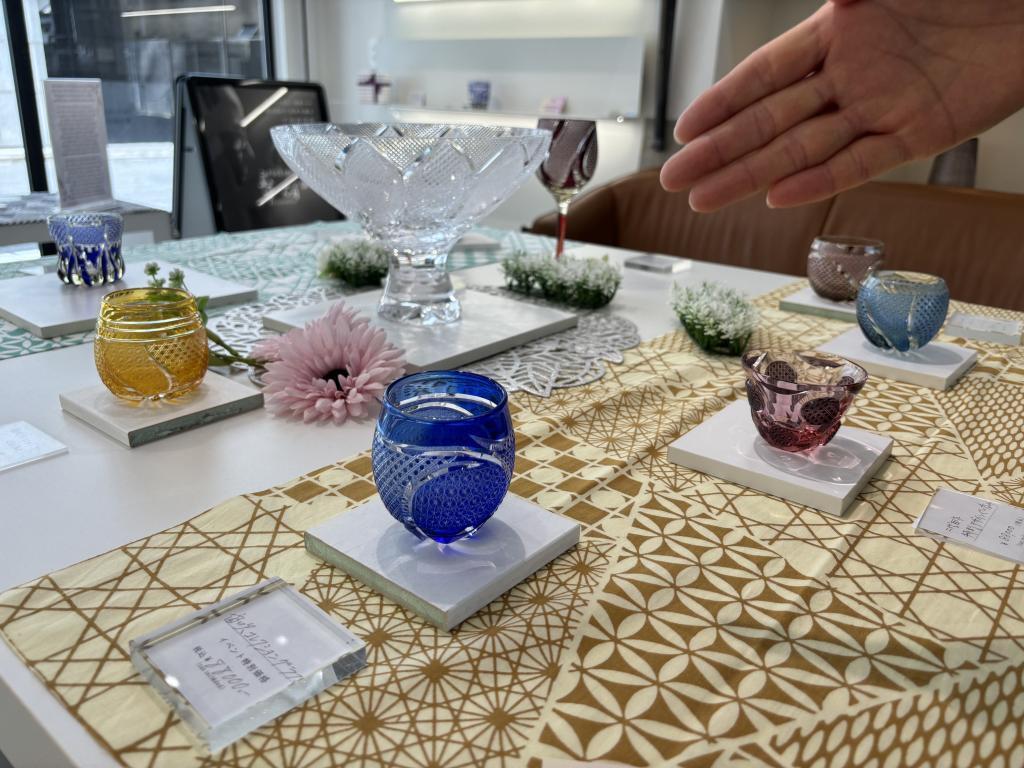
This time, I saw various kinds of Edo Kiriko,
↓As you can see, each one was completely different depending on the difference in color and pattern, all of which were very artistic and exalted just by looking at them.

Edo Kiriko of the synonymous "Rice Tsunagi" by Kanitra
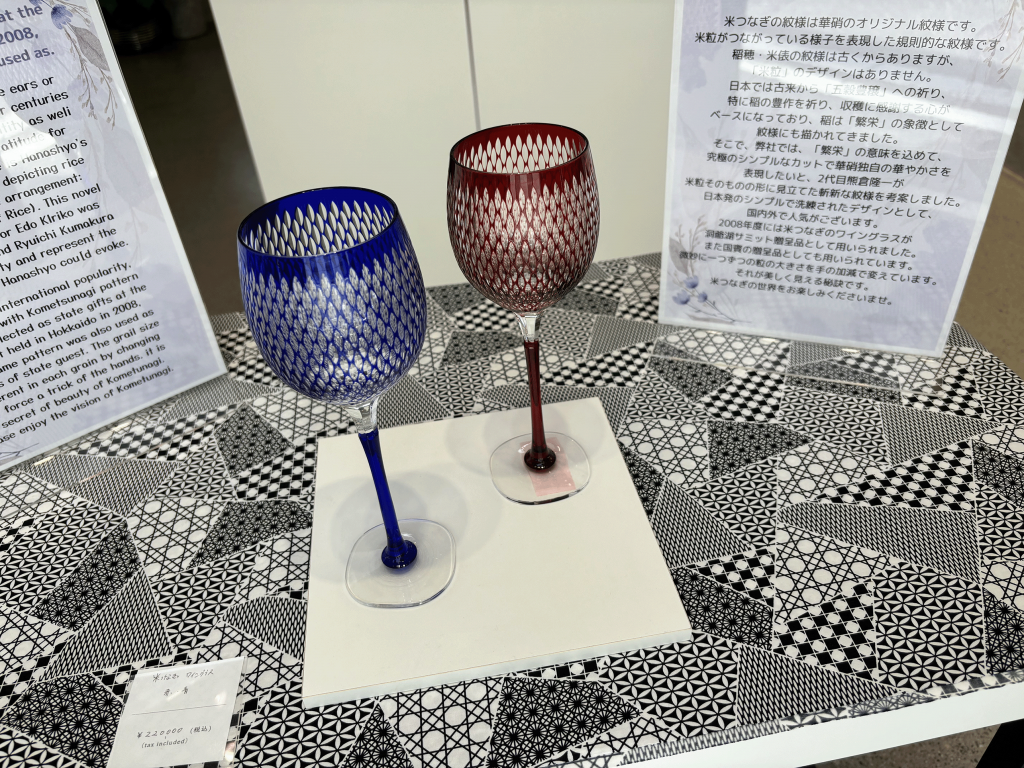
One of the turning points for Kanit was this "rice connection", which can be called a synonym.
This design, designed by Ryuichi Kumakura, the second generation, expresses the gorgeousness by applying a cut like rice grains to the glass.
This was highly acclaimed both in Japan and overseas, and at the G8 Lake Toya-ko Summit held in Hokkaido, Hanagaru's rice-linked wine glass was adopted as a gift to the heads of state.
In this way, while maintaining the traditional design, Kanit has devised its own delicate and beautiful patterns, and continues to provide highly satisfying Edo Kiriko.
The spirit was passed down from the second generation Ryuichi Kumakura to the third generation Takayuki Kumakura, and continues to disseminate Edo Kiriko as a culture not only to Japan but also to the world.
I was taught about the production procedure of Edo Kiriko.
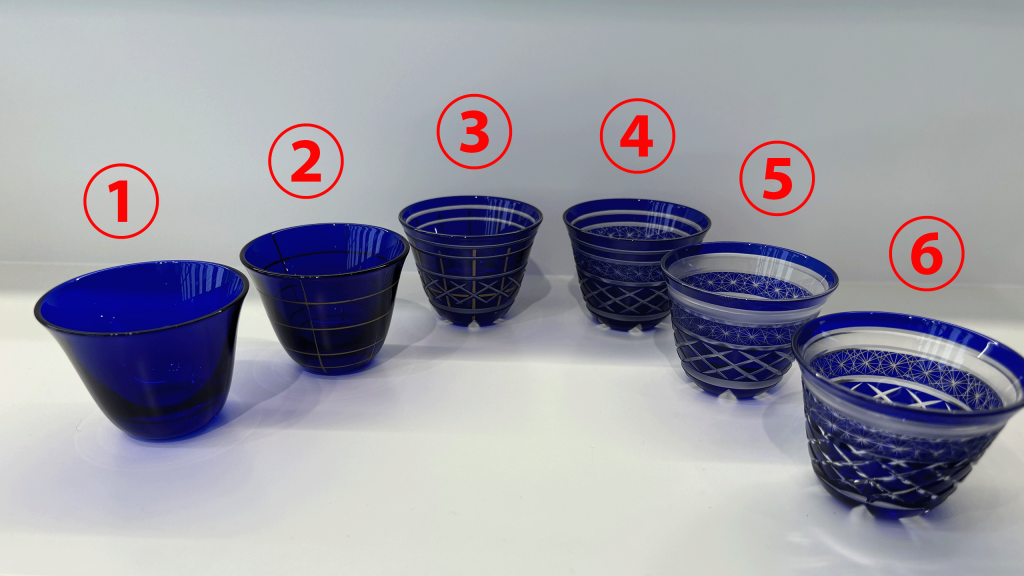
I've been asking you about the six steps involved in the production of Edo Kiriko, so I'll introduce it (you can see it at the shop)
①The process of applying colored glass to transparent glass (the photo is transparent + blue)
※The glass itself is procured from outside.
②Craftsman draws a line of draft horizontally and vertically (like the blueprint of this glass pattern)
Then actually cut it.
※It does not follow the line of the draft completely
※A tool like a grinder is used for cutting.
③As a result of cutting the glass with the outer color, a white line emerges on the transparent glass.
④In addition, we perform cutting process with high accuracy
In that case, the pattern is adjusted by using various kinds of blades appropriately as appropriate.
⑤The cutting process has been completed. We will start the polishing process from here.
This polishing process is a very technical and labor-intensive process, and it is the secret to making Kanit's Edo Kiriko a unique and excellent work. No compromise will be polished with outstanding skills.
⑥Edo Kiriko's "polishing" process is completed and the work is completed.
I didn't know until I explained it myself.
This time, I realized that there was a lot of effort and technology taking place.
Mr. Kanit was very active in expanding the base of Edo Kiriko culture, and when I visited this time, he explained variously in this way.
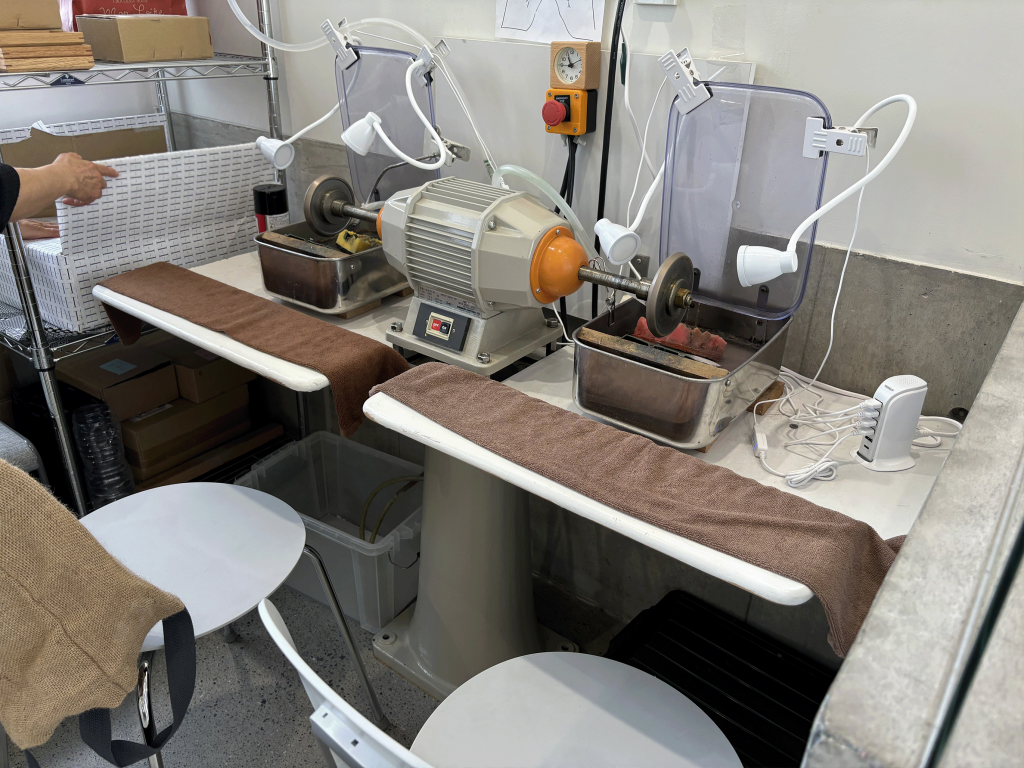
In addition, we have prepared Edo Kiriko experience courses in Nihonbashi stores (although advance reservations are required).
↓It is equipped with such facilities, and if you are interested, you may try it.
Excellent access! Ideal for strolling around Nihonbashi
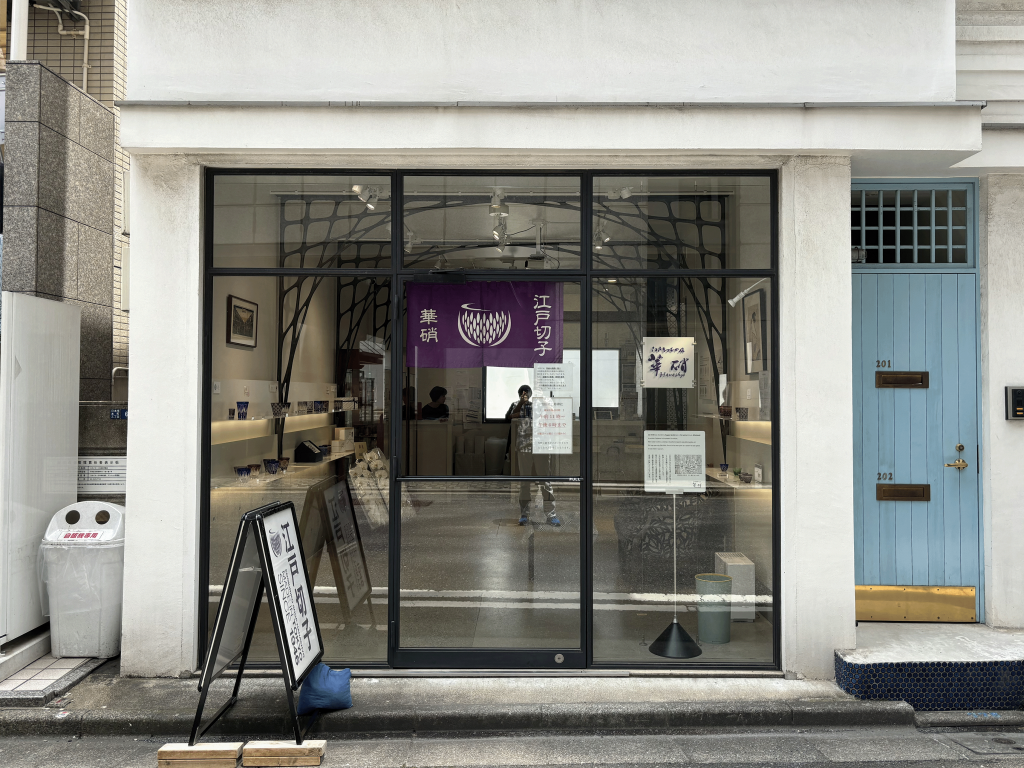
The Koshodo site of Juzaburo Tsutaya, which was featured in Taiga drama series in 2025, is also a short walk from here. Edo Kiriko is a very compatible item.
Wouldn't it be a good idea to stop by while strolling around the land related to Juzaburo Tsutaya?
Store Information
〒103-0023 3-6-5, Nihonbashihoncho, Chuo-ku, Tokyo
03-6661-2781
Closed: Sunday
Click here for the official website
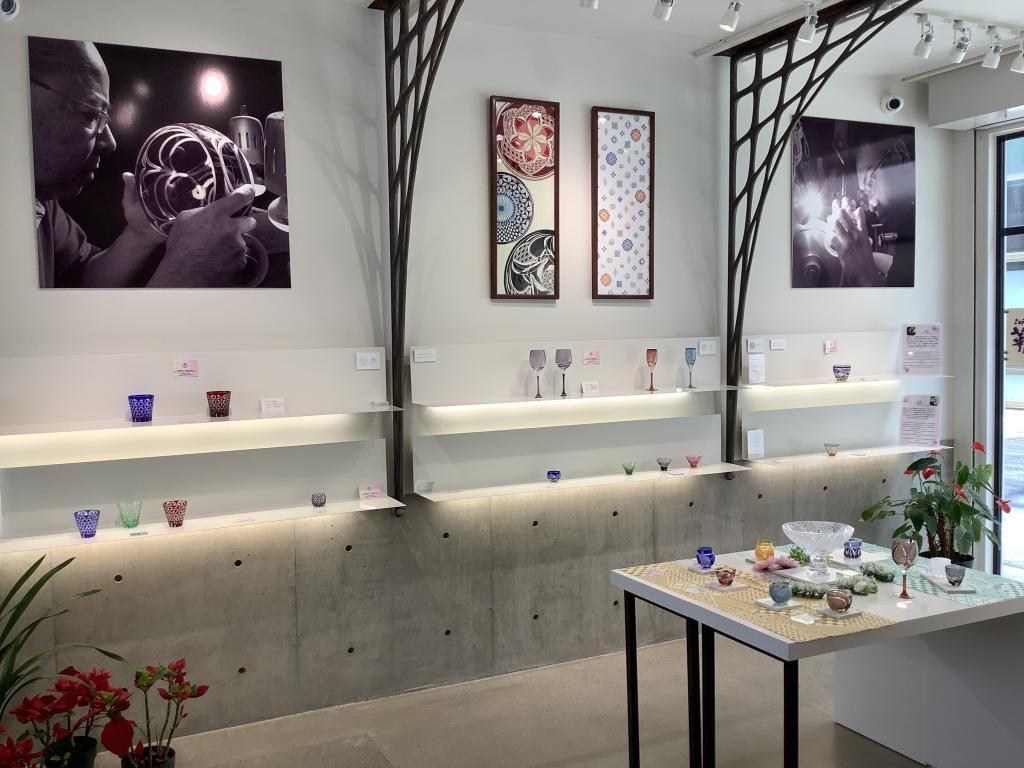
Hananit's shop is very clean and feels like you're in a museum.
Please come when you stop by Nihonbashihoncho