 Official
What's this? Entrance to the basement?
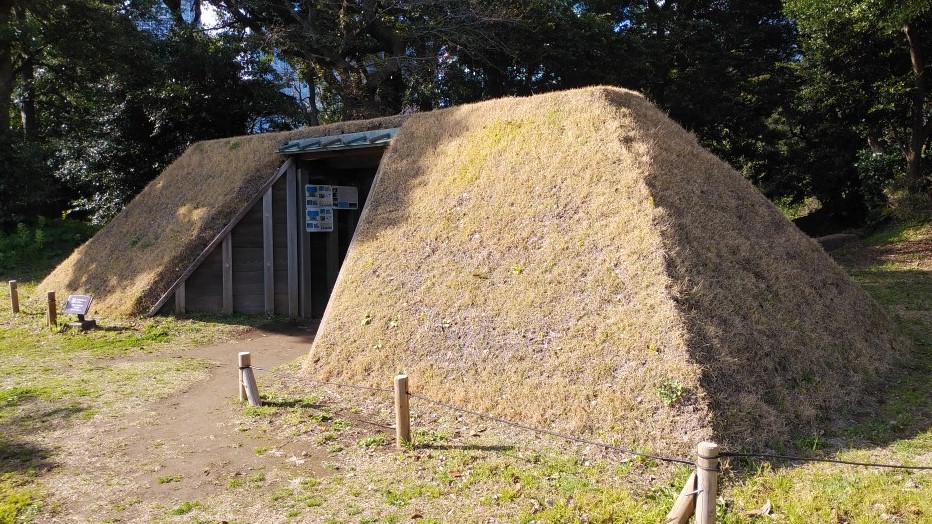
This was made by raising the soil in a trapezoid shape.
In the center, there is a space enough for people to enter.
It is built near the trees, in a very inconspicuous place.
Is it a treasure trove that is excellent for fire prevention in earthwork?
Or a secret entrance to the basement.
This mysterious object is located in Hamarikyu Onshi Garden.
A daimyo garden of the Tokugawa Shogun family, known for its Shioiri Pond, which draws in seawater.
It is a sober existence, far from the gorgeous atmosphere.
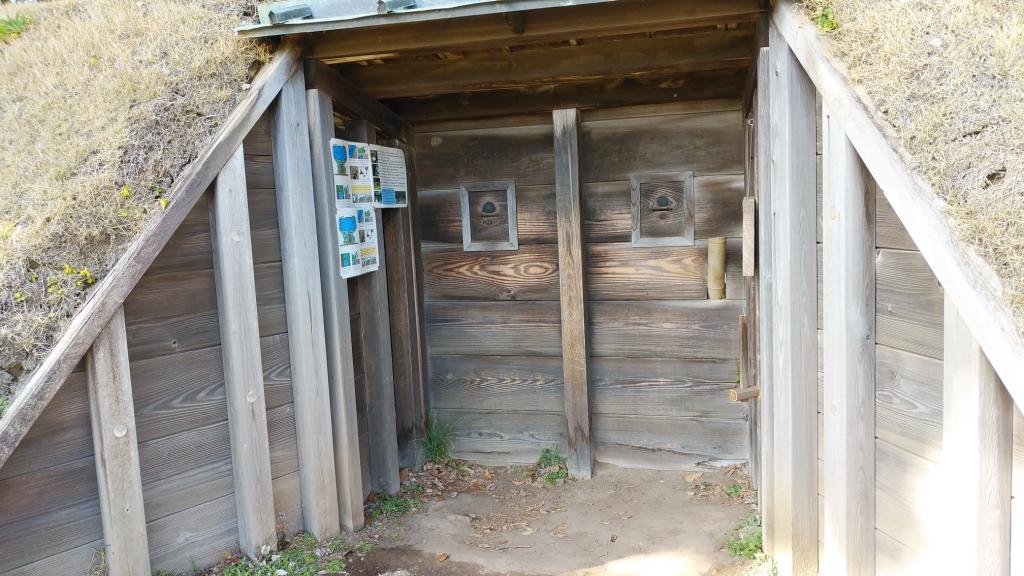
When you approach a lot, three sides are boarded and there is a space where you can hide your body.
I have a peephole.
The wooden board and the hammer are down. 。
There is also a bamboo tube that sticks out outside.
In fact, this is one of the big tricks of duck hunting.
It is a facility called "Konozoki".
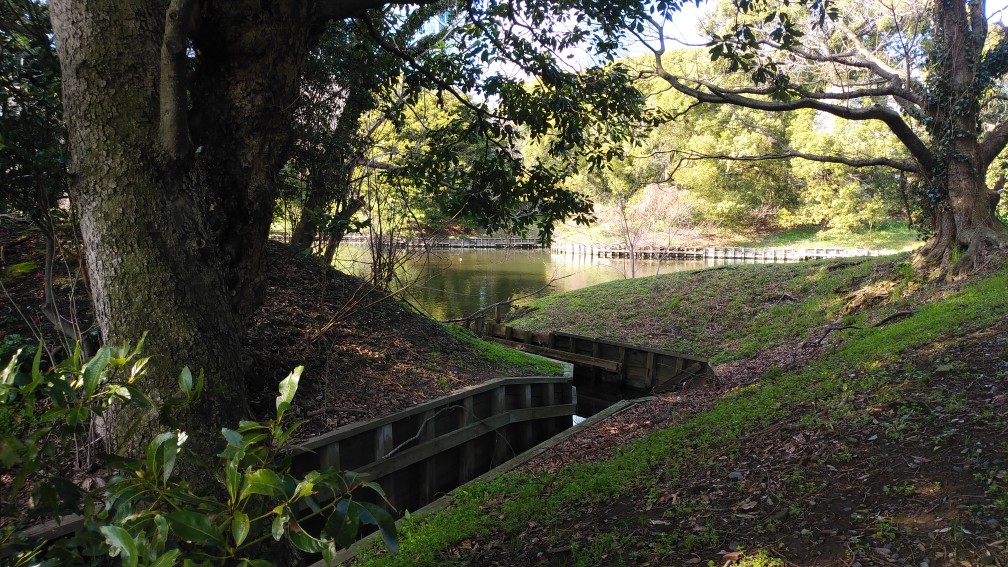
Even though it is a garden, did you catch duck in it?
・・I did it.
The site area of Hamarikyu is about 25 hectares.
It is about 5.5 times the size of Tokyo Dome.
Among them, there are two ducks.
It is Koshindo Kamoba and Shinsenza Kamoba.
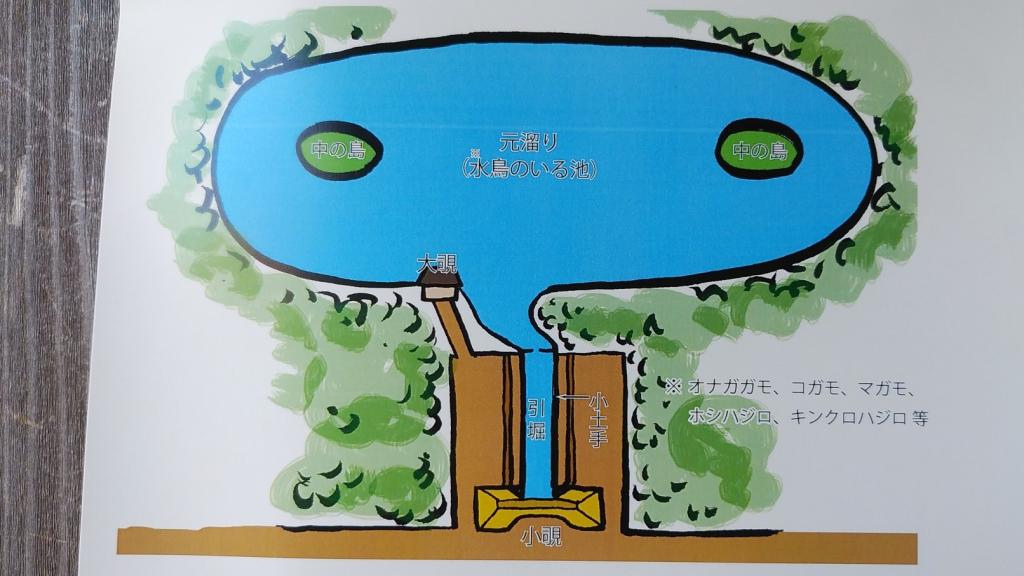
Let's follow the hunting situation in the map of Kamoba that was posted.
Kamoba consists of a large pond with an island called "Motodamari" and a few waterways "Hikibori".
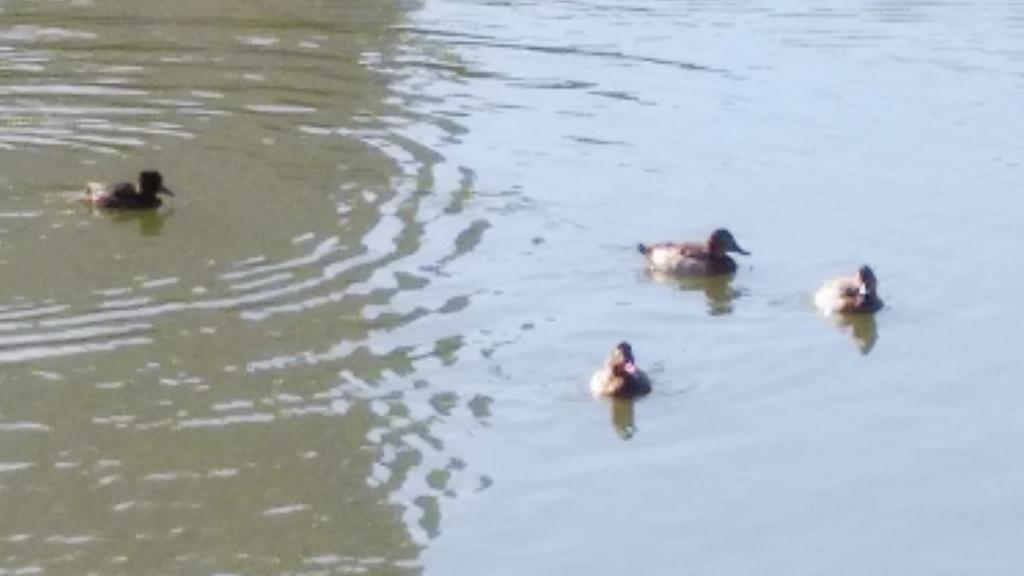
From autumn to winter, wild waterfowls fly to the pond of Kamoba.
Northern pintail, green-winged teal, mallard, Hosihajiro etc.
Leave the well-trained duck in the original pool.
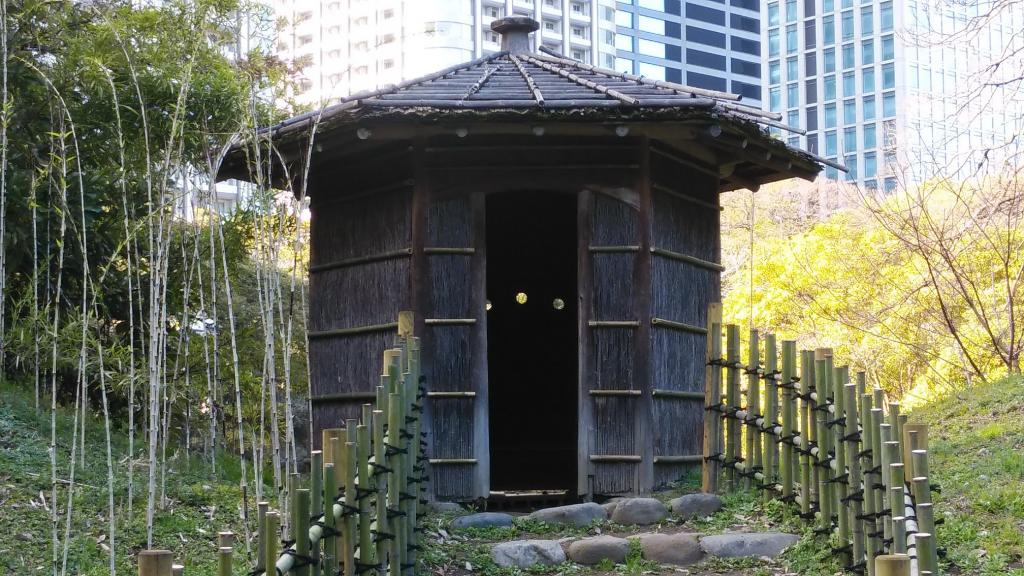
What is a building like this Japanese style Mumin mansion?
It is a monitoring station that can overlook the original reservoir called "Onozoki".
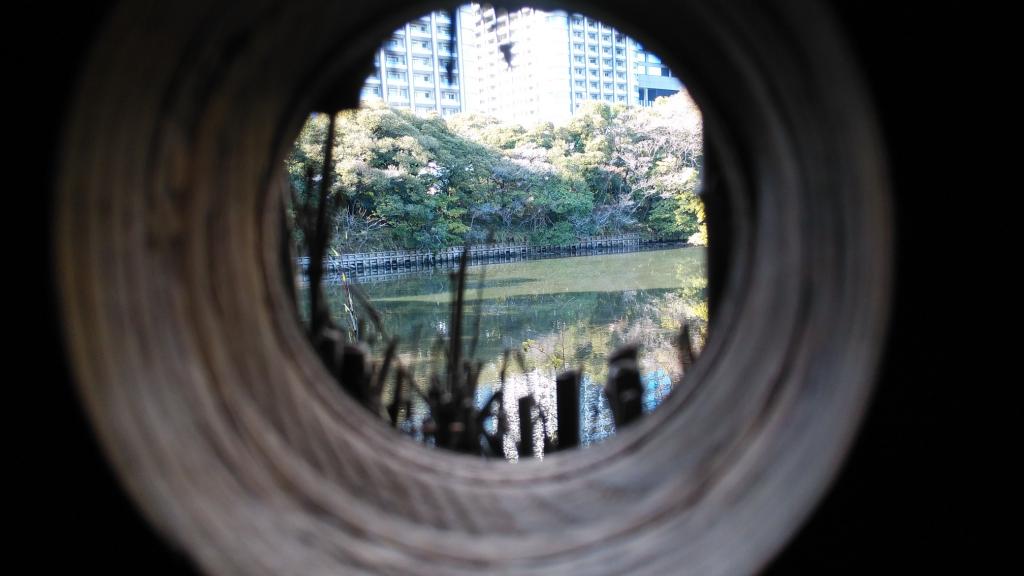
In this place, check the gathering of ducks and the direction of wind, etc., and decide which draw moat to hunt.
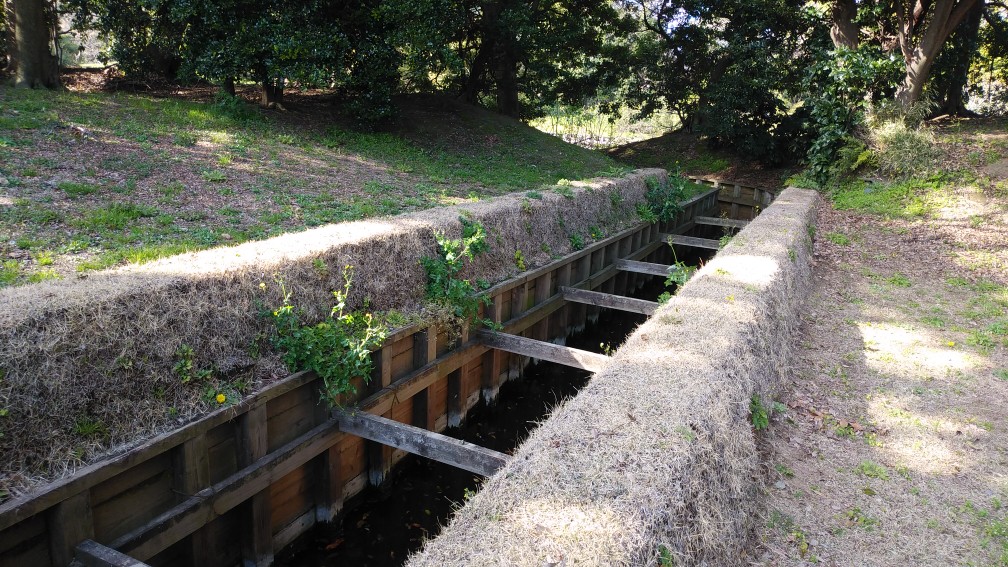
In a small peep where the guard is hidden, hit the board and feed it, and the duck of the bird enters the moat.
Ducks have the habit of following ducks, and they are caught and enter the Hikibori.
The number of ducks to be drawn into the moat was determined in advance, and when it reached a certain number, there was a mechanism to foam the entrance of the moat using bellows to block the later invasion.
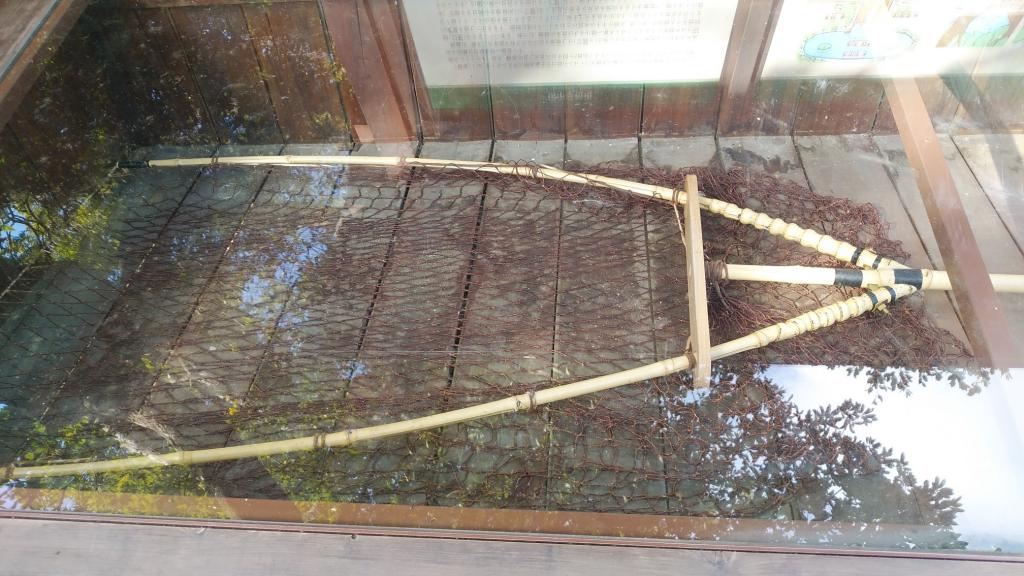
The catcher hides in the small bank of Hikibori, receives a signal, releases a hawk, and catches ducks.
Since the Meiji era, we have used a sadeami.
Imagine a fork net that is a large lacross stick.
There was a sample in the park.
It is said that a hawk will fly away from the net and catch what has escaped.
If you miss it, the duck will tell your friends that the place is dangerous.
Duck hunting was carried out from the middle of the Edo period to 1944.
Now, water birds floating in the pond can be spent with peace of mind without being caught by humans.
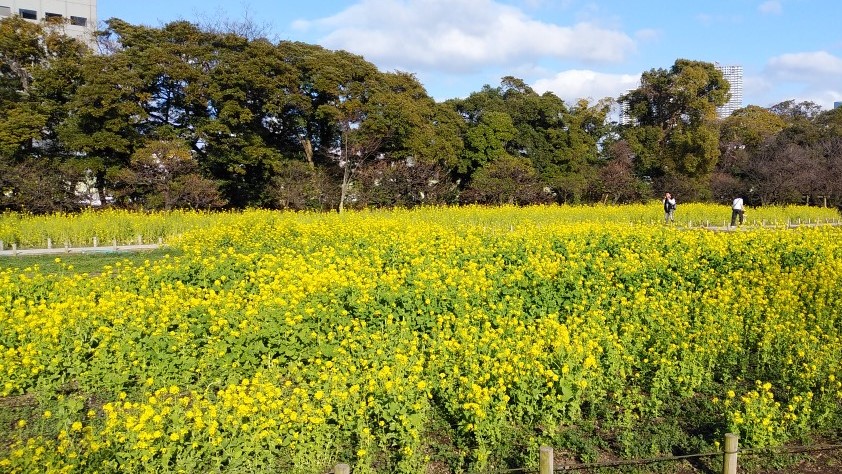
During this time, the flower garden of Hamarikyu is filled with yellow from canola flower.
Attracted by its soft colors, families with cherry blossom viewing also visit.
Certainly, there was a story in folk tale called "Kamotorigonbee".
Gonbei, who tried to catch a lot of ducks at a time, ties duck feet frozen in the cold with ropes.
In the morning, the ducks whose ice melted fly all at once, and Gonbei flutters into the sky.
So, how far did Gongo fly?
Depending on the region, there are many places that have landed.
If possible, Mr. Gonbei, I thought it would be nice to be able to land on the canola flower in the flower garden.