 Official
Irifune and Minatoichi consideration
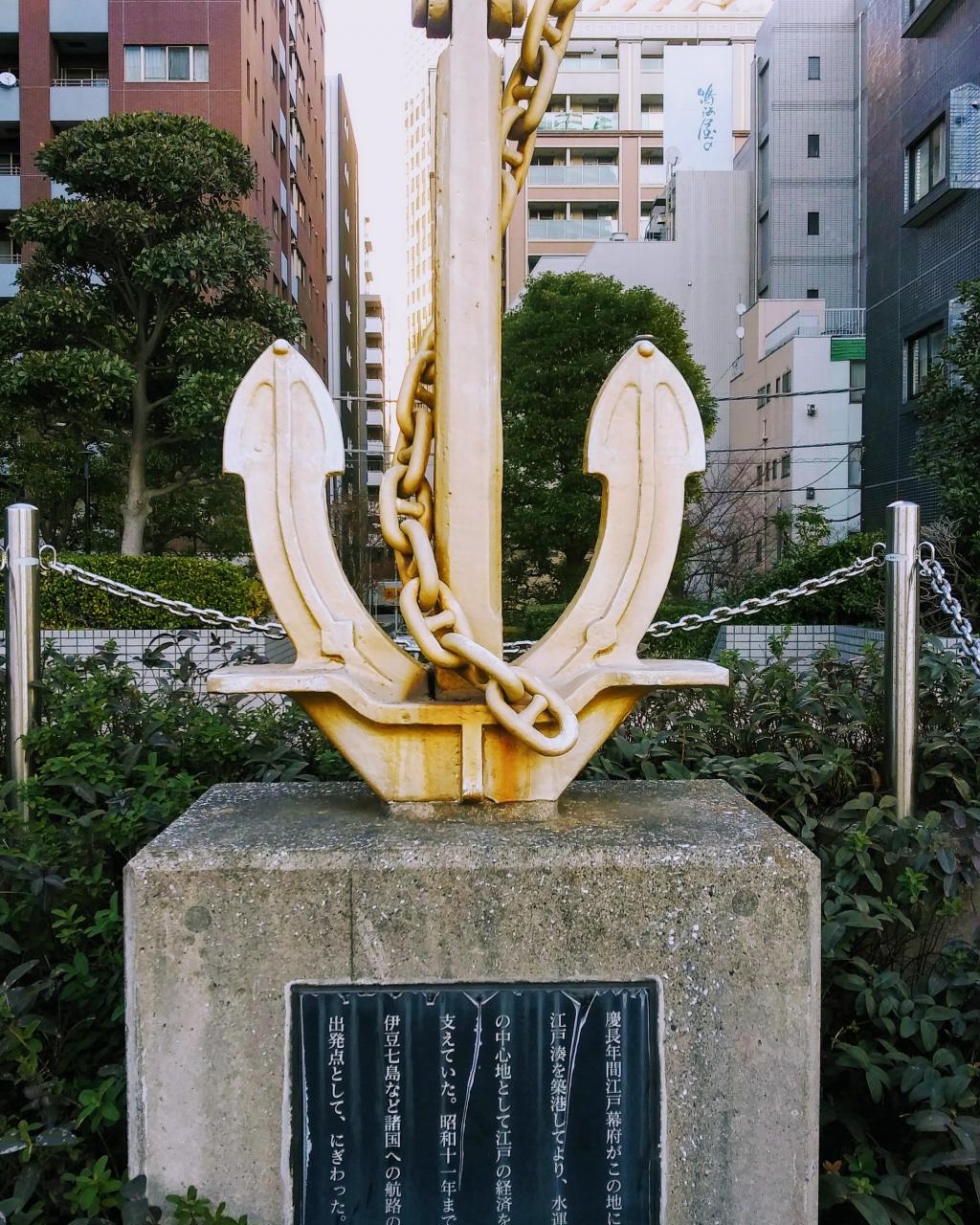
Until 1603, most of Chuo-ku was sea. It is reclaimed, a lot of waterways are built, and a city is formed. Water transportation was important as an important means of transportation and transportation to form the city.
This photo is an anchor object that says there was Edo Minato near the promenade entrance of Shinkawa, Chuo-ku. It is located at the exit of the Kamejima River. From around the Edo period to around Shibaura, it is called Tepposhu. Tepposu Inari Shrine, which has been transferred to the sea side to the sea side, gathers the worship of sailors as the guardian angel of Edo Minato, where most of the goods to Edo enter. It is listed under the name Minato Inari in "Edo Souvenir" by Hiroshige Utagawa and "Edo Famous Places" during the Tenpo era. Minato's name is used, a place where more boats come and go, and people gather, rather than the current meaning of large ports such as Kobe and Yokohama.
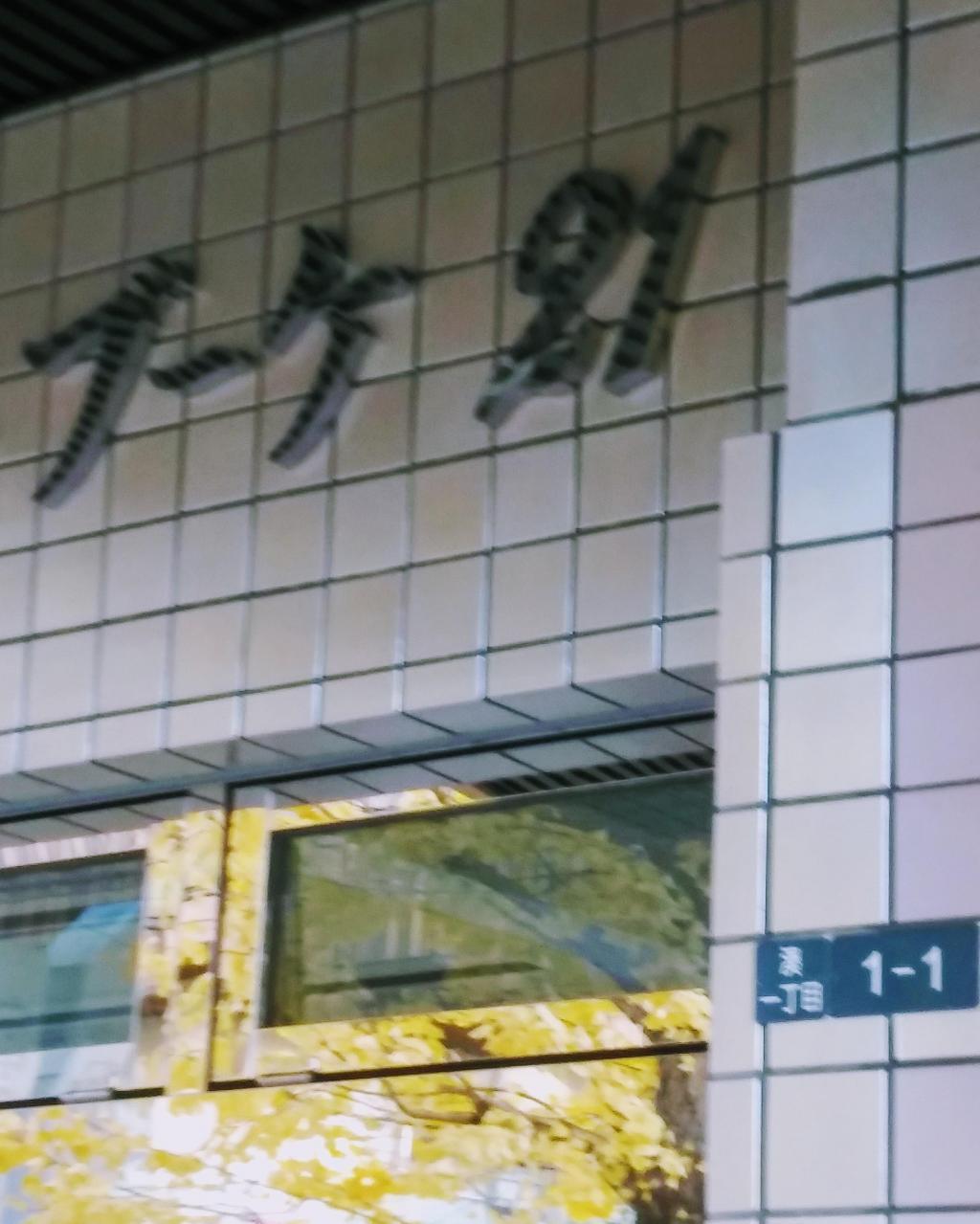
Currently, Minato 1-1-1, Chuo-ku is the entrance of bouquet 21.
A map of the Kyoho period of the Edo period (around 1720) describes Honko-cho along the Kamejima River, where Samurai residence line up. The east side is Inari Bridge, and the next town in the direction of Honganji is Funa Matsumachi.
After that, the south side of Hatchobori is called Minami Hatchobori and Shinminatomachi.
In the Meiji era, Samurai residence disappears, and the town name is decided from 1-chome to 5-chome Shinminatomachi. Honminato Town has become Honminato Town, and along the river of Funamatsumachi has become Shinminato Town 6-chome.
Shinminato Town, Honminato Town, Funamatsumachi, Minami Hatchobori, and Shinsakaemachi are merged in the land readjustment after the Great Kanto Earthquake, and Minatomachi 1-chome to 3-chome.
The Chuo-ku Board of Education issued a "Talking about the old days of Chuo-ku" issued by the Chuo-ku Board of Education that Edo Minato was a place where ships arrived and departed and many supplies from Izu-Oshima Island and Hachijojima Island were dropped.
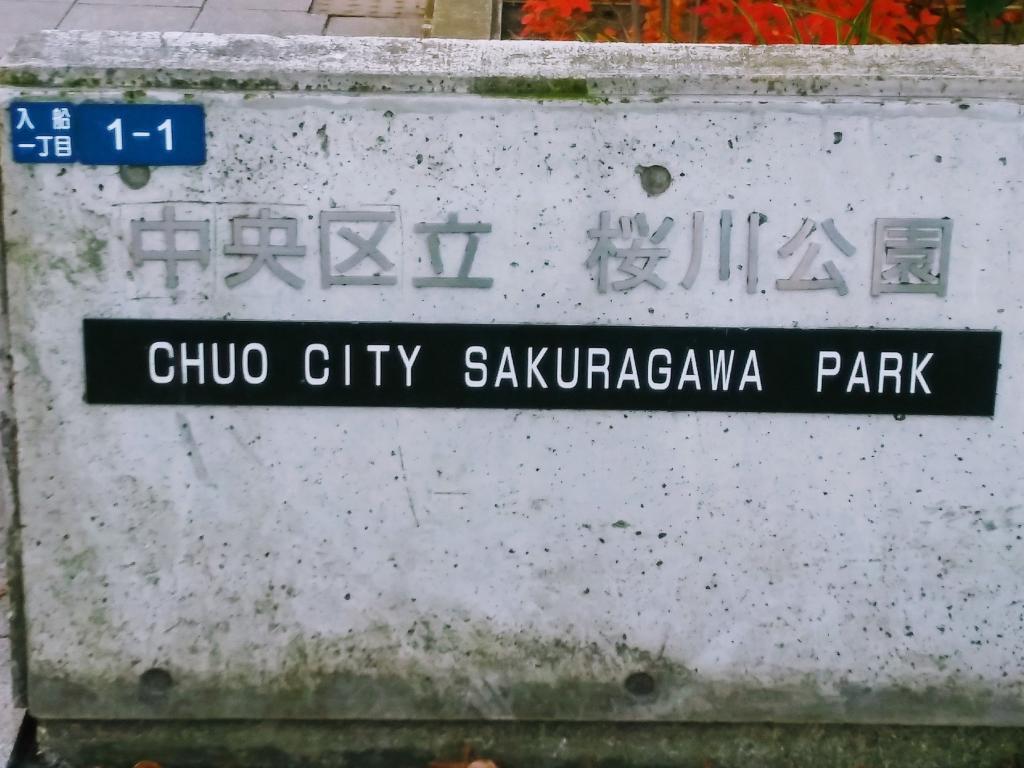
The current Chuo-ku Irifune 1-1-1 is the entrance to the Shin-ohashi-dori St. side of Sakuragawa Park.
In the Meiji era, moats are built between the Tsukiji River and Sakuragawa (Hatchobori). It is called the Irifune River and is used for logistics. The Samurai residence on the east side of the river is removed and divided into towns, from Irifunecho 1-chome to 6-chome. Jikkencho became Irifunecho 7-chome, and the places designated as foreign settlements near Tsukiji were 8-chome and 9-chome Irifunecho. The government, which has been struggling with the shortage of alternative land to build housing as a reconstruction project due to the Great Kanto Earthquake, reclaims the Irifune River. The current Shin-ohashi-dori St. is a part of it.
I thought that the famous place other than the printing town in Irifune-cho was the birthplace of the shoe industry and the Mizuno Printing Museum. The birthplace of the shoe industry was the place where Katsuzo Nishimura built a leather shoe factory in 1870, and Eiichi Shibusawa also supports it. Because there was a foreign settlement, it sold very well, and factories will be built in five places such as Kibiki-cho. Every factory was said to be a shoe factory in Irifune. The Mizuno Printing Museum displays the printing machine of Tomiji Hirano, the first printing machine in Japan, and the first edition of "Recommendation of Learning" written by Yukichi Fukuzawa.
Immediately after the Meiji era, there is a record that Chinese Ren Shotai sold rumne around Karuko Bridge in Irifune-cho. In addition, Carl Jacob Hess, who was called Charihes, runs the Ramne Factory at 1-1 Irifunecho, and later becomes a bakery in Odawaracho. It opens in Ginza under the name of Charisha and becomes famous as a French bakery. At the beginning of the Meiji era, a private Seika Hirone Elementary School, which opened in Minami Hatchobori, merged with Shintomi Elementary School in 1894 and moved to 1-26 Irifunecho, some people say "Talking about the old days of Chuo-ku." The number of students around Meiji 34 was 185, but the news of the school after that is unknown. I looked up in a book on the history of education in Chuo-ku, but there was no description of the school name. In a time when there were a shortage of public schools, there were many private private schools.
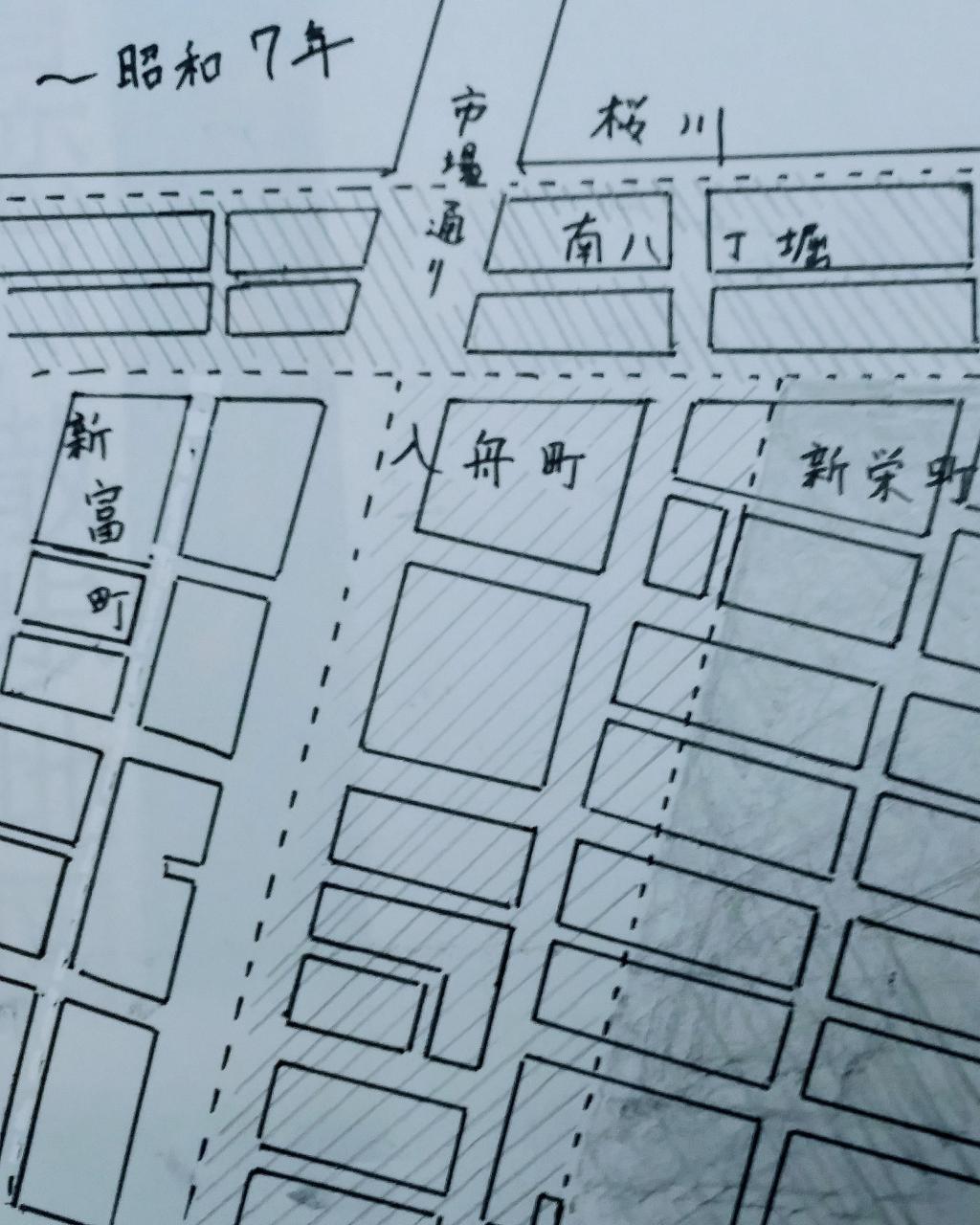
My house was 1-chome, Irifunecho. It was a merchant from the end of the Meiji era and was rebuilt after being burned down in the Great Kanto Earthquake. There was a plate with an address display on the old pillar. It is written as Shinei-cho, Kyobashi district. What is this for my grandfather? When you hear it, it is called an old address. I was shocked that it was not in Irifune town. It is lined with Shin-Tomicho, Irifunecho, Shinsakaemachi and Minatomachi. Until 1932, the town name was divided in the middle of the town division. I didn't understand the reason well, but when I checked it in the book forest Chuo, it seems that it was divided on the site of Samurai residence and divided the town.
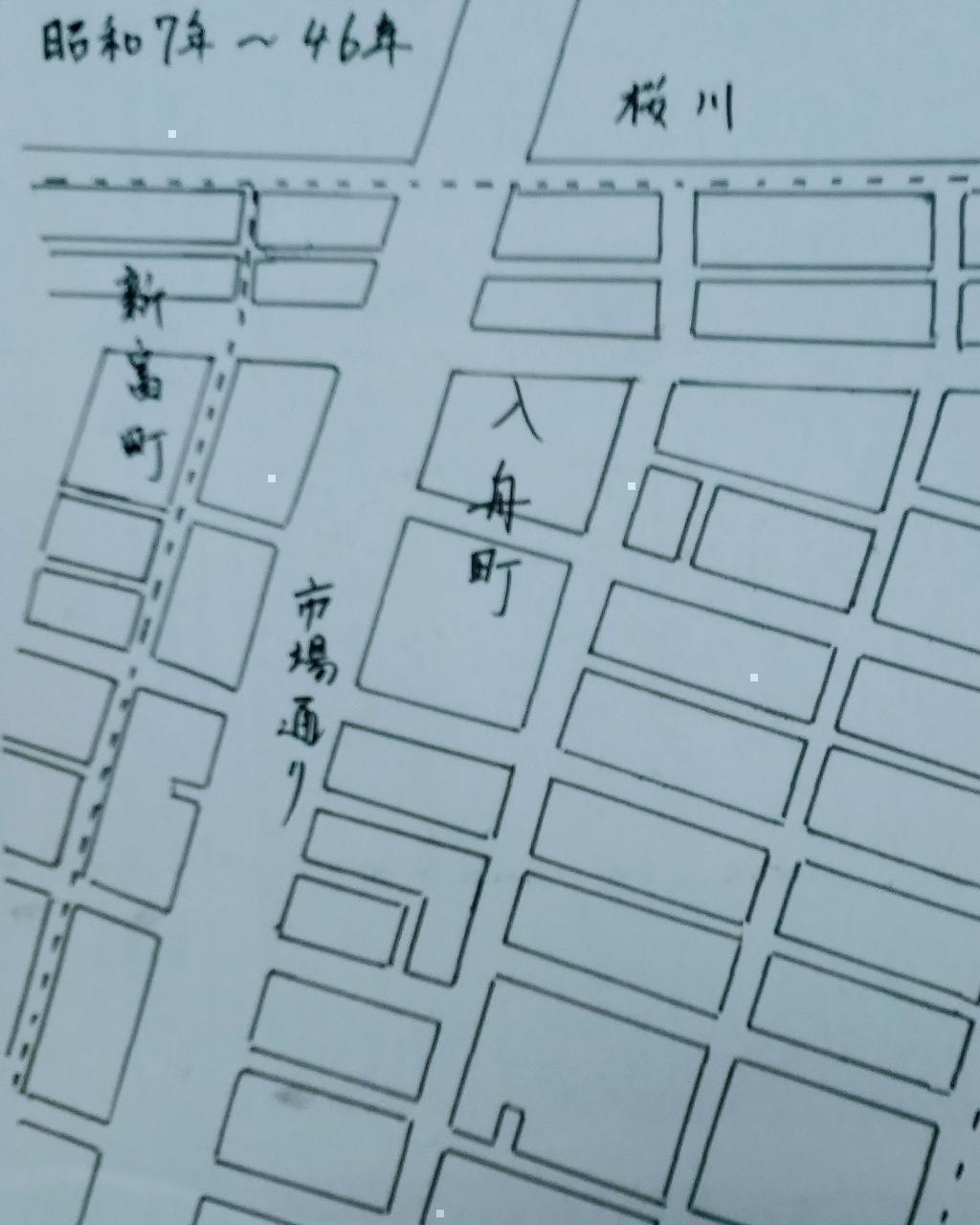
Shinsakaemachi disappeared in 1932, and after the war, Kyobashi district changed to Chuo-ku. Minami Hatchobori disappeared, and it was incorporated into Shin-Tomicho and Irifunecho, and lined up vertically between Shin-Tomicho, Irifunecho and Minatomachi. Irifune-cho reached the back street of the current Bank of Mitsubishi UFJ, and changed from 1-chome to 3-chome. At that time, Shin-ohashi-dori St. was commonly known as Market Street at that time, so I dared to call it so. The Irifune River was reclaimed in the reconstruction project after the Great Kanto Earthquake, and a wide road and residential area were created. Was this boundary between the Irifune River at that time?
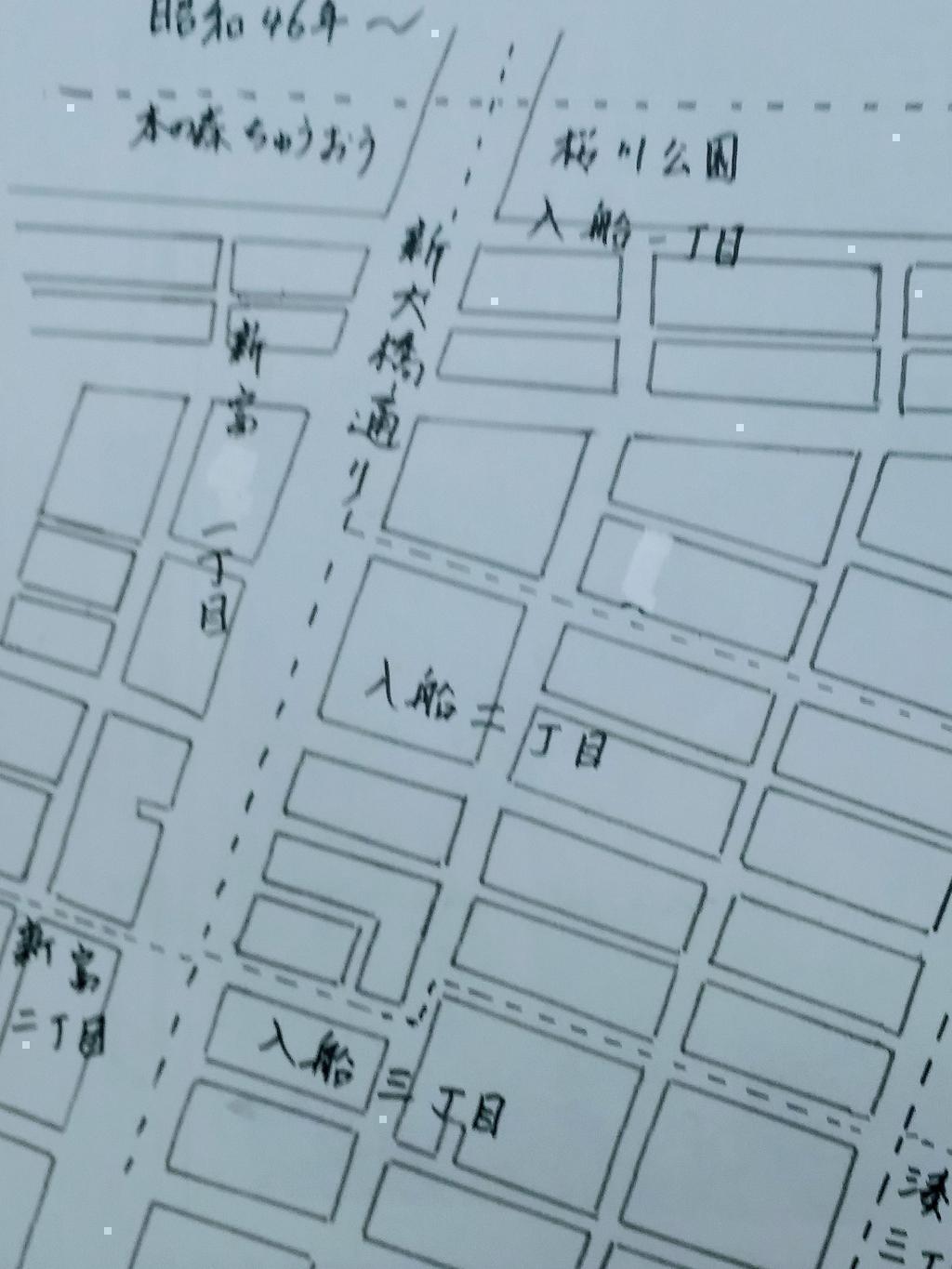
In 1971, the house was displayed, and Shin-ohashi-dori St. was divided into Shintomi and Irifune. Shintomi, Irifune and Minato no longer have the character of the town. The reclaimed Sakuragawa Park also has an address display at Irifune 1-chome, and the book forest Chuou on the opposite side of Shin-ohashi-dori St. is Shintomi 1-chome.
By the way, Kibiki-cho and Odawara-cho have disappeared, and only Akashicho has the character of the town in the Kyobashi area. Akashicho doesn't have a street such as 1-chome. Until recently, the intersection of Shintomi 1-chome was displayed at 1-chome Shintomicho, but now the character of the town has been erased and it has become Shintomi. The subway station on the Yurakucho Line is still Shin-Tomicho.
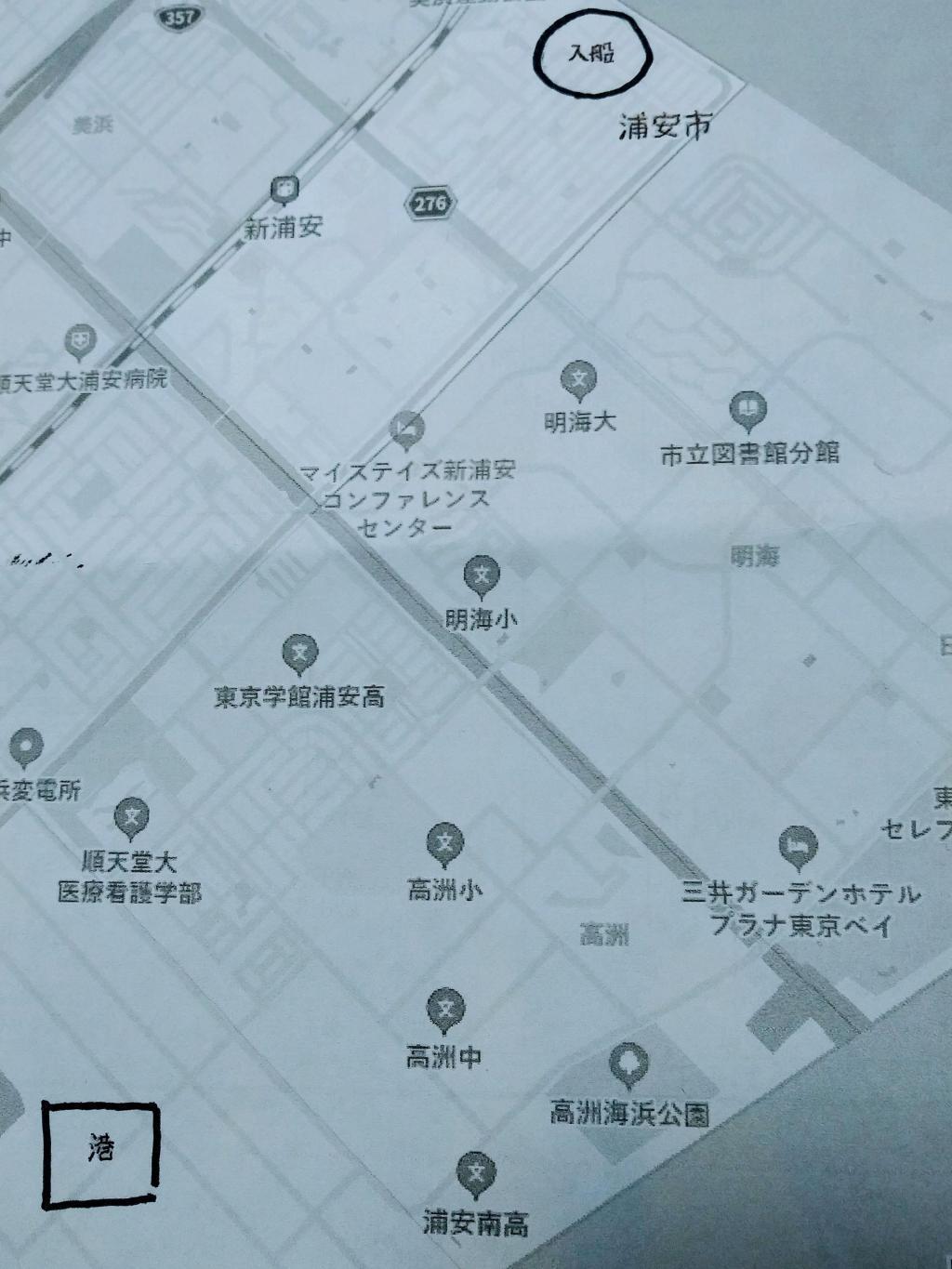
I was always in the local area, and I was not very interested in this place name, but about 30 years ago, I went to Urayasu for work by car. The intersection that stopped at the traffic light was an entry marked with a zero mark. A few days later, I went to another job and got lost on my way, and the address is displayed at Urayasu's port. Although it is not the character of Minato, I remembered that Urayasu City also has the same sound as Irifune, Port, and Chuo-ku.
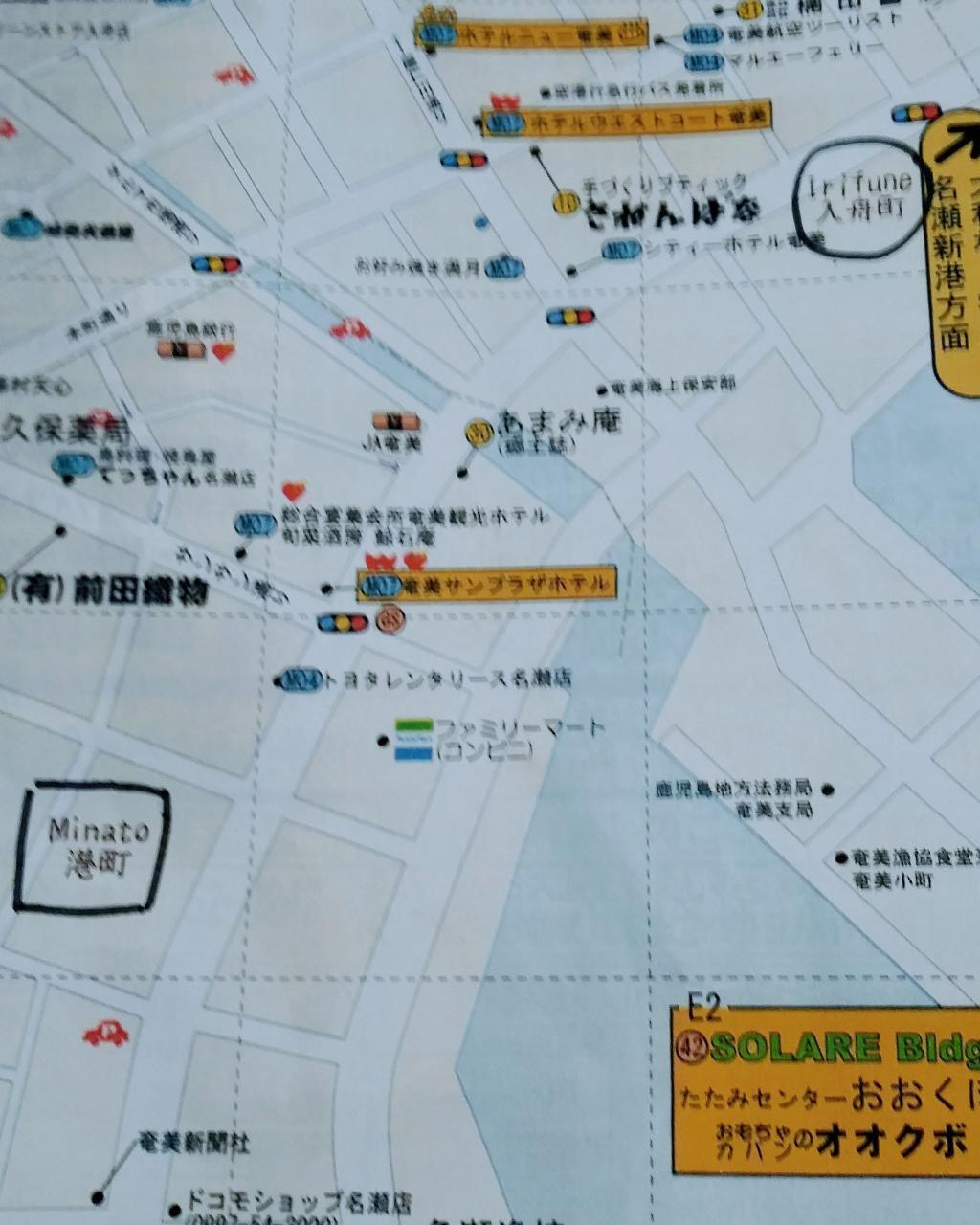
4 years ago, I went to Amami Oshima Island when I needed it. The address of the hotel where I stayed was Irifune-cho (mark) in Naze, Amami City. When I walked to the place where the errand was the next day, I moved to the neighboring town, the place name was the port town (India). It's not Minato, but I was a little impressed that it's the same next door. Naze was originally Nase City, but was merged and incorporated into Amami City. The Naze district is the best downtown area in Amami. By the way, there was also Ginza Street right next to it.
When I picked it up in the printing town, I checked the boat and Minato.
Irifune, Irifune-cho, Irifune-cho, Irifune-cho are located in 14 prefectures in one city and one road.
Minato, Minato, Minato, port, and port towns had their place names in one city, one prefecture, one prefecture, and 33 prefectures.
Except for Shinminato, Kohoku, Konan, etc., it is still a country surrounded by the sea.
There are Minatomachi in Tochigi and Gifu prefectures without sea, and Nagano has a place name of Minato. It is a place where people and supplies gather.
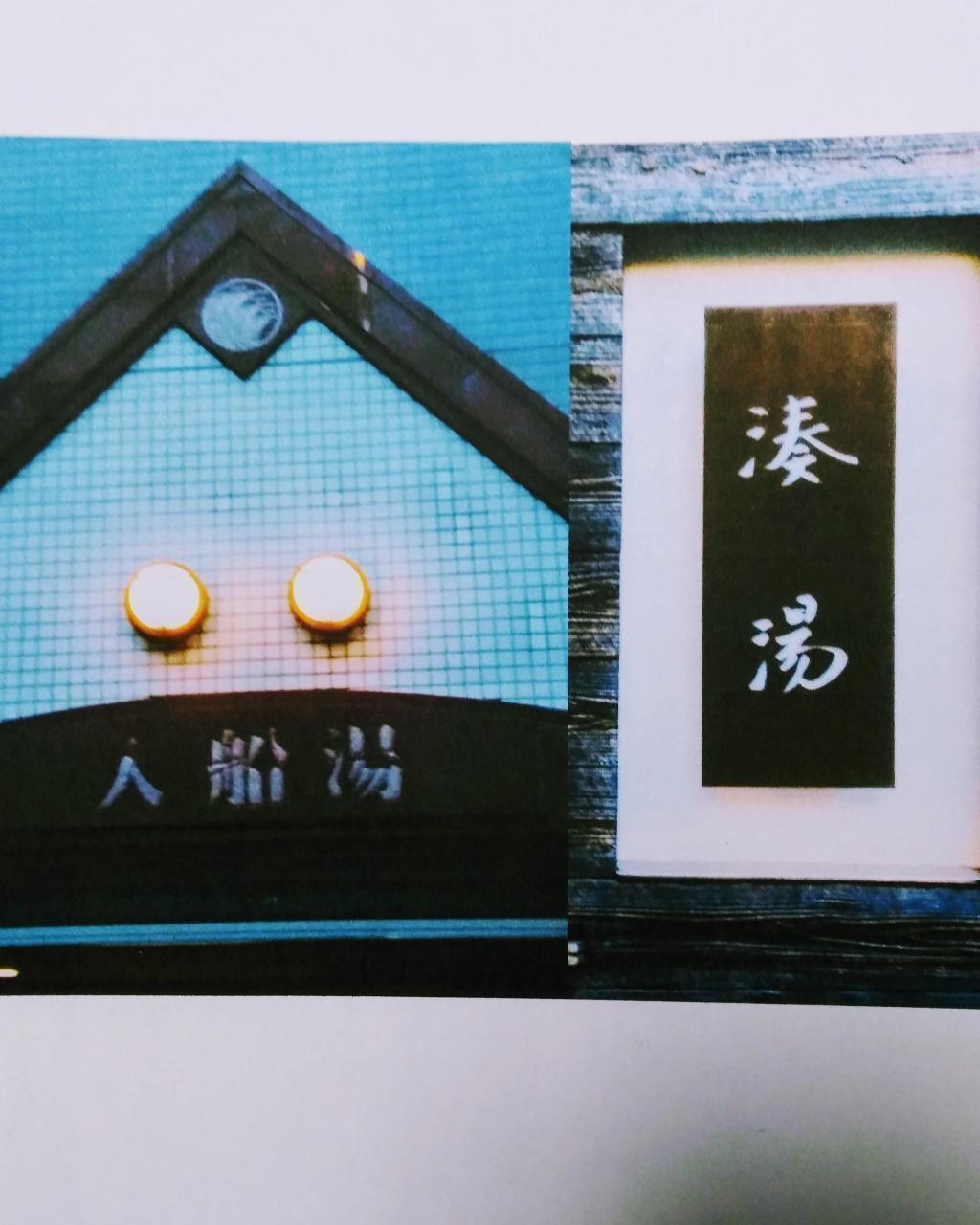
Ningyocho's world hot water closed in 2020, but now there are eight public baths in Chuo-ku. There are two houses in Ginza, one in Kachidoki, Tsukishima, Tsukuda, and Kodemmacho, and one in Minato and the boat.
Minato-yu on the right has a jacuzzi, jet bath, silk bath, and a sauna bath. I use soft water.
The left side of the photo is Irifuneyu. It is famous for its hot bath. It's over 43 degrees. The deep Yubune seems to be 44 degrees at a higher temperature. The Edo kid doesn't say it's hot, so don't give me a lot of wood. No, I don't have wood now.
Irifune-yu used to be called Shige-no-yu. I'm glad for some reason that the remaining public baths are the place names of Minato and Irifune.