 Official
(Tentative name) "History of Edo's Hairstyle Collection and Barbers / Development of the Ono Group" ①
~ Hair Salon ONO Tsukude specialty store ~
It is rosemary sea, which covers "gifts and enjoy yourself" with great care.
Showwindow that was also introduced in the article "Edo Town in Early Spring: In Nihonbashi Muromachi-" by Kozaru-san on January 10.
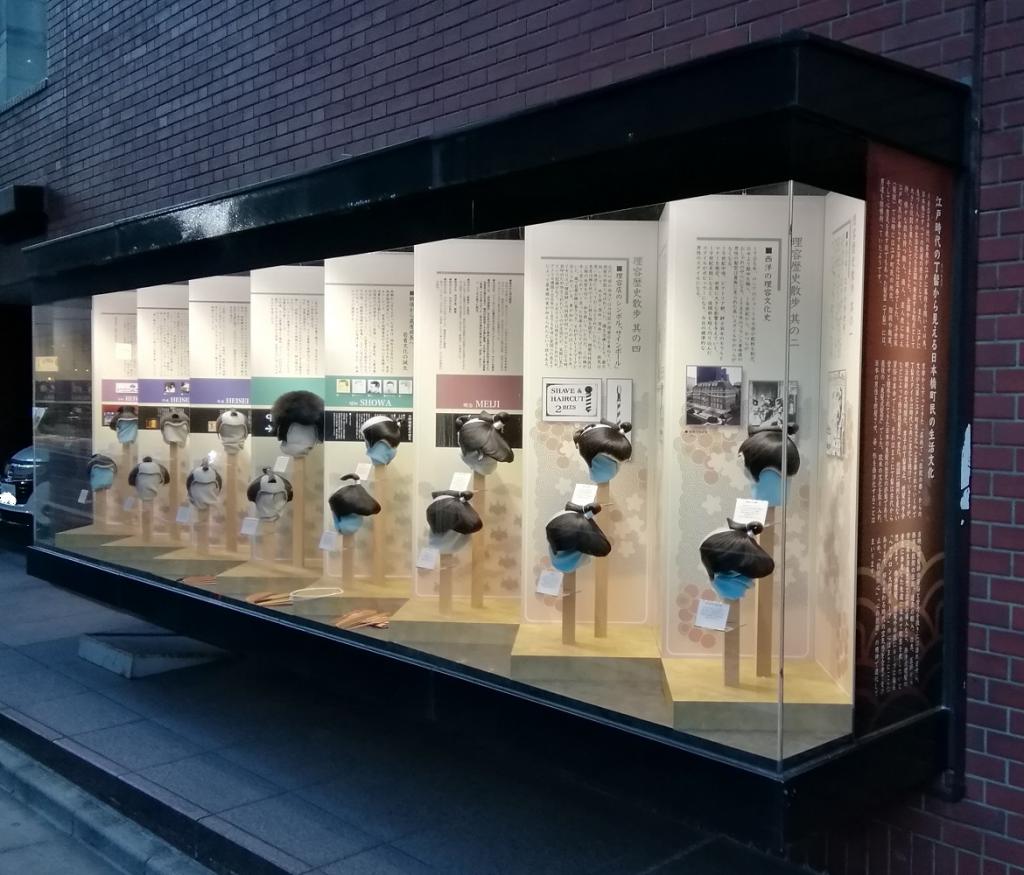
As you can see in the image of the store at the bottom, there is a very eye-catching show window on the left side of the building of the hair salon Ono Group's shop "Tsuyadashi Senka Honten".
It is still in the tentative name stage, but it is said that it is "Edo's hairstyle collection and the history of barber / development of the Ono group".
In the foreground, there are 16 types of Chomage, and in the back, "Barber History Walk" and "Ono Barber Shop-Heatheron Ono Group History" are written.
The "history" in the back will be the next time, and this time I will introduce the "chonmage" in the foreground.
This is a work created by "Katsura Yamada" commissioned by the Hair Salon Ono Group.
I think you often see Mr. Katsura Yamada in movies and drama end rolls.
Especially in historical drama, it has been famous for a long time.
Wig production, Tokoyama haircut, hair and makeup Mr. Wig Yamada, founded in 1926.
He is in charge of a wide range of TV dramas, movies, stages, hair makeup such as operas and ballets, wigs, and mustaches.
This time, I also took care of Mr. Etsuji Ono, Representative of Hair Salon ONO Ono Group.
First of all, I would like to introduce 16 kinds of Chonmage.
Above: Ginkgo head (Icho Atama: early Edo period)
Below: Semiori: Tenna to Genroku era
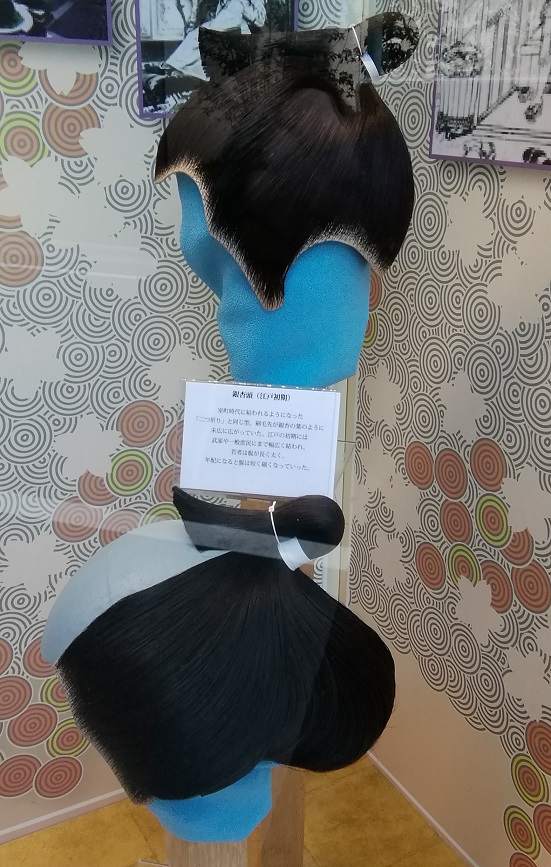
Ginkgo head ...
The same type as the "two-fold" that came to be tied in the Muromachi period.
The brush tip (Hakesaki) was spreading like a ginkgo.
In the early Edo period, it was widely tied to samurai and the general public, and young people had a long and thick bun, and when they were older, the bun became shorter and thinner.
Cicada-ori ...
From Tenna to Kyoho, the bun style was popular in some societies.
Its shape is like a cicada with a thin brush tip and a tip of the bun turned upward.
The people who tied this hair were sumo wrestlers, heroes (Kyokaku: a foreigner living in a hero), and Yujiro (Yuyarou: a paradigm), and many men and others were connected.
Above: The bun (Edo period)
Below: Men's Mage
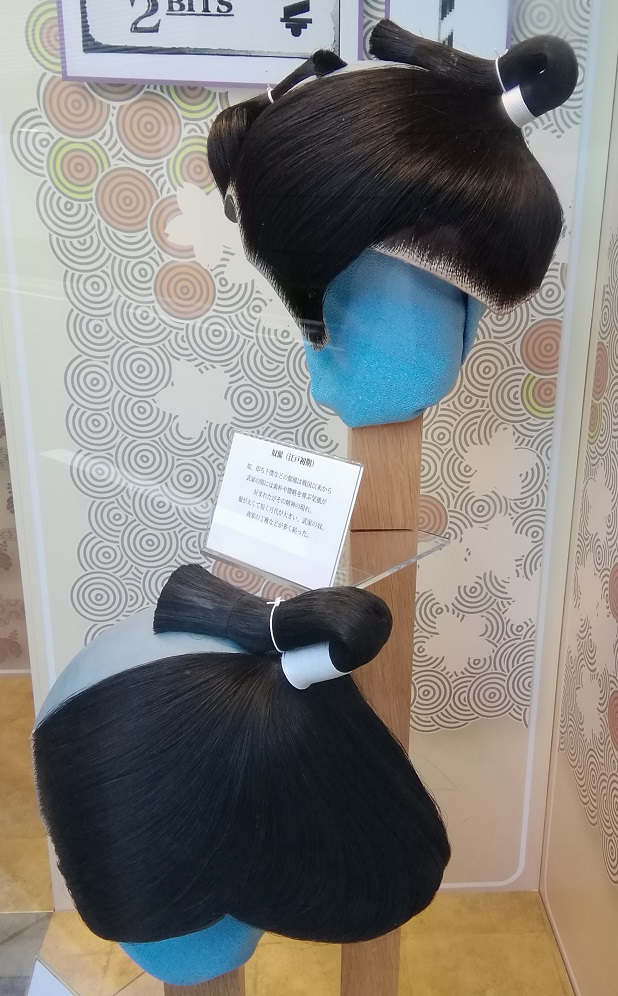
A man's bun ...
Since the Warring States, the bun style of servants, such as servants, has favored the simplicity and simplicity among samurai.
This bun is the manifestation of that spirit.
The bun was thick and short and the moon was large, there were many samurai guys and merchants' chins.
Men's Mage ...
The hairstyle of men in the early Edo period was "Futatsuori", and this was simply called "Manage".
The length of the bun was long and large for young people, but it became generally smaller after Genroku.
Protruding the alba (bottle) began at the time of Kanei, but the left and right alba flowed back to make a bun.
Above: Wakashu Mage (Edo period)
Below: Yaromage
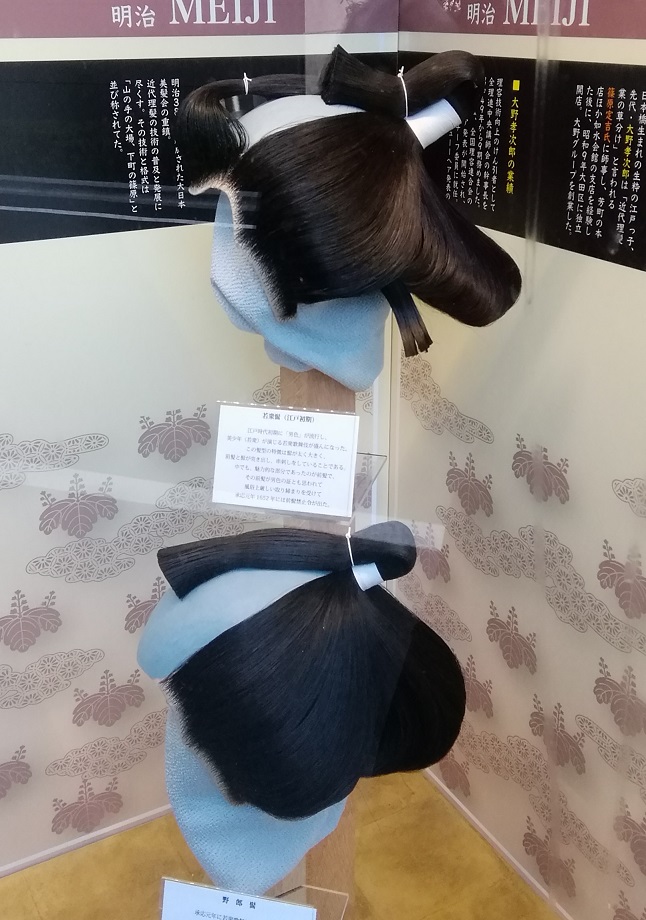
Young people's bun
In the early Edo period, "male color" became popular, and young people Kabuki played by young people (young people) became popular.
The feature of this hairstyle is that the bun is large, the bangs and the waist protrudes and skewers are skewered.
Among them, the most attractive part was the bangs.
The bangs were also thought to be a masculine sign.
This hairstyle was subject to strict crackdown due to customs, and in 1652 (1652), a ban on Maebun was issued.
Norobun ...
In 1652, young Kabuki was banned and became a basal Kabuki.
The young man shaved down his bangs, "Norobun."
Because the bun was particularly large, it became this name.
Above: Abachibin
Below: Tatsumatsukaze (Tatsumatsufu: early Edo period)
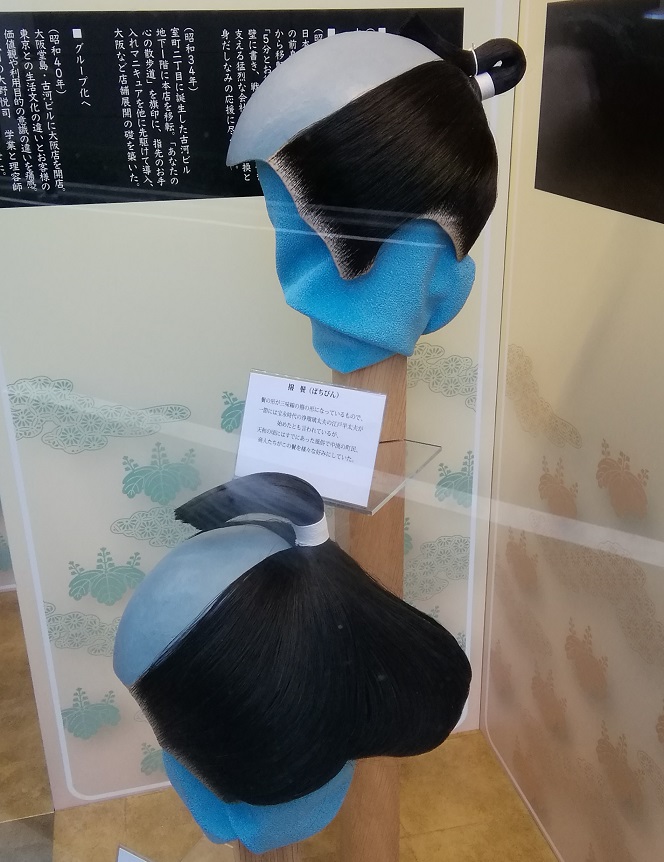
Album repellency ...
The shape of the alba is the shape of a shamisen bee, and one theory is that the Edo Hantayu of the Joruri Tayu of the Hoei era started.
However, it was a customs that had already existed in the Tenna era, and middle-class townspeople and merchants made this albacus a variety of tastes.
Tatsumatsukaze ...
This hairstyle was founded by Hachirobe Tatsumatsu, a puppeteer in Joruri at the end of the Kyoho period.
When you turn up when you send a doll (Aomuku), you hate turning the bun and entering the collar, raise the roots of the bun, and stop many original knots with winding trees and needles. .
The tip of the hair is short and the tip is thin to point to the head.
Above: Nihon Daemon (Nippondaemon: Appeared in Kabuki)
Below: With bag (Fukurotsuki: Appeared in the general hairstyle of townspeople, Kabuki)
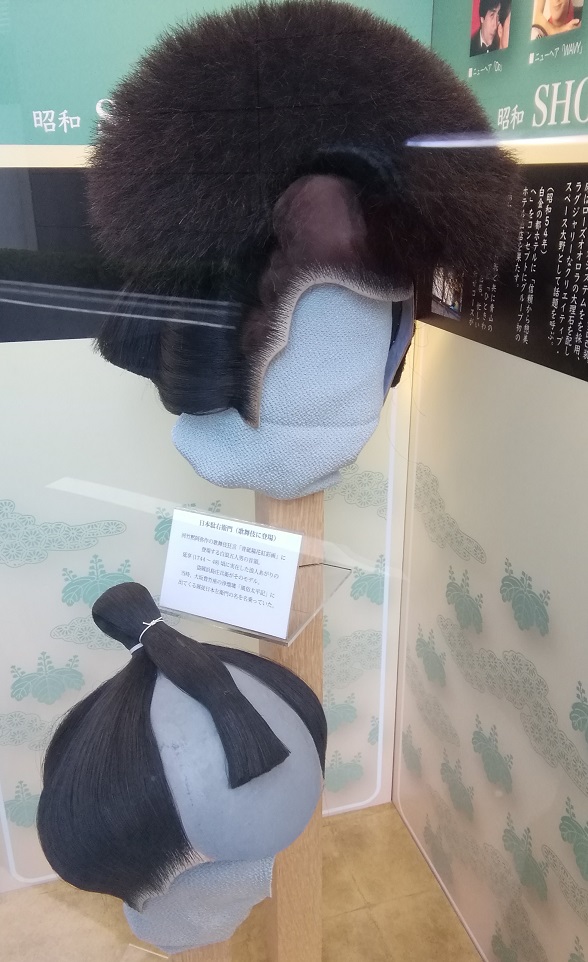
Japanese daemon ...
Nihon Danemon, the head of the Kabuki Kyogen "Shiranami Gonin Otoko", which appears in Mokuami Kawatake's Kabuki Kyogen "Aoto Draft Hana Aya Painting".
The model is Hama Shimanoshobei, a thief of a real ronin, who existed during Enkyo (1744-48).
At that time, he was named Nihonzaemon, a pirate who appeared in the Joruri "Fudo Taiheiki" in Toyotakeza, Osaka.
With bag ...
Tabo (cannot be converted to kanji, the same as hair and bun, and the word "bao" on the kamikanmuri) is the part that protrudes below the back of the head.
Although it is an inconspicuous part, the "with bag" with inflated hair in the back of the head was a hairstyle common among townspeople.
And the oiled (aburatsuki) whose hair was flattened with oil was in the shape of a samurai.
Above: The family (Gokenin: appeared in Kabuki in late Edo period)
Below: Bunkinfu Miyako-ji style (Bunkinfu Miyakojifu: mid-Edo period)
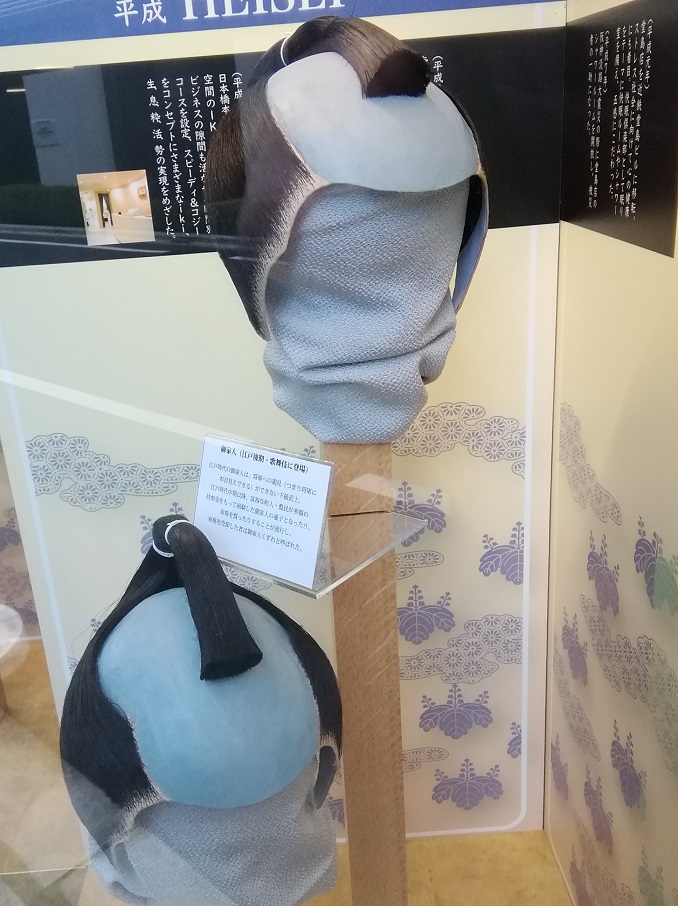
A family member ...
The Edo period family was a lower-class samurai who could not see the Shogun, that is, an audience with the Shogun.
Since the middle of the Edo period, it has become popular for wealthy townspeople and peasants to adopt a family member who was in need with a large amount of money and to buy a family member.
The family who sold the family status was called "the family break".
Bunkin style Miyako street style ...
It is a hairstyle that Joruri, which became popular during the Kyoho year, and her husband, Bungoroku Miyakoji, began to tie.
Genbun Oval, which was also called character gold, was issued, and the hairstyle that began to become popular was called "Bunkin style".
The roots were slightly changed from Tatsumatsu-style and the roots were high inclined, and there was little winding, bamboo skewers were placed on the brush tip, solidified with oil, and scraped the hair of the albab to prevent cracks.
Above: Total hair (Sohatsu: late Tokugawa shogunate's priest, scholar, doctor, etc., late Edo period)
Below: Spring (late Edo period)
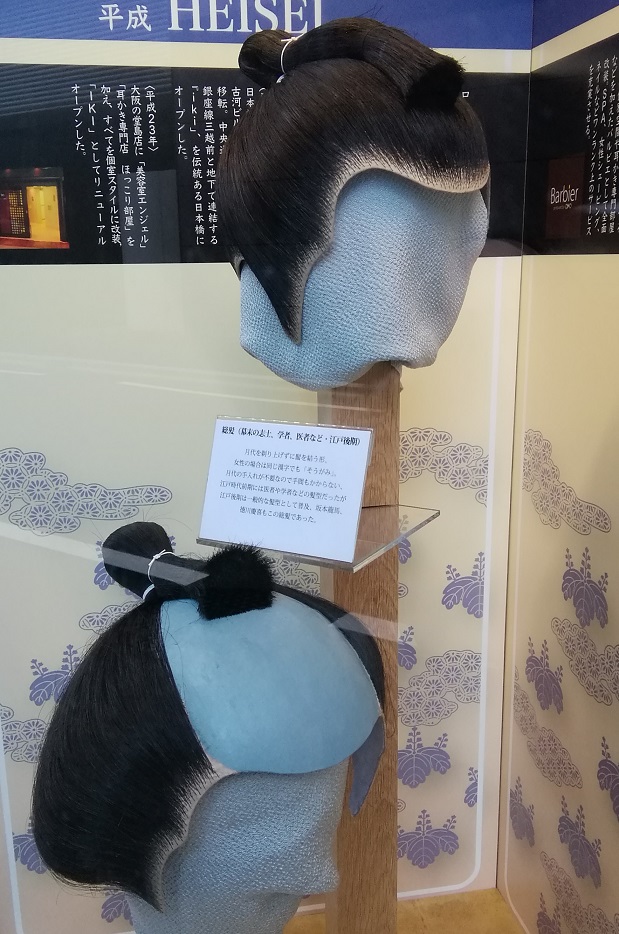
Total hair...
It is a form that ties the bun without shaving the moon.
In the case of women, the same kanji "Total hair" is read as "Sogami" instead of "Sohatsu" when he was a man.
No need for monthly care, so there is no need to worry.
In the early Edo period, it was a hairstyle for doctors and scholars, but in the late Edo period it became popular as a general hairstyle.
Sakamoto Ryoma and Yoshinobu Tokugawa also had this hairstyle.
Spring...
The stupid, the ruin, and the brave skin scattered the tip of the bun and turned upward.
It doesn't add much oil, tie it with only hair, plump only the bun, scatter the brush tip and turn it upward.
It's a hairstyle that looks like it was tied one day to two days ago, but this was considered smart.
It is a hairstyle that is favored by brave men and women.
Above: Great ginkgo (late Edo period)
Below: Sohatsuchasen (late Edo period)
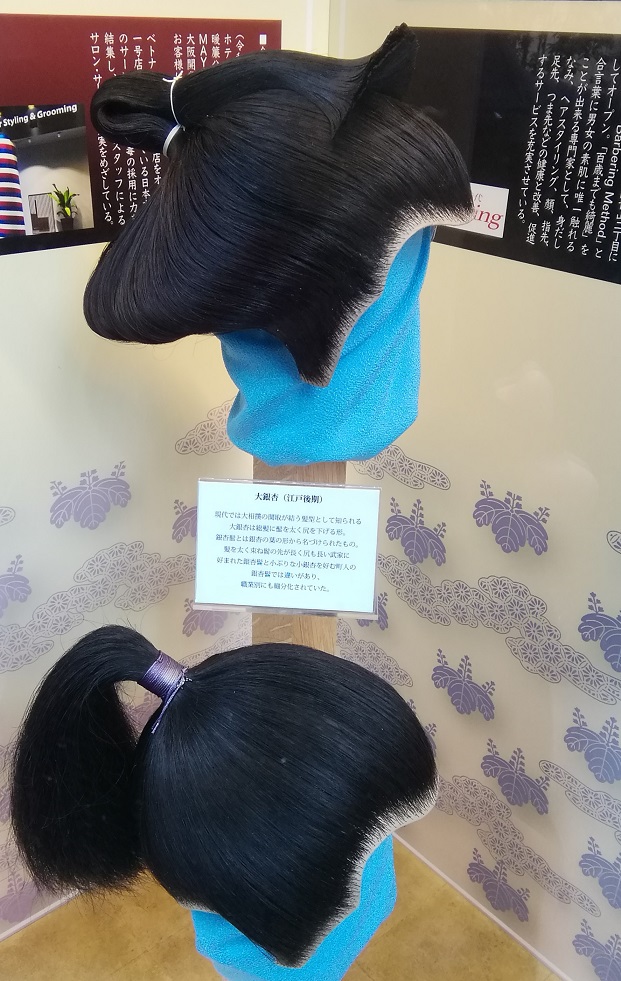
Great ginkgo ...
In modern times, it is known as a hairstyle tied to the sumo wrestling Sekitori.
It is a hairstyle that draws a thick bun on the total hair and lowers the butt.
The ginkgo bun is named after the shape of a ginkgo leaf.
"Ginkgo bun" is a thick hair, a long tip of the bun, and a long butt.
This was liked by the samurai.
On the other hand, the townspeople prefer the small "small ginkgo" even with the same ginkgo bun.
It can be said that they were subdivided by occupation.
A hair whisk...
Among the total hairs seen in late Tokugawa shogunate's priests, the characteristic of Chasen was to scatter the tip of the bun.
It is characterized by the fact that there is no moon and the bun of total hair is scattered.
・・・ Along with "History", the concept of "Machikado Exhibition Hall" will be introduced next time with interviews with Representative Ono.
Please look forward to it.
Hair Salon ONO Tsukade Specialty Head Office
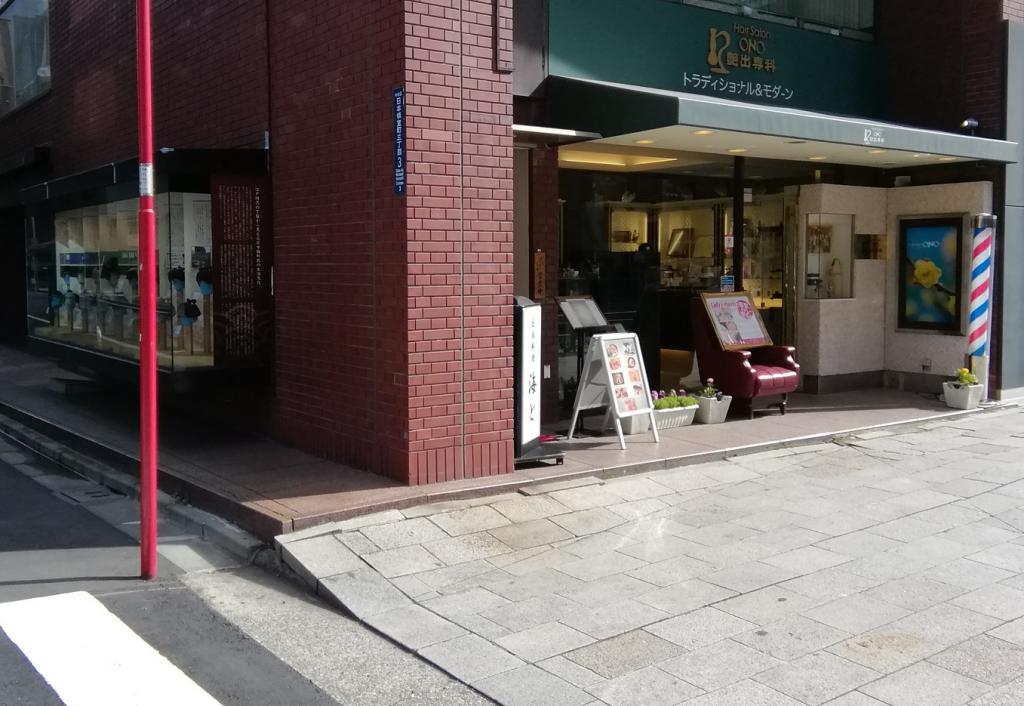
1st floor of the CM Building, 3-3-3 Nihonbashi Muromachi
03-3211-7031
Business hours from 10:00 to 21:00
(Last order 20:00)
Saturdays, Sundays, and holidays from 10:00 to 20:00
(Last order 19:00)
Open all year round
Click here for the homepage of Hair Salon Ono Group.