 Official
Discover the connection between Katakura Industries and World Heritage's Tomioka Silk Mill in Chuo-ku!
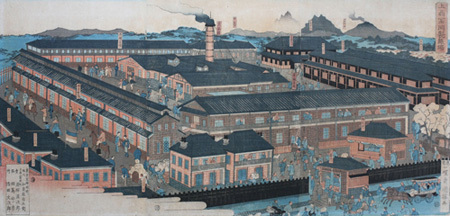
1872 Founded in 1872, Tomioka Silk Mill registered in World Heritage in 2014. Did you know that Katakura Industries Co., Ltd. built a significant contribution to the development of modern Japanese textile industry from 1939 to 1987?
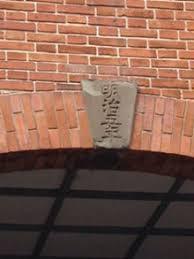
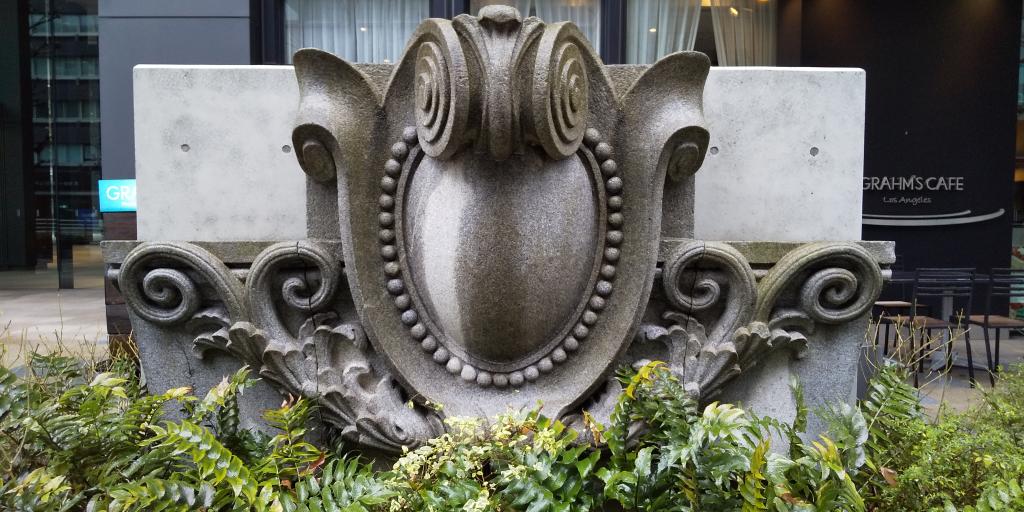
Katakura Industries Co., Ltd. operated in 1873 in 1873, and the fact that the head office was located in Kyobashi in 1920 remains as a medalion. After that, the head office moved to Ginza now to Akashicho.
"Silk's Katakura" made a significant contribution to the development of the textile industry until demand for raw silk declined.
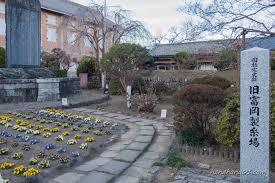
Recognizing the historical value of Tomioka Silk Mill, after the suspension of operations, the last Kumagaya Plant of Katakura Industries took over the history and spirit of the silk industry.
However, worldwide demand for raw silk has disappeared, and the Kumagaya Plant was closed in 1994.
The cause of the decline in the raw silk industry
・Slump in raw silk prices, shortage of cocoons due to government policies to reduce production, spread of chemical fibers, and import of inexpensive imports

In the Meiji era, 98% of exports were Japan's main industries, such as raw silk and silkworm species.
1872 In 1872, we developed a machine suitable for the Japanese climate of Western-style silk machines imported from Western Europe.
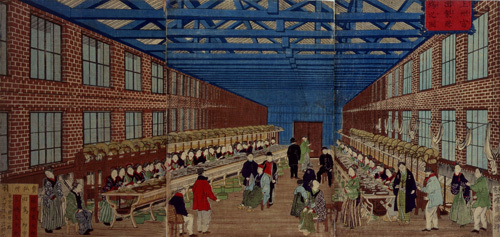
We invited French leader Paul Bruna to introduce a factory system of Tomioka Silk Mill's design concept, technology introduction, quality control, and employment (an average of 7 hours and 30 minutes a day, a Sunday weekly holiday).
History of Katakura Industries Co., Ltd., which supported the world's most famous high-quality silk industry in Japan
Nishiki-e Joshu Tomioka Silk Mill Figure
1873 1873-Shisuke Katakura started spinning 10-person sitting silk in Kawagishi-mura, Suwa-gun, Nagano Prefecture (currently Okaya-shi).
1895 1895 - Established a branch in Kyobashi
1920 1920 - Moved head office to Kyobashi
1939 1939 Merged the former Tomioka Silk Mill
1987 1987 - Tomioka Silk Mill suspension
2000 2000-Kataoka Silk Memorial Hall Open (next to Kumagaya Aeon)
2005 2005 - Donation of Tomioka Silk Mill Building to Tomioka City
2006 2006 - Sale of Tomioka Silk Mill land to Tomioka City
2009 2009 - Moved head office to Ginza
2011 2011-Relocated head office to Akashicho
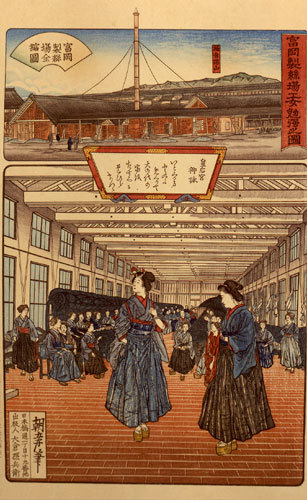
Nishiki-e Tomioka Silk Mill's Study Map
・Research on silkworm species, improvement of reeling machines, training of workers
The women gathered from all over the country lived in the dormitory. The girls trained in Tomioka Silk Mill were sent to silk mill nationwide as Tomioka girls, and I am surprised at the high level of training that contributes to the development of the Japanese silk industry.
Of course, was the splendor of the factory's employment system a factor in raising the level of training for workers?
Former "Katakurakan" front entrance medalion
Current Tokyo Square Garden (Kyobashi) Kajibashi Street
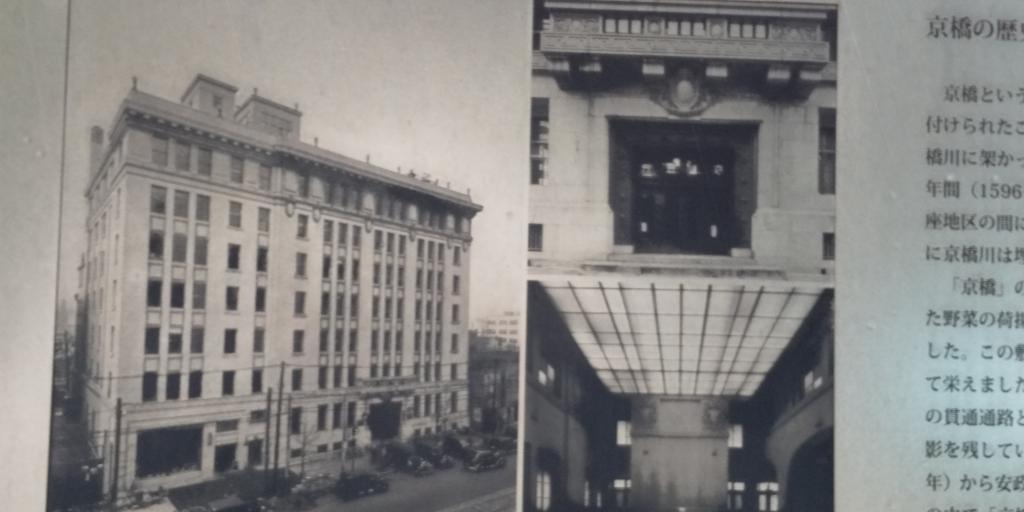
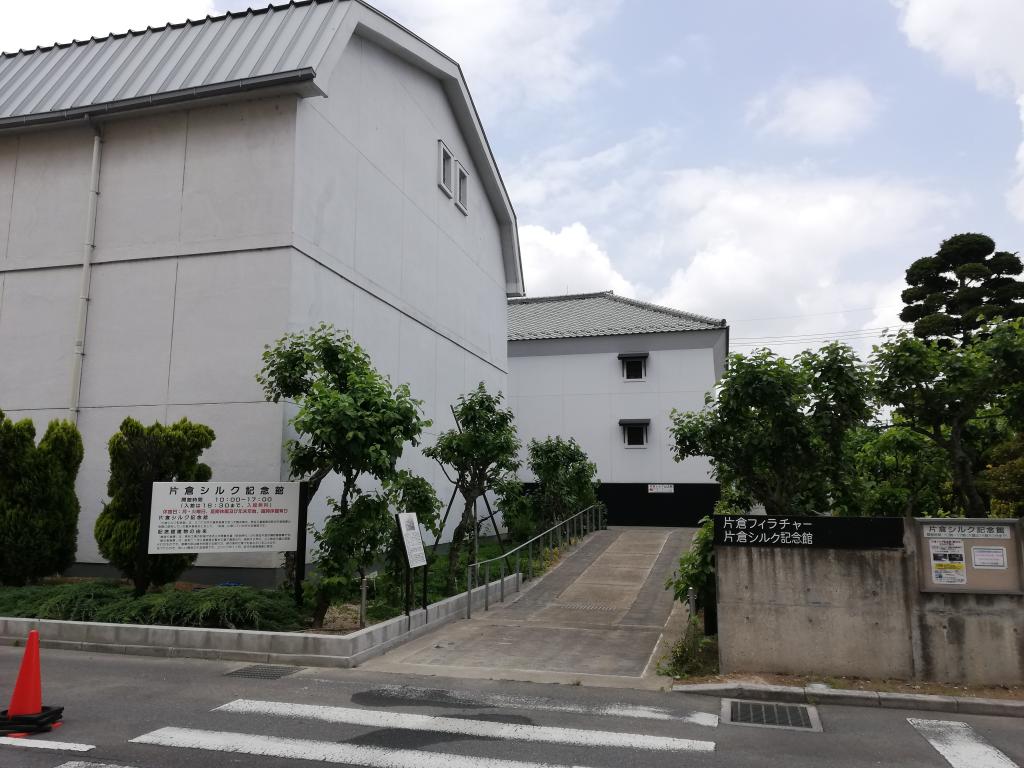
Kataoka Silk Memorial Hall, where you can easily understand the history, manufacturing process, and factory life of silk in a compact manner.
There is no place to throw away cocoons! Reuse lint and sanagi
Everything that did not become raw silk is by-products (raw materials for silk spinning, food such as Sanagi fish and fishing bait).
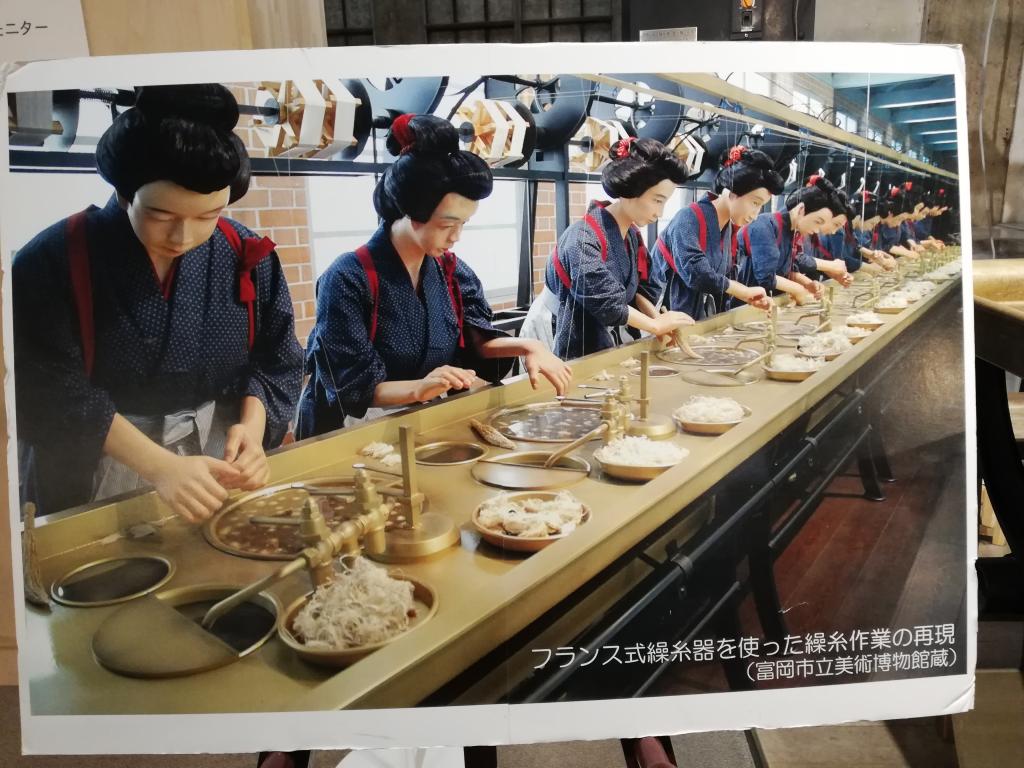
Opened in 2000 as a complex commercial facility "Katakura Philacha (Sweeping mill)" consisting of the Katakura Silk Memorial Hall and a commercial facility (next to Kumagaya Aeon). The footprints of the silk industry, which was once a key industry in Japan, are preserved and introduced in the wooden cocoon warehouse at the time of the establishment of the Kumagaya Plant.
When I talked to the memorial hall, I heard about it.
"I would like to continue to pass on the footprints left by Katakura Industries' predecessors and local people for 121 years, along with the preservation and management of the cocoon warehouse at the Kumagaya Plant," he said. I visited the Katakura Silk Memorial Hall to learn about the greatness of the Tomioka Silk Mill and Japanese silk industry, and I was able to feel the connection with Chuo-ku.
〒350-0815 2-135, Hongoku, Kumagaya-shi, Saitama
☎FAX048-522-4316
Opening hours from 10:00 to 17:00 (entry at 16:30)
Closed days Every month, Tuesday, summer, New Year's holidays (temporary closure available)
Admission is free
Katakura Industries Co., Ltd.
6-4 Akashicho Building, Chuo-ku, Nichirei Akashicho Building
☎03-6832-1873 FAX03-6832-0256
(I received permission from the Katakura Memorial Hall to take photos and write articles.)
※Currently, due to the coronavirus, please contact us and go out.