 Official
Be familiar with print
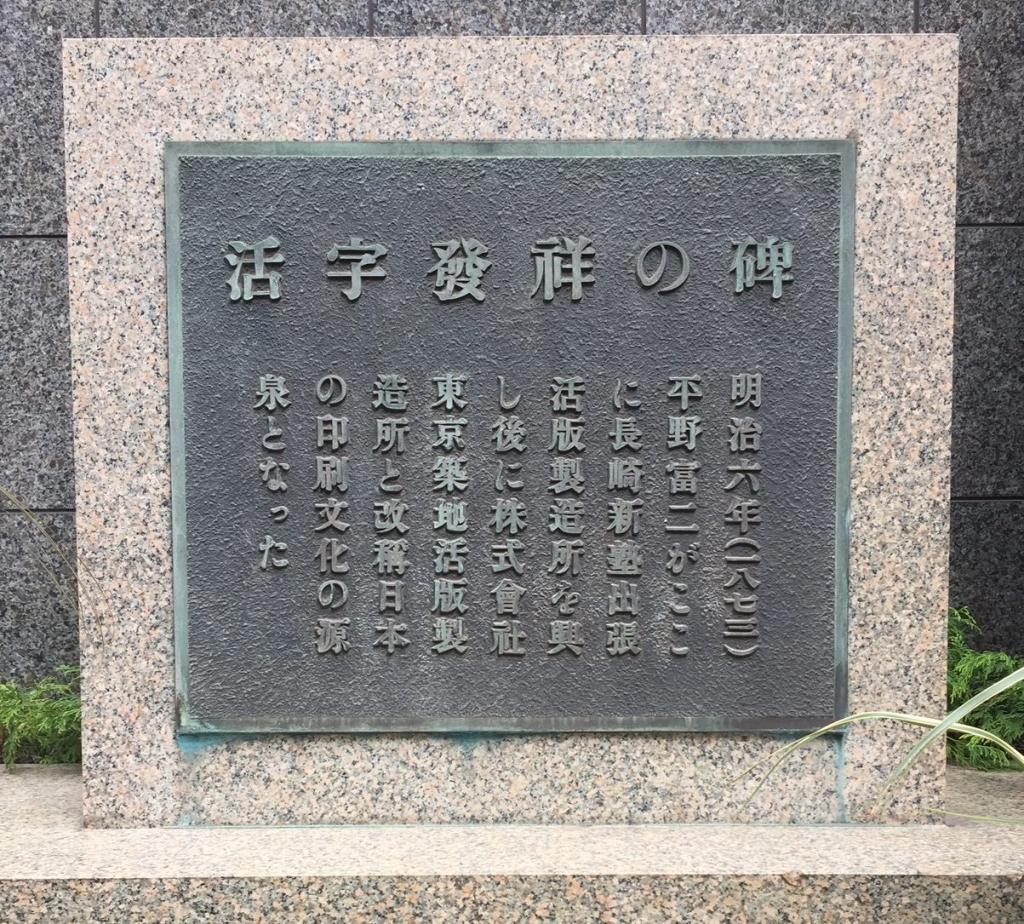
As you continue to refrain from going out due to COVID-19 infection control, I think you are spending every day while devising various things. I am one of those who seek a way in print. Now that the library is closed, you can re-read the books you have on hand and re-examine the books you have read before. I would like to talk about Chuo-ku related that I encountered at such a time.
※The photo shows when I visited the birthplace of print before listening to the Tsukiji Reservation Study Group held on September 28, 2019, "Printing and Mission of Christianity-" It is.
In the book I happened to get
Chuo-ku appears in many stories. Kyoka Izumi's Nihonbashi, Yumie Hiraiwa's Onjuku Kasemi, Hatanaka's Shabake, and modern times Keigo Higashino's newcomers are all popular. If I think that it is related to Chuo-ku from the title and summary, I will pick it up.
However, the other day, I encountered Chuo-ku related in a completely unexpected place. It was in a book called "Ilone Saudade" by Jiro Nitta and Masahiko Fujiwara. This is a book that spells from the arrival of a Portuguese named Moraes to Japan as Deputy Consul in Portugal in 1899 to the end of his life in Tokushima in 1929. The manuscript that had not been completed due to the sudden death of Mr. Nitta was completed by his son Fujiwara clan and published by Bungeishunju.
I happened to be interested in a person named Moraes, and I was reading the books of Jiro Nitta one after another, so I started reading this book. Then, while the Portuguese living in Kobe were discussing how to promote trade in their own country, Ginka Kishida's Seisui came out!
Seisui of KISHIDA Ginka
Speaking of Seisui, Ginka Kishida's super famous product that opened a drug store in Ginza 2-chome! According to Mr. Nitta's book, the container was a bottle of Setomono and the plug was a cork of Portuguese specialty. There was an explanation that this was the first use of cork in Japan. Since Cork was purchased and exported by U.K. and Germany from Portugal, it was also said that the Japanese did not know that Cork was Portuguese.
In retrospect, I pulled out the pamphlet of the 19th special exhibition "Tokyo 150th Anniversary Western Medicine Beginning in Chuo-ku" held from October 20, 2018, and reread the page of Ginka Kishida. The container of the glass bottle of Seisui is posted without a plug. It was also said that Ginka Kishida received eye treatment from Dr. Hebbon in 1864, and that he opened a drug store the following year.
Mr. Nitta writes that the first cork was brought to Japan in 1864. It is said that Mr. Nitta's work is based on a thorough investigation of materials. There should be historical materials somewhere between the Setomono Seisui container and the cork plug. As a result of this encounter, I wanted to know more about Ginka Kishida.
I thought that the fun of print was that one thing would connect next and expand the world.