 Official
"Negima Nabe", which has been handed down since the Edo period, is at Yoshi Umemoto store.
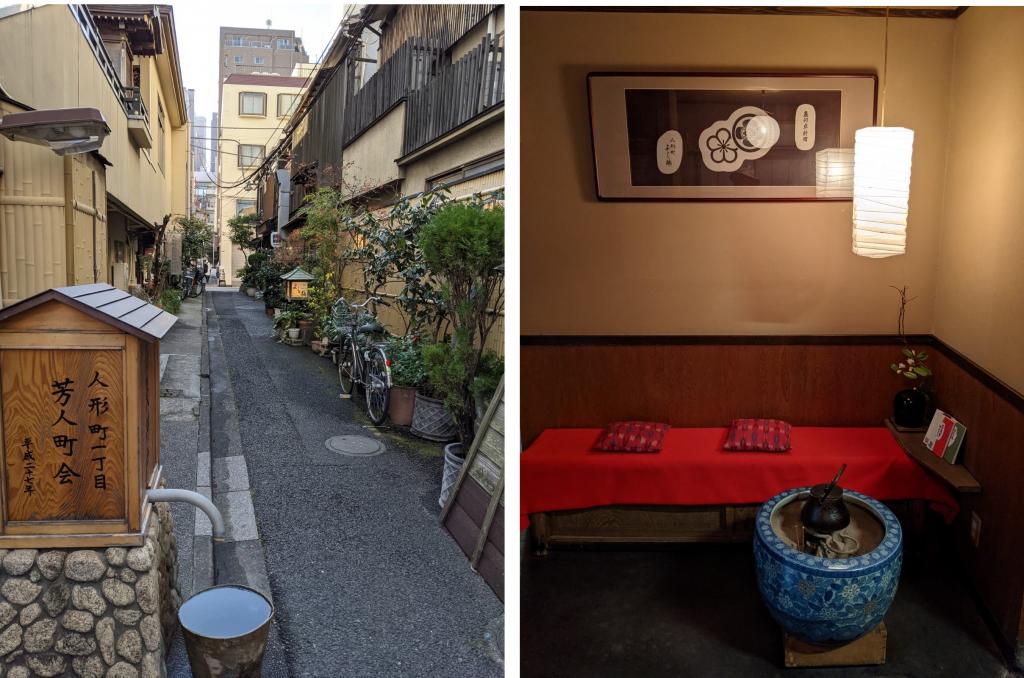
Yoshiume is a shop known for its "Negima Nabe". Even with the same good plum, "Yoshiume Yoshicho-tei" is only dinner. I have a high threshold, so I came to the "Yoshi Umemoto store" where lunch is served. The place is a small street next to Daikanonji Temple along Ningyocho Street, right after entering the Geisha Shindo.
Onion pot is a pot that eats green onions and tuna together.
At the end of the Edo period, Edo was a major consumption area with a population of over 1 million. Fish banks lined up next to Nihonbashi at the base of the Shogun's knee, and fish were carried not only from Edo-mae but also from Shizuoka. The life of fresh fish is fresh. At that time, there was no ice, so I was transported by a push ship, a limited express ship now. Only fishermen on Tsukuda Island carrying fish to be presented to the general were allowed to cross the Feudal lord's procession.
The flow of the Kuroshio Current has changed, and tuna can now be caught. But
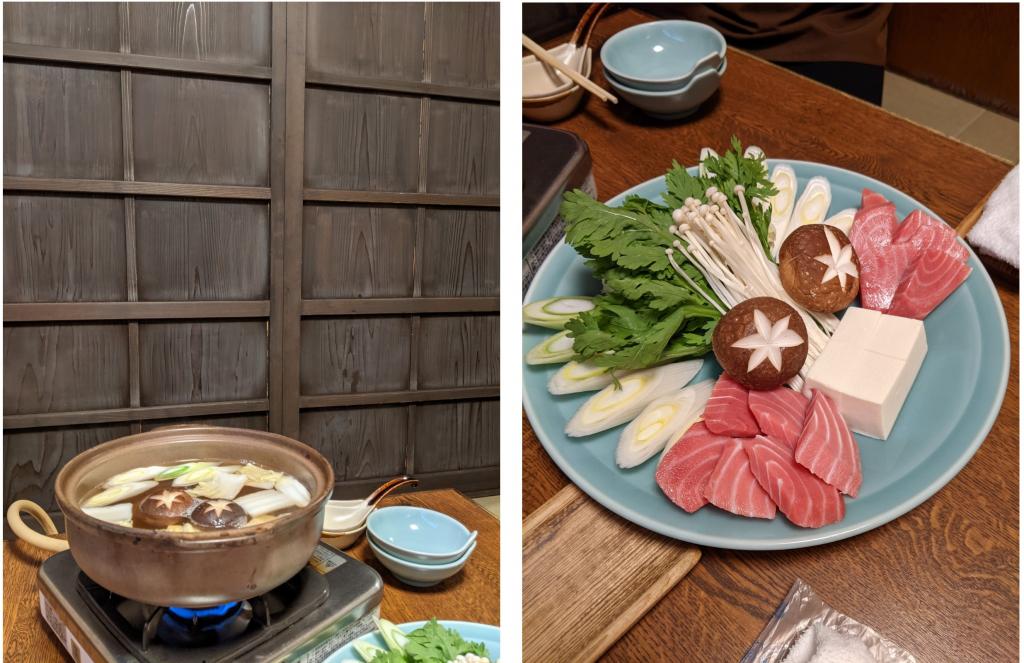
At the end of the Edo period, the flow of the Kuroshio Current changed, and tuna became available nearby. However, at that time, the box for placing fish to be offered to the general was called the "Gozen White Fish Box", so white fish were all over. Red fish like tuna quickly discolored black, so they were not popular and sold for a cup. In particular, the fat-rich toro that did not last for a long time was unpopular and sometimes thrown away (Omaiger). I couldn't sell the brain heavenly horses that didn't get sucked, and I was in trouble. But it's greasy and delicious, if you don't do something ...
When the tuna toro was boiled and eaten with the green onions, it turned out to be delicious, and the green onions spread, saying, "The tuna has squeezed the green onions." Yoshiume's "Negima Hot Pot" is derived from the green onion soup. After the Meiji era, when the beef pot began to spread, the seasoning became darker, but the seasoning of Yoshiume still remains light. The toro of the ingredients is not seasoned.
Mr. Nakai was not Mr. Nakai.
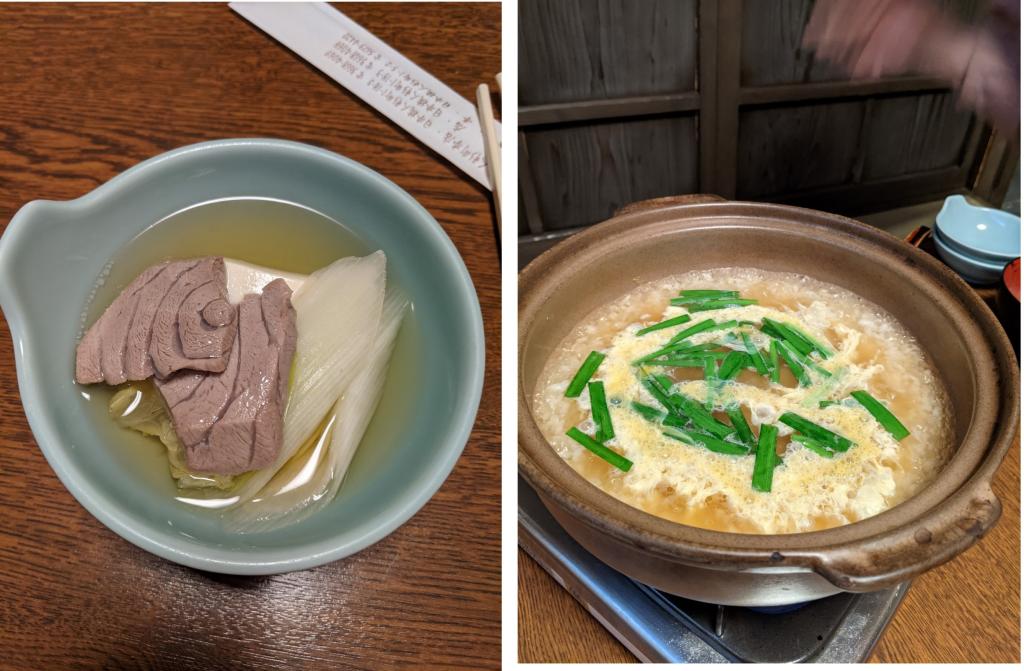
Mr. Nakai explained in detail the dishes and their origins and backgrounds.
I said, "In the last year's Chuo-ku Tourism Certification Test, there was a problem of guessing what the material of the ceiling of plums was good," "I answered correctly. "I'm yakusugi cedar (Echen)." The ceiling is from a separate building, Yoshicho-tei. Now I'm having a cafe time, so you can see it." ・ ・ ・ ・ Surely the question was "Yoshiume Yoshicho-tei".
After the meal, I stopped by "Yoshicho-tei" and was surprised to see Nakai. Actually, I was even more surprised because I was a young landlady, not Nakai. It leads to the first blog titled "Cafe Time at a luxury restaurant in Sukiya style, Tangible Cultural Property."
The dinner hot pot course starts at 12,000 yen. Lunch "Negima Nabe" was 7,000 yen. I'd like to eat the morning "Negima" ...
For lunch, grilled fish set meal 1500 yen, seasonal set meal 1800 yen, lunch kaiseki small chrysanthemum 3700 yen, etc. (former kagurazaka geisha and actress Kogiku Hanayagi lived in the building where Yoshiume Yoshichotei is located) Nihonbashi Ningyocho 1-5-2 Hibiya Line 1-minute walk, Ningyo Toei Line 03-3668-4069