 Official
Harumi NOW
On March 29, we participated in a project called "Spring Honban's Tokyo Bay Area Tour" organized by an organization called "Keiyokai". I was a correspondent for the Chuo-ku Tourism Association, and I was asked for a guide on the day.
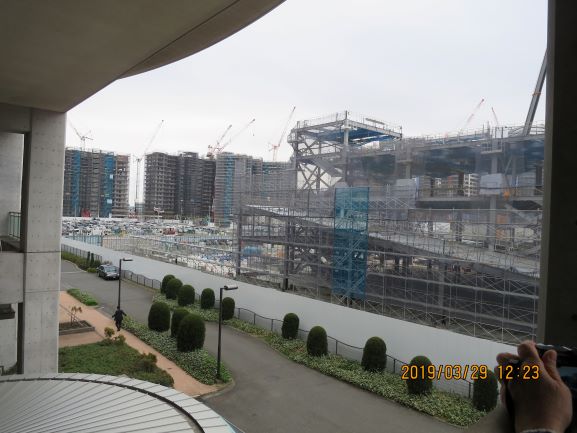
Meeting at 10:30 in the lobby on the 2nd floor of Harumi Wharf Terminal. From the observation deck on the 6th floor, I overlooked the sight of the Tokyo Bay shore, such as Rainbow Bridge, but although it did not rain on the day, it was not clear, it was quite cold and there was wind, and Harumi Wharf Park was also closed under construction, so I moved to "Hot Plaza Harumi" where I planned lunch while watching the athlete village under construction.
The photo shows a scene of the athlete village under construction from the Central Incineration Plant.
Less than 500 days before the opening of the Olympics, the athlete village has been built. The athlete village is 18ha,
It will be built on the site of 3.7 Tokyo Dome, but after the Olympics, it will be rebuilt into a general house (condominium). The project is named "Harumi FLAG". The plan is to add 4,145 units for sale and other rentals to 5,632 units, so a new residential area with more than 12,000 people will emerge. Two new tower apartments will be built (completion is scheduled for spring 2024), shopping malls, elementary and junior high schools, and nursing homes with nursing care will be built.
As of March 4, 2019, the number of households in Chuo-ku is 92,126 and the population is 163,137, so if about 5,600 households and more than 12,000 people are added here, it will be a record high of 172,183, which was recorded in 1953. It is likely that the highest record will exceed the record population of 172,183.
As early as this year (2019), the sale will start in May (the move-in is scheduled to start in March 2023), so it will be a big topic. However, the remaining challenge is to improve access (transportation).
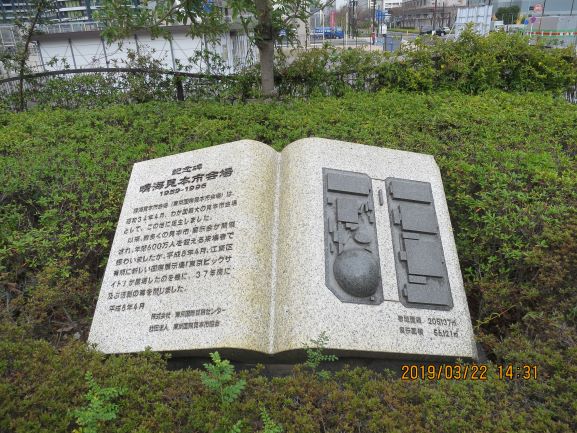
Walking along Harumi-dori from the Chuo Incineration Plant, a monument is set up in the park ahead of the Chuo Incineration Plant commemorating the closing of the Tokyo International Trade Fair in 1996. Beyond that, there is a signboard describing the site of the office when the Expo was planned in 1940 (1940).
The plan for the exposition was to be held at the mouth of the Sumida River and the coast of Yokohama, which were scheduled for the venue, and admission tickets have already been sold, and it is said that sales have been strong. Missions were sent abroad and promotion began. However, in 1938, the same year when he declined the Olympics, the government announced a plan to extend the expo indefinitely. At this time, there was a plan to relocate the city hall to Tsukishima, but it seems that it was canceled. (This part was based on Cidenstecker's book "Stand Up Tokyo". This book is a sequel to "Tokyo Shimomachi Yamanote", which describes the history up to the Great Kanto Earthquake, but I think both books are good books for understanding the history of Tokyo. )
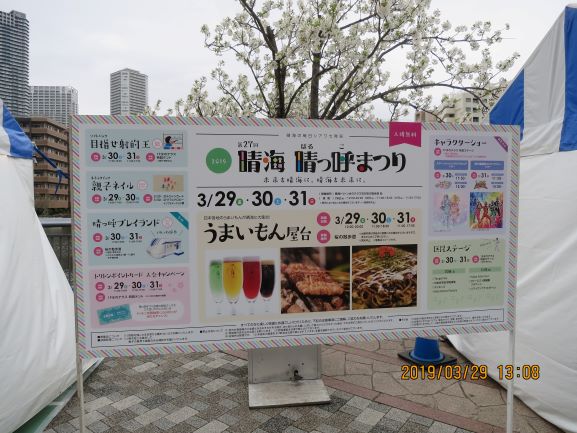
If you follow Harumi-dori, "Harumi Island Triton Square" is already in front of you. Just the "Harumi Haruki Call Festival" was held, but because it was cold and there was wind, there was another gathering of people. We also headed to the izakaya in the building as soon as possible, held a volunteer social gathering, and missed the "Heisei that died" on topics from the Heisei era.