 Official
"Koibun" Where is the PX? ~The story told by Yukio Mishima~
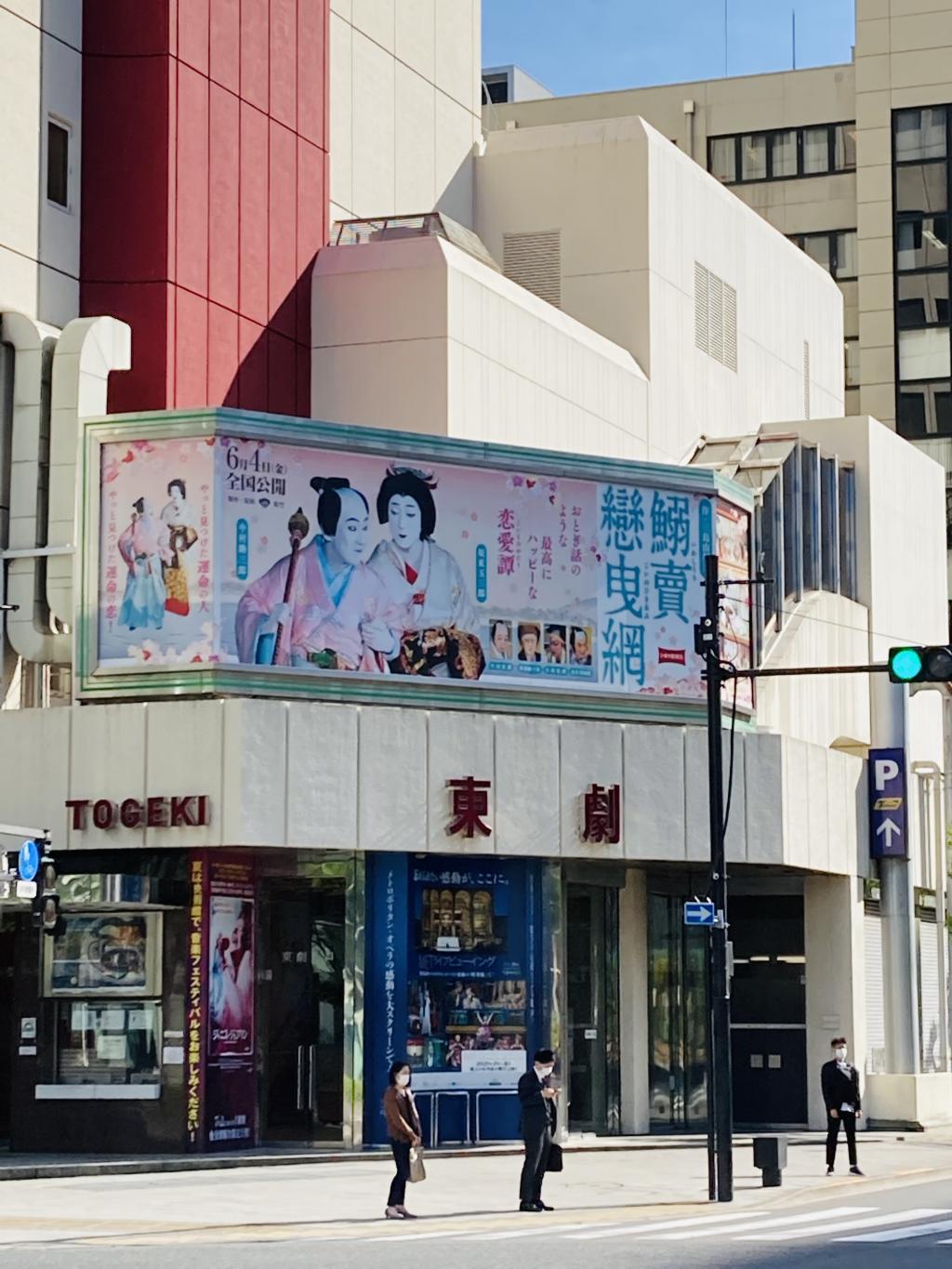
Now, the Higashi Theater Building in Higashiginza has a signboard of Cinema Kabuki "Iwashiurikoi Hikiami", which is scheduled to be screened from June 4. It is a love story like a fairy tale of a prostitute who fell in love with fate, but it is actually Yukio Mishima who wrote the original story.
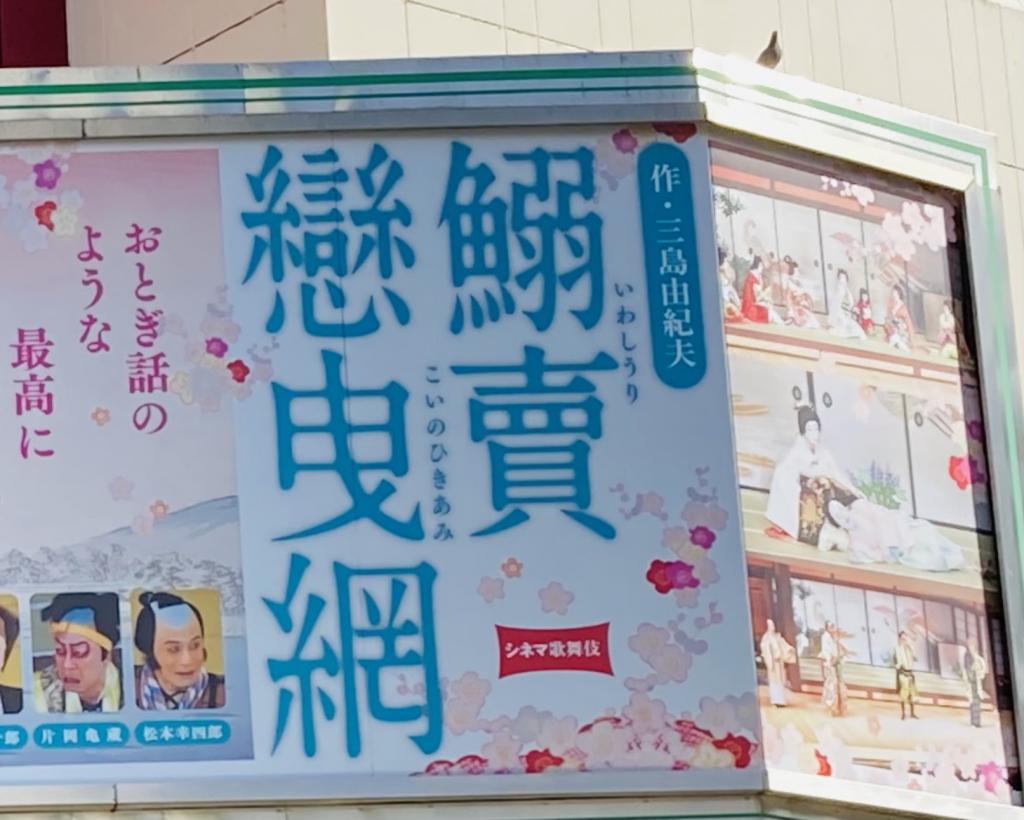
Yukio Mishima wrote six Kabuki plays in his lifetime, but I was embarrassed to find the word "Yukio Mishima" on the signboard of "Sardine Meruki Hiki Net".
"Bridge Tsukushi" that wraps your tongue around Mishima's storytelling
Hey, Yukio Mishima.…When I whispered, I tried to cross Harumi-dori St. north, that is, from the side of the Togaki Building to the side of the Ginza Shochiku Square Building, it suddenly came to my mind that Yukio Mishima's novel "Hashizukushi".
Toshin Beltway, the Metropolitan Expressway runs beside the Togara Building.
If you go about 400m northeast along the Metropolitan High Loop Line, you will reach the rare Y-shaped bridge "Miyoshi Bridge" in front of Chuo-ku government office.
And Miyoshi Bridge is the first bridge to appear in Yukio Mishima's novel "Hashizukushi".
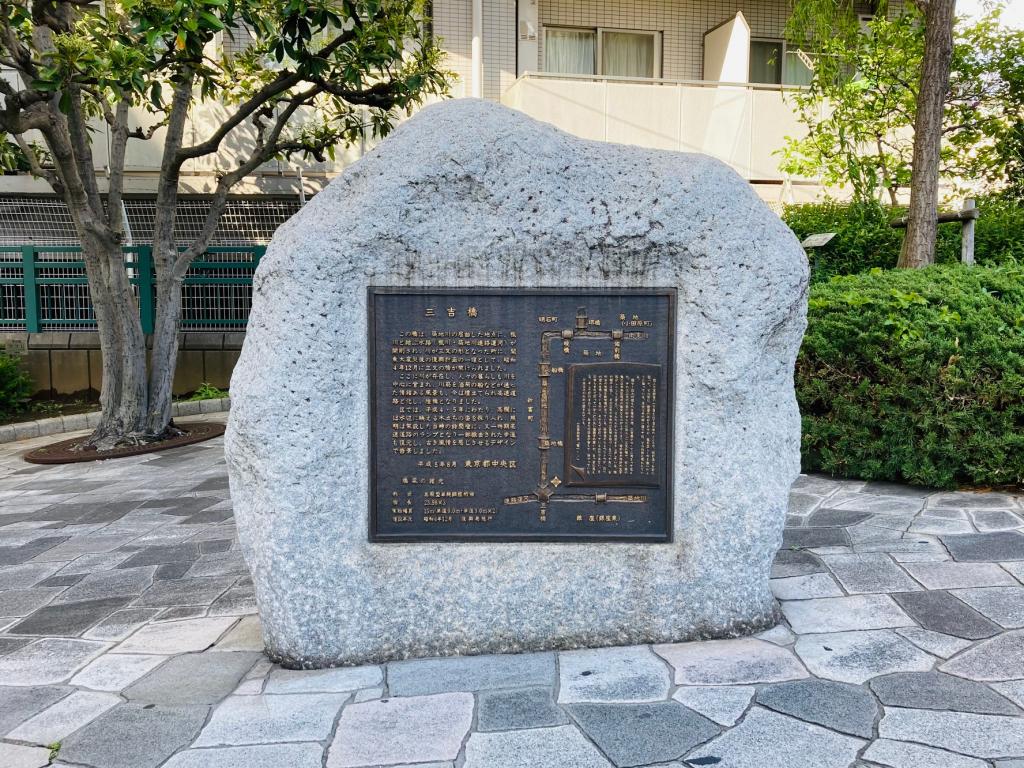
Stone monument standing in the northwest corner of Miyoshi-bashi Bridge
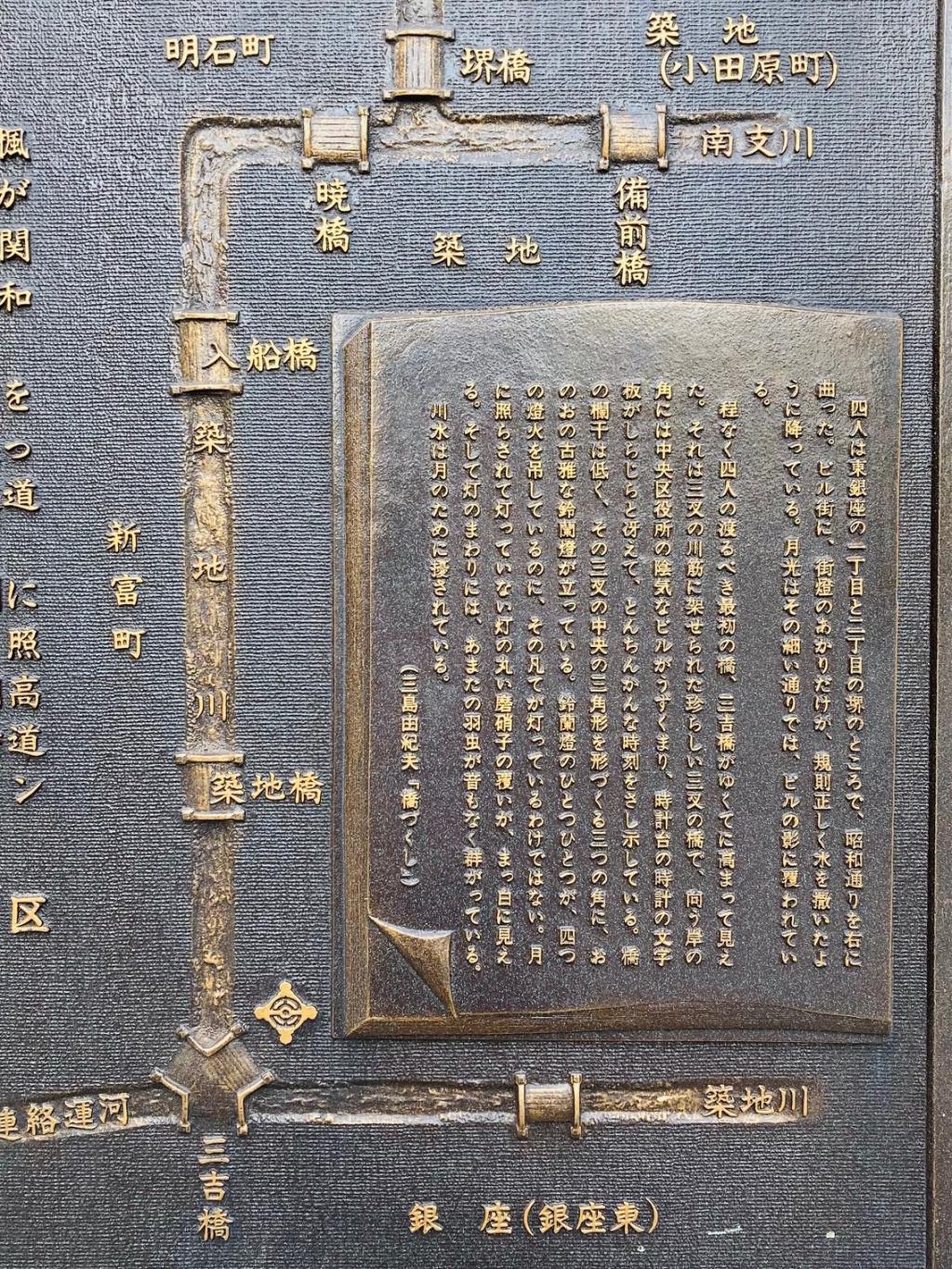
You can confirm the name of the bridge that appears in "bridge zukushi"
The main stream of the Tsukiji River, which flows from left to right at the bottom of the figure, is the current Metropolitan High Loop Line. The East Theater Building is located at the lower right corner of the book.
The novel "Hashizukushi" is a story in which four women wish to cross the seven bridges over the Tsukiji River on the night of a full moon on August 15th in the lunar calendar.
A small incident occurs while walking along the route only about 1 km, leaving one or two.
Yukio Mishima's storytelling is skillful, such as the development that does not know who will succeed in crossing the bridge until the end and the unexpectedness of my own, and it is a work that attracts me quickly.
"Koibun" Which PX does it appear?
Speaking of Yukio Mishima, I learned in a newspaper article that his long buried palm novel (so-called super-short novel) had recently been found.
His fictional novel was called "Koibun."
When a man called "branch manager" tried to take out a handkerchief at a banquet, he found an envelope that was inside without his knowledge. "I'll be waiting for you in front of 5 p.m. PX tomorrow. There was a piece of paper written as X-ko." Who sent this love sentence to Kemmotsu branch manager?
From memos about the existence of the meeting partner, the human pattern surrounding the branch manager will be developed brilliantly in the number of characters less than one manuscript paper. This is also a work where Yukio Mishima's storytelling technology shines even more.
By the way, when I read in the newspaper the message "I'll wait in front of PX" written in this mysterious love letter, I have a question in me.
PX is an abbreviation for Post Exchange and originally refers to a shop in the US military base.
After the war, a large number of commercial facilities were seized by the invasion of Japan, and it has a history of being used as PX for US soldiers. In Tokyo, Hattori Clock Store (now Wako) in Ginza 4-chome, Matsuya Main Store in Ginza 3-chome, Shirakiya in Nihonbashi, and Sogo Osaka Main Store in Osaka and Daimaru Department Store in Kobe were requisited as PX. In other words, PX existed in cities all over Japan.
The novel "Koibun" was written in 1949. It was a time when PX existed all over Japan, and if you knew it (what PX would this lady have designated as a meeting place?) The question comes very naturally.
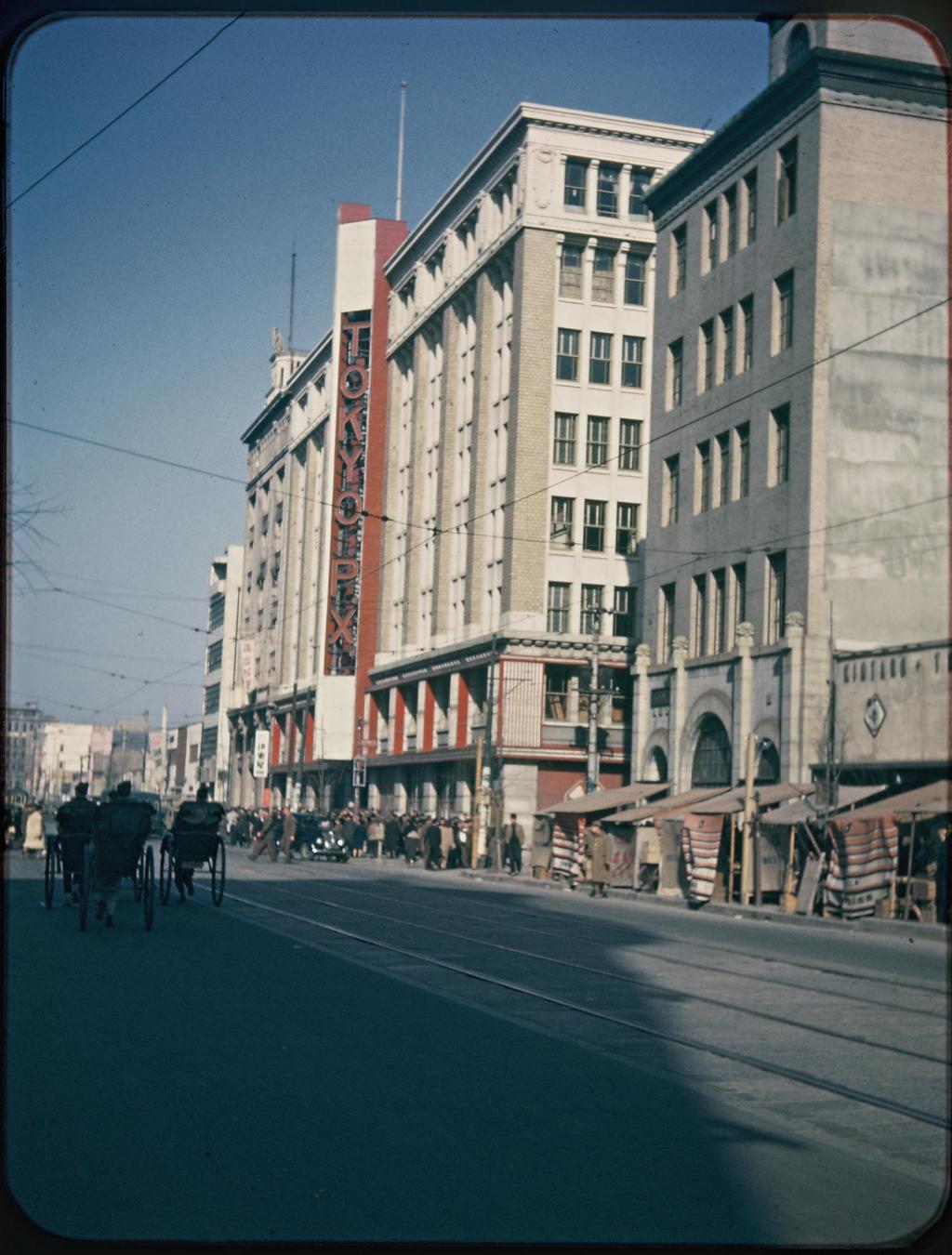
Matsuya Ginza Main Store around 1946
Source: From the National Diet Library Digital Collection "Photographs by Mr. Moger"
So, I really wanted to solve the mystery, so I bought a literary magazine "Shincho", which contains Yukio Mishima's "Koibun".
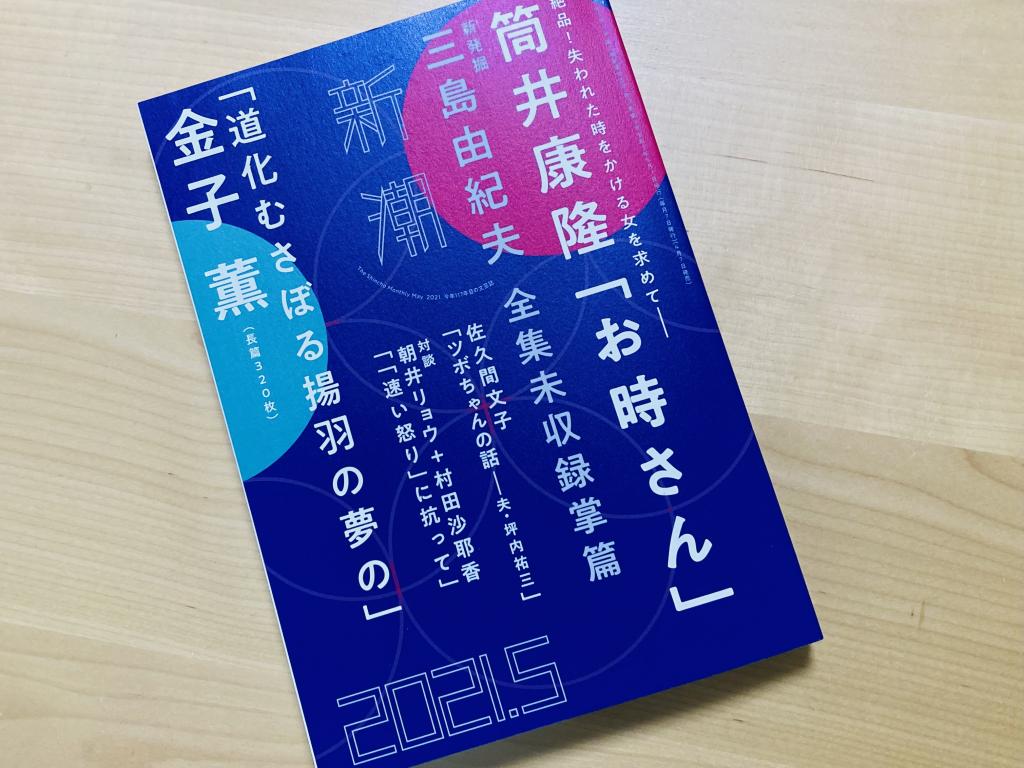
By the way, what about reading the novel "Koibun"?…
(Hmm, again, Yukio Mishima's citeyalareta!)
Why cyteyalareta! If you are wondering if you think, please read "Koibun" yourself and check it.
Access Information
■To-gaki
〒104-0045 Higashi Theater Building 4-1-1 Tsukiji, Chuo-ku, Tokyo
1 minute walk from Exit 6 of Higashi-Ginza Station on the Tokyo Metro Hibiya Line
https://www.smt-cinema.com/site/togeki/access.html
■Monument of Miyoshi-bashi Bridge
〒104-0061 1-28, Ginza, Chuo-ku, Tokyo
1 minute walk from Exit 2 of Shintomicho Station on the Tokyo Metro Yurakucho Line