 Official
Harumi Konjaku Monogatari (1) The History of Harumi Bridge and Harumi
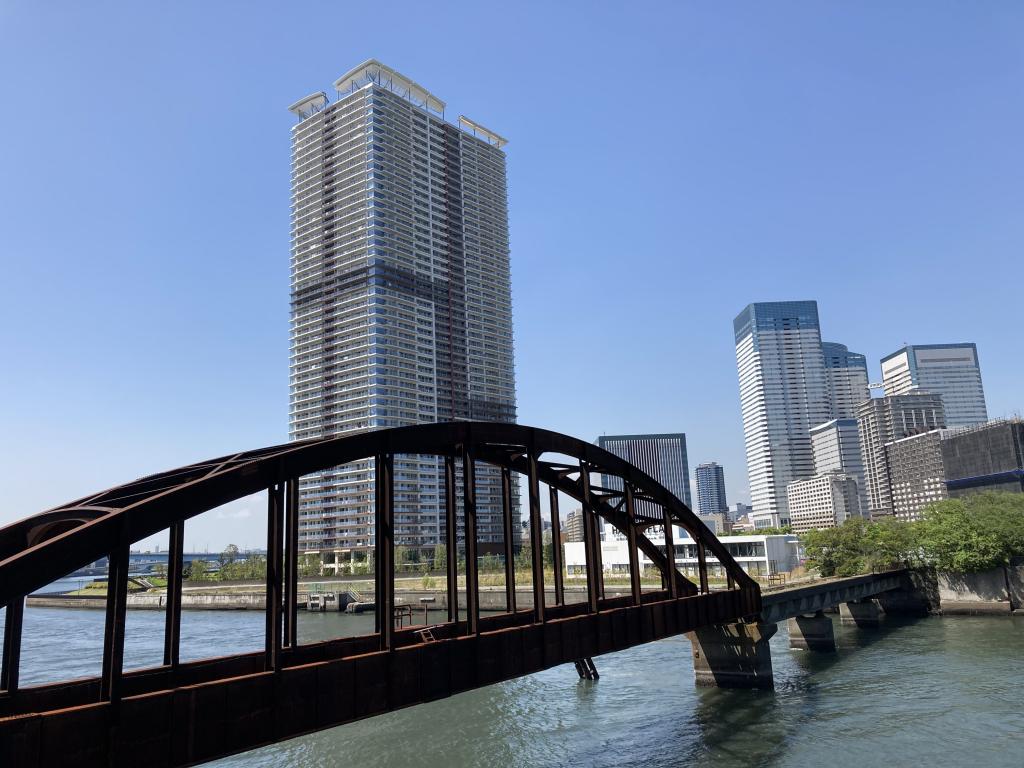
It seems that the Harumi Bridge will be constructed as promenade.
It is that red rusted bridge running parallel to Harumi Bridge connecting Harumi in Chuo-ku and Toyosu in Koto-ku.
It is said that preservation and renovation had been mentioned before, but in March this year, the Tokyo Port and Harbor Bureau officially announced it.
This time, I would like to briefly introduce the history of this bridge and the development of Harumi.
Harumi Bridge, built as a railway bridge dedicated to freight
The Harumi Bridge (formerly Harumi Railway Bridge) was completed on November 26, 1957 as a railway bridge dedicated to the Port and Harbor Bureau of the Tokyo freight line.
Prior to that, the line connecting the current Ecchujima Freight Station and Toyosu Coal Wharf was opened as the Fukagawa Line, but when the Fukagawa Line diverged along the way and extended to Harumi, it was established to cross the Harumi Canal. Harumi Bridge.
In response to the wave of motorization that began in earnest in the mid-1960s, the demand for logistics by combining marine transportation and freight car transportation declined sharply. In 1989, the Harumi Line was abolished, and at the same time, the Harumi Bridge was no longer used. In other words, the Harumi Bridge has been watching Harumi's development at that place for 30 years even after finishing its role.
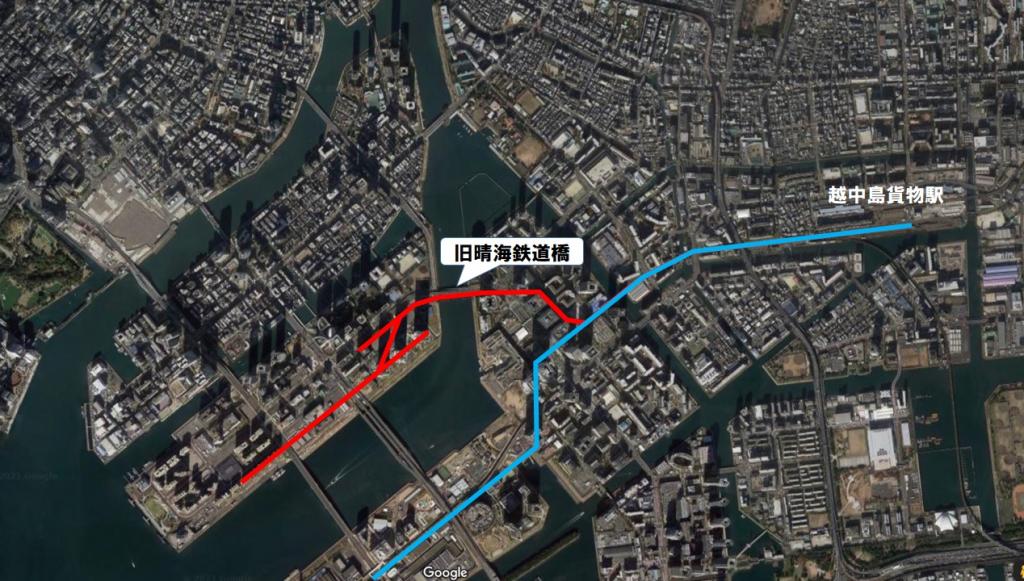
The "Fukagawa Line" is a line dedicated to Tokyo Port and Harbor Bureau, and the red color is "Harumi Line".
The Fukagawa Line, which extends from Ecchujima Freight Station, branched toward Toyosu Wharf and Harumi near Super Viva Home in Toyosu.
A part of the track that indicates the junction is still left on the sidewalk.

Photo on the left is the Super Viva Home in Toyosu, and LaLaport Toyosu in the back direction of travel
The Fukagawa Line went straight through the side of Super Viva Home, and the Harumi Line branched right forward.
Unfortunately, on the land on the Chuo-ku side, we couldn't find anything that seemed to be a freight line, but traces of that are certainly left. That's it.
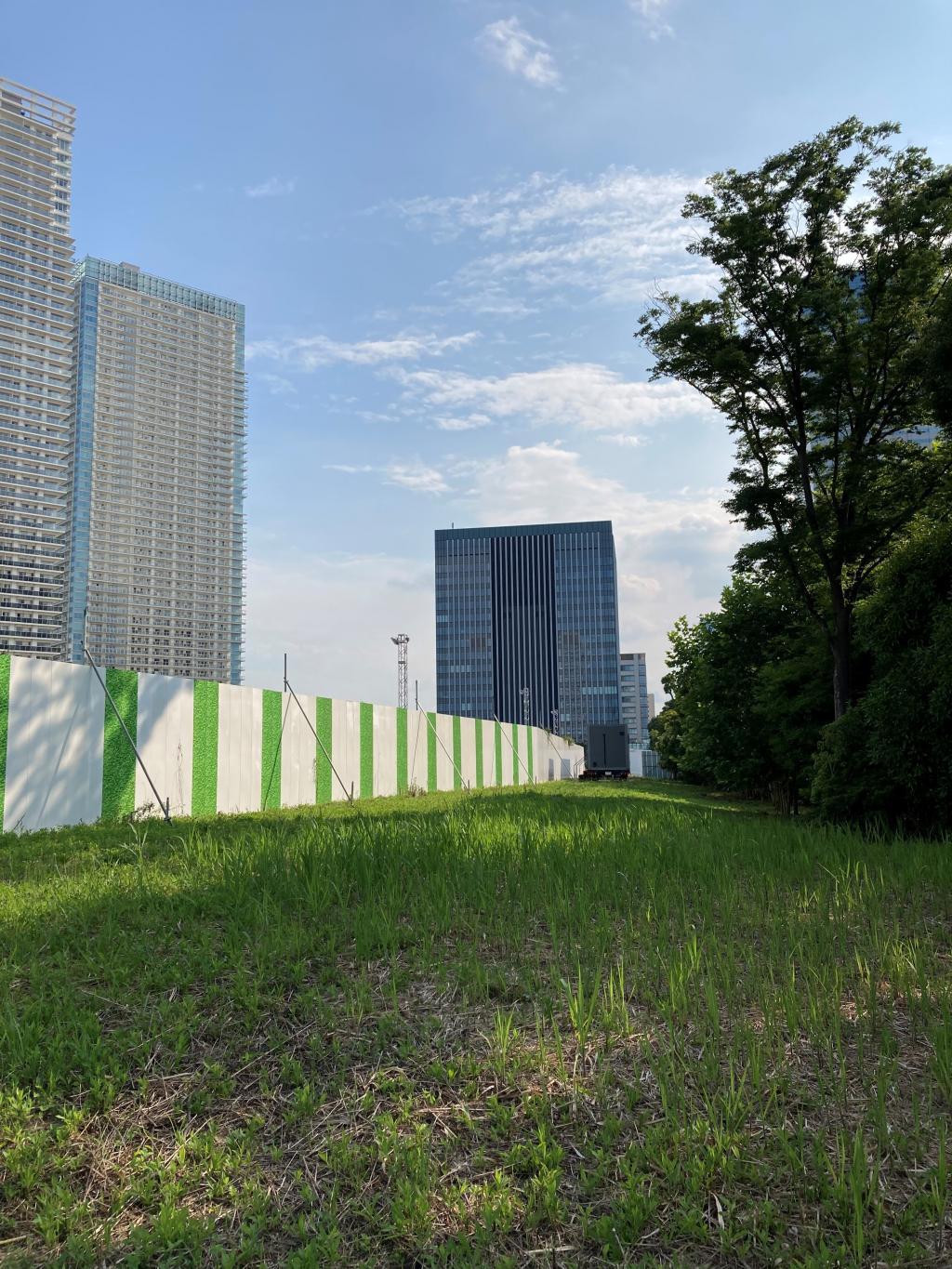
This is the land left between Harumi BRT Terminal and Harumi-dori St. Turn your back on the Harumi Bridge and shoot toward the south side.
To the left of the screen is a tower apartment along the Harumi Canal, Harumi BRT Terminal between the white partition and the tower apartment, and Harumi-dori St. (east side of Harumi Triton Square) on the right side.
Looking at the elongated grassland spreading in front of me, I wondered, "Oh, there used to be a freight track here."
Cargo carried by the Harumi Line mainly consisted of newspaper wrapping paper, imported wheat, soybeans, cement, and miscellaneous goods. The cargo landed in Harumi was transported to Ecchujima Station by a dedicated freight line, and from there, they traveled by railway to demand areas nationwide.
Harumi's History: Developing as an area where people, goods and information can go through
Let's take a brief look back on Harumi's history here.
Harumi is an island created by reclamation, as can be seen from its shape, and its construction began in the late Meiji era. The construction was completed a long time later in 1931. At the time of completion, this new landfill was called Tsukishima No. 4. He was named 'Harumi' in 1937.
In 1938, a building was completed in the vast space of Harumi. This is the secretariat building of the World Exposition scheduled for two years later. Yes, Harumi was supposed to be the venue for the Expo. Unfortunately, the Expo at this time was canceled due to the intensification of the war, and the secretariat building will be used as an army hospital.
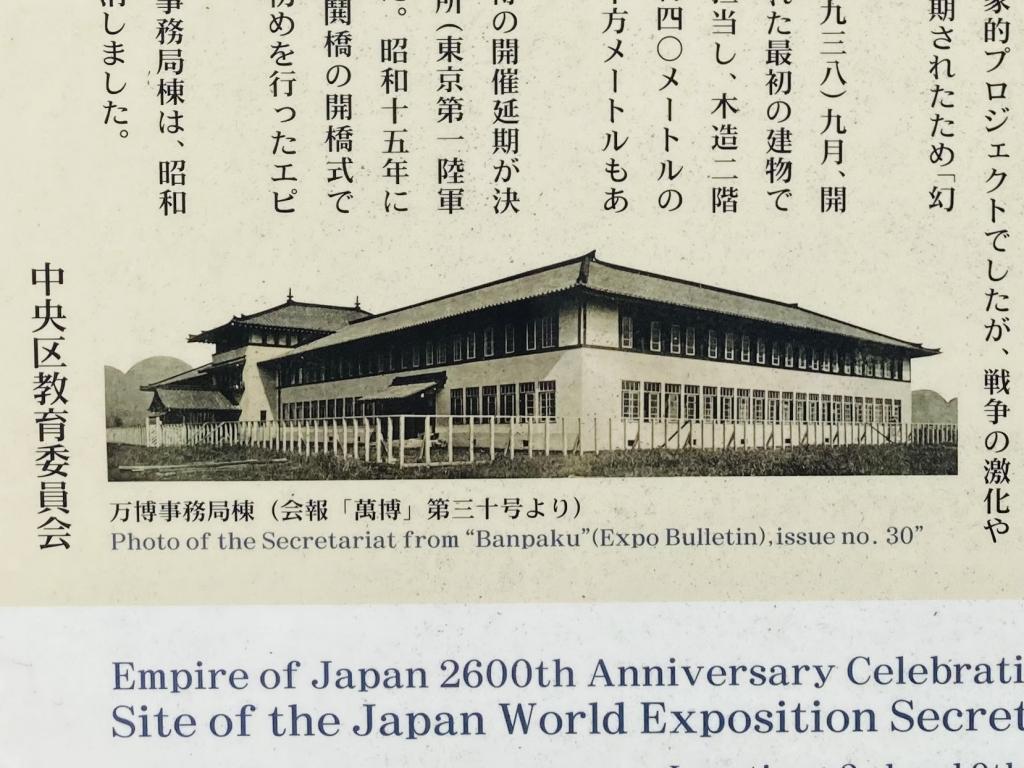
Exposition office building that was so splendid
(From the commentary version standing near the site)
Harumi was used as a transportation base for military supplies during World War II. For this reason, for a while after the war, this land will be requisitioned by the invasion force.
During the requisition period, the pier maintenance in the Harumi area progressed, and in 1955, the Harumi Wharf opened. Together with Hinode Wharf, Shibaura Wharf, Takeshiba Wharf, Toyosu Wharf, etc., we will play a part in the logistics base of Tokyo Port, contributing to Japan's high economic growth.
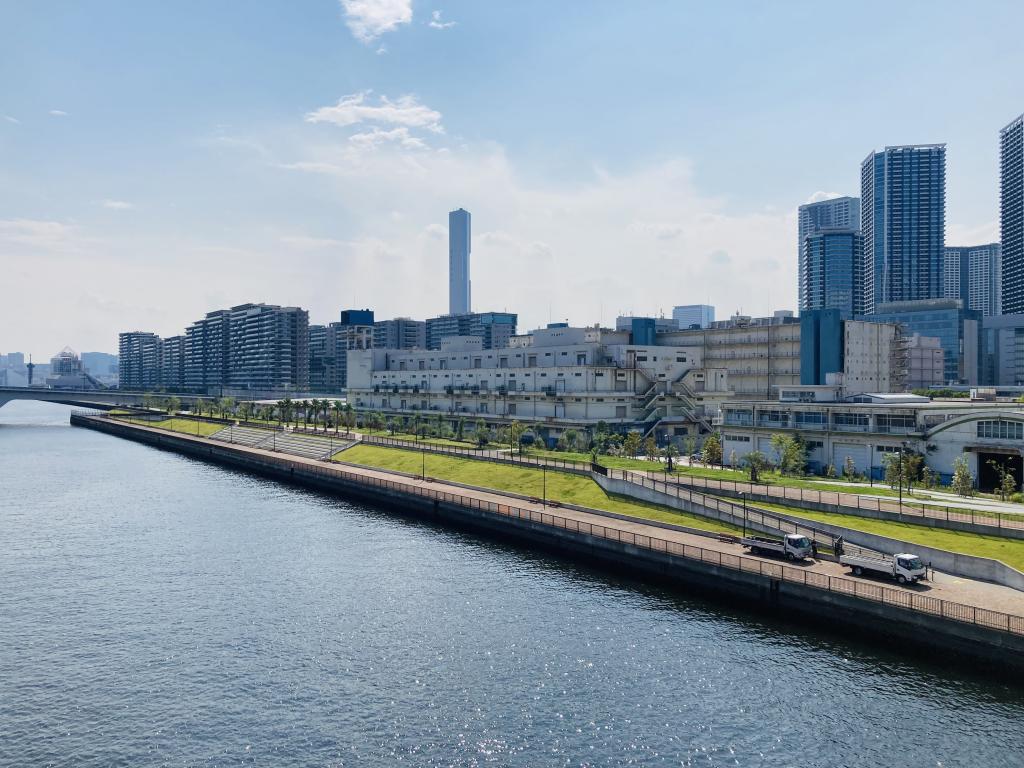
Warehouses at Harumi 4-chome, a logistics base that retains the impression of Harumi Wharf
In 1957, a huge public housing, including 240 units for sale and 430 units for rent, was completed in Harumi. 10 stories high-rise Harumi apartment (at that time, high-rise even on the 10th floor!) Designed by Kunio Maekawa, who studied under the master of Modernism architecture, Le-Corbusier. New technologies and housing models have been introduced to change the way apartment houses should be, such as the first elevator for public housing and the adoption of a skip floor system, which attracted public attention. This is a time when new attractions have been added to the city of Harumi due to the increasing number of people who work in ports and warehouses.
In 1959, the Tokyo International Trade Center was completed at present Harumi 5-chome. As a result, international exhibitions such as the Tokyo Motor Show will be held in Harumi.
In 2001, Harumi Island Triton Square, the most Aiko Nic building in current Harumi, was completed. In the previous year, the nearest station, Kachidoki Station on the Toei Oedo Line, opened, improving access to the city center at a stretch.
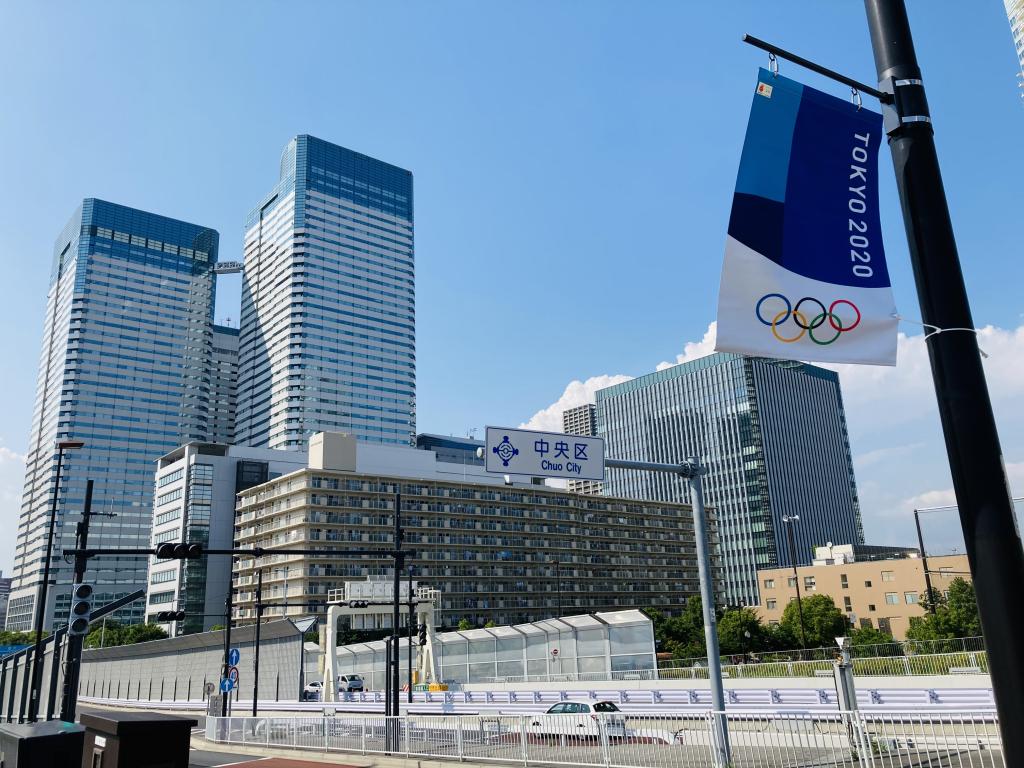
Harumi Triton Square Viewed from Harumi Ohashi
The Olympic Village for the Tokyo 2020 Olympic and Paralympic Games is planned to become a city where a population of 12,000 will live after the Games, and Harumi will become an increasingly bustling area in the future.
This time, Ipromenade gave an overview of Harumi's history at the entrance of the Harumi Bridge.
During the survey, I encountered a valuable map depicting Harumi before Harumi Triton Square was formed. Next time, I would like to introduce Harumi in the "Before Triton Era" centering on the map.
Access Information
■Harumi Bridge (formerly Harumi Railway Bridge)
〒104-0053 Beyond 2-58 Harumi, Chuo-ku, Tokyo
11-minute walk from Exit 1 of Tsukishima Station on the Tokyo Metro Yurakucho Line
■Remains of the Secretariat Building of the 2,600th Anniversary of Japan World Exposition
〒104-0053 3-9, Harumi, Chuo-ku, Tokyo
1 minute walk from Exit A3b of Kachidoki Station on the Toei Oedo Line