 Official
Behind the Kidai Shoran
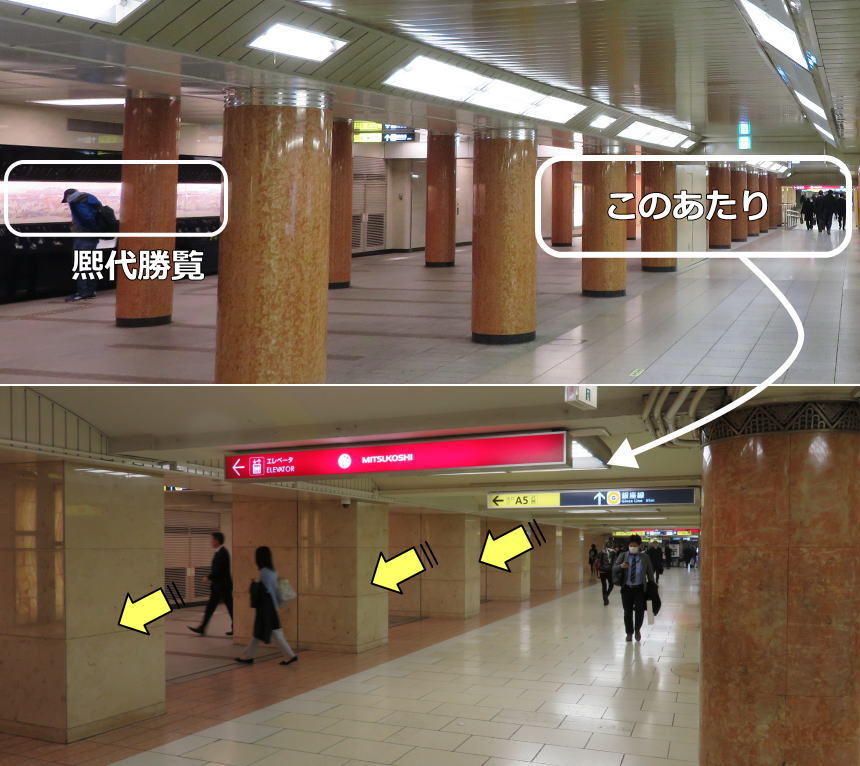
On the underground passage in front of Mitsukoshi, there is a Kidai Shoran, which is often featured on correspondent blogs. However, there is something interesting in the back (Kanda side) ...
Actually, I was ashamed to know the Kidai Shoran because of the sightseeing test, but I knew the thing behind it for a long time (^^)
What is it?
The back of the passage is the Mesozoic world
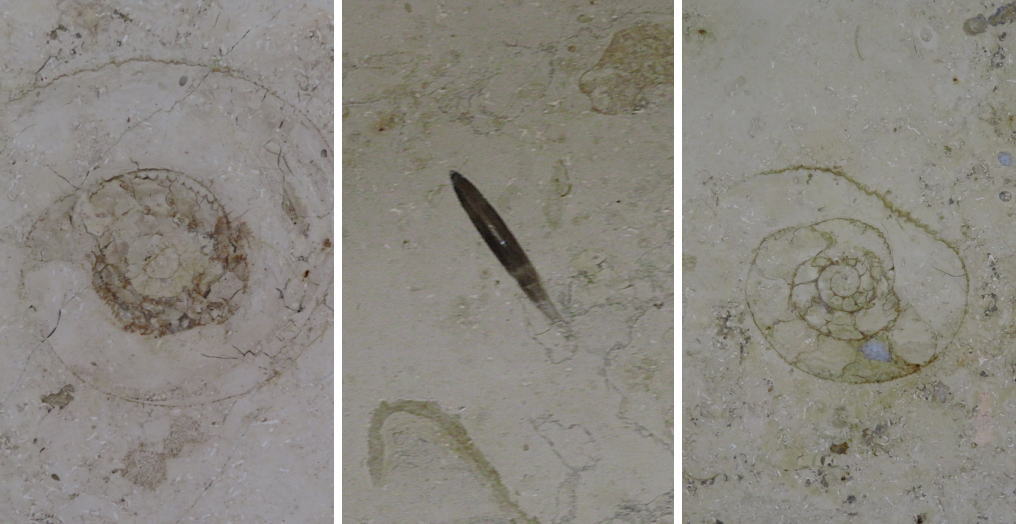
There are a large number of ammonites and belemonites on the outer walls of dozens of underground passage pillars!
The world of 200 million years ago suddenly spreads in the back of the Kidai Shoran of the Edo period.
Ammonites in the main building of Mitsukoshi and Takashimaya Nihonbashi stores have been famous for a long time, but the number of ammonites in the passages built along with the construction of the subway station is overwhelming.
This outer wall material seems to be a marble from Germany called "Jurai Ero (Yura Yellow)". Julie ero, yellow of Jurassic. That's right (laughs).
According to the site below, it seems to be used in quite a variety of places, such as Akasaka Sacas and Horyuji Temple in Hiroshi Azuma.
Click here for more information about Jurai Ero.
https://ishirabe.com/jura-yellow/
Click here for the construction company in front of Mitsukoshi
http://sekistone.com/general/knowledge/1/
Ammonites are also available at Ningyocho Library (Nihonbashi Elementary School).
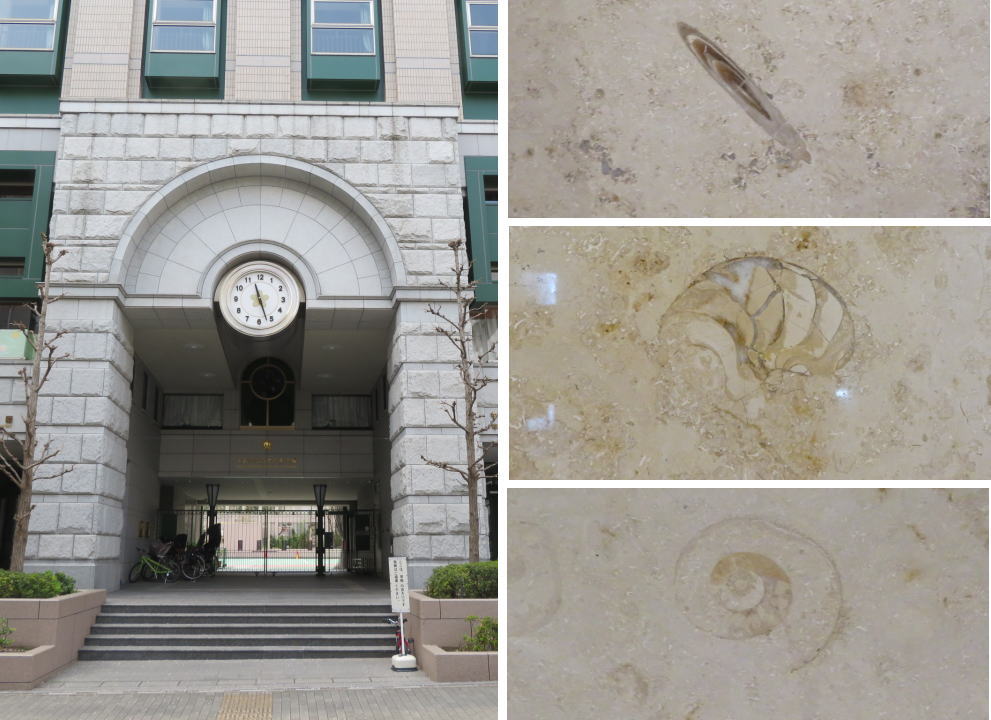
In Chuo-ku, I found that this marble was also used in the lobby of Ningyocho Library.
As you know, this building is also used as an elementary school building, so it may be popular with children.