 Official
U.S. Embassy in Chuo Ward
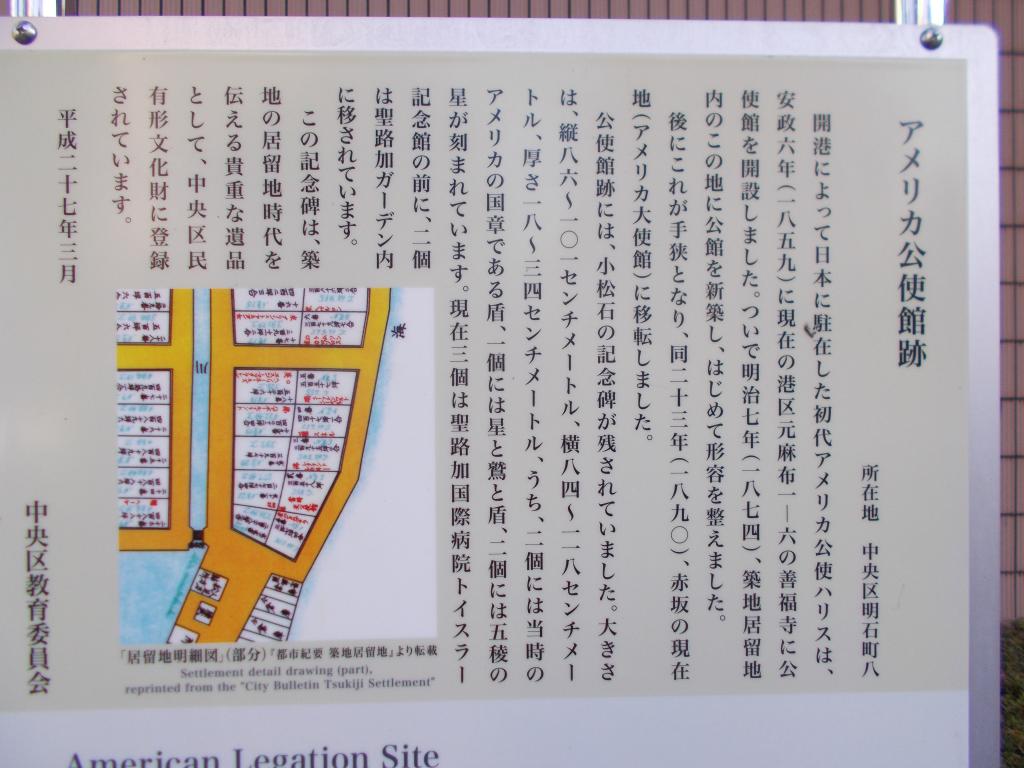
Currently, the American Embassy is located in Akasaka, Minato-ku. Prior to that, however, there was the United States Missionary for 16 years from 1874 to 1890 at the location of St. Luke's Garden in Akashi-cho, Chuo-ku, as indicated on the information board above. The history of the American Embassy in Japan begins with Perry's arrival in 1853 (1853). In 1856 (1856), the first American Consul-General Townsend Harris opened a temporary consulate at Gyokusenji Temple in Shimoda. In 1859 (1859), Harris, who was appointed as a lawyer, moved his mission and residence to Zenpukuji Temple in Azabu, lent by the Shogunate. In 1863 (1863), a fire broke out from kitchen hall in Azabu Zenpukuji Temple, where the mission was located, and the building disappeared, so the mission was relocated to a foreign settlement in Yokohama Seki. In 1874 (1874), Minister John Bingam moved his residence and residence to a foreign settlement in Tsukiji (currently Akashicho, Chuo-ku).
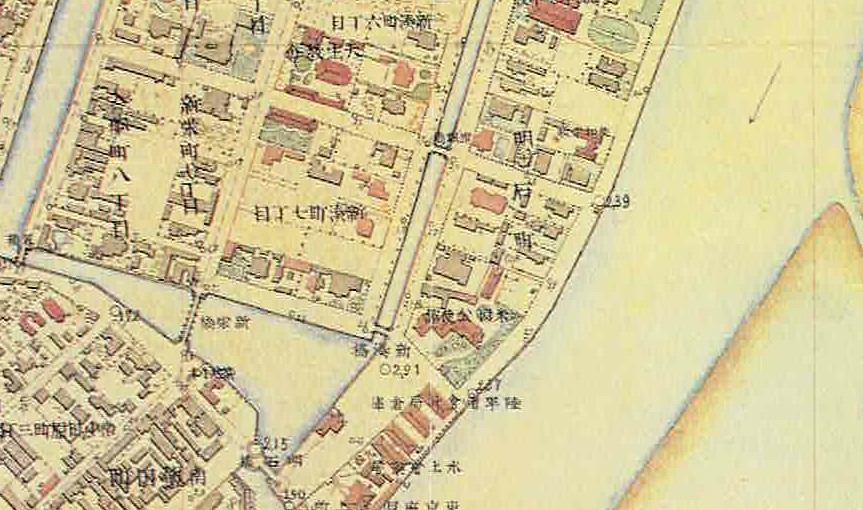
The figure above is a map of the Survey Bureau of the Department of War, Staff Headquarters in 1884 (1884). Almost in the center is the indication of the U.S.
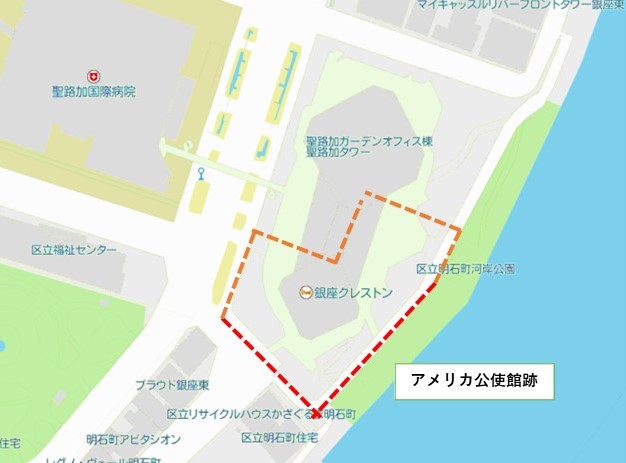
The figure above shows the range of the American Embassy on a modern map.
It is said that the residence of Tsukiji Foreign Residents was a two-story wooden Western-style building with cream-colored paint. In 1890 (1890), the Japanese government and Minister John Swift signed a contract to rent the land and building at 1-10-5 Akasaka, Minato-ku, Akasaka-ku, Tokyo (currently 1-chome, Akasaka-ku, Minato-ku) and the building for the Mission of the United States. Has moved to the current location of Akasaka. The building after the relocation of the American Embassy to Akasaka was expanded a few years later to become the Hotel Metro Paul.
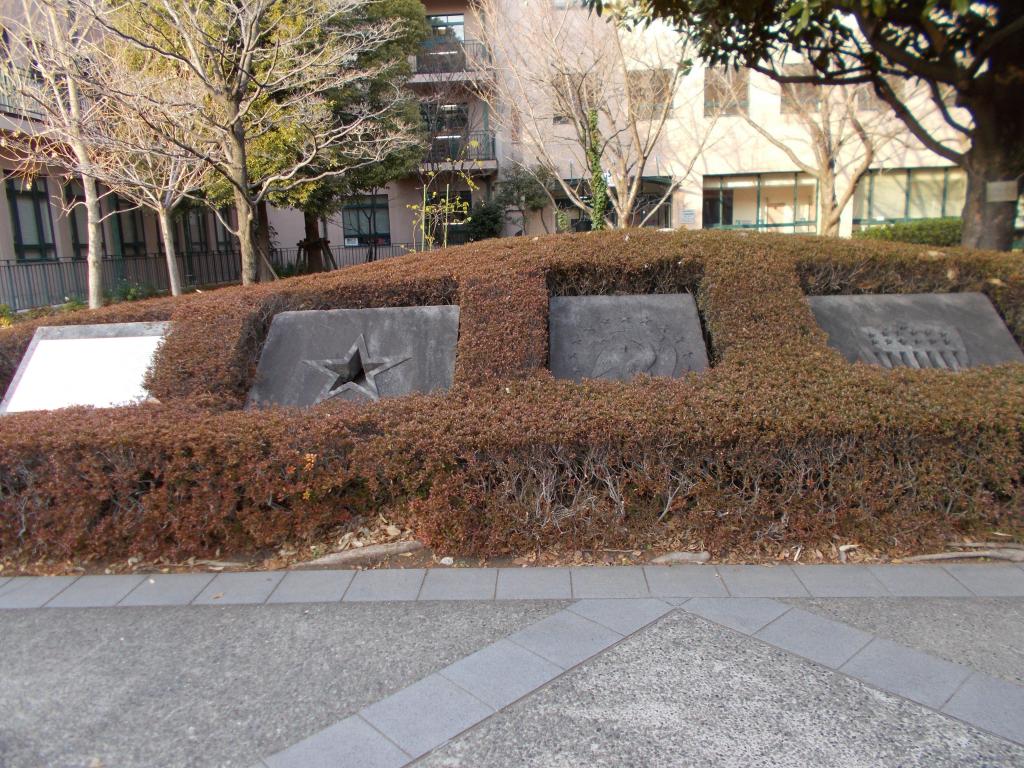
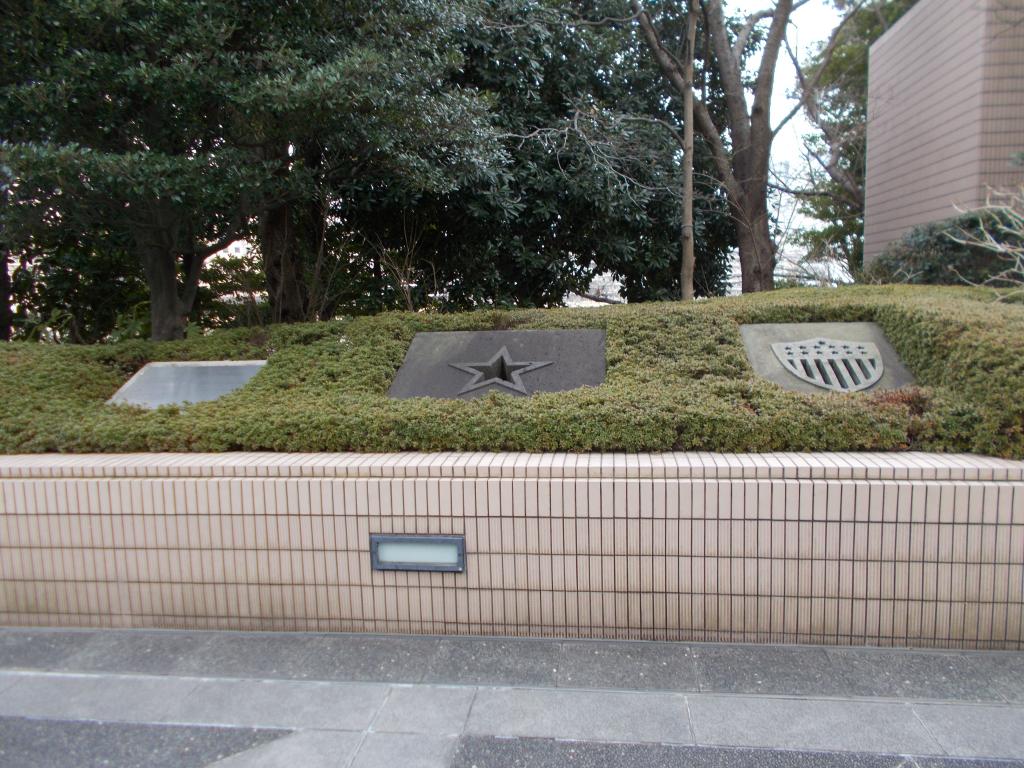
The photo above is a monument to the ruins of the American Embassy. The upper photo shows the three units in front of the Toysler Memorial Hall of St. Luke's International Hospital, and the lower one is two units in St. Luke's Garden. Komatsu stone cut off on the coast of Izu Peninsula is engraved with American national birds such as white head eagle, shield-shaped star-shaped flag, and Goryo stars. According to former diplomat Haruro Kawasaki, at the ceremony commemorating the 100th anniversary of American independence in 1876 (1876), Minister Bingham carved the symbols of the independence of the United States, "stars", "Shields" and "white head eagle" in Japanese masonry. There were eight memorial stones at St. Luke's International Hospital, which was built on the site, three of which were donated to the American Embassy in 1984 (1984) during the days of Ambassador Mansfield.
On a small hill of St. Luke Garden, there is a monument that retains the remnants of the settlement era, and just a signboard showing the history under the hill, the state of the exotic city of Meiji has been completely lost. However, it may be a good idea to think about the past while watching the flow of the Sumida River. In writing this sentence, "Chuo-ku History Map Book (Kyobashi Edition)" "Tsukiji Reservoir Hundred Story (written by Masao Shimizu)" "Tsukiji Reservoir (Tsukiji Reservoir Study Group)" "Troll in Chuo Ward (Part 2)" "Internet" etc.
Address: 8, Akashicho, Chuo-ku
Access 3b entrance of Tsukiji Station on the Hibiya Line 3b walk 7 minutes
8-minute walk from the 4th exit of Shintomi Station on the Yurakucho Line
From Tokyo Bus Tokyo Station Yaesu Exit, get off at St. Luke Hospital for 15 minutes (for Fukagawa Garage)