 Official
Chuo-ku was the best "junction Ginza" in Japan!
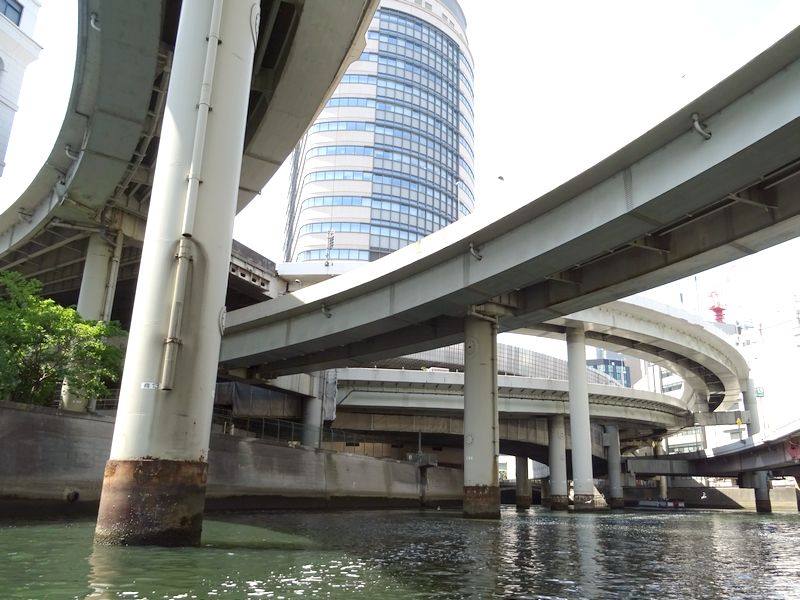
If you walk around the city of Chuo-ku, especially the Nihonbashi and Kyobashi areas on the right bank of the Sumida River, you can see many expressways.
The city of Chuo-ku, which was supported by water transportation, used to be covered with waterways, but during the post-war period of high economic growth, expressways were developed using the waterway space.…It can be said that this is one of the reasons for this.
The city surrounded by water has transformed into a city surrounded by highways.
The highway laid on a channel like a net was inevitably made a lot of branches. It's a so-called "junction."
…When you think so, isn't Chuo-ku one of Japan's leading junction dense areas? I'm interested in it. I thought, but lucky day, I would like to introduce the results of my own research!
What are the results of the survey?…
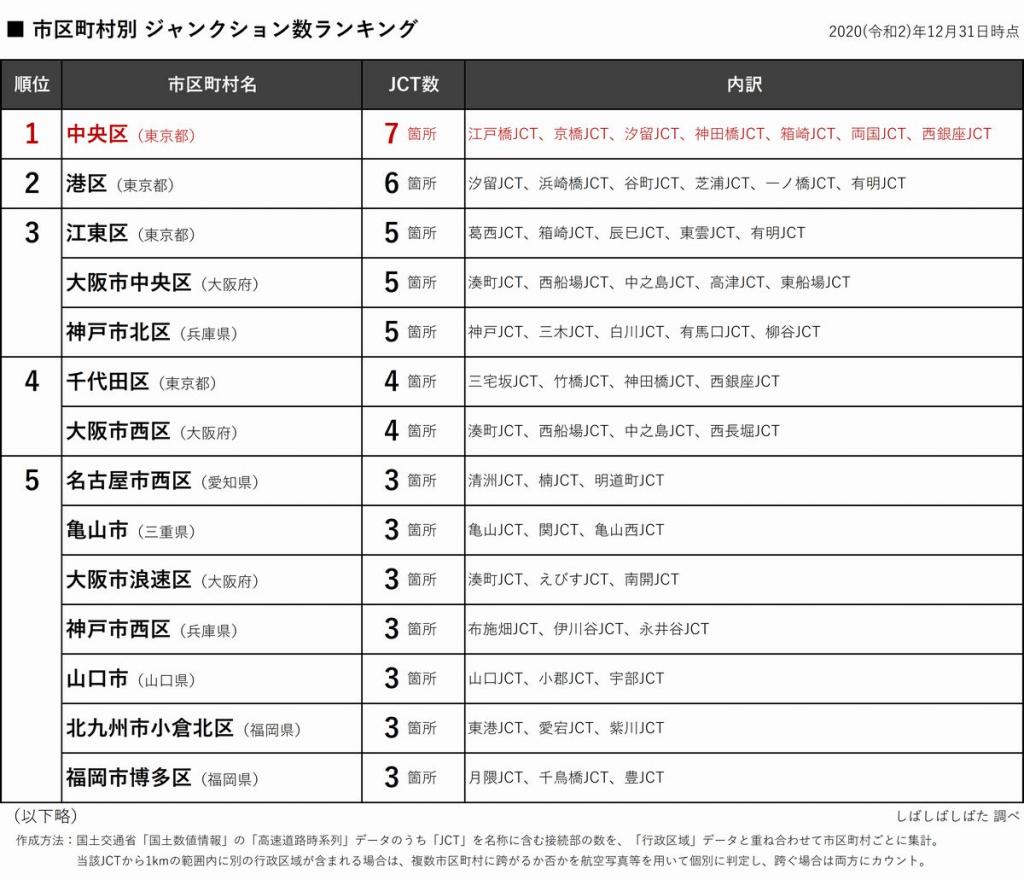
The survey was conducted using open data from the Ministry of Land, Infrastructure, Transport and Tourism to calculate the number of junctions for each municipality. (For junctions located near the municipal boundaries, we judge individually whether the parts that make up the junction cross the boundaries, and if they straddle, they are counted as both.)
The results are summarized in this table.
It has become clear that Chuo-ku is the city with the largest number of junctions in Japan!
It is exactly the best "Junction Ginza" in Japan.
There are seven junctions located in Chuo-ku, four of which are installed across the border of the adjacent ward, and the feature that they were built using the space of the waterway is also shown here.
Let's enjoy a lot of junctions in Chuo-ku
By the way, the highway in the ward closed the waterway and divided the city.…Therefore, it is often treated as a bad guy in town development, and in some sections, plans for underground and parking are being promoted.
On the other hand, there are opinions that evaluate complex structural beauty such as junctions, and photo books have been published, and I have heard that it is popular among overseas people.
The debate on underground and parking is going forward, so I would like to dare to spread this perspective of "let's enjoy watching junctions" more.
So, today I would like to introduce two junctions representing the city!
Introduction of Junction in the city (1) Edobashi Junction
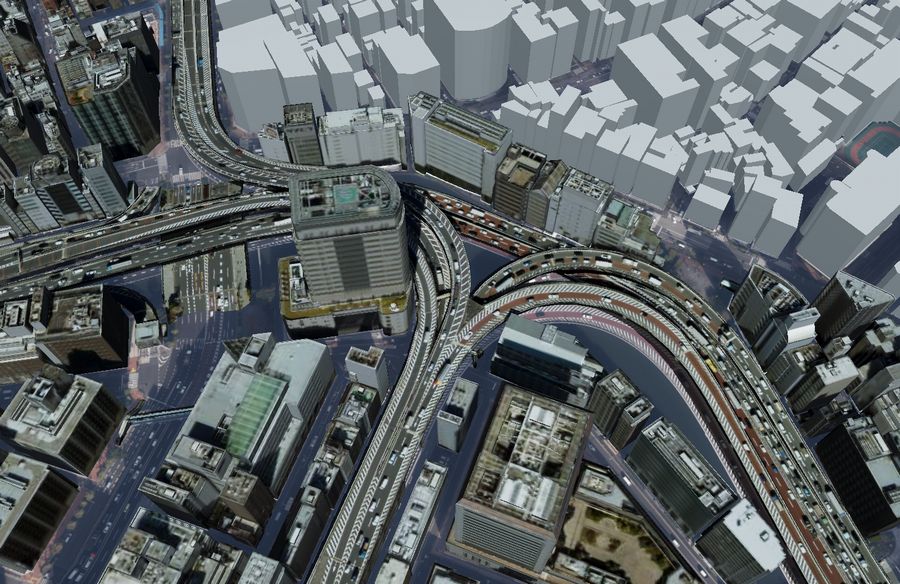
The first is the Edobashi Junction. (Image source: Output from PLATEAU VIEW, Ministry of Land, Infrastructure, Transport and Tourism)
At the T-shaped branch using the intersection of the Nihonbashi River and the former Kaede River, the Metropolitan Expressway Toshin Beltway and the No. 6 Mukojima Line are connected, and the Metropolitan Expressway No. 1 Ueno Line running on Showa-dori is connected from the north side.
The Nihonbashi River bends around here, thanks to this, the Edobashi JCT seen from the sky has a beautiful curve like a fountain.
The Edobashi JCT, which has this curve beauty and multi-layered complexity and runs between buildings, is probably particularly popular among many junctions nationwide.
If you want to feel the shape of the Edobashi JCT, we recommend looking at it from the top of the Nihonbashi River, as shown in the picture I used at the beginning of this article.
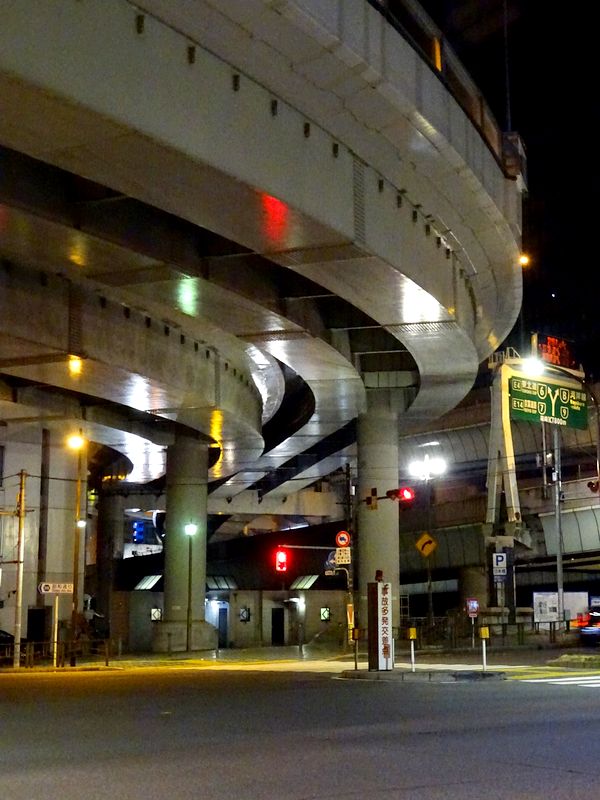
However, there is no chance to get on a boat…I think there are some people. The view point recommended for such people is the view from the Edobashi North Intersection. The Edobashi North Intersection is located just below the Tokyo Metropolitan Expressway No. 1 Ueno Line, drawing an S-shaped curve and branching, and you can feel both the curvie and multilayered nature of the Edobashi JCT. At night, the lights of cars running down the lower layer are reflected behind the elevated, so you will not get tired of watching.
Introduction of Junction in the ward (2) Hakozaki Junction
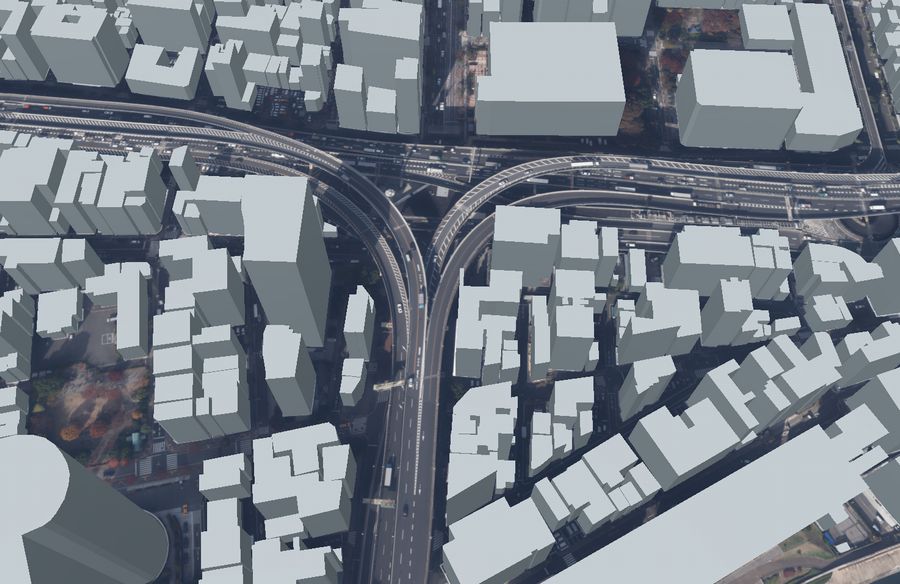
Another thing I would like to introduce today is "Hakozaki Junction". (Image source: Output from PLATEAU VIEW, Ministry of Land, Infrastructure, Transport and Tourism)
This is a T-shaped branch that uses the place where the former Hakozaki River and the former Hakozaki River tributary diverge, and connects No. 6 Mukojima Line and No. 9 Fukagawa Line. In addition, the Hakozaki Entrance, Hamacho Entrance, and Kiyosubashi Exit are connected, and the T-CAT, an airport limousine bus terminal, and a small parking area are also added to the complex structure. Because it is too complicated, a rotary is also installed in the middle part of the junction.
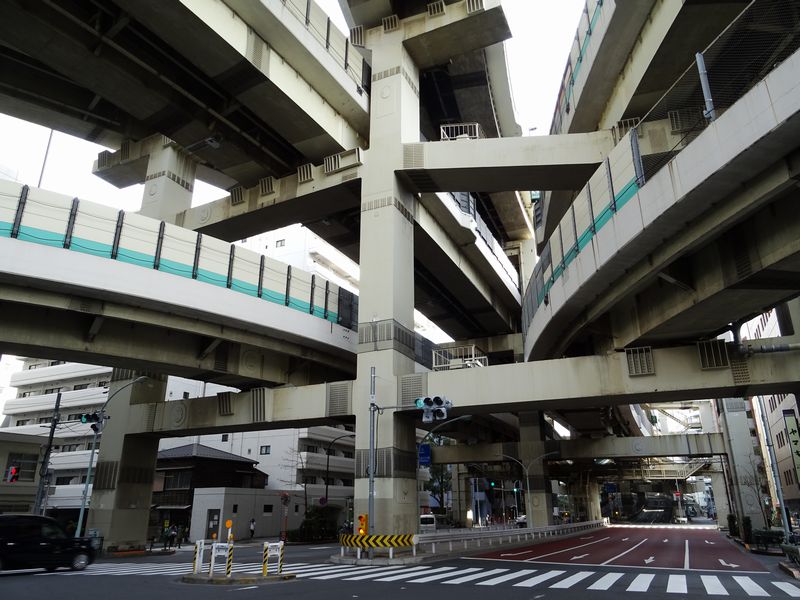
It is such a complicated Hakozaki Junction, but you can walk directly below because the ground part that reclaims the Hakozaki River tributary is a general road.
It is a good view point to look at the branches that are divided into several from the bottom.
Go
In general, you suddenly introduced the two big heads that are well-known, but could you tell us a little about the appeal of junction appreciation?
In the future, I would like to introduce the remaining five junctions in the city!
Readers, please take a closer look at the junction in Chuo-ku.