 Official
Gates and Monzeki @ Chuo-ku
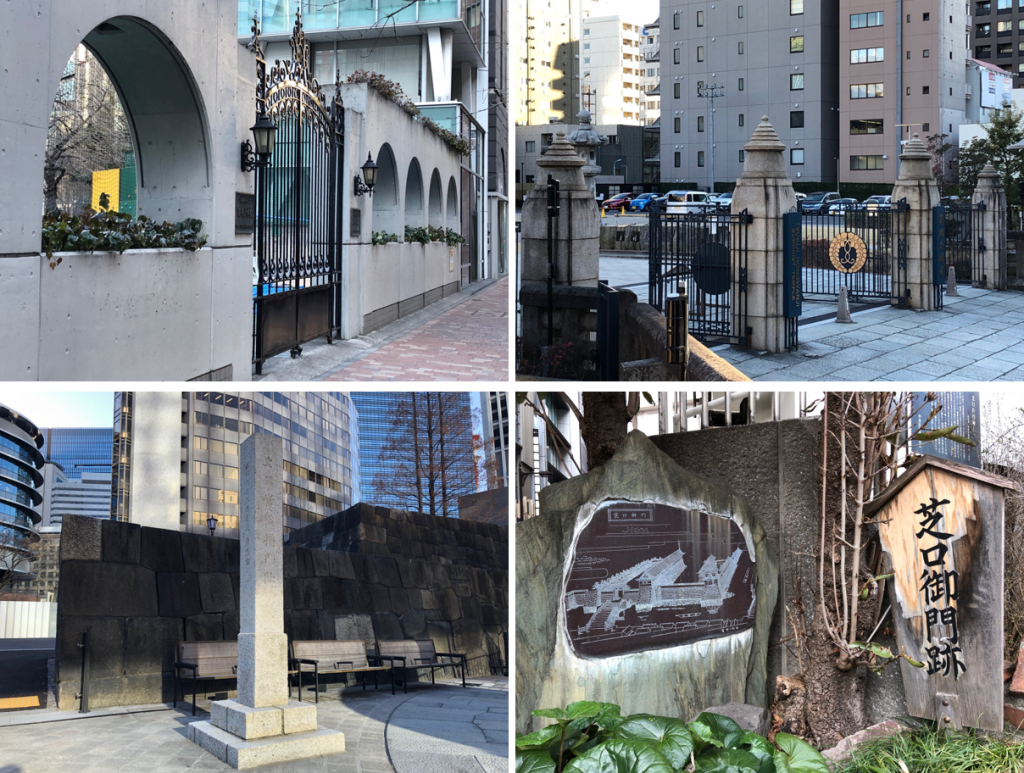
Spring is a new beginning season. So, in this blog, we will introduce two gates and two gates in Chuo-ku.
The French Gate of Yasuaki Elementary School
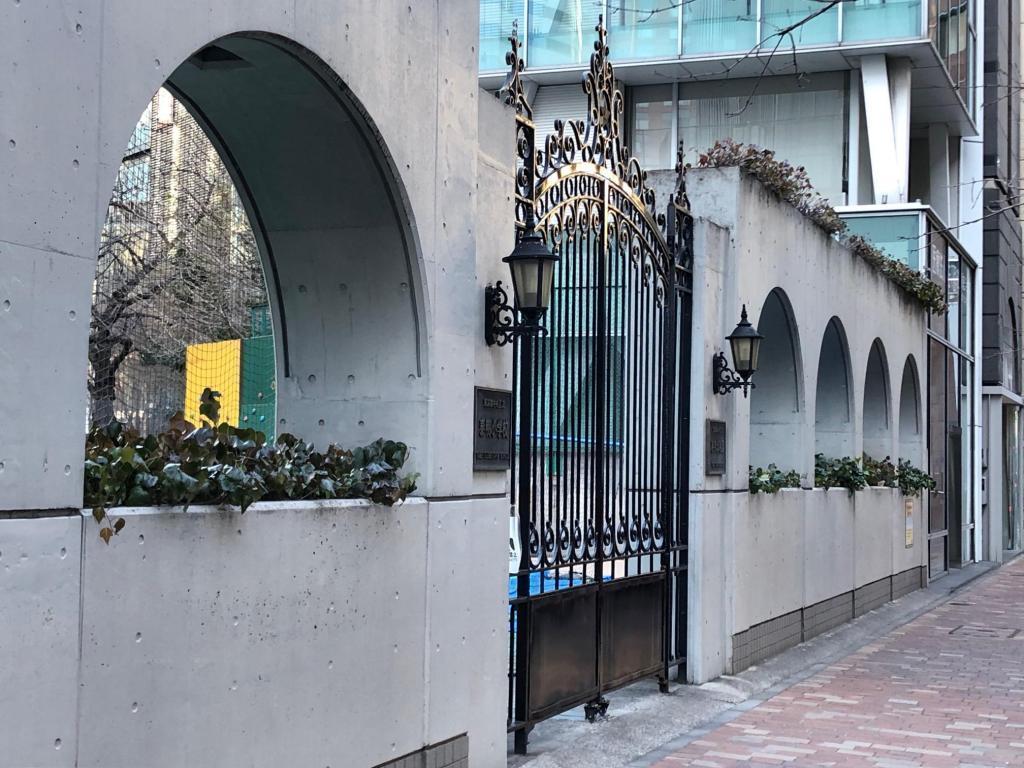
The main gate of Yasuaki Elementary School, which faces Ginza Miyuki Street, is called the French Gate. It is said that the gate was imported and installed in the aristocratic mansion in southern France, and it is a very elegant design set up on a fence with an arch-shaped opening.
By the way, the school building of Yasuaki Elementary School was constructed in 1929 as one of the reconstruction elementary schools after the Great Kanto Earthquake, and was selected as the Historic buildings selected by Tokyo in 1999.
Location 5, Ginza, Chuo-ku
Main gate, north gate and south gate of Tsukiji Honganji Temple
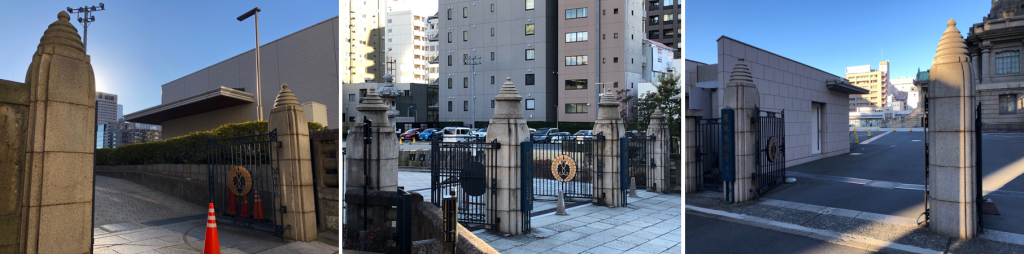
Tsukiji Honganji's main hall, gatepost (from left in the photo above, north gate, main gate, south gate) and stone walls surrounding the site were designated as National Important Cultural Properties in 2014. Completed in 1934. Designed by Chuta Ito, one of the designers of Meiji-jingu Shrine. Main hall is an ancient Indian Buddhist style reinforced concrete structure. The design of the gatepost and stone wall is common to main hall, creating a unique landscape with a sense of unity.
Location 3, Tsukiji, Chuo-ku
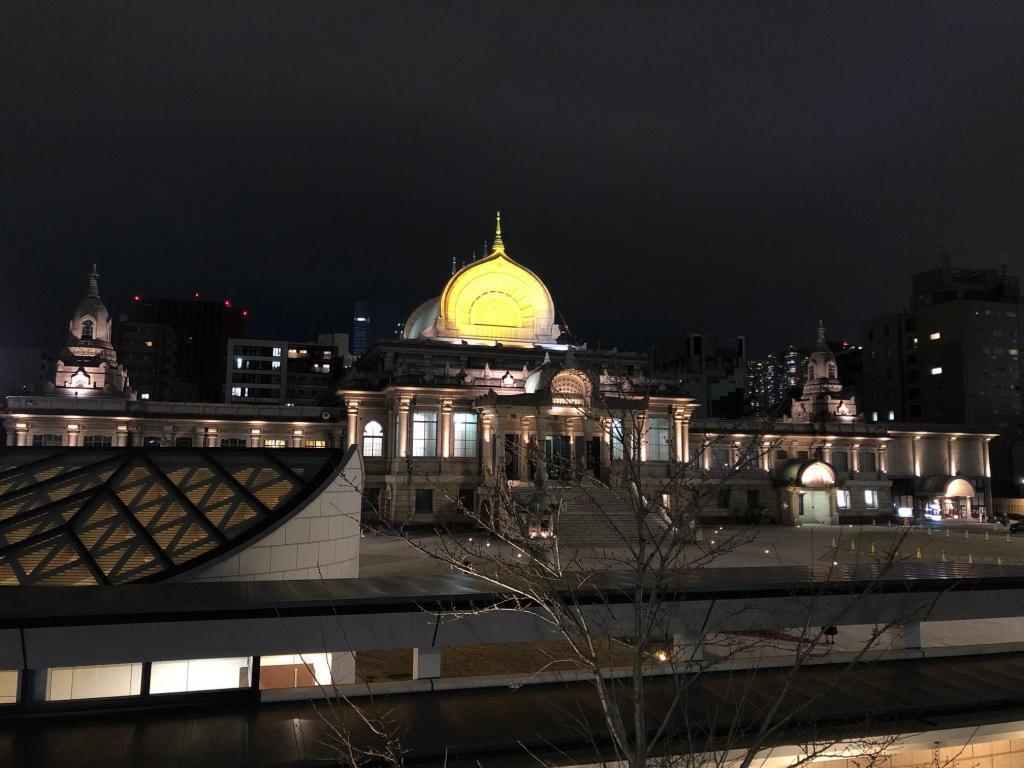
※In particular, Tsukiji Honganji at night has an atmosphere away from Japan.
The site of Joban Hashikado
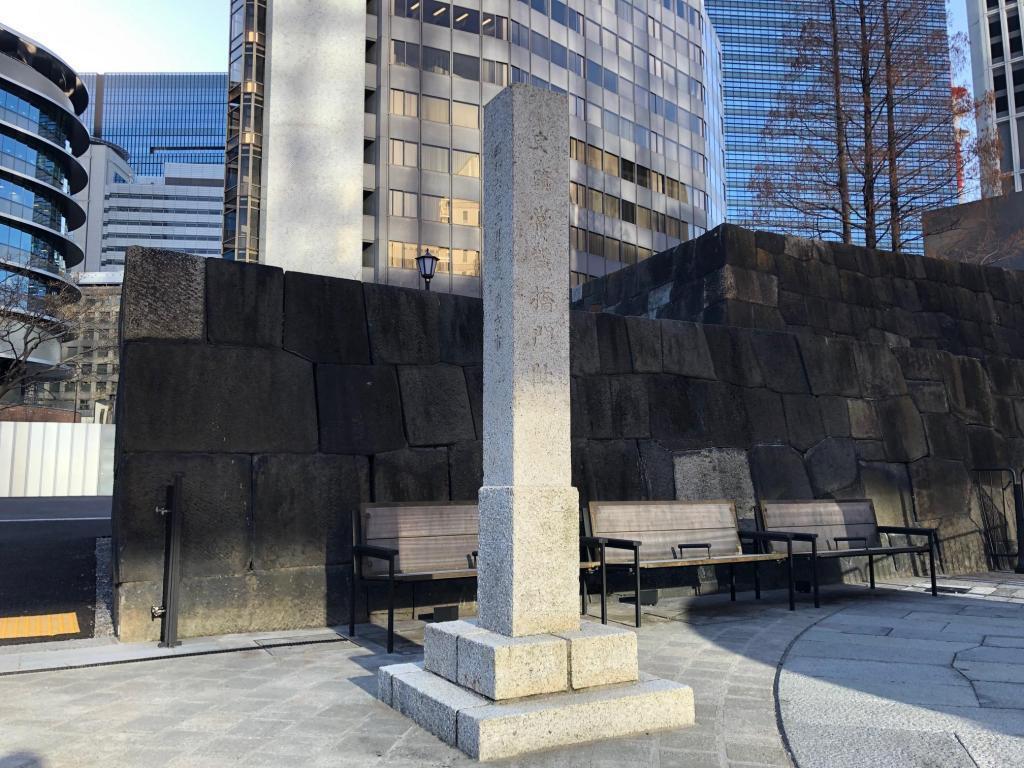
Tokiwa Hashikado is one of the outer gates of Edo Castle and was built in 1629 (Kanei 6). It leads to the Otemon gate of the main gate of Edo Castle, so it leads to Oshu Dochu and Nikko Dochu via Asakusa, so it is also called Asakusa Exit, and it is also called Tayasumon (Joshu Exit), Kanda Hashikado (Shibasaki Exit), Hanzomon (Koshu Exit) and Soto Sakurada-mon Gate (Oda Haraguchi) were counted as Edo Goguchi.
It seems that it was a Masugatamon, which consisted of Ichinomon (Koraimon) and Ninomon (Watayaguramon), and the stone walls of the cut-off (how to stack the shaped stones together) reminded of the time.
Location 2-chome Nihonbashi Honishicho, Chuo-ku - 2-chome Otemachi, Chiyoda-ku
Shibakuchi Gomonzeki
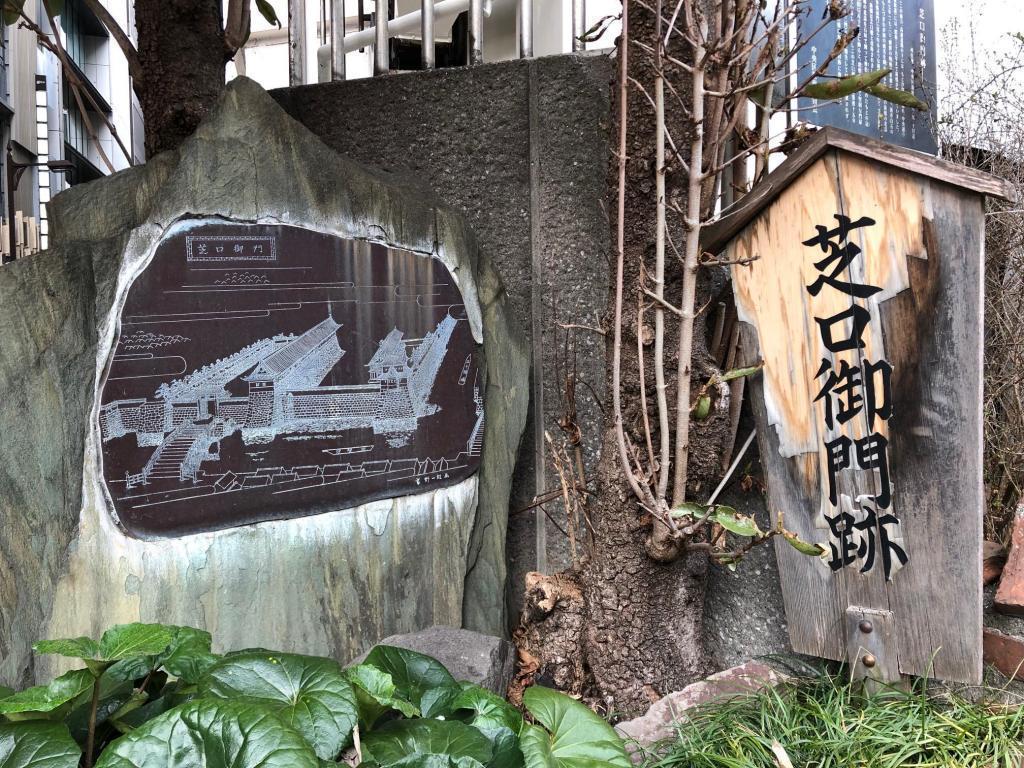
In 1710 (Hoei 7), Edo shogunate built Shibakuchi Gate of Edo Castle upon the visit of the Korean Communications Envoy to Japan to show his majesty. It is said that it was inspired by Hakuseki Arai. Since it was burned down in 1724 (Kyoho 9), it has not been rebuilt and stone walls have been removed.
The former appearance of Shibakuchi Gomon is depicted on the copper plate of a monument built at the site of the gate, and like Tokiwa Hashikado, it seems that it was a Masugatamon consisting of Ichinomon (Koraimon) and Ninomon (Watayaguramon). .
Location 8, Ginza, Chuo-ku
Tokiwa Hashikado and Shibakuchi Gomon-I think both gates were very spectacular. It's a shame that you can't see the real thing.