 Official
"What happened to Ieyasu Tokugawa" What is the answer to the geometry problem?
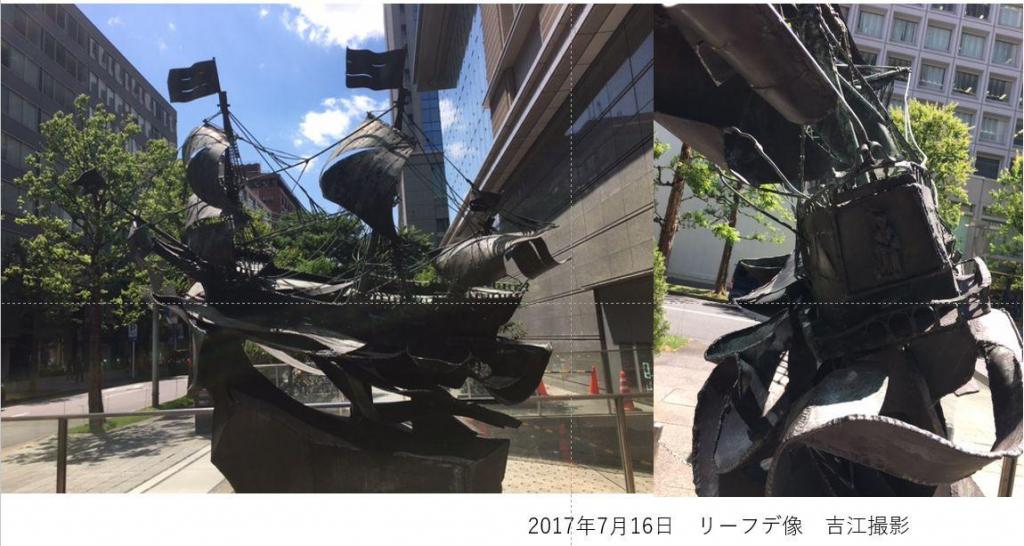
This time, the story of Anjin Miura. What is the relationship between Anjin Miura, geometry, and Ieyasu Tokugawa?
William Adams, who has a Japanese name that combines "Miura" derived from the territory of Yokosuka worshiped by Ieyasu Tokugawa, and "Anhori" (a pilot) derived from monitoring the magnet as a pilot, is an Englishman. How many languages did you interact with Japanese people? Since I lived in Japan for many years, I think I could understand some Japanese, but there is no mention that I gave English instruction to Japanese people, so it is not English. It is expected that he interacted mainly with the "Portuguese" he made. For example, when John Seiris, commander of the East India Company, came to Japan, it is expected that a relay interpreter between English and Portuguese and Japanese was performed across a Portuguese interpreter.
I learned him some points of jeometry, and understanding of the art of mathmaties. Here he is Ieyasu. Grammatically, the underlined part appears to be an error, but it is not an error. (I wrote it with a pile of light Yasumura's Don't worry! I'm wearing., but it may not be transmitted.) Learn from the time of Shakespeare means "taught" when there is an indirect purpose. I taught him some points of geometry, and understanding of the art of mathematics. Ieyasu learned geometry from Anjin Miura, didn't he?
If this is true, Ieyasu will be the first Japanese to do geometry.
The Nihonbashi area when Anjin Miura lived
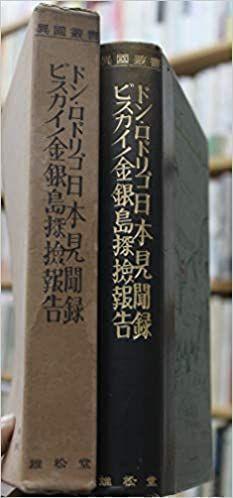
At that time, the situation near Nihonbashi Anjin-cho, where Adams worshiped from Ieyasu, was in the situation that Don Rodrigo (Admiral Manila), who was wrecked and forced to visit Japan on his way back to Spain from the Philippines in 1609, left an opportunity to see Ieyasu as a record. This content may be the appearance of Edo when Anjin Miura lived (September 1564 to May 1620).
“The town of Edo has 150,000 inhabitants, along the sea, and a large river flows through the center of the town, connecting quite large ships, so much of the food is readily available by the river. So the price is very cheap. If one boy has a half real (1 real = about 27.0 yen) a day, he can live enough. All prices are inexpensive, bread is pure white and good quality is one piece in half loaf. This is 15 pieces and 1 real. Bread, like fruits, is a food eaten by Japanese people other than regular meals, but bread made in this town of Edo can be said to be the best in the world. But because there are few people who buy it, they are almost free.”
Reference:
1) Nihonbashi Surugacho Originki (out of print): Kiichiro Okano, the third president of Suruga Bank, drafted by Suruga Real Estate Co., Ltd. Editing and publishing cooperation: Chuo Koron Business Publishing
2) Nihonbashi Private Records: Yasaburo Ikeda
3) Shi Nihonbashi: Ki Kimura