 Official
Nihonbashi neighborhood
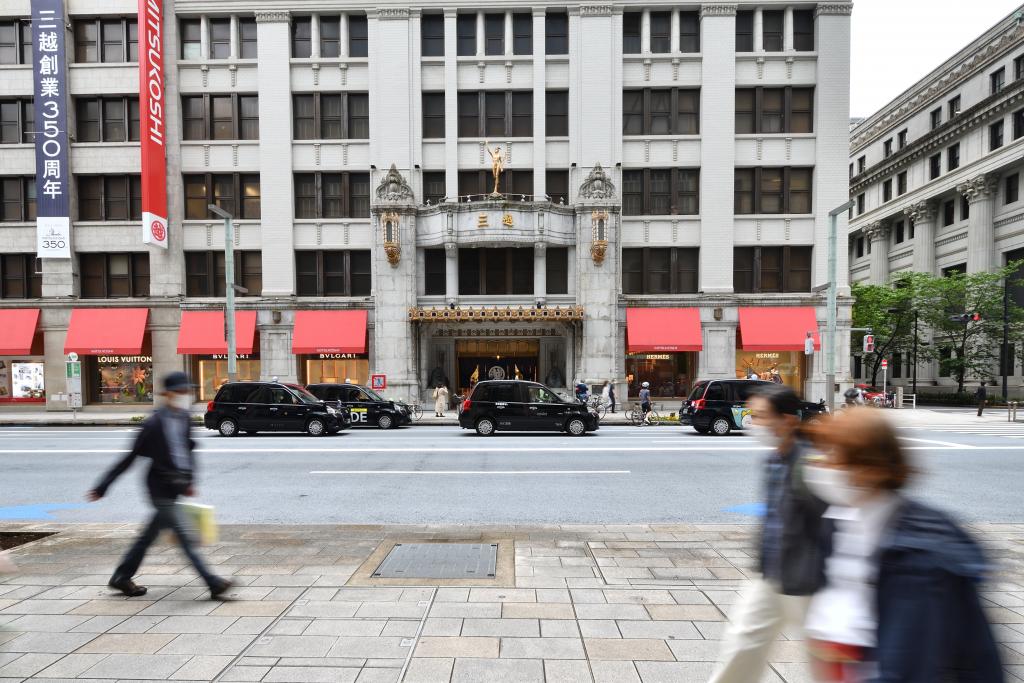
After the Kanda Festival is over, it is very easy to lose the festival.
In the previous post, I made a grudge mistake that I didn't realize that if I didn't put a photo at the beginning of the article, I didn't notice that thumbnail would not be displayed. I'll be careful after that.
By the way, a few years ago, in the spring of the spring, a banner called "Echigo-ya, the Lord is Spring Yonou" was lowered at the Mitsukoshi Nihonbashi Main Store. This is a familiar line in the historical drama, "Echigo-ya, the Lord is also evil. Hahahahah!" "That's the deputy. Huffhuh." It's clear that it comes from. Growing up watching historical drama, this catch phrase was irresistible. With the development of SNS, I think many people know now, but Echigo-ya is the name of the old days of Mitsukoshi Department Store. Mitsukoshi at Mitsui Echigoya Kimono Store Three and Koshi. Echigoya, the catch phrase at the beginning, refers to Mitsukoshi himself. Echigo-ya has a strong image of an unscrupulous merchant in historical drama, but it is actually a department store loved by people. It means that you are taking the gap between the image of Echigo-ya and Mitsukoshi. The area around Nihonbashi today seemed to have returned to a calm daily life after the bustle of Kanda festival passed. When the Kanda Festival is over, spring is over, and it is already early summer.
In the novel of the period, Mitsui Echigoya Kimono Store appeared in Rin Hamuro's "Inuiyama Late Autumn" (in the late autumn of Inuiyama, Kadokawa Shoten) (in the work, "Mitsui Kimono Store"). The younger brother of the painter Kourin Ogata, Fukasho Ogata, will take care of the woman, Chie and his child, Yoichi, who had a connection with his brother. Yoichi, who has grown into a diligent merchant, has gone to pay the cloth, and Yoichi, who is liked by Mitsui's owner, will enter Mitsui's store.
In addition, the haiku master Sakian, who appears in Rin Hamuro's "Shinaruri" (Shodensha), was originally a person who served as the head of a kimono wholesaler in Edo, Mitsui Echigoya. Sakian remorse the past of quitting the store on his own to become a haiku master and making his family unhappy. On the other hand, the main character, Kaizo Ibuki, also deeply regrets that his younger brother, who gave up his family after his blunder, did not try to look back on his brother until he was cut off and ended. Kaizo decides to work again to clear his brother's remorse, and seeks help from Sakian, who knows the world of merchants. Although Sakian refuses the offer once, he is persuaded by Kaizo and accepts the offer that shakes the old power would be a ruin to his family.
Mitsui Main Building
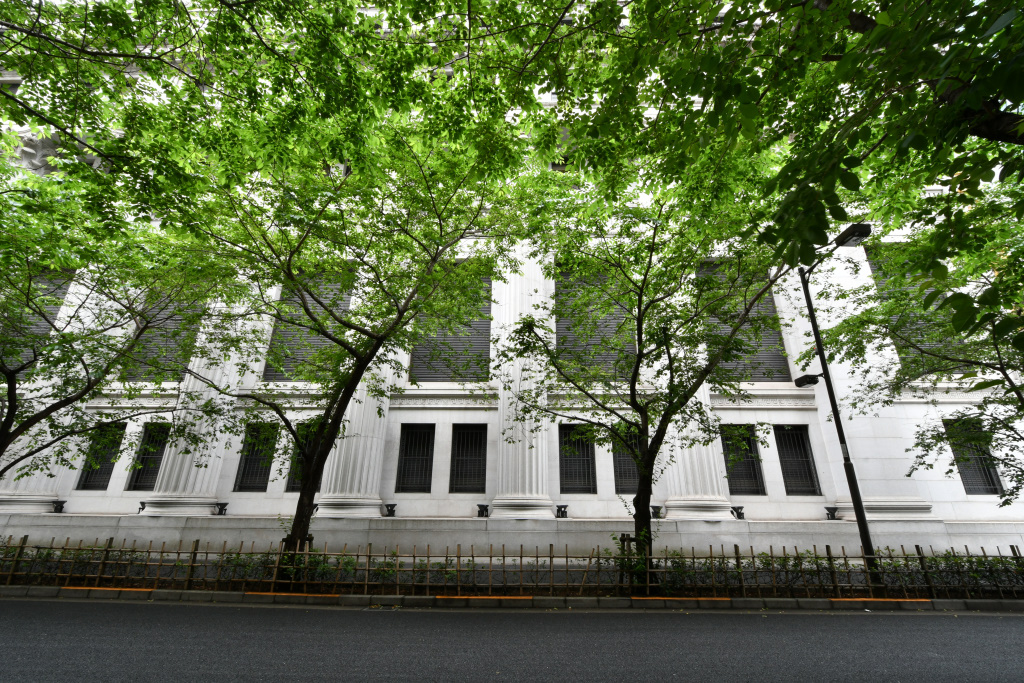
The Mitsui Main Building is located next to the Mitsukoshi Nihonbashi Main Store. The "colint order column" attached to the outer wall attracts attention.
Nihonbashi
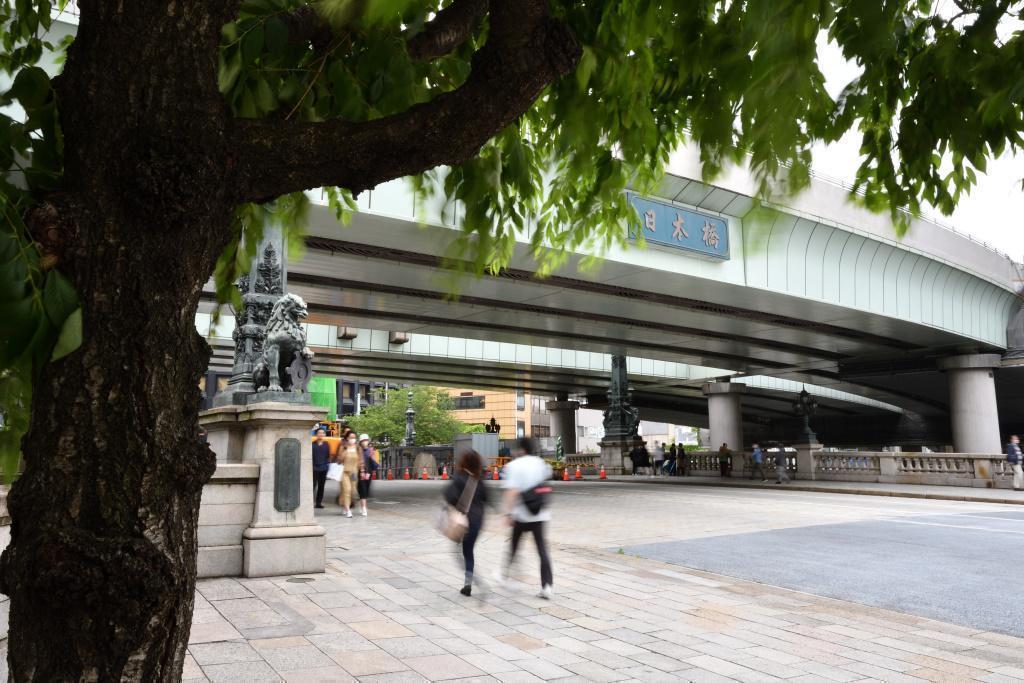
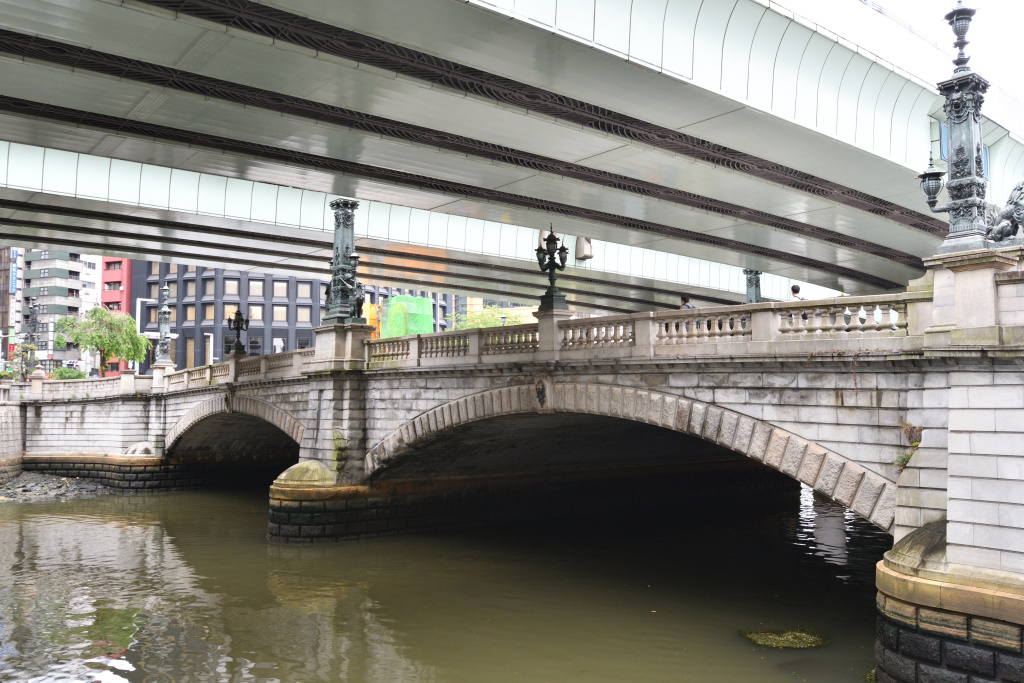
Just a short walk south of the Mitsukoshi Nihonbashi Main Store is Nihonbashi, which spans the Nihonbashi River. The first bridge was built in Keicho 8 (1603), and the current stone bridge is the 19th-generation bridge built in 1911. When Nihonbashi was a wooden bridge, it burned down many times only in Edo, where there were many fires called "fires and fights are Edo flowers", but the current bridge was not defeated by the Great Kanto Earthquake and World War II. It is a very beautiful bridge with two arch bridges.
Bronze statue of Kirin and Lion
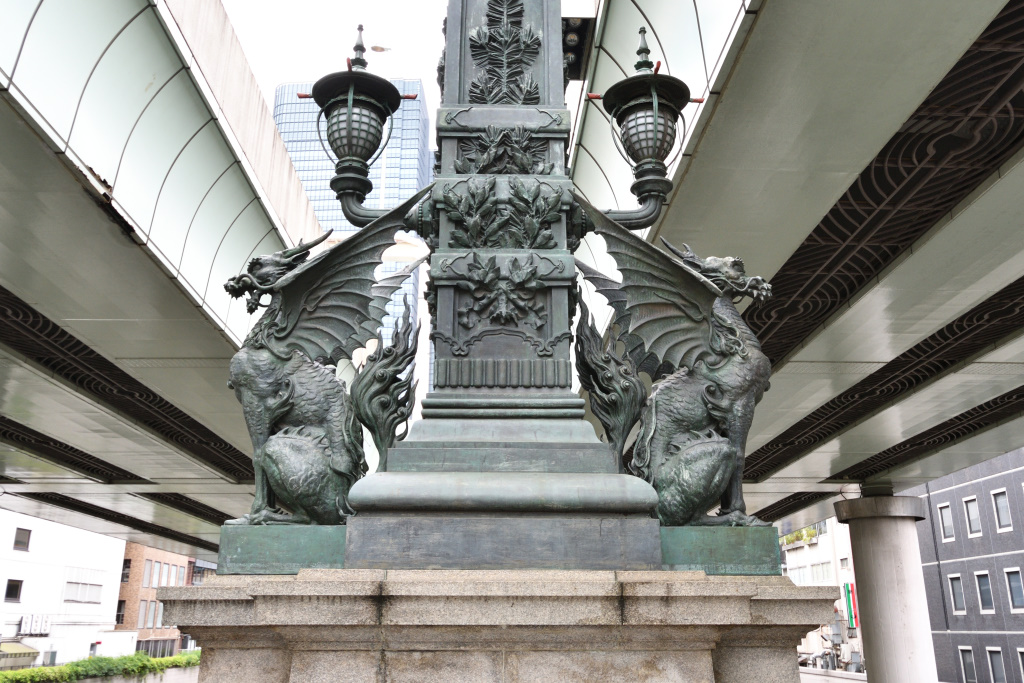

The letters "Nihonbashi" engraved on the main pillar were written by the last Tokugawa general, Yoshinobu Tokugawa. The bronze statues of Kirin and lions on the bridge were designed by architect Yorinaka Tsumaki, and the statue of Kirin in the center expresses the prosperity of Tokyo City at the time of completion, and the lion statues at the four corners represent protection. I think the Kirin statue became widely known by Keigo Higashino's novel "Kirin no Tsubasa" (Kodansha), which was also made into a movie. There are many people who take pictures.
Soji Juro Riverside
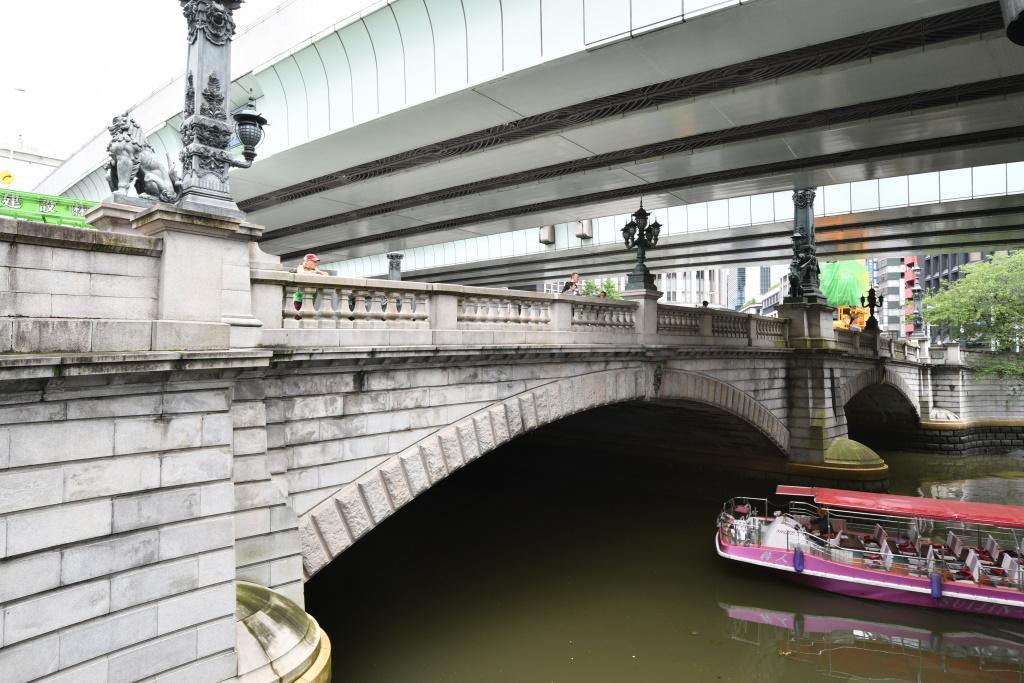
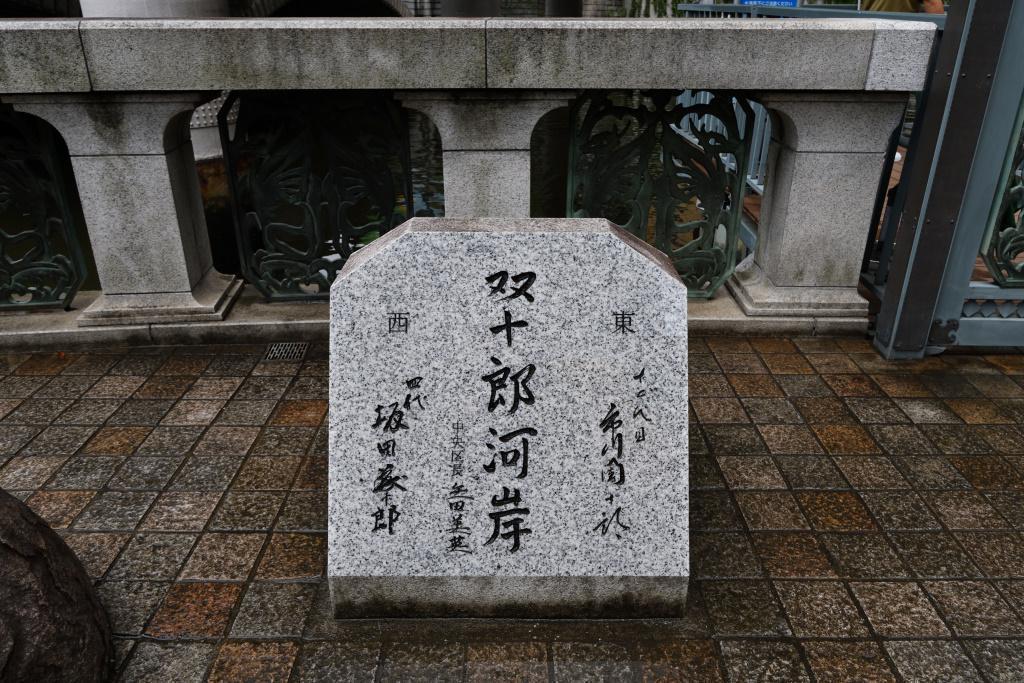
At the foot of the bridge, there is a water bus stop, which is named after two Kabuki actors, Sakata Tojuro and Danjuro Ichikawa, and is named after the Sojuro Riverbank.
Nihonbashi is a bridge known throughout Japan by its name recognition, but it rarely appears in a novel of the period, and the number of appearances is far from Ryogoku Bridge over the Sumida River and Ichitsume Bridge over the Tate River (now Kazuyuki Bridge). Nihonbashi is a commercial area with high-end stores, close to Edo Castle, and is far from the place where poor Ichii people and less-minded samurai live, so it may not be because it is a place far from era novels . Nihonbashi has a small number of appearances, but it appears in Shuhei Fujisawa's "Uminari (upper), (lower)" (Bunshun Bunko). The main character, Shinbei Onoya, is a rich man rare for the protagonist of a time novel called a paper wholesaler, and was blessed with the opportunity to appear because the shop was in Nihonbashi Motoishi-cho. In addition, it has appeared in Shotaro Ikenami's "Intraction Woman" (recorded in the Onihei Crime Book (19), Bungei Haruaki).