 Official
Is it a board boat on the riverbank seen by Uoya Sogoro?
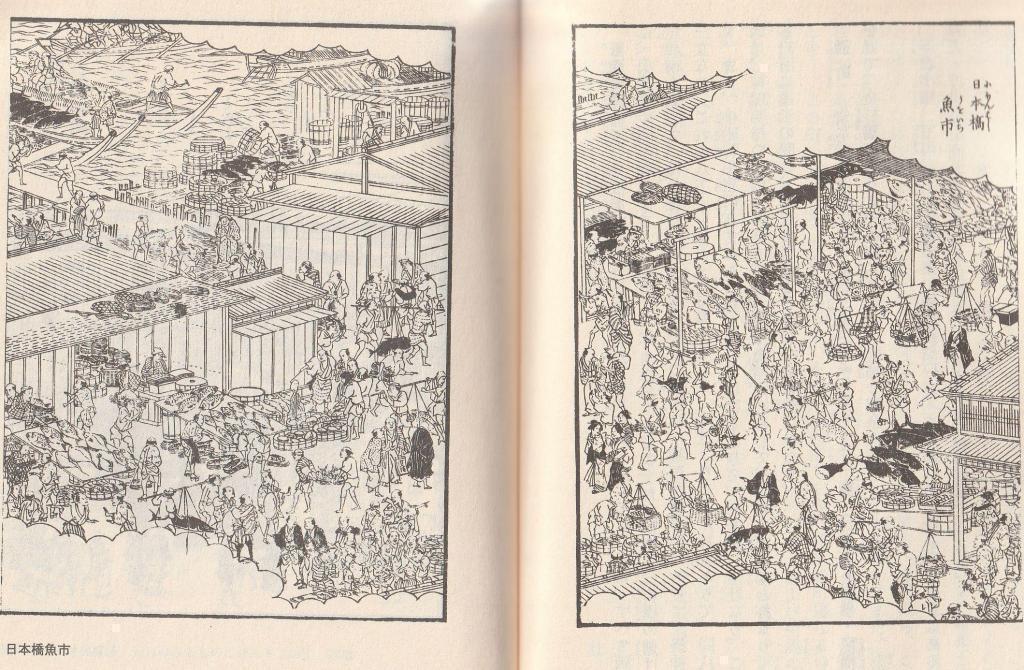
Following the New Year's Asakusa Kabuki "Uoya So Goro" in January, the topic of the fish shore. How did you sell fish on the fish shore of Nihonbashi?
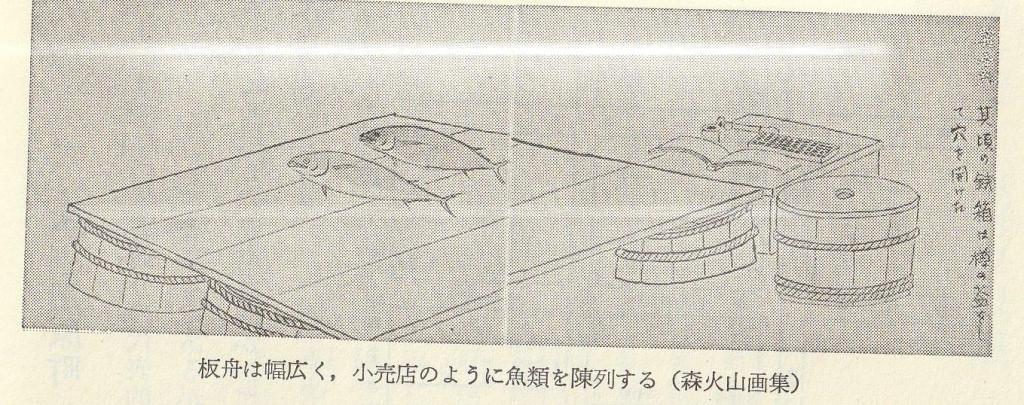
A board that arranges fish is called a board boat. A board boat is a door plate that sells fish side by side. The back of the mana board is surrounded by a shallow edge, a little cold water is added, and raw fish is added. Because of its shape, it is called a board boat. A flat plate with a width of 1 shaku (about 30 cm) and a length of 5 to 6 shaku was presented to public roads from under the eaves of the store to make it a fish sales area. The public road was narrowed by the boat from both sides. In the Taisho era and Showa eras, permission from Tokyo City was required to use this, and this was called "Itafune Gon". This right was registered with the union and would not be able to do business in the market without the right of board boat.
Purchase and sale of board boats
The ownership of this boat had to be obtained by buying, selling, renting, or inheriting. The board boat right could be used for sale, lease, and security only to union members, but if the transferor still owns a land house, the transferee will pay the rent as "Niwasen" every month. Up to 50% was to be paid to the transferor. It was a different concept from the right of a boat and the ownership of a land house.
Itafune Gon originated in the Edo period and was a complex tradition. It is described as follows in the History of Fish Market.
"Everyone, fish merchants set up their own doorboards and started selling fish, then set up barns on the riverside street, made eaves boards and sinks in front of the barn, and on Hon Funamachi Street, hemp (cloths woven with hemp) ) And ship tools, etc., and the merchant's residence will occupy the fish merchant's market in later years. In the first year of the Taisho era, the Itafune rights had a total length of 7,236 shaku (2,170m), but gradually increased due to the development of the market and the approval of the police, reaching 9,100 shaku when the fish market was relocated (Nihonbashi → Tsukiji). Was. The lease price was 1st to 7th mag, and the monthly fee was distributed at a minimum of 2.40 to 14.86 yen. The trading price was distributed between a minimum of 250 yen and 1,300 yen per shaku, bringing the total price to 7,097,683 yen. (From the History of Tokyo Central Wholesale Market)