 Official
Watch Art Deco at Mitsukoshimae Station
Thank you, moss.
Have you ever heard of such a story about Mitsukoshimae Station?
"Mitsukoshi paid all construction costs instead of making the station name Mitsukoshimae Station."
In fact, there is no clear evidence in this story, and it seems that "There seems to have been some promise, but the truth is unknown", and it is still handed down like an urban legend.
However, it remains in the document that Mitsukoshi made the connecting passage connecting the ticket gate of the station and Mitsukoshi underground at the expense.
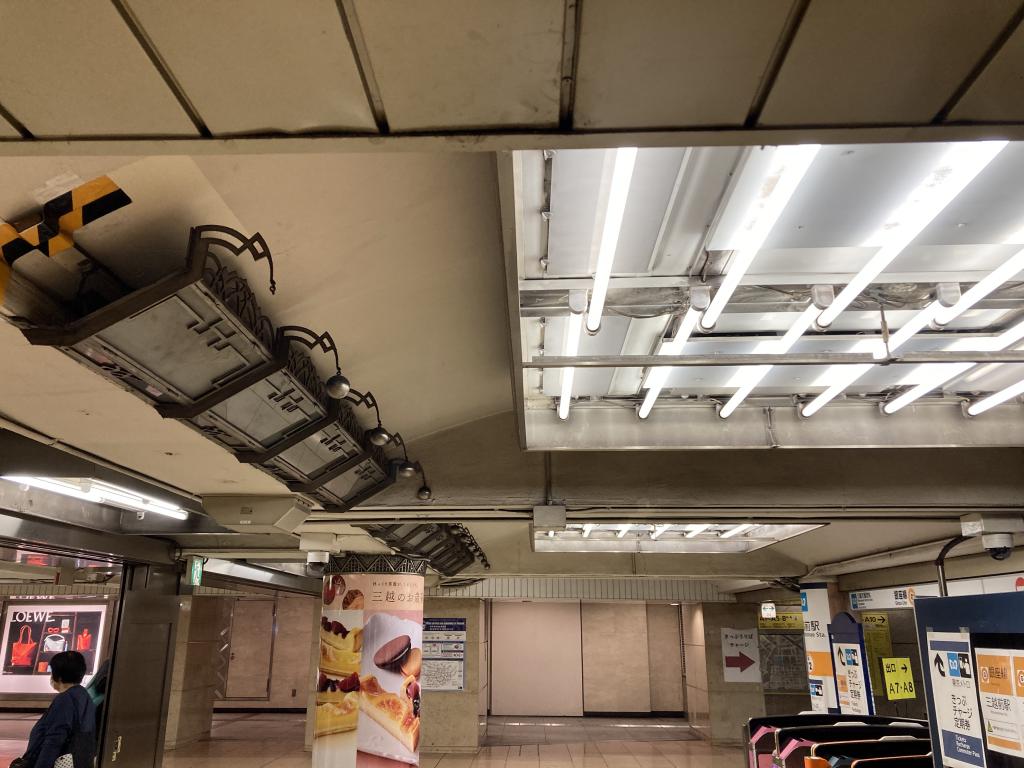
There are some remnants of the station at the time of the construction of the connecting passage, but what I would like to introduce this time seems to be a little more visible than usual.
Art Deco decoration left on the connecting passage
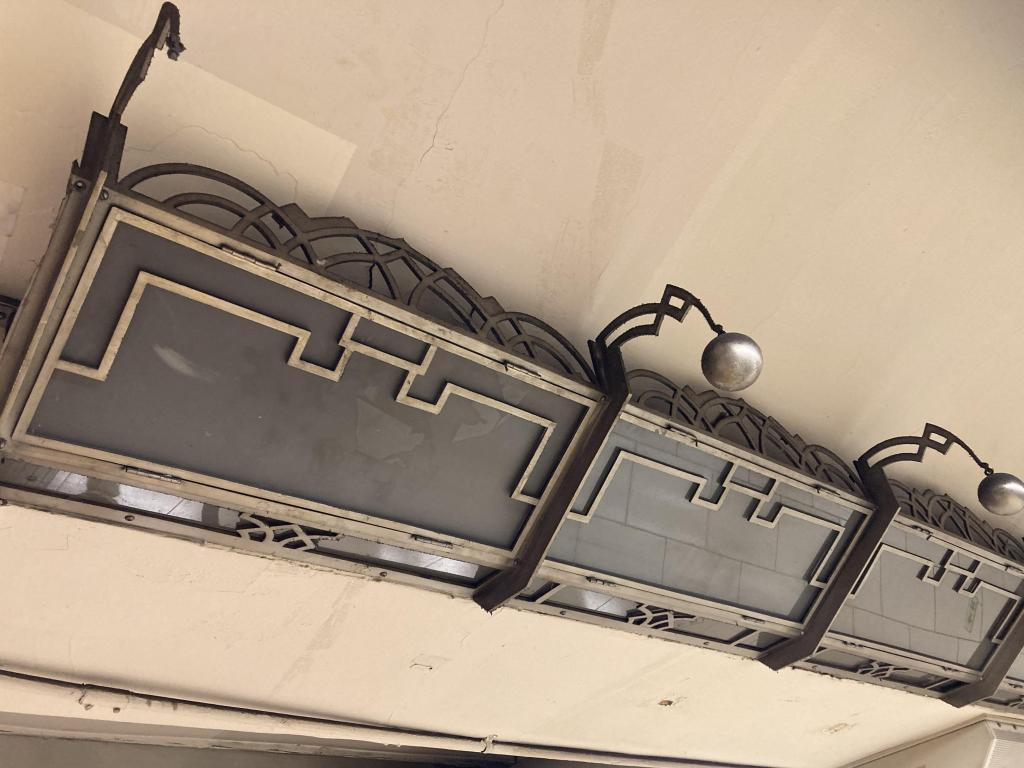
When you exit the ticket gate for Mitsukoshi on the Ginza Line, you can see some old metal decorations when you look up a little above.
In fact, this decoration, when Mitsukoshimae Station opened in 1932, what was installed as a lighting decoration remains as it is.
Although the composition of the combination of straight lines and curves is characteristic, the design with the symbolic geometric shapes is known as the "Art Déco".
Art Deco became popular in Europe and the United States from 1910 to 1930, and it seems that a little inorganic feeling was received coolly.
It was brought to Japan in the early Showa era, and today the Tokyo Metropolitan Teien Art Museum (formerly Asakanomiya House), Isetan Shinjuku Main Store, Kanagawa Prefectural Government Building, etc. remain as representative art deco architectures.
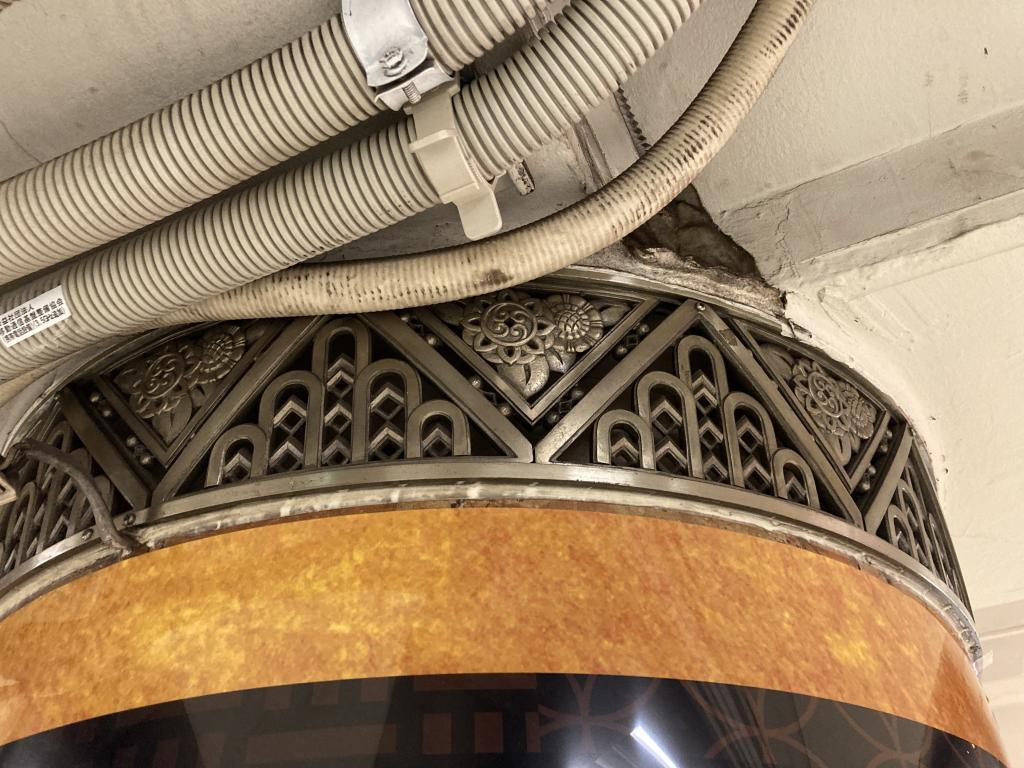
At the top of the 10 pillars lined up in front of the connecting passage (Yume Road) to the Hanzomon Line, you can also see decorations with similar materials.
Geometric patterns with curves and diamonds in alternately assembled triangles and flower decorations create luxuriousness.
Only these two types of Art Deco decorations at the time that remained on the connecting passage of Mitsukoshimae Station were found.
This is because many other ornaments were recovered by metalPacific War.
Speaking of Mitsukoshi's metal offerings, the lion statue at the front entrance of the main building and the episode of the first escalator in Japan as a commercial facility are famous, but gorgeous metal ornaments were also included.
Focus on Decorative Designer Rene Pruo
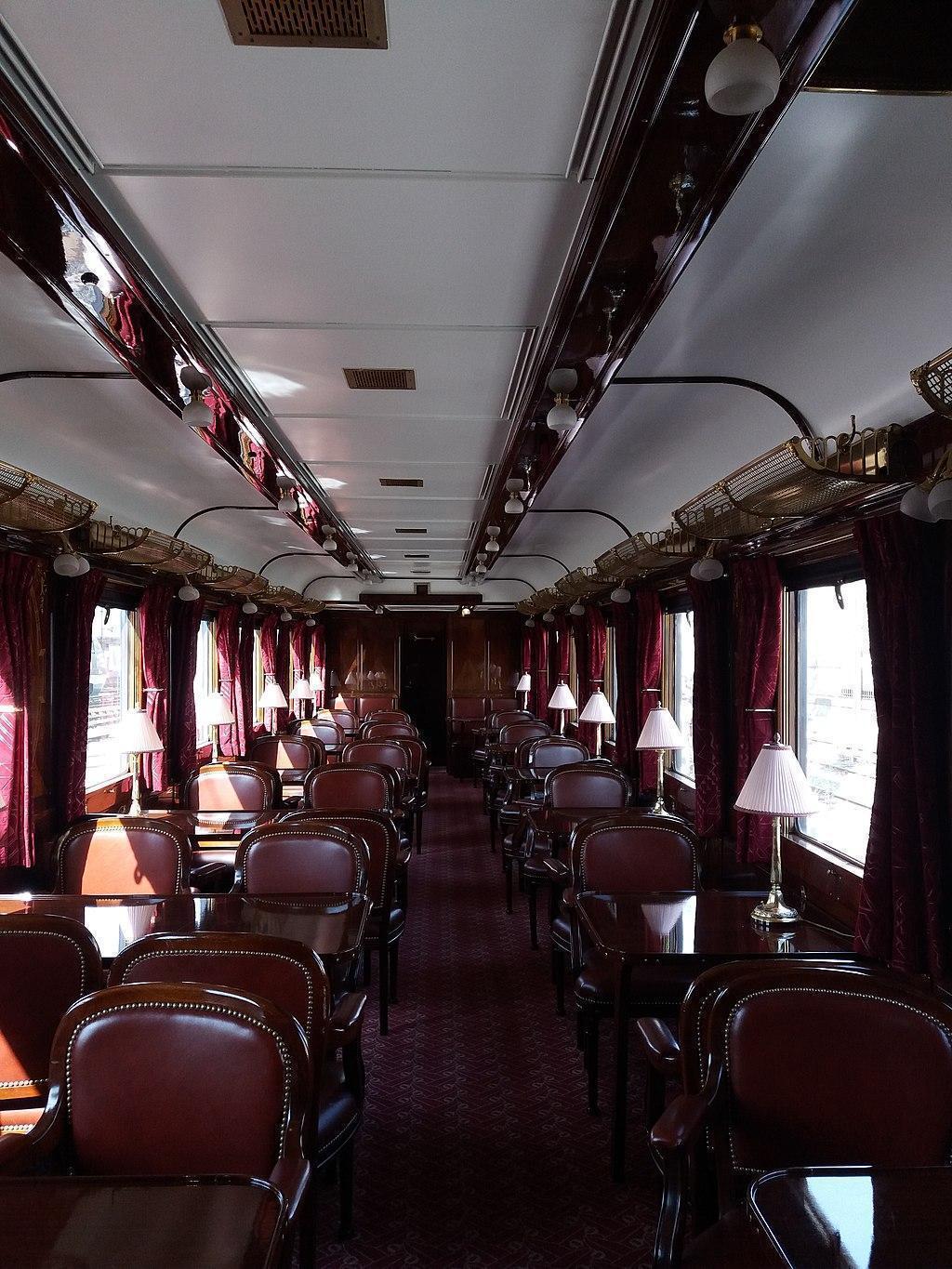
▲Restored Orient Express Carriage (from Wikimedia Commons)
Mitsukoshi's Art Deco ornament was designed by a Frenchman named René Prou, who was a leading figure in the French decorative world.
He specializes in interior design that pursues luxury, such as luxury cruise ships and sleeper limited express trains, and is also in charge of interior design for that famous "Orient Express".
It is said that Mitsukoshi sent two employees to France so that they could communicate smoothly.
Puru's biggest job at Mitsukoshi is interior design for a special dining room and rest room. Most of them are not limited to the decoration of doors and walls, but also metal decoration of ventilation openings are made with original designs.
Even today, a part of the Art Deco decoration at the time that was spared from metal offering remains in the special cafeteria on the 7th floor of Mitsukoshi.
Mitsukoshimae Station is full of attractions!
This time, we introduced some of the parts of Mitsukoshimae Station that do not attract much attention, but there are many other attractions in this station.
Correspondent blogs have been dug in from various viewpoints, so I'm glad if you can be obsessed with this station!
[Related Articles]
・"Kidai Shoran" is a global cultural property! by Tom Shitamachi
・Behind the Kidai Shoran by Mr. Kairly
・Explore Chuo-ku Underpass [Mitsukoshi-mae, Shin Nihonbashi Edition] (for kids) by Takechan
・Stained glass by moss at the underground steel entrance of Mitsukoshi Nihonbashi Main Store