 Official
Seiki Tokyo kid Kiyokata Kaburaki and Chuo-ku
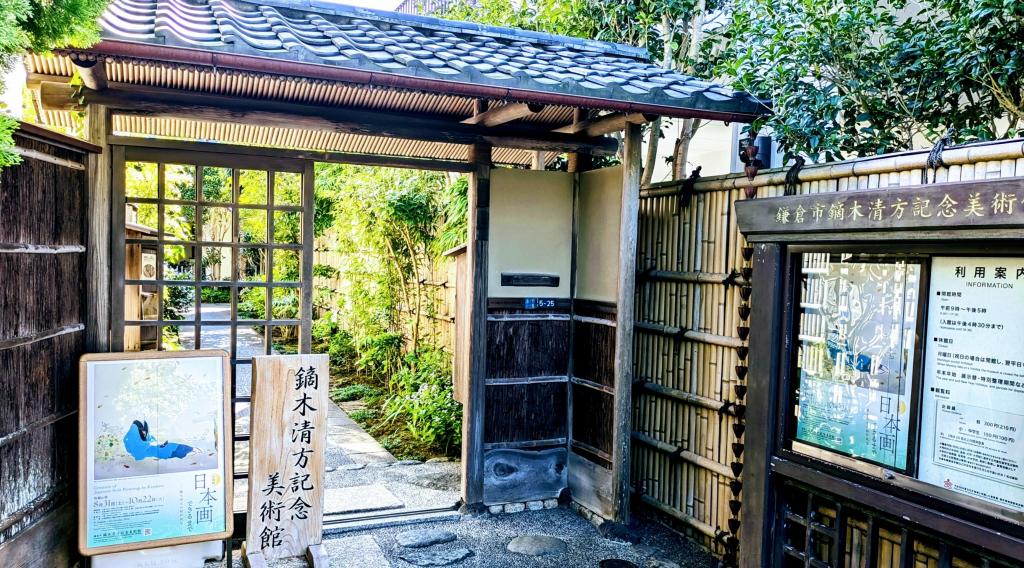
Get off at Kamakura Station, follow Komachi-dori, and turn left. You will find the Kiyokata Kaburaki Memorial Museum.
Kiyokata Kaburaki, who lost his home in Yagi-cho, Shinjuku in the war, evacuated to Gotemba, moved to Kamakura Zakuza, and moved to Kamakura Yuki in 1954. This place with a wonderful place name is the site of the old house in Kiyokata. Kamakura City, which donated land, buildings, works and materials from his bereaved family, will build a new museum as a memorial museum to pass on his paintings and production places to future generations. The lattice Tokado at the entrance of the museum is the same as in the era of Kiyokata, and the garden's branch doors have been restored.
On the left back of the entrance gate, there was a Haiku post hanging Haiku and Kamakura hike.
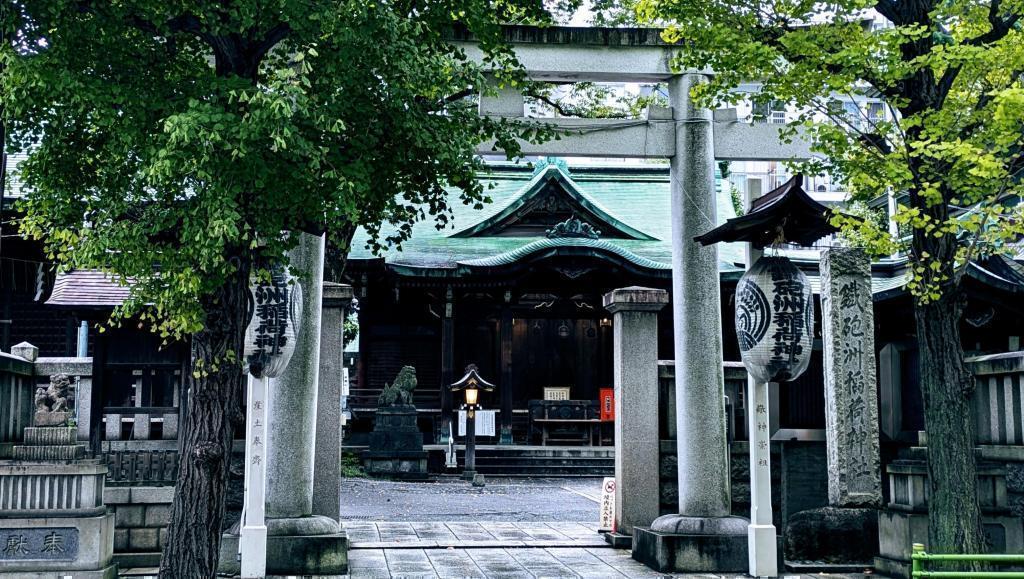
Kiyokata Kaburaki was born in Kandasakumacho in Meiji 11 (1878).
His father was Jono Saikiku. My parents' house was a local wholesaler in Horidome-cho, Nihonbashi (a popular wholesaler in Edo). He is one of the founders of the present Mainichi Shimbun and the Tokyo Nichinichi Shimbun. He was a journalist and a humanistic writer who also worked on drama reviews and plays (popular novels), and later left Kiyokata to illustrate newspapers during the era of Yamato Shimbun's president, and had a great influence on literary arts.
Mr. Hokiyama, the birthplace of his maternal grandmother, Fuku, was a shrine clerk (chief priest) at Tepposhu Inari Shrine in the Edo period. Kiyokata recalls in his essay "Tsukiji Neighborhood" that he stopped at Tepposu Inari Shrine, where his grandmother helped and played when he was young, helping and playing with Omiyaban. From the time he began to understand the characters, Kiyokata has been trying to solve the picture of the Soso paper at home for his grandmother, and is deeply familiar with paintings and sentences.
His mother Fumi is born to the house of the Kaburagi family, the priest of the sixth Tenjin Shrine in Asakusa. A woman with the spirit of an Edo woman who likes performing arts and entertainers, prefers flashy things and hates lonely things. Looking at his mother, Kiyokata wrote that he learned the life, hobbies, and ways of thinking about things of the common people of Edo at the bottom of his art.
My mother seemed to like moving. Kiyokata himself said, "In the past, there were many people in Tokyo who loved moving. I can reach out to you thirty times when I was young," he wrote in "Meiji Gokai".
I think that it includes villas and work workplaces, but according to the materials I found, there are many unknown places such as addresses, but 20 places are known. Seven of them were now in the central district.
I will move to Shitaya Ni Nagamachi soon after I was born. One year later, I moved to Kyobashi Minami Konnyacho.
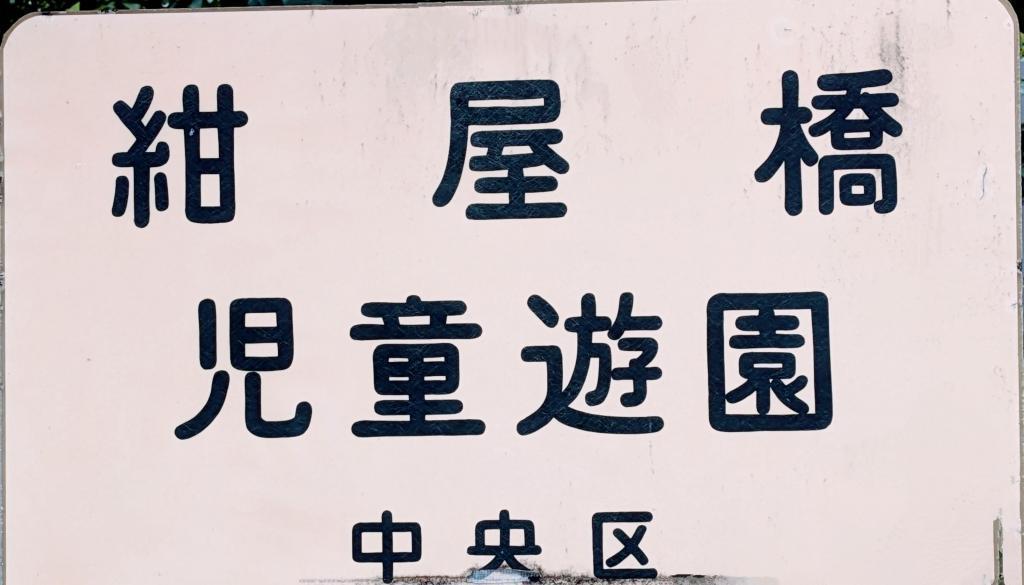
It is the current Ginza 1-chome. Since there was nothing to show Minami Konnyacho, I took a picture of Konyabashi Children's Park. I didn't know the exact address, but it seems to be a part of the antenna shop side of Kochi Prefecture rather than the park.
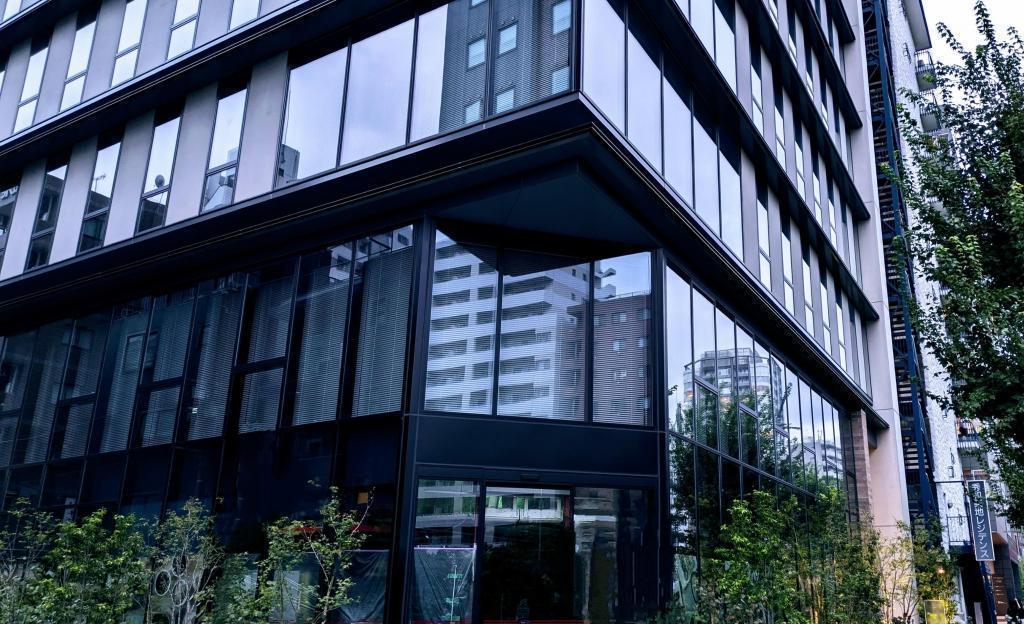
In the same year that I moved to Minami Konnyacho, I moved to Bunkai Elementary School at Tsukiji 1-chome.
There was a house in front of the back gate of the elementary school.
I saw the map of the early Meiji era of the Chuo-ku history map collection, but the road is different from now and the parcels are different. Go west from Karuko Bridge, which was at the diagonal position of the current Irifune Bridge, and go to Tsukijibashi. It seems that the area around the building in the photo of Tsukiji 1-chome was the front entrance. The southwest side can be imagined as the back gate, and in the old map, private houses line up across the alley.
I live here from the age of 1 in Meiji 12 (1879) to the age of 7 in Meiji 18 (1885).
The third generation, Hiroshige Utagawa, lived in the neighboring house and had exchanges. I think I had the opportunity to see Ukiyo-e.
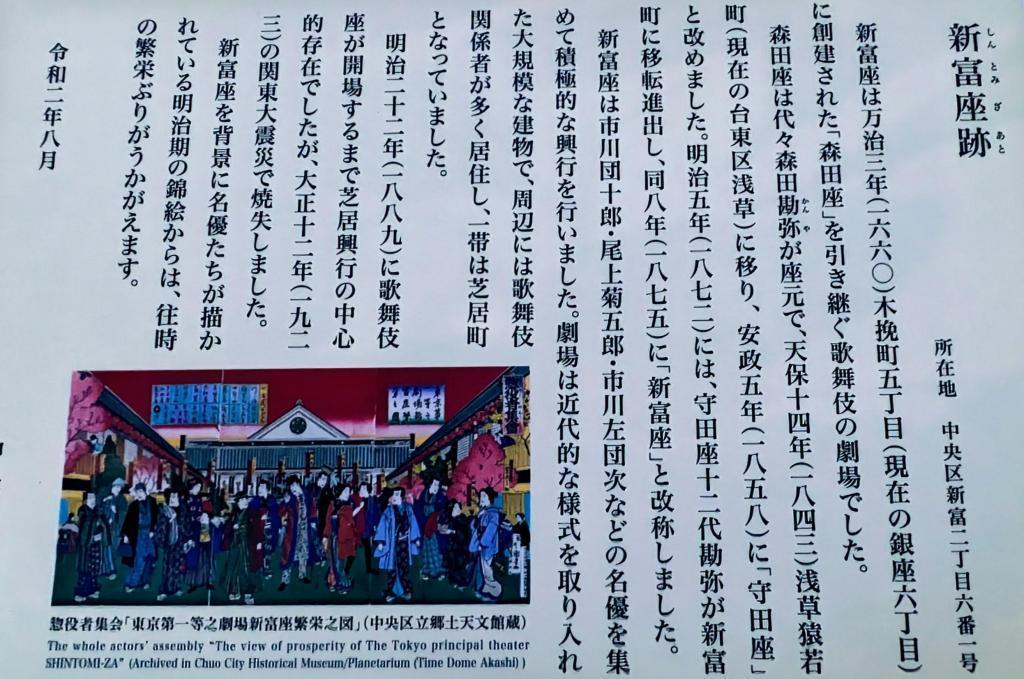
This is an explanation version of the site of Shintomiza. This is the current location of Kyobashi Tax Office. It is about 150 meters from the Jono family in front of the back gate of Bunkai Elementary School. This is one of the reasons why the parents who love the play moved.
The Nihonbashi and Kyobashi districts have been places where Terakoya has been concentrated since the Edo period. In the Meiji era, a school system was issued, and public elementary schools were established, including Sakamoto Elementary School, but many parents chose Terakoya as a place for education. Terakoya will also be a private elementary school to survive. Elementary schools without playgrounds were eliminated, but a few remained as substitute elementary schools. Among them, Suzuki Elementary School is said to be a prestigious elementary school. Kyobashi, Minami Hatchobori, and Tepposhu were written, but the location could not be specified. Is it around the 1-chome entrance now? I will enter when I was 5 years old in Meiji 16 (1883). It is close to Tepposu Shrine, and I wrote before that I went to school every day and played with my grandmother. In addition, many actors and play-related children living around Shintomiza attended Suzuki Elementary School, and Kiyokata grew up with desks.
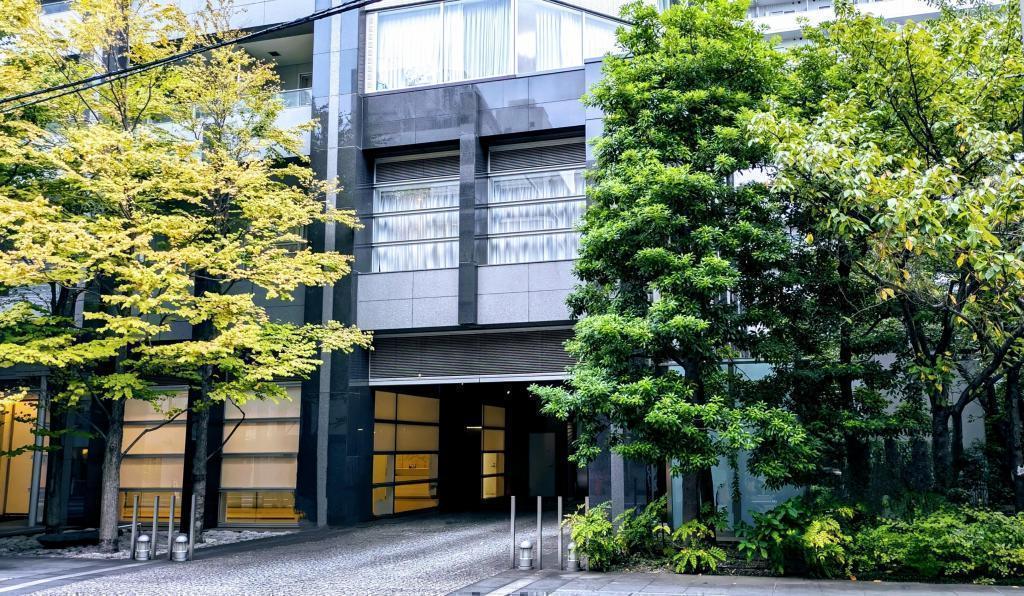
At the age of 7 in Meiji 18 (1885), he moved to 11-chome, Kibikicho. Looking at the Chuo-ku history map collection and the old map of 1875, it is next to Kyobashi Park, where the current Chuo-ku Tourism Association is located. My current address is Ginza 1-chome. It seems that private houses were lined up on the southwest side of a part of the apartment in the photo. Meiji 28 (1895) I live here until I was 17 years old.
Around this time, his father Jono Rigiku launched Yamato Shimbun. Kiyokata will stop Suzuki Elementary School and enter a private Tokyo English school in Kandanishikicho. At the age of 13, he was introduced to Toshikata Mizuno, a ukiyo-e artist, and practiced by going to school, but he recalls that it was difficult to improve. At the age of 15, he was awarded the honorific title of Kiyokata and began drawing illustrations in Yamato Shimbun.
At this time, the Yamato Shimbun falls into business difficulties, and the households of the Jono family are tight. For this reason, Kiyokata inherited the family head of his mother's family and became Kaburagi's surname. The reading is "Kabraki".
By the way, the reason why I was the theme of Kiyokata Kaburaki even though I don't know anything about the picture is because my relatives have Kaburagi surname. I didn't know the painting, but I knew the name from a long time ago. Until recently, I thought it was Kaburagi, but when I checked with myself, I said "Kaburaki".
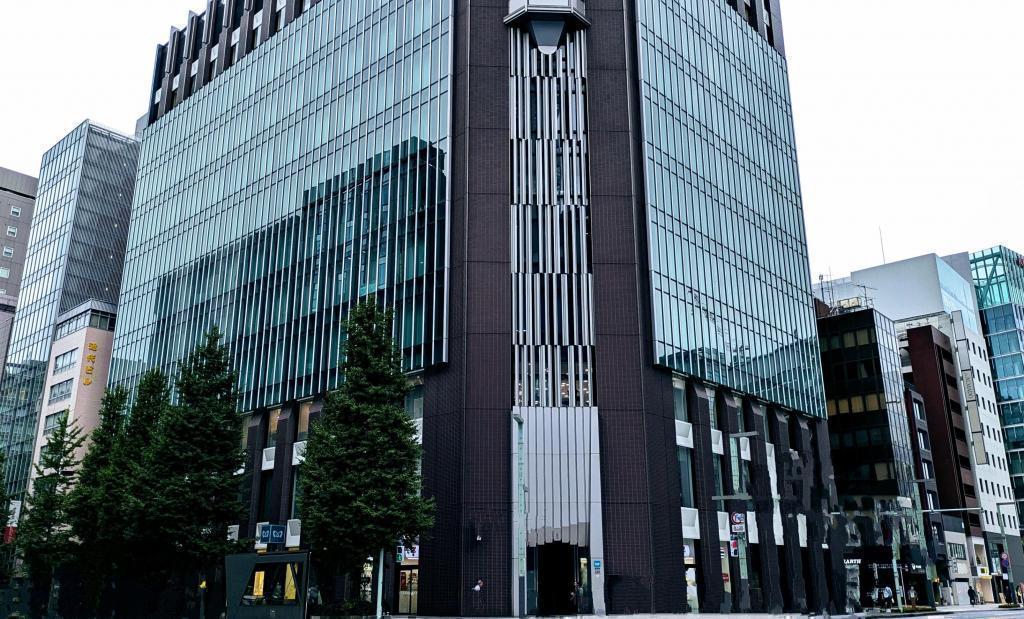
Yamato Shimbun wrote and serialized Sanyutei Encho's creations dictated. On that edge, when Kiyokata was 17 years old, he suffered from beriberi and was recommended to relocate, but if he was in trouble with his household budget, Encho will come out for a new interview but invites him instead of his disciple. Kiyokata, who has never left Tokyo, travels around Tochigi and is fascinated by the scenery of his travel destination, and completely cures his beriberi. Kiyokata, who hated painting portraits, became interested in biography 35 years later, and thinks that portraits should be drawn with people's inner and human beings. "Sanyutei Encho Statue" has become an important cultural property.
At this time, Kiyokata leaves Chuo-ku and moves at least three times in the direction of Hongo Yushima. Then, in 1900, at the end of the age of 22, he moved to 3-chome, Kyobashi Minami Denmacho. This is around the building in front of Tokyo Square Garden, where the current Kyobashi 3-chome and Central FM headquarters are located. I came back to Chuo-ku.
The following year, in April 1901, he moved to Kibiki-cho again. His address is 115, Kibikicho. The address where Kiyokata lived between the ages of 7 and 15 is 11-chome. According to the old map of 1897 in the Chuo-ku history map collection, the Bananro, which was previously written as 11, has been changed from 11 to 15. It is a high-class restaurant with a vast site. The residential site in front of it is written in the same way as the old map of 1875. Kiyokata writes in a memoir of "Tokisho Customs" that "When I lived on the streets of Manan in Kibiki-cho ...". I think it is very likely that I have returned to my previous home.
During this period between the ages of 23 and 28, he draws illustrations and illustrations such as "Takekurabe" by Higuchi Ichiyo, who had been writing for a long time, interacts with Koyo Ozaki and Kyoka Izumi, and draws illustrations of "Gold Yasha" and "Family Tree".
At the age of 25, he married Teru, a sister-in-law of Makoto Tsuzuki, who was a comrade. Teru was 17 years old at the time, and she was really a writer. The ceremony was held at the Mananro in front of me.
There is a photo at the Kiyokata Kaburaki Memorial Museum of Art working in a room during the period of Kibiki-cho, "When I became independent as an illustrator".
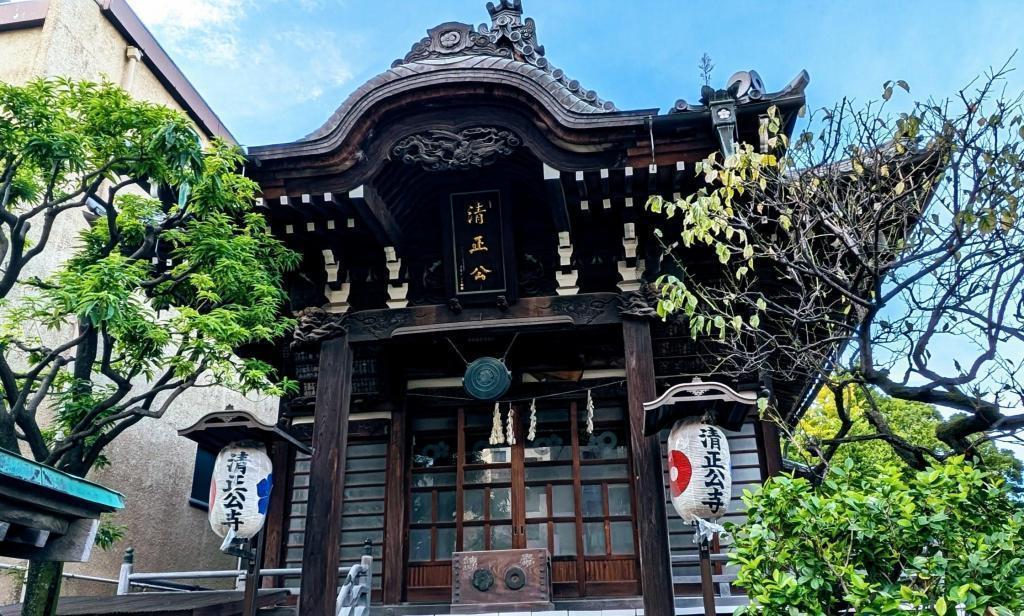
The following year, Kaoru Osanai, who met through Kabuki, visited Kiyokata's house in Kibiki-cho with Toson Shimazaki and asked for a picture of "breakfast", at the end of 28 in 1906, Nihonbashihama-cho 2-chome, former Hosokawa family residence No. 2. I will live here until 1912.
I know the address so far, but I couldn't identify the location. In an old map of 1875, Hosokawa's residence is written at Hamacho 2-chome. Kiyomasa Koji Temple was located near the center of the large site. I'm sure it's around here.
In the old map of 1897, there is no notation of Hosokawa's residence at Hamacho 2-chome, and the location of No. 2 in the house is not known at all. The site of Hosokawa's residence in 1875 seems to include the current Arashio room. There is no possibility that you were around here.
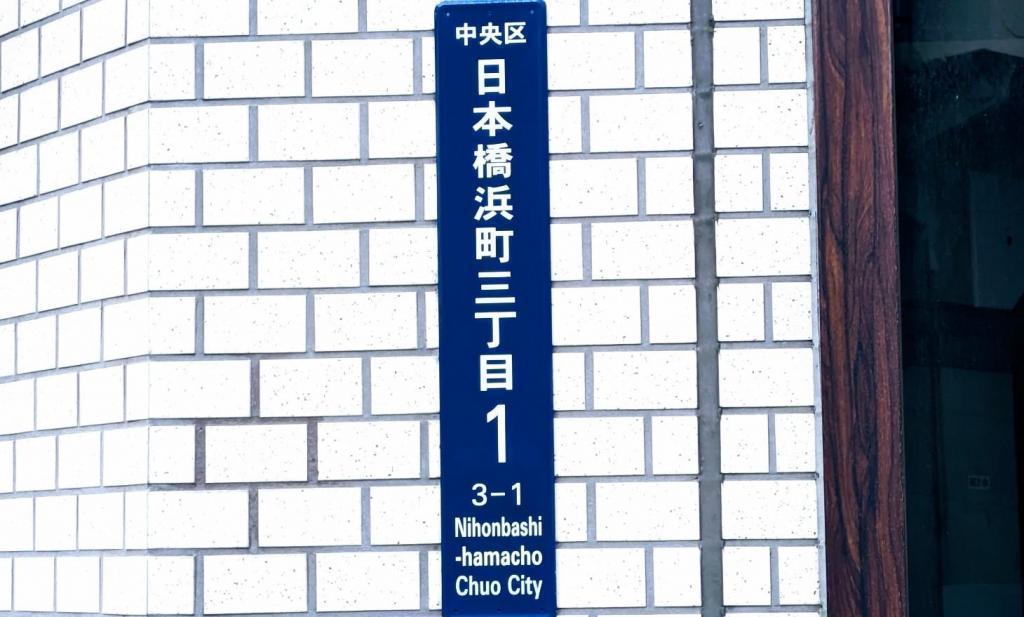
In April 1912, he moved to 18th No. 3-chome, Nihonbashihama-cho, in April 1912. I'm 34 years old.
In the old map of 1897, half of Hamacho 3-chome is one. I couldn't see the hiragana notation.
This land moved to Hongo in about a month, then moved to Ushigome Yaraicho, and moved to Kamakura after the war. It seems to be the last time Hamacho Sanchome lived in Chuo-ku.
The building was different in Hamacho at the time when Kiyokata lived, but there were Arima Elementary School and Suitengu. But if you look at Tornale Nihonbashihamacho, which has a 46th floor that appears in modern times, what kind of impression do you have?
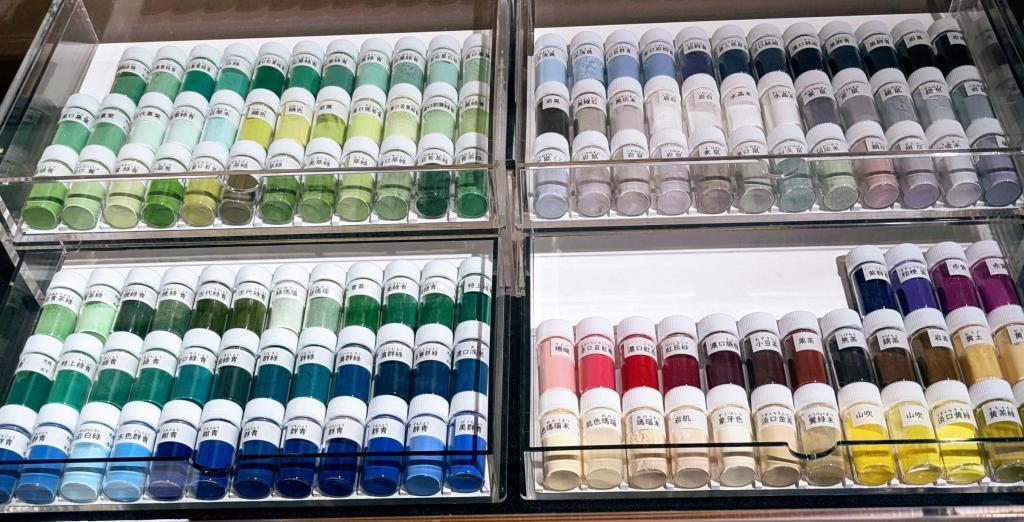
The paint in this photo is the paint used by Kiyokata, who was placed at the Kiyokata Kaburaki Memorial Museum.
In particular, it was explained that the blue paint, which was called Kiyokata Blue, was finely crushed a green natural rock called peacock stone (malachite) to produce shades of color due to differences in size of particles.
Just looking at this actual item, you can feel the delicateness, expressiveness, and commitment to Kiyokata's paintings.
At first, Kiyokata Kaburaki, who only knew his name, thought that he was a famous beauty painter.
"Tsukiji Akashicho" depicts the light blue fences and morning glory of the Western-style building in Akashicho, which was a foreign settlement in the background of a beautiful kimono, and "Shin-Tomicho" is the background of Shintomi-za, which was no longer written at the time. "Morning and evening Yasui", which I like, depicts the life scenery of the townspeople in the morning, daytime and nighttime, but all of them are the lives of the people I saw in Tsukiji in the morning and the neighborhood of Hatchobori in the day and night. In an interview, he said, "I wanted to write a novel." He was a writer who wrote many essays such as "Ginsuko" which looked back on the banks of Hamacho, "Tsukiji River" which wrote the scenery of the river flowing in the neighborhood of Kibikicho, and "Faharuki" which wrote rows of willow trees in Ginza. He had a versatile face such as illustrators, landscape painters, and ukiyo-e painters.
"I can say that the hometown of my heart, which is firmly rooted in me, is in my life that lasted until the 34th and 5th years of the Meiji era."
He was a fresh Tokyo kid who wanted to leave memories of the Meiji era and downtown.
Photographs of the entrance of the Memorial Museum were permitted at the reception. Shooting is not possible in the hall, but the exhibition of this paint was OK with Iwahara stone of other colors.